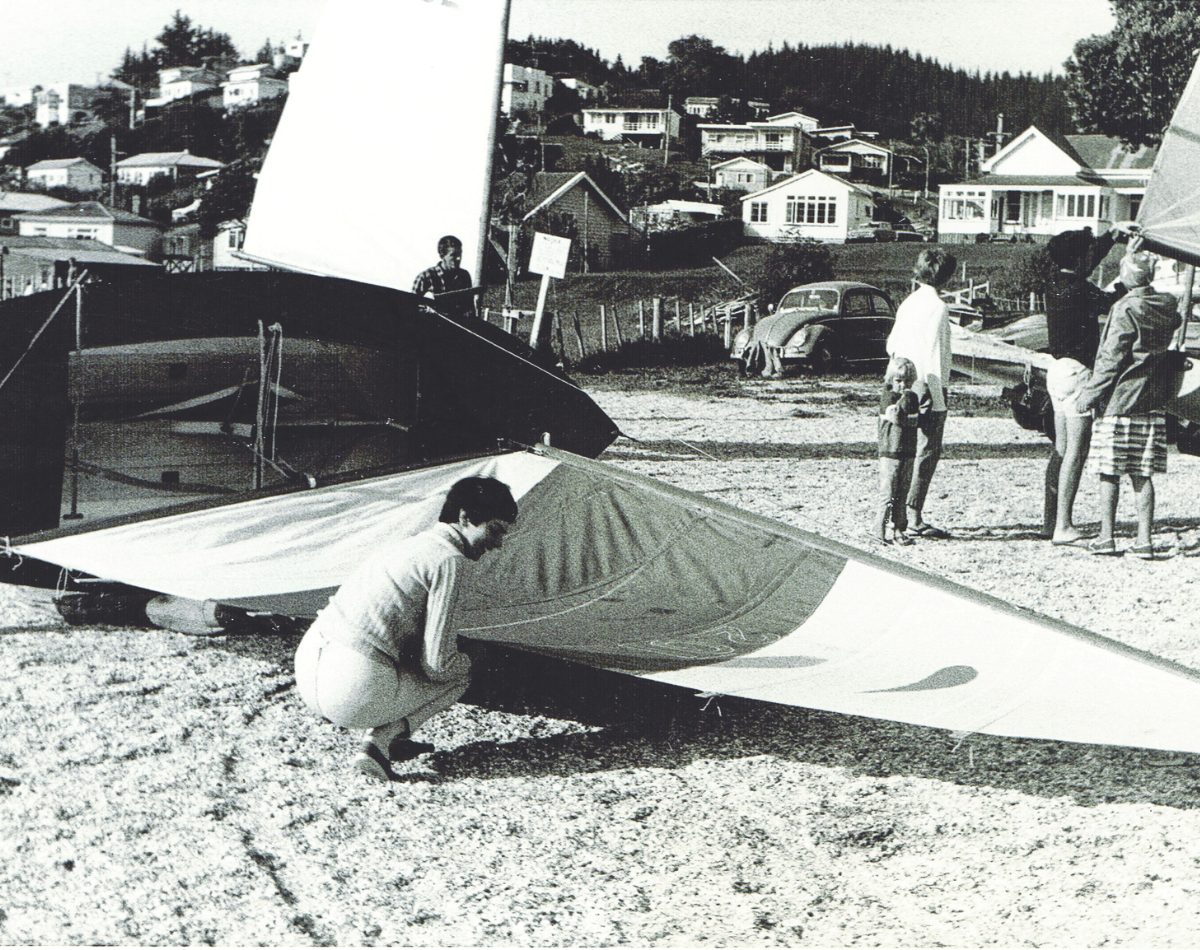
The Platinum Anniversary of the Zephyr class at Howick in 2026 will host a guest with a pedigree like no other. Sue Currie, a teenage Zephyr sailor in the 1960s during an era where female participation was not common, was shipwrecked on the way to the 1968 Zephyr Nationals, then flew to Auckland the following day and commenced racing that afternoon, all within 24 hours of the Wahine sinking.
Sue started her sailing as a seven-year-old in P-class, then to Zephyr #150 Easterly, a new Des Townson-built bare hull her father Ian finished at home. She was the first lady sailor at Charteris Bay Yacht Club.
The 1968 Zephyr nationals were scheduled to start on 11 April 1968 at Maraetai Beach Boating Club, Auckland. Sue and fellow Zephyr sailor Geoff Beaumont embarked on the Wahine in Lyttelton Harbour on the evening of the 9th as foot passengers, their boats having been sent to Auckland a week earlier.

The departure was in calm conditions, but by the time they were off the Kaikoura Coast, the wind had risen and sea conditions worsened. Huge waves continuously struck the side of the ship, making loud reverberating sounds followed by hull shuddering. The noise was likened to the gong strike that preceded Rank Corporation’s 20th Century movies.
By 6.30am, when the Wahine was approaching Wellington Harbour, the southerly was hurricane strength, in excess of 100 knots, with huge accompanying swells. Heavy rain, hail, freezing temperatures and zero visibility added to the conditions. Sue recalled that she “…wanted to die from seasickness.”
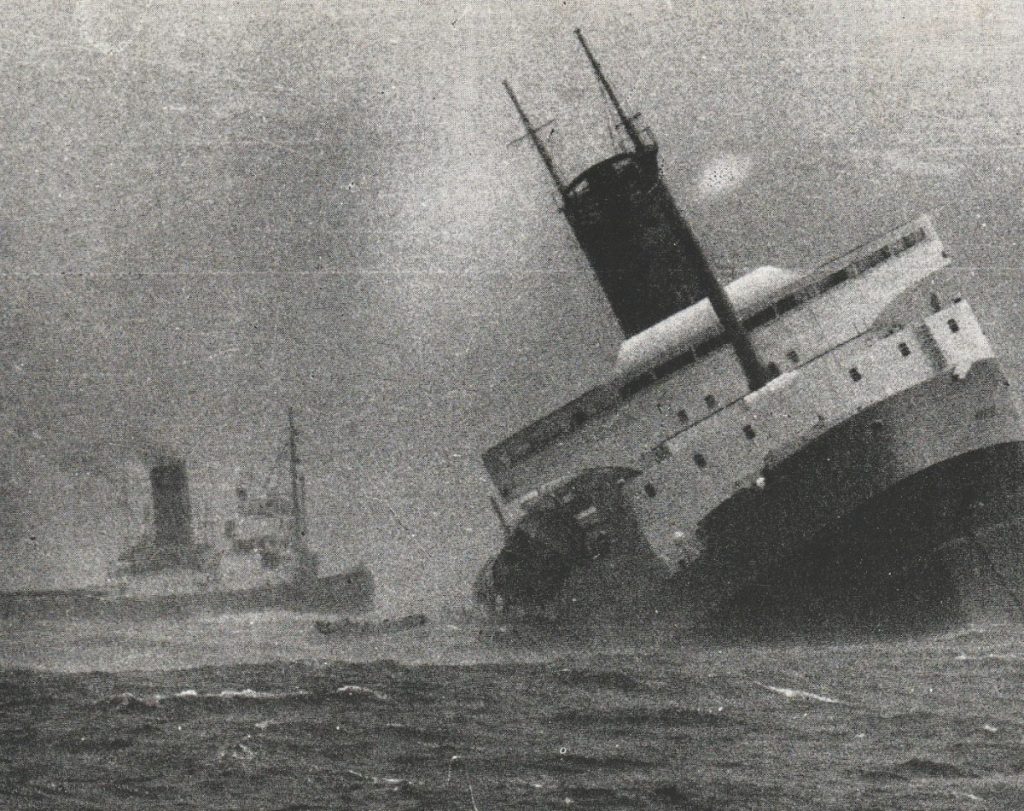
The realisation something was wrong began when “…the engines were being repeatedly reversed, then cycled full ahead.” Sue wisely overdressed in all her wool clothing. Many did not, staying in light cotton, with some even wearing high heels.
Once the ship grounded, graunching sounds echoed through the vessel, “…like thousands of tin cans grating on rocks.” Out of lower portholes, huge rocks could be seen within touching distance. Despite this, crew were saying everything was under control.
The ship slowly started listing to starboard. As the list worsened, there was a sudden jolt, with many passengers slipping and becoming injured as chairs and tables began sliding down the tilted floor.
Two hours after first reef contact, the ‘Abandon Ship’ order was given. Queues formed for lifeboats, but many crew members had already left on liferafts, leaving only a few remaining crew and able-bodied passengers to try to launch the rest.
It was a shambolic evacuation.
“Only huge lifejackets with no crotch straps were available, unsuitable for smaller people, and totally unsuitable for children or infants. There were not enough lifejackets for everyone.”
By this point the wind had dropped to gale force, around 40 knots.
Sue believed her only option was to jump into the sea because all the lifeboats had gone. The hail had stopped but the water was freezing cold. On hitting the water, her lifejacket was immediately ripped off, but she managed to get back into it.
“I couldn’t see the far shore after I jumped off the stern because of poor visibility. Many passengers were floating around the heavily listing hull. No lifeboats or suitable rescue boats were in sight, only a huge tugboat in the distance, trying to pick people up.”
She judged the tug to be more dangerous than helpful due to the risk of being crushed.
Sue decided her best option for survival was to swim toward the northeastern side of Wellington Harbour to avoid the rocky shoreline to the southeast. She reasoned that the incoming tide and wind would push her up harbour if she swam across it.
Once she started swimming, she saw no other passengers. Eventually she reached the breaker line near a sandy beach. Huge dumping waves smashed onto the shore, but there was no shallow water beneath them.
Her only option was to be dumped and hope.
After the first attempt, she was dragged back out to sea by a southerly undercurrent. The second attempt failed the same way. On the third attempt, she was pushed dangerously close to exposed rocks.
“This is it, I’ve had it.”
The next wave was larger. It swept her over the rock line, tumbling her like a pebble, and deposited her onto a small beach. She found footing and scrambled to safety.
Once out of the surf, she realised she was completely alone. No passengers or rescuers were in sight. Without a watch, she estimated she had spent about an hour swimming.
She began walking and eventually came across two policemen who told her to keep moving. Later she stayed to help two elderly women who were hypothermic and in shock.
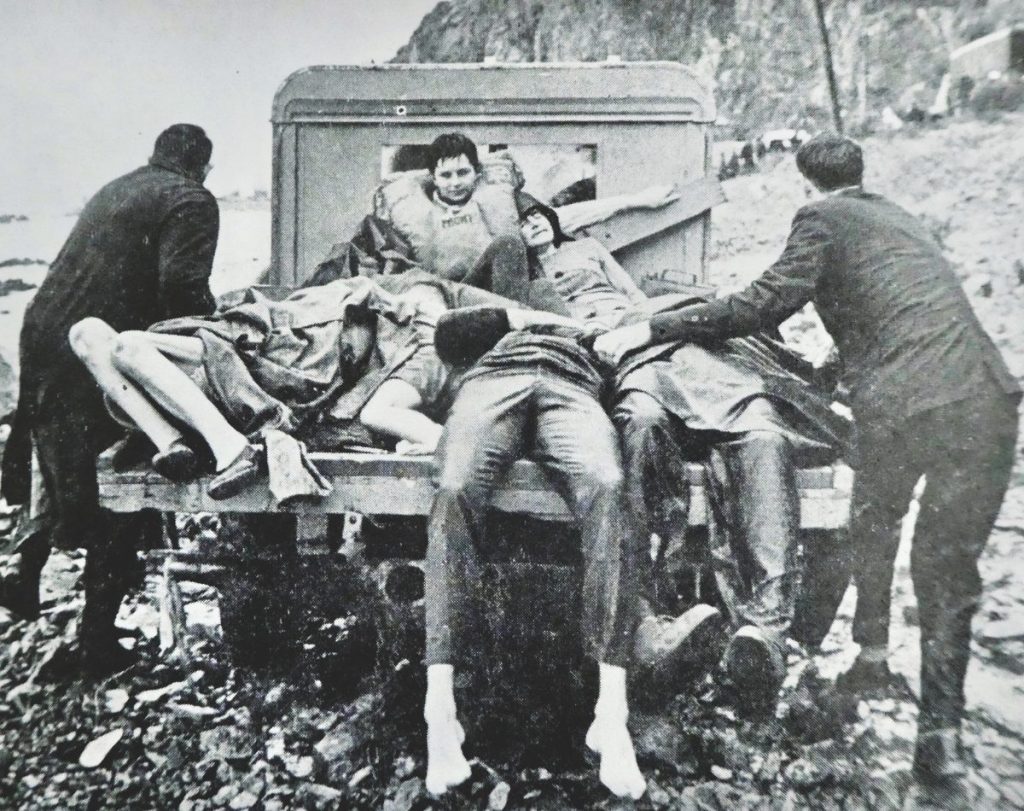
A lifeboat came ashore nearby, and a farmer arrived with a flatbed truck. Sue and a group of survivors were loaded aboard and taken to the Wellington Post Office. She believed some passengers were already deceased.
“There was much waiting around in Wellington. I had a blanket lent by Red Cross. They were amazingly helpful, handing out blankets and donated clothing. Only one phone was available, so a long queue formed. No food was given out and it was evening before I received dry clothes from the DIC department store, which offered one free set per person. Passengers were then on their own.”
“There was no support from any Government, Wellington City Council, or Union Steamship Company staff.”
“I believe the reason I survived was because of my yachting background as well as lifesaving training from school days.”
At the Post Office, Sue reconnected with Geoff Beaumont. Her parents had arranged accommodation for them that night.
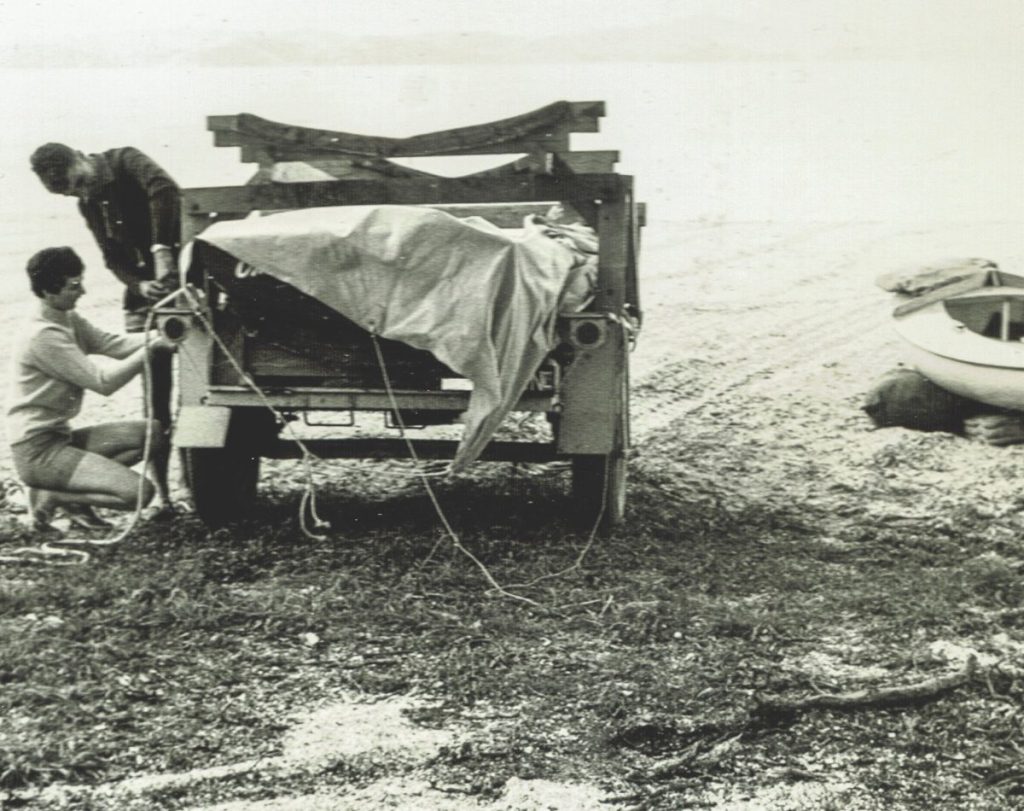
At 8am the following morning, Geoff phoned NAC about their flight to Auckland. Soon after, they were airborne.
On arrival, they were driven straight to Maraetai Beach Boating Club, where they unpacked their boats and sailed the invitation race that same afternoon.
It was not a good regatta for Sue. The strong winds followed them north, and after the ordeal she came down with the flu, missing two races. She still managed to place third on handicap.
Sue was never compensated for her lost luggage. The ticket fine print absolved the company of responsibility for lost goods, injury or death. Passengers travelled at their own risk.
A 26-day enquiry into the sinking found numerous shortcomings, but nobody was prosecuted. Many survivors considered it a whitewash for an event in which 51 people lost their lives.
Clearly, Sue Currie and Geoff Beaumont were made of stern stuff. Post-traumatic stress disorder was not yet widely recognised.