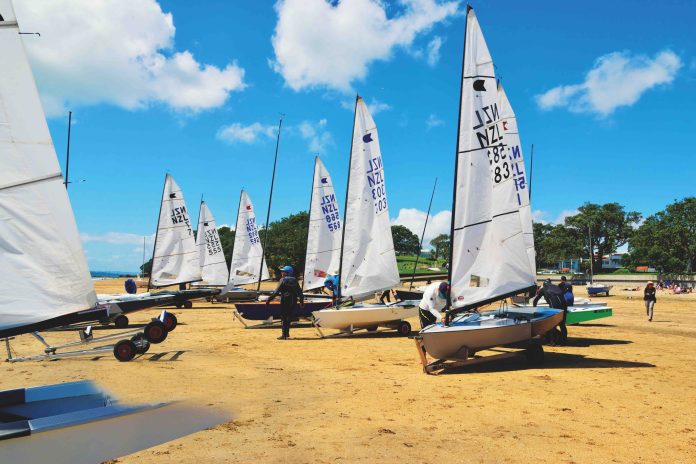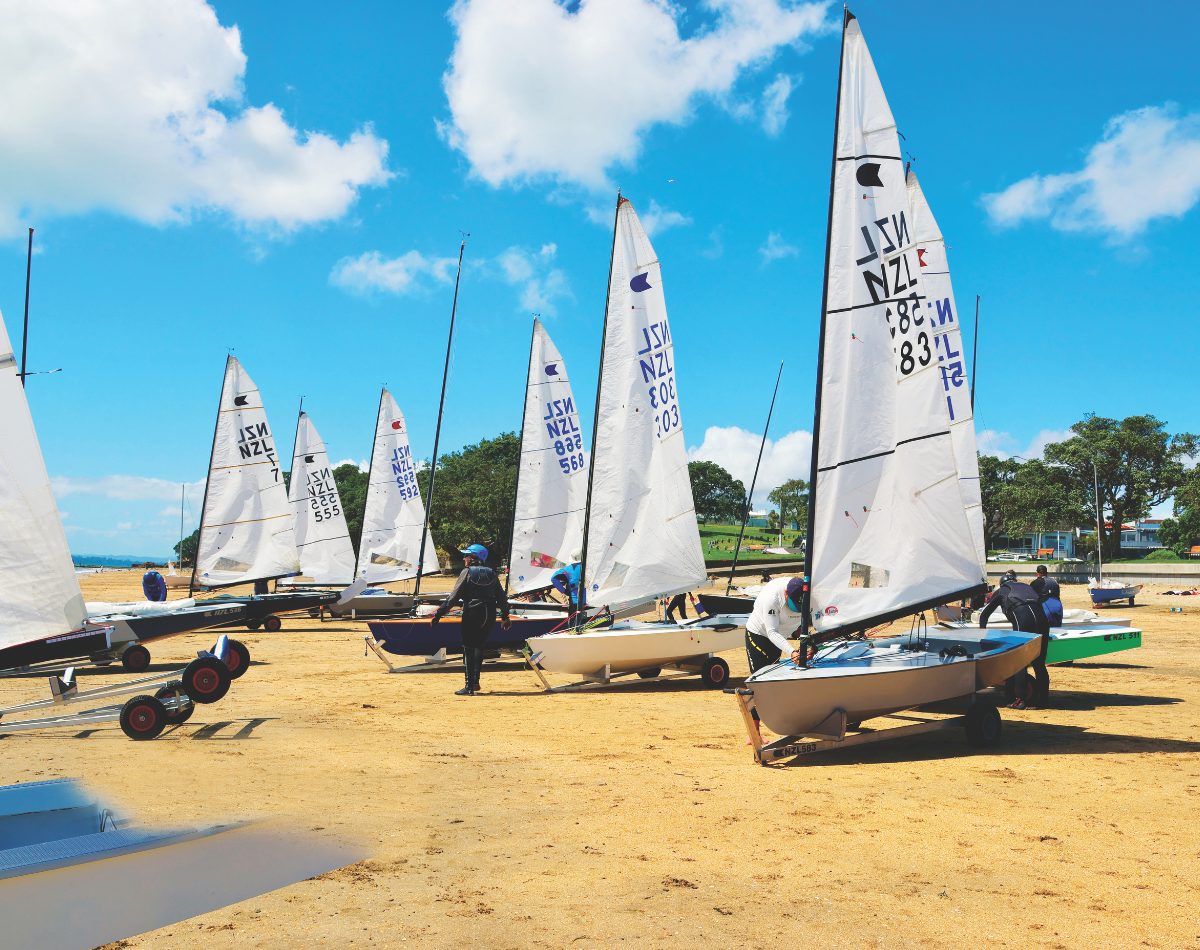
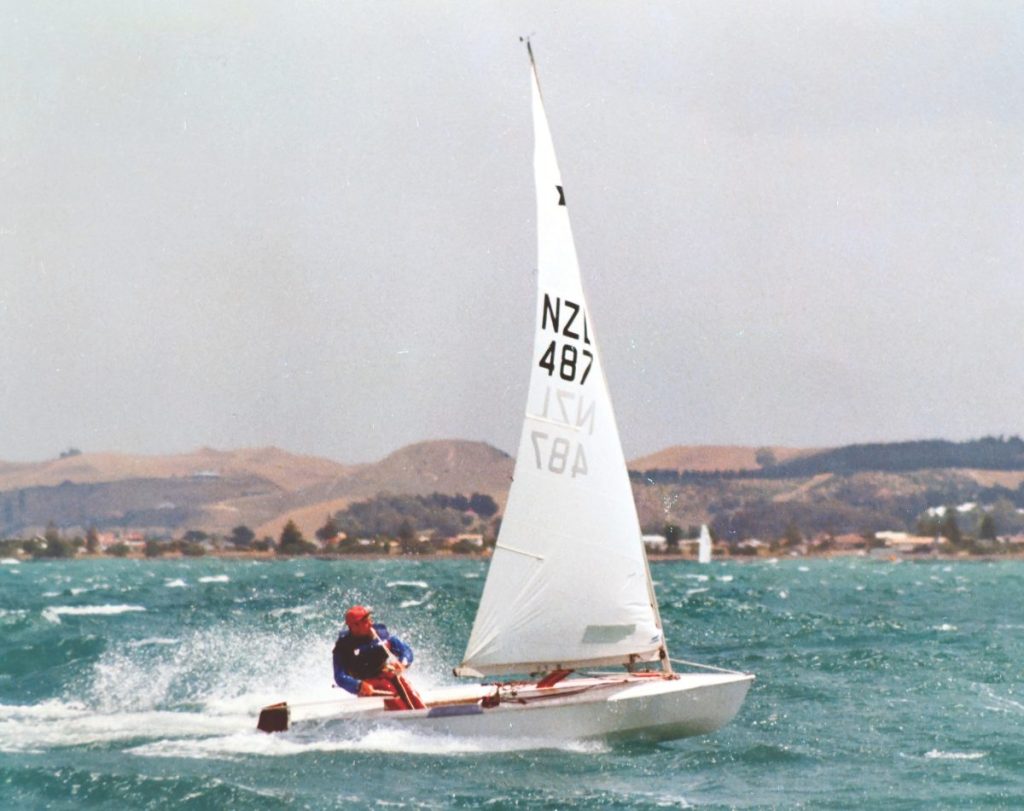
For nearly 70 years, the OK Dinghy has been one of this country’s most popular international classes. New Zealand sailors have an enviable track record in the class. Since 1973, our sailors have won the World OK Championship 13 times. This is the story of the OK dinghy in New Zealand.
Danish boatbuilder and designer Knud Olsen (1919–2010) designed what would become the OK in 1956. The brief was for an inexpensive, lightweight, plywood planing dinghy, commissioned by Danish architect Axel Damgaard Olsen.
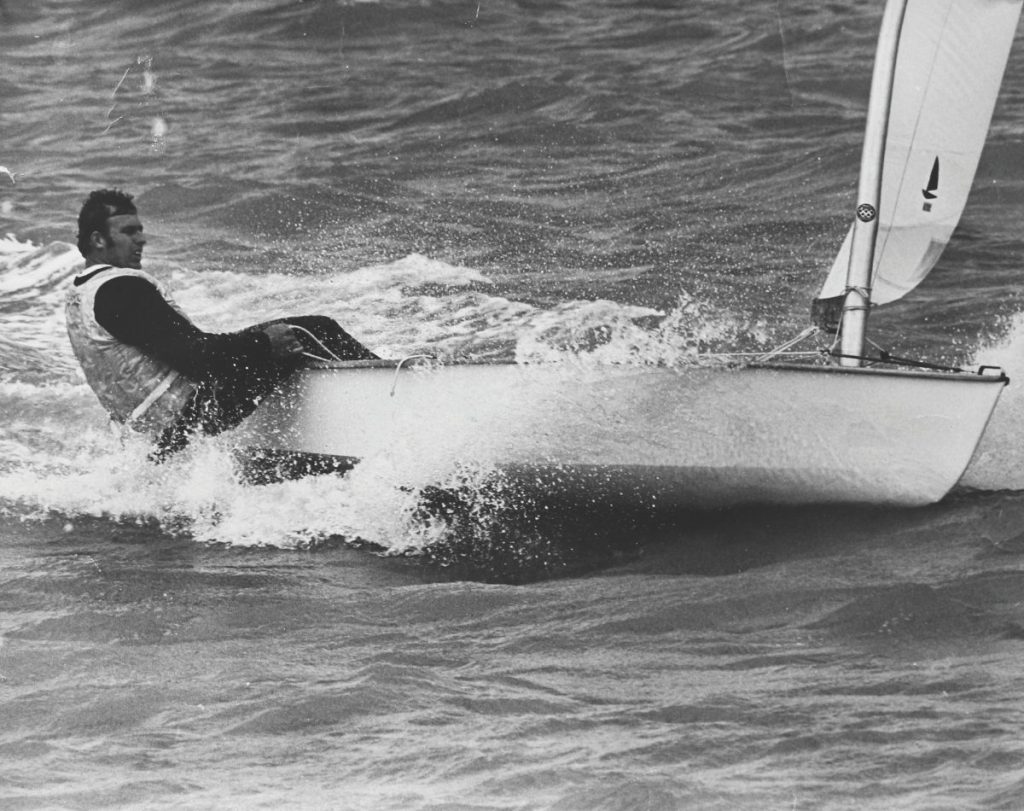
The OK’s strong sailing characteristics quickly made it popular in Denmark, Sweden, the USA, and eventually worldwide. Early on, it was recognised as an ideal training class for the Olympic Finn, further boosting its appeal.

The first OK dinghies in New Zealand were built in Christchurch in 1961 by the Oliver brothers. The Auckland fleet followed in 1962, initiated by Jack Douglas of the Pt Chevalier Sailing Club, who organised parents to build 17 OKs under the Pasadena School Hall.
Dave Blundell, later known for Davidson 28 and 35 keelers, owned one of these early boats. In 1966, he travelled to Australia and won the Australian National OK Championship.
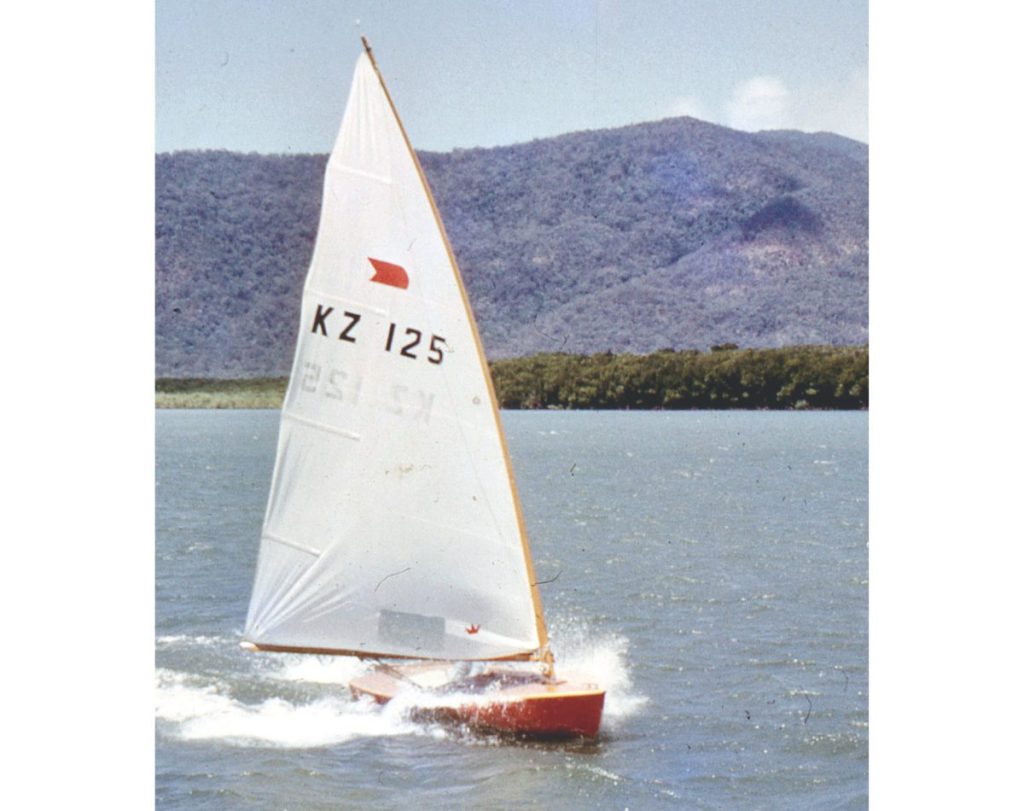
Mike Menzies was another early Auckland sailor, competing internationally in the 1967 Worlds in Canada and finishing 10th in the 1970 Worlds at Takapuna.
Clive Roberts (1941–1975) was instrumental in establishing New Zealand’s dominance. Initially a Finn sailor, he switched to the OK in 1963 due to his lighter build.
In 1964, he won his first National OK Championship, with his brother Ralph placing second. Roberts competed internationally before winning the OK World Championship in 1973, the first non-European to do so.

He went on to win 10 New Zealand OK Championships, including eight consecutively. In 1975, he achieved a double by winning both the Finn and OK National Championships. He was also President of the OK International Association and New Zealand Yachtsman of the Year.
Tragically, Roberts died in a car accident in 1975.
Other prominent sailors emerged through the 1970s. Graeme Woodroff placed second in the 1972 Worlds and third in 1974. Peter Lester, a standout junior, finished top junior and eighth overall at the 1974 Worlds, then placed second in 1975 and won the 1977 Worlds in Takapuna.
Tom Dobson and his brother Richard also contributed to the class, with Richard winning World Championships in 1979 and 1982.
Leith Armit is widely regarded as New Zealand’s most successful OK sailor. After entering the class in the late 1970s, he went on to win four World Championships (1983, 1985, 1990, 1994), six national titles, and three Interdominions.
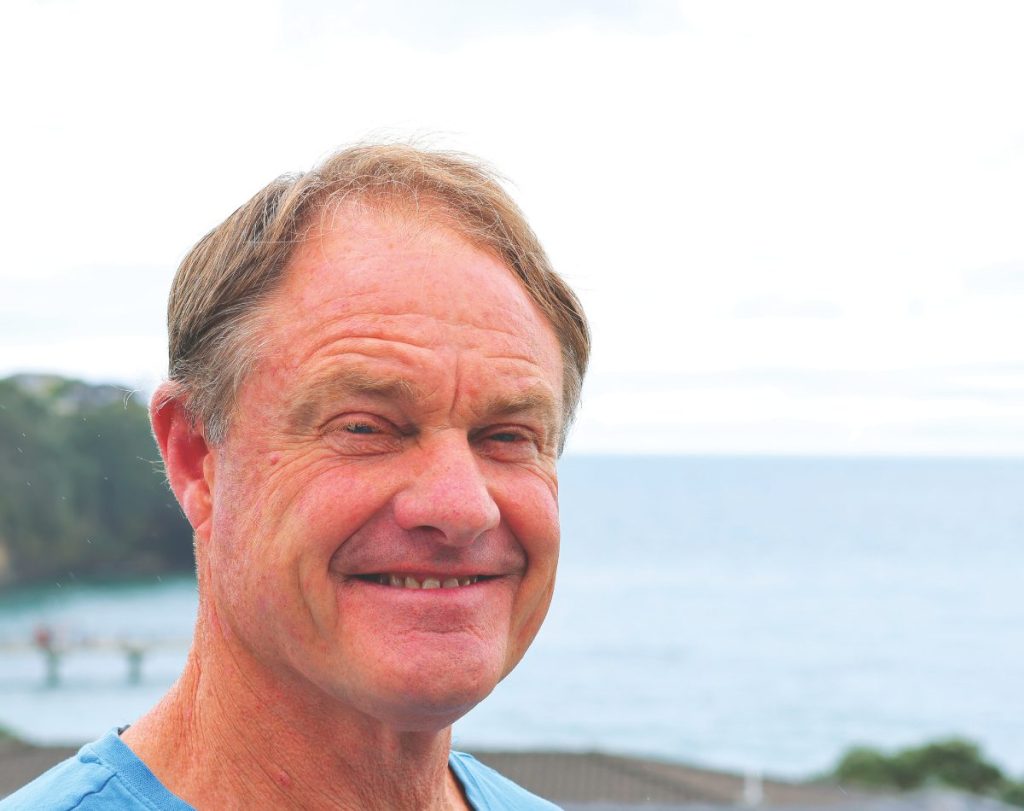
Remarkably, Armit achieved this while working full-time as a boatbuilder. He was awarded New Zealand Yachtsman of the Year in 1985.
His success is often attributed to disciplined training, technical knowledge, and exceptional boat handling. His four world titles place him among the most successful sailors globally.
Greg Wilcox, another leading figure, won the OK Worlds in Napier in 2002 and has consistently ranked among the top sailors, finishing in the top 10 at the Worlds 22 times.
Karl Purdie entered the class in 2003 and won World Championships in 2008 and 2010. He was also ranked world number one for three consecutive years.
Rod Davis, known for his America’s Cup involvement, has been active in the OK class for over a decade and continues to refine his boat setup using high-performance insights.
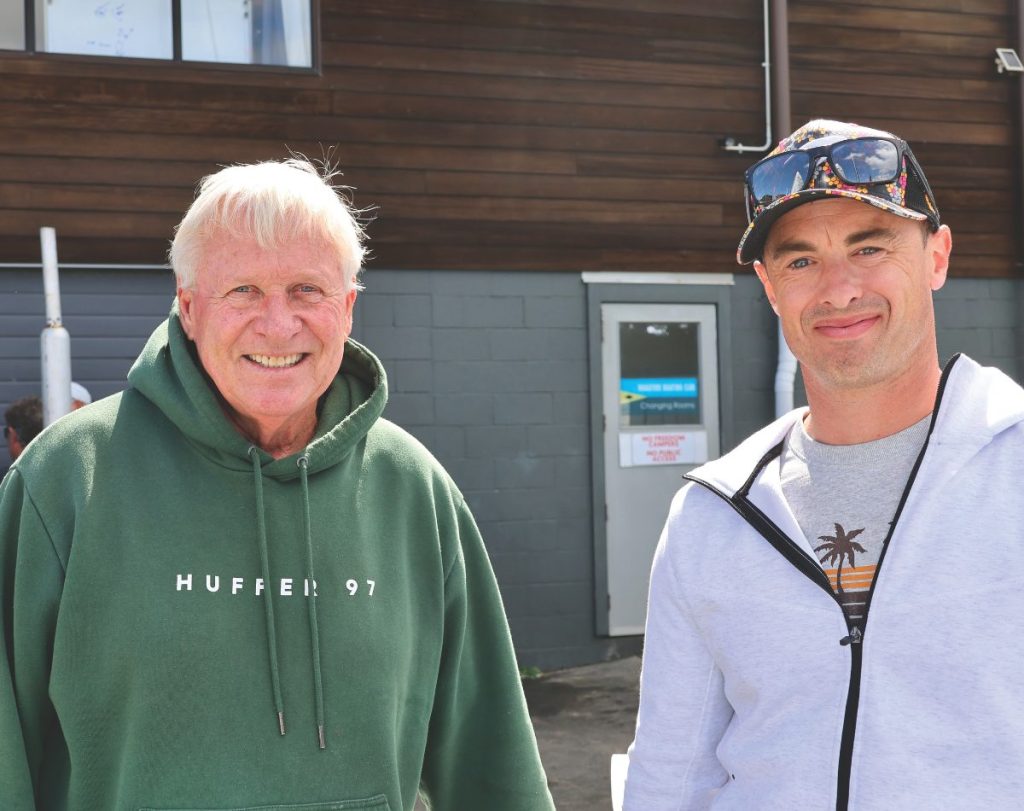
More recent champions include Matt Stechmann (2014) and Dan Slater (2019), with strong performances from emerging sailors such as Josh Armit.
The class remains vibrant due to strong community involvement and technical development.
The New Zealand OK Dinghy Association reports around 80 active members, with fleets in Auckland, Napier, and Wellington. South Island fleets are rebuilding.
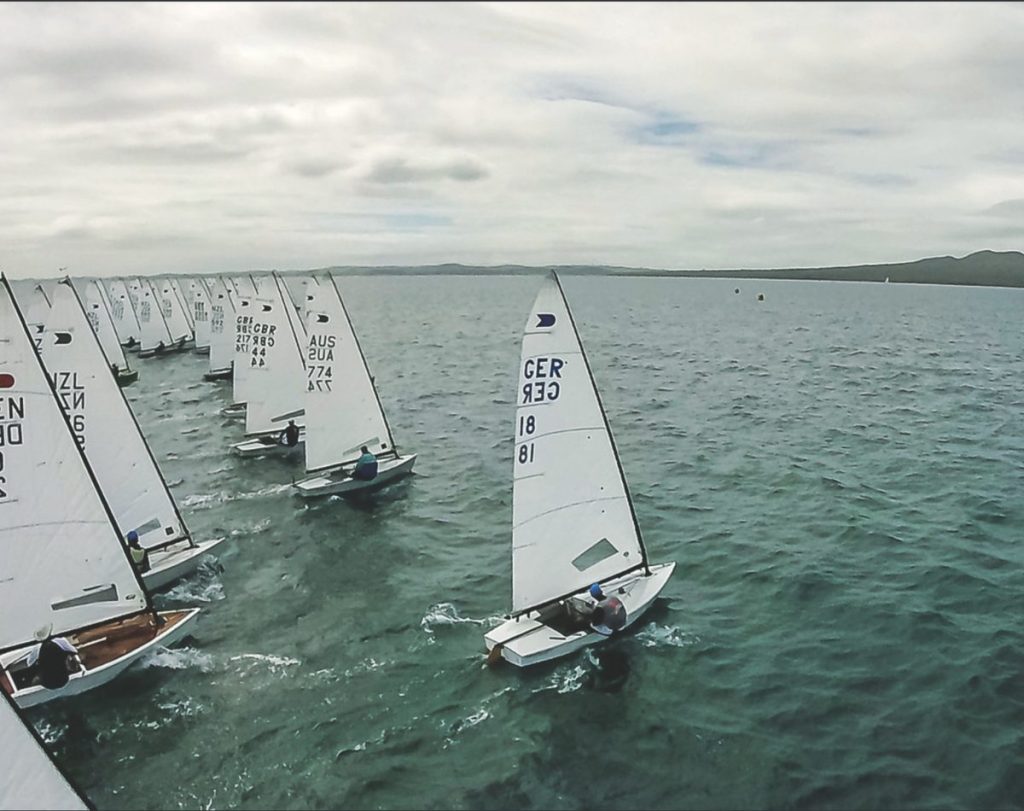
The class benefits from a balance between strict one-design rules and small tolerances that allow personal tuning. Boats have a minimum weight of 72kg, ensuring durability and longevity.
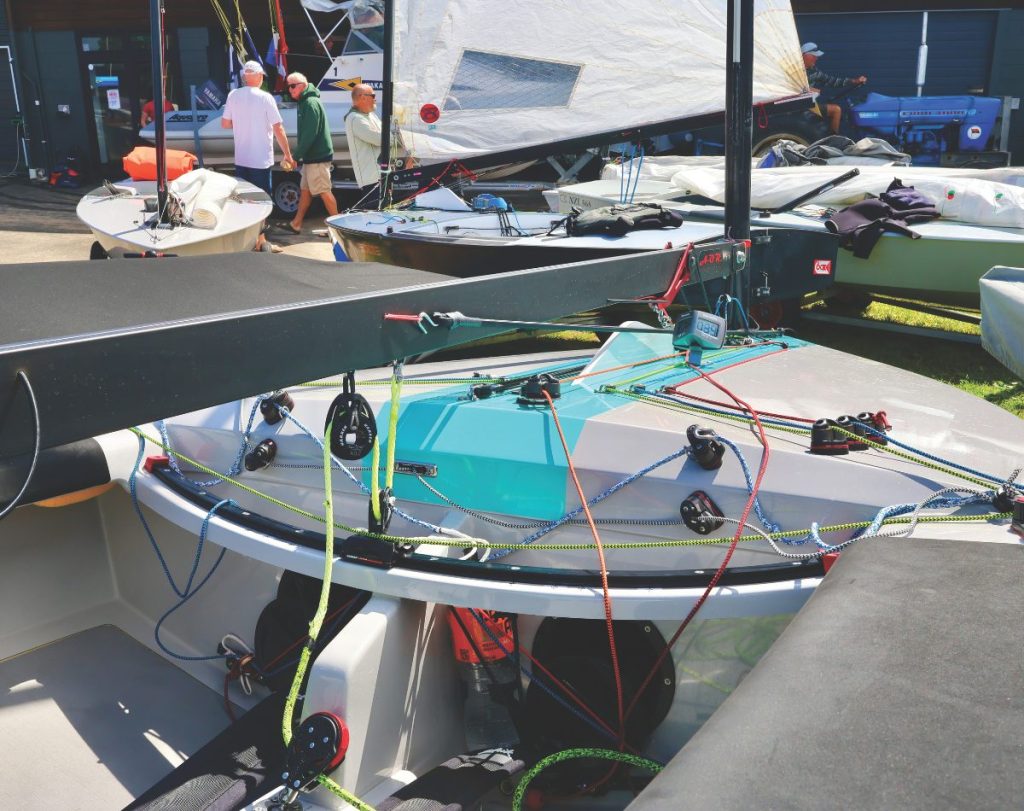
Modern construction methods include CNC-cut plywood kits and GRP hulls, with UK builders such as Ovington Boats and Synergy Marine leading production.
A key performance factor is the unstayed mast. Originally wooden, then aluminium, modern OK dinghies now use carbon masts, allowing greater flexibility and performance tuning across varying sailor weights and conditions.
New Zealand manufacturer CTECH produces carbon masts locally.
While new GRP boats can cost up to $41,000 plus shipping and GST, second-hand boats offer a more accessible entry point at around $10,000.
New Zealand sailors have also contributed significantly off the water. Figures such as Alf Lock, who developed measurement systems and hull designs, have helped maintain the class’s integrity.
Several New Zealanders are recognised in the OK World Hall of Fame, including Clive Roberts, Leith Armit, Greg Wilcox, Alf Lock, and Alistair Deaves.
The OK dinghy continues to be a proving ground for sailors. Many who excel in the class go on to succeed in broader yacht racing.
As one sailor put it, the appeal lies in its simplicity, responsiveness, and the strong community surrounding it.
Why we sail the OK
A summary of sailor feedback highlights the class’s enduring appeal:
Fun and exciting to sail
Highly responsive
Technically engaging
Fast and rewarding
Strong sense of community
Competitive internationally
Suitable for a range of body types
Keeps sailors fit
The OK dinghy remains a deceptively simple yet deeply rewarding class that continues to thrive in New Zealand.