Boating New Zealand Boat Reviews
Reviews
Boating New Zealand News
News
Boating New Zealand Sports
Sport
Boating New Zealand Lifestyle
Lifestyle
advertise
Boating New Zealand Boat Reviews
Reviews
Boating New Zealand News
News
Boating New Zealand Sports
Sport
Boating New Zealand Lifestyle
Lifestyle
BOAT-REVIEWS-MOBILE
Boat Reviews
BOAT-NEWS-MOBILE
News
BOAT-SPORTS-MOBILE
Sports
BOAT-LIFESTYLE-MOBILE
Lifestyle
HomeBoating NewsNew products and upgradesCustoms unveils underwater tech to combat smugglers

Customs unveils underwater tech to combat smugglers

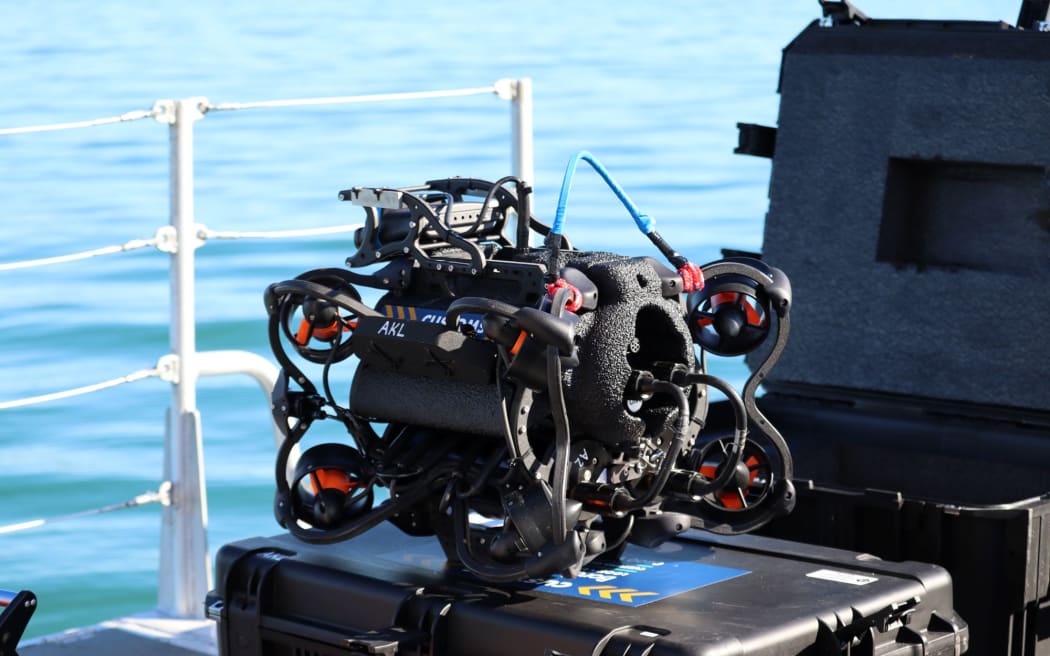
Customs have announced three new remotely controlled underwater vehicles to combat smugglers coming in by sea.

The newly purchased equipment will be used to conduct checks below the water line, freeing up diving crews and targeting illicit smuggling.

Customs Minister Casey Costello made the pre-budget announcement at the Port of Auckland on Friday.

Customs group manager for maritime, Paul Campbell said the technology meant faster targeted inspections and better deployment of specialist divers.

- Advertisement, article continues below -

“Transnational criminal groups are increasingly exploiting the scale and complexity of the maritime environment to move illicit drugs into New Zealand and across the Pacific,” he said.

“Customs has, in recent years, invested in a range of maritime capabilities, including uncrewed surface vessels, at-sea boarding capability, specialist detection tools, and now remotely operated vehicles.”

Those tools added to Customs defence capabilities and played a distinct role in detecting and disrupting criminal activity, he said.

“Our response brings together intelligence, partnerships, technology, and frontline expertise to target, identify, and respond to border risks earlier – in collaboration with our partners in New Zealand and overseas as needed.”

Campbell said the investment supported Customs’ role in protecting the country and “contributing to security across the Pacific.”

- Advertisement, article continues below -
sailing yacht ocean
Oceanflo
Kiwi designed. Kiwi built.
Fresh water, anywhere at sea.
Three models · 12V & 24V · Under 4W per litre
Oceanflo OF70M
Model 01
OF70M
70 L / hr
Simple, robust, direct control. No-fuss desalination for owners who want clean water without extra electronics.
Manual Operation
Oceanflo OF70A
Model 02
OF70A
70 L / hr
Automated salinity control, auto-flush, and dual-panel operation. All the ease, none of the complexity.
Fully Automated
Oceanflo OF150A
Flagship
OF150A
150 L / hr
Brushless DC motor, automated control, double the output. For larger crews and serious bluewater passages.
High Output

Minister Casey Costello said organised crime had been targeting the region as a transit hub.
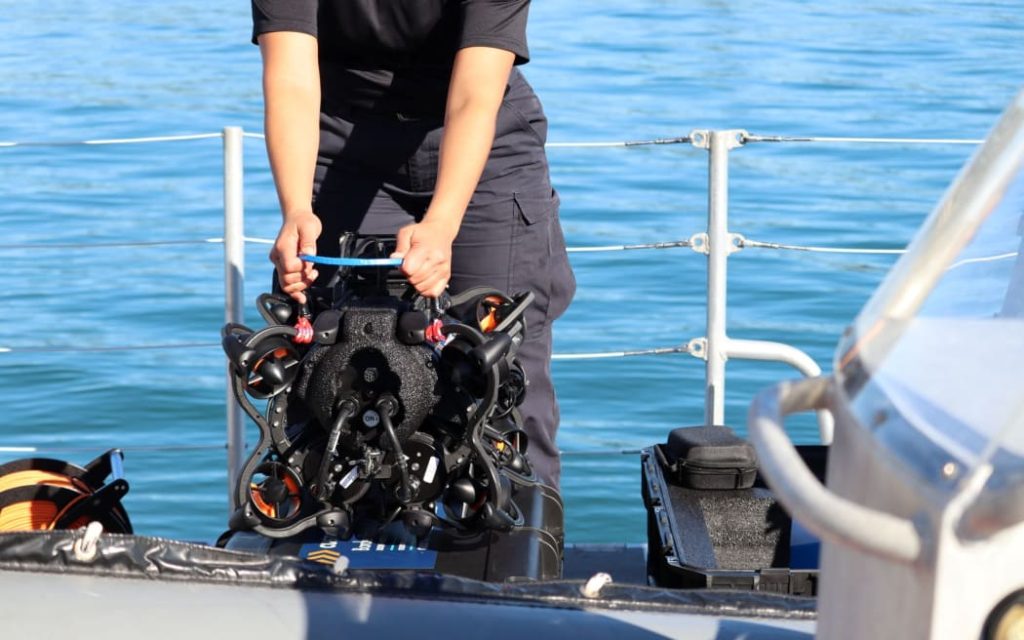
The remote-controlled vehicles will be deployed at ports in Auckland, Tauranga, and Lyttelton. Photo: Supplied

“In the first six weeks of this year, a staggering 14 tonnes of cocaine were seized in the Pacific,” she said.

“Facing these growing threats, we need to make sure Customs has the best tools, the best training, and the best strategic capability possible to meet the challenges.

“That’s what this Budget investment of $70 million is for.

“The government’s investment supported strengthening the domestic border, and improving offshore capacity and relationships.”

- Advertisement, article continues below -

Costello said the remote-controlled vehicles were safer for Customs.

“Effectively it’s a remote drone that goes under the water, and the team can see into the sea chest around the hulls, they can do it much more safely, they can do much more of it and that’s the technology investment that I think is important.”

Customs maritime manager Robert Smith said it would make a massive difference.

“We require dive teams right now to go down, it takes a lot of resource, a lot of effort,” he said.
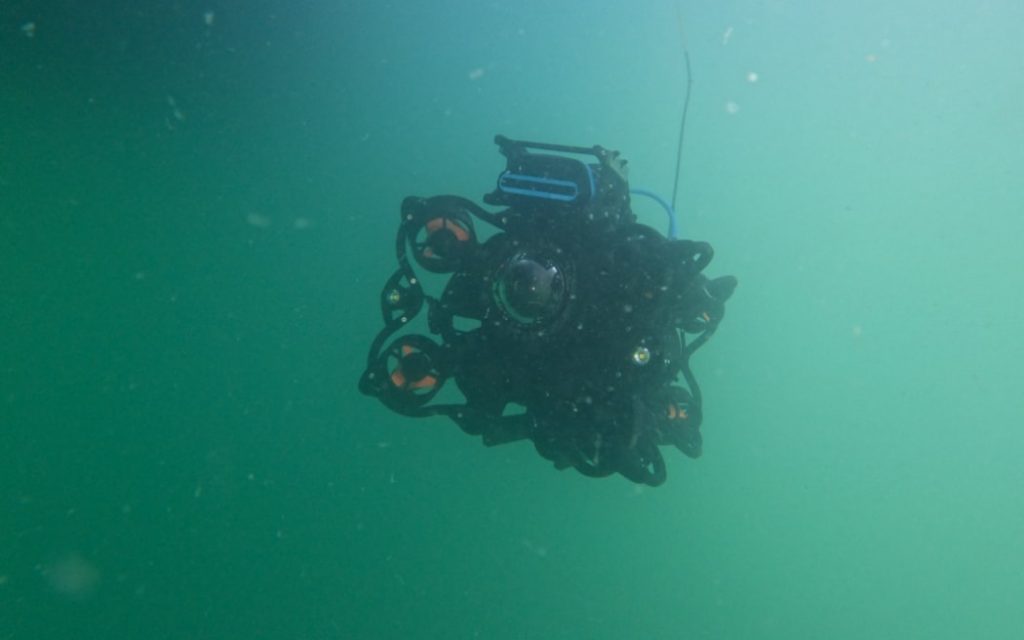
The ROV underwater. Photo: Supplied

“We can drop one of these things overboard, do a vessel in about an hour and then move onto the next one.”

Smith said it gave officers an idea of what was below the water and the numbers they were dealing with.

“It’s a numbers game, cartel are constantly flooding things, lets just go ahead and get ahead of it.”

The remote-controlled vehicles will be deployed at ports in Auckland, Tauranga, and Lyttelton over the coming months.


Originally published on rnz.co.nz.  written by Finn BlackwellReporter

Finn Blackwell
Share this
New products and upgrades

Digital Yacht raises the AIS bar with the satellite-ready AIT6000 Nucleus

AIS has been around long enough that most boaties know what it does. The AIT6000 is Digital Yacht's answer to what comes next...
Read more
POD 4900 // ZF Marine
Boat Business

ZF Marine unveils new POD 4900

ZF is extending its pod propulsion range with the new POD 4900, which was unveiled at the 2025 Cannes Yachting Festival. Desi...
Read more
Scanstrut launches a smarter way to route Starlink® and rooftop cables. // Scanstrut
Boat gear

Scanstrut launches a smarter way to route Starlink® and rooftop cables

Scanstrut, a global leader in outdoor technologies, has announced the launch of the DS-HSL-01 Starlink® Compatible Horizontal...
Read more

Comments

This conversation is moderated by Boating New Zealand. Subscribe to view comments and join the conversation. Choose your plan →

This conversation is moderated by Boating New Zealand.

LEAVE A REPLY

Please enter your comment!
Please enter your name here

RNZ
RNZhttp://rnz.co.nz
Boating NZ are proud to augment our news gathering with that of our partners. We work with RNZ to deliver additional news, current events, and local reporting. RNZ (Radio New Zealand) is New Zealand's independent public service multimedia organisation and is a Crown entity established under the Radio New Zealand Act 1995. RNZ has a specific role under the Civil Defence Emergency Management Act as the designated Lifeline Utility radio broadcaster in the event of a Civil Defence emergency. RNZ provides audiences with trusted and independent news and current affairs, a range of diverse programmes, podcasts and series both on-air and online in accordance with the Radio New Zealand Charter.

Recent articles