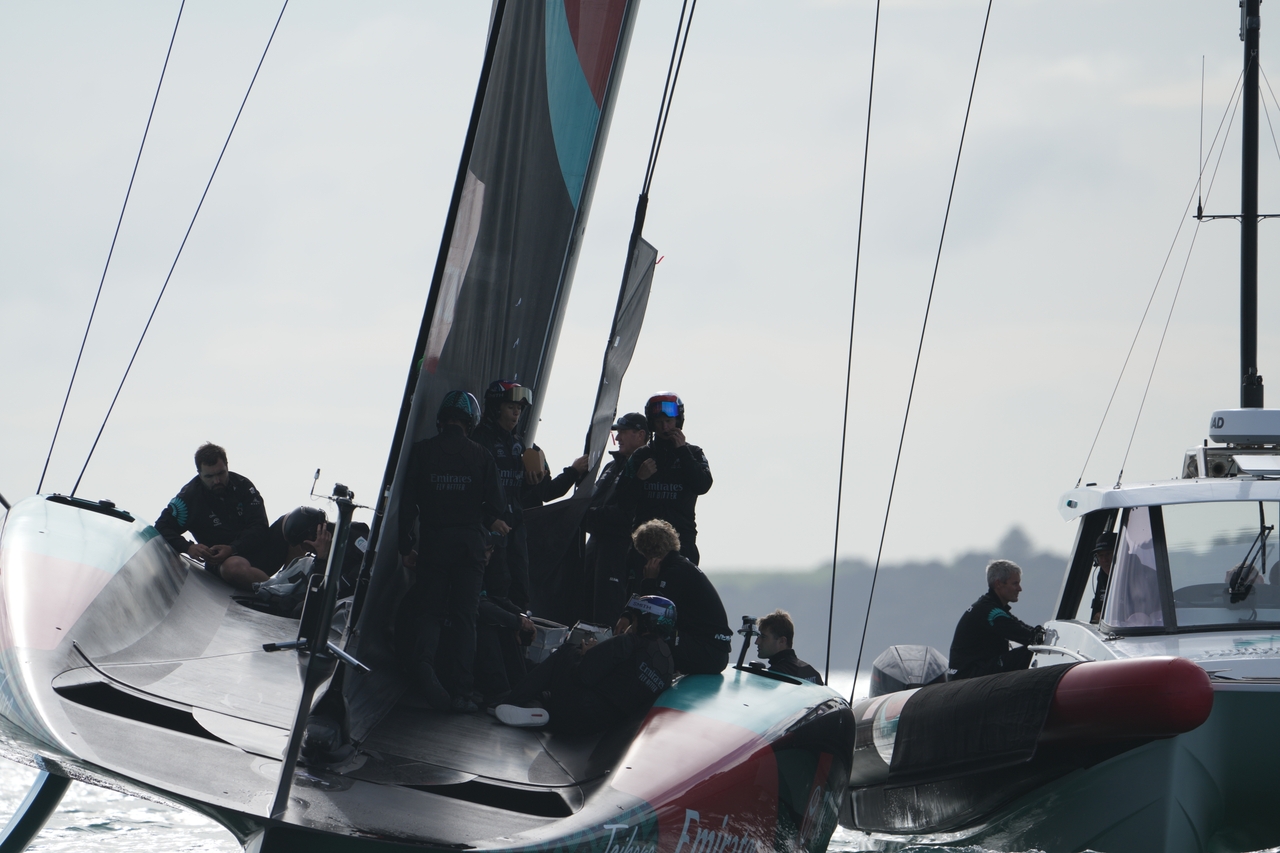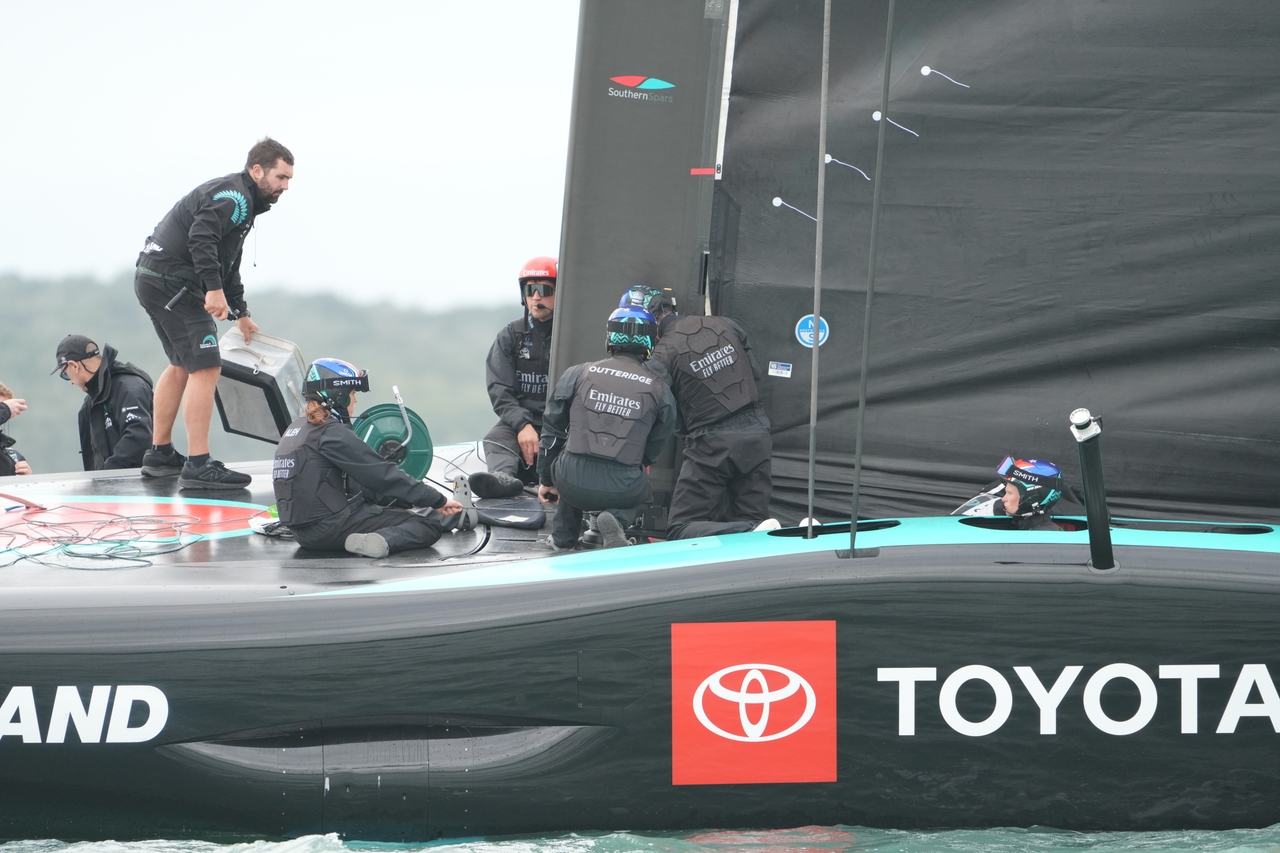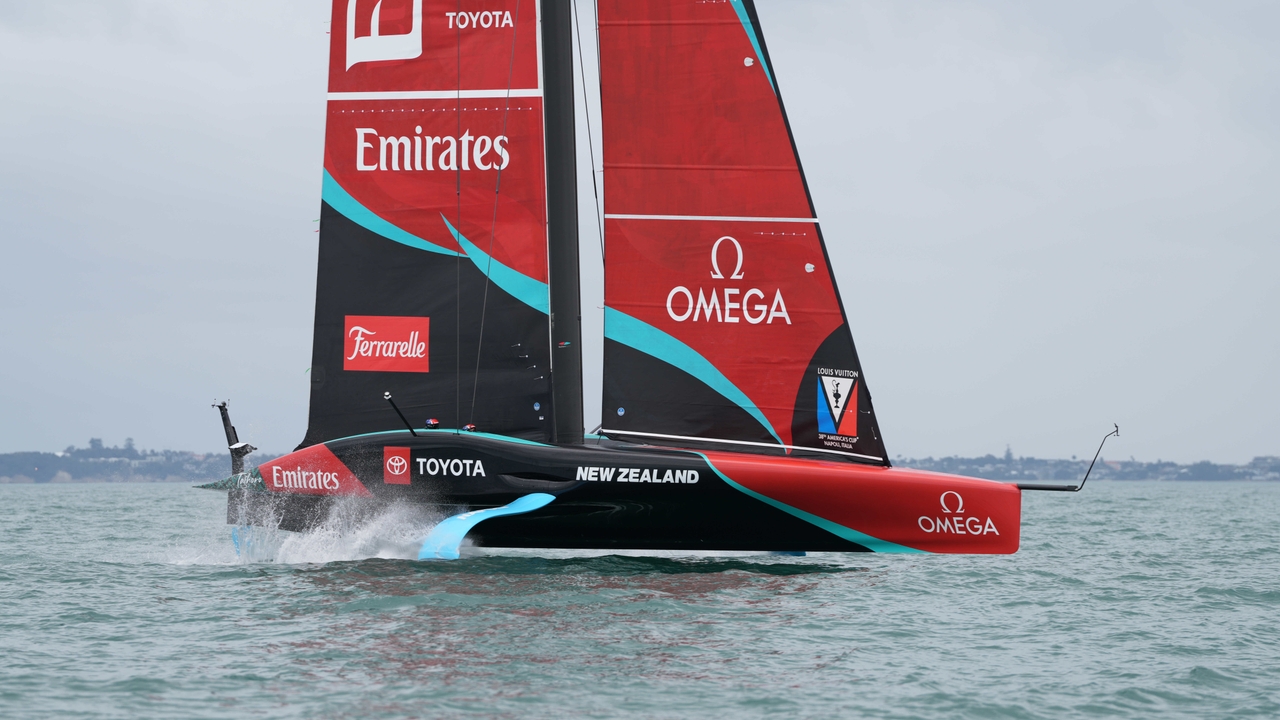
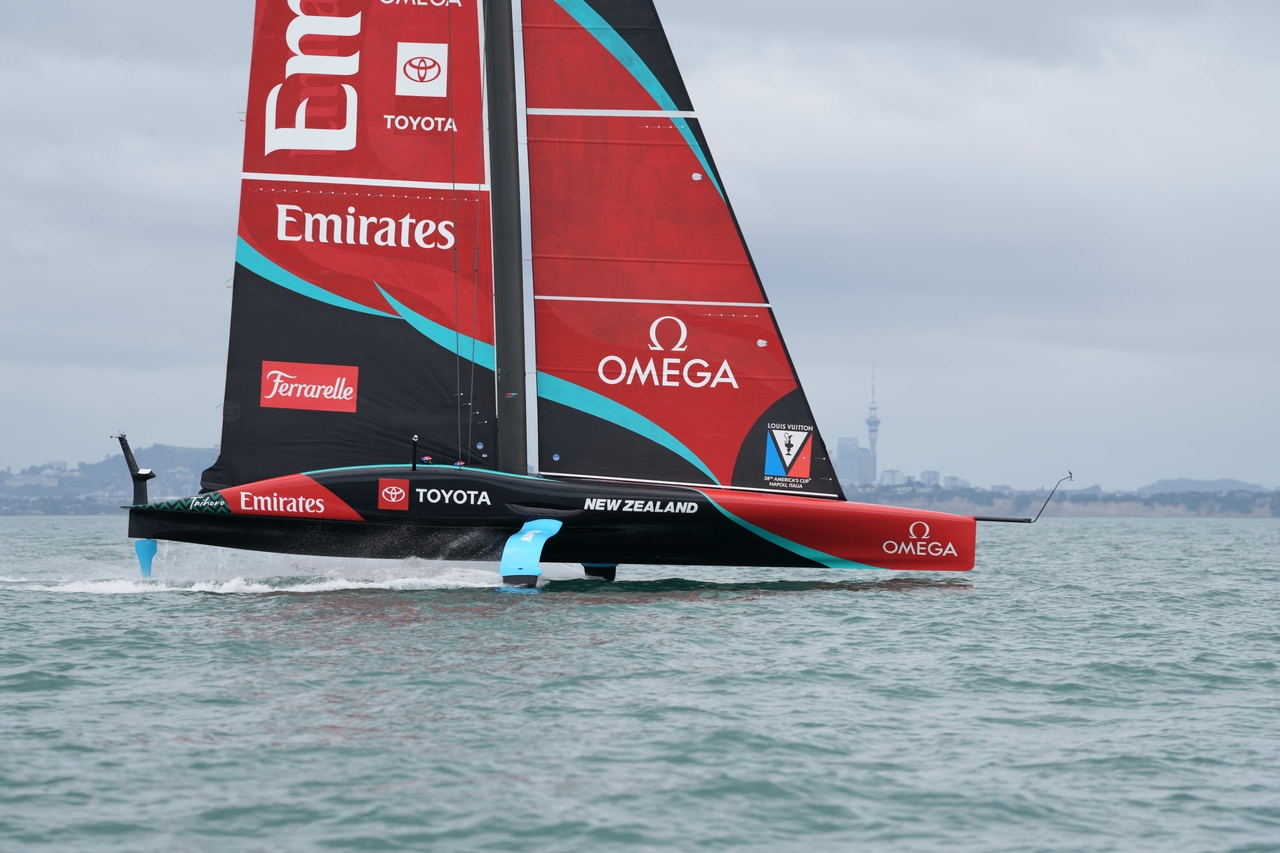
With the fabulous opening Preliminary Regatta of the Louis Vuitton 38th America’s Cup still being downloaded and analysed from a racing perspective, it was back to work for Emirates Team New Zealand in Auckland on their AC75. The antipodean summer has given way to winter conditions, with much shorter days now, so every chance the Defenders get to be out on what the team call the ‘big boat’ is valuable.
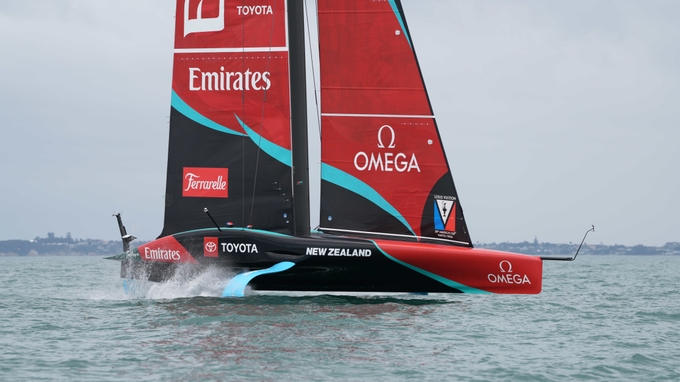
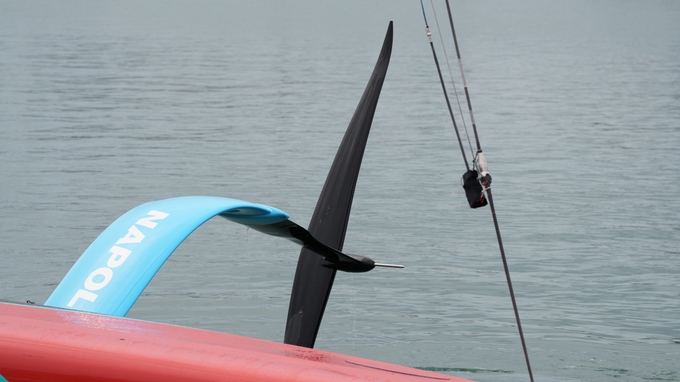
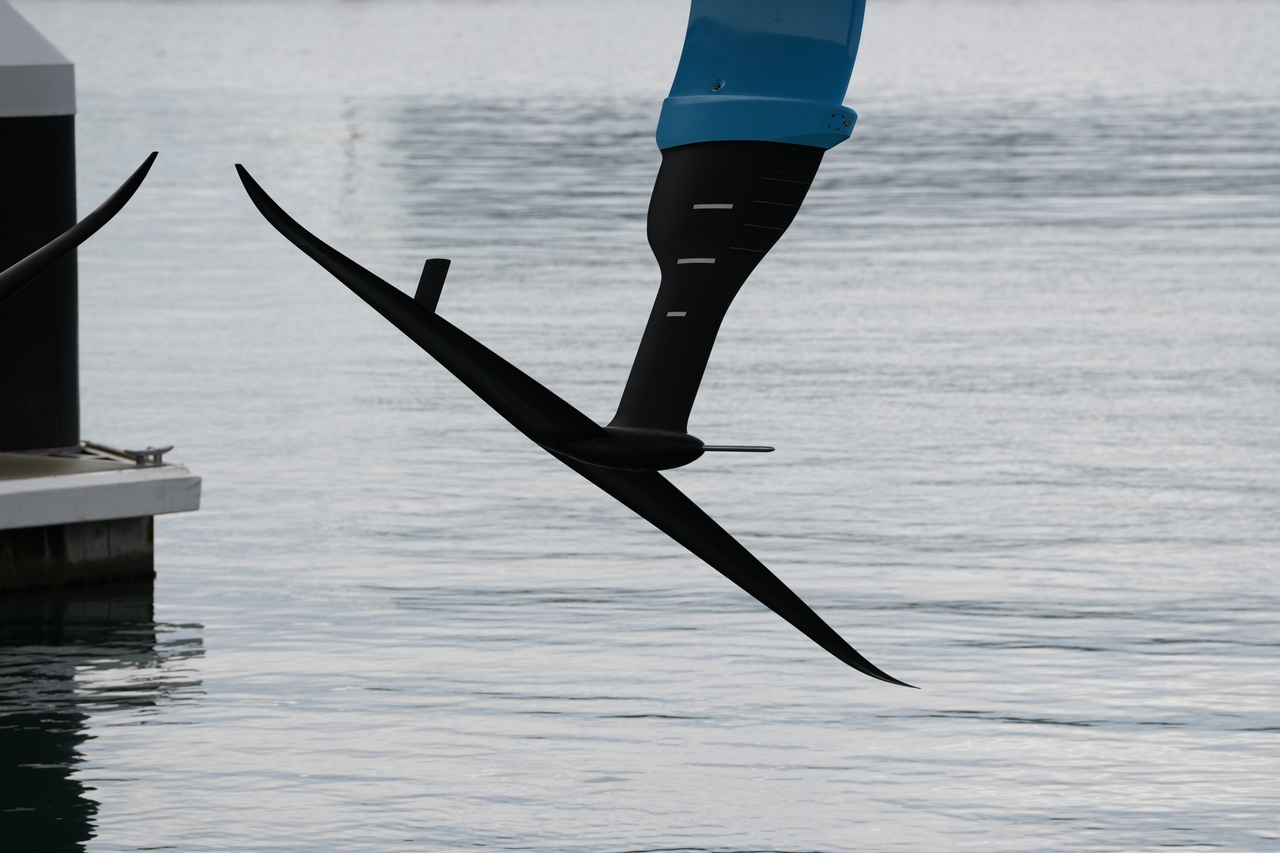
Before sailing, Emirates Team New Zealand declared upgraded foils (FW7 and FW8) that look like a step-on refinement of what we saw in the last sailing block before Sardinia.
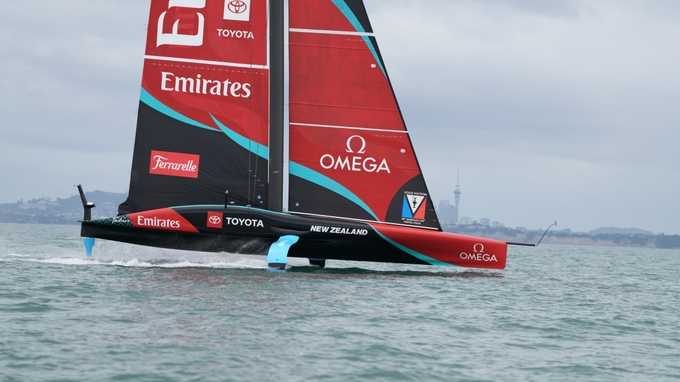
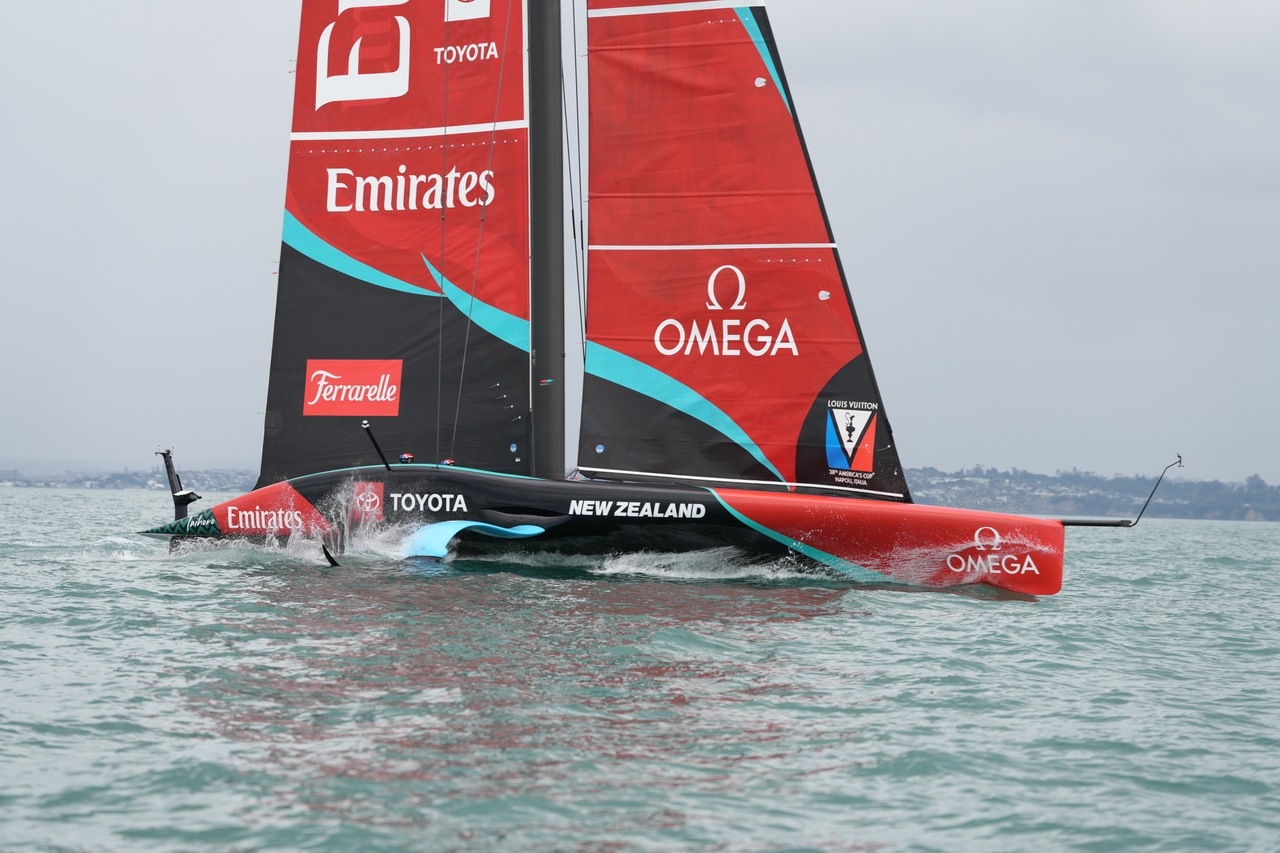
The single flap design and the long, slightly anhedral gull wing design was fitted with Pitot tubes forward to measure flow accurately, and it’s clear that the Kiwis are favouring this light-weather set up for the expected conditions in Naples in July. Notable stand-cameras were attached on the inboard wings with smaller cameras mounted outboard looking down the foil arm onto the foil itself.
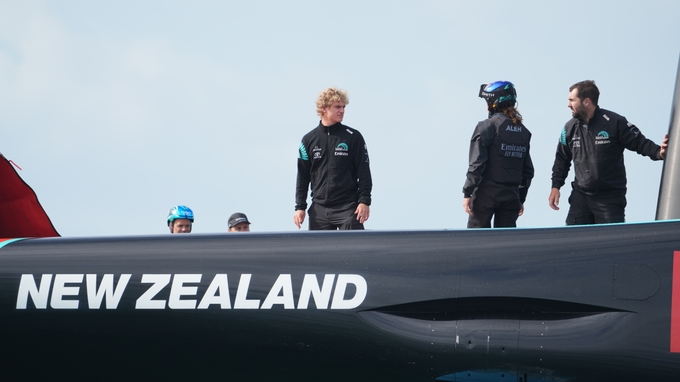
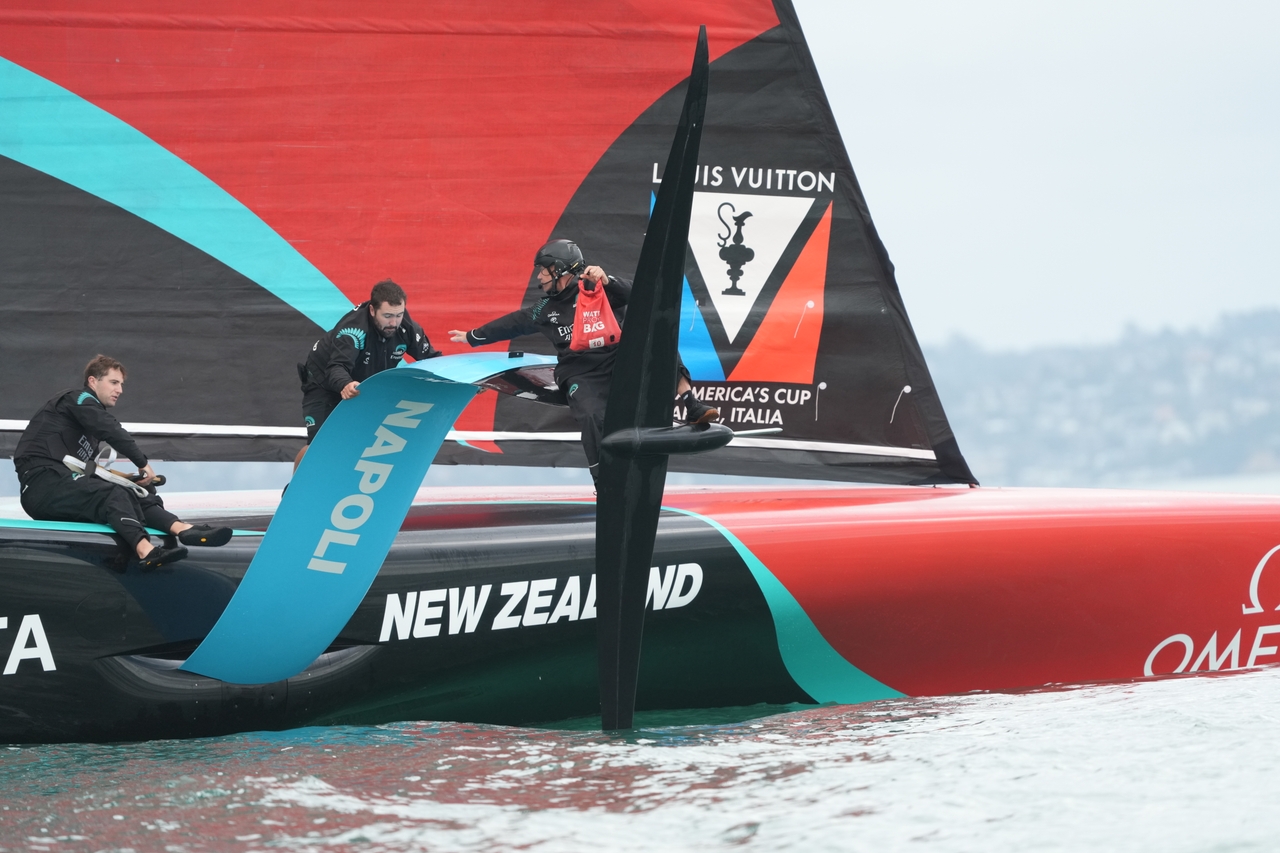
Rain pulses came in across the city, and a useful session in moderate to light breezes that seemed to be concentrating a lot on the deployment of the foil arms, was conducted before a mechanical issue around the mast base, shortened the day. As Jo Aleh commented “there was a lot of sitting around” as the technicians fought to solve the issue on the water.
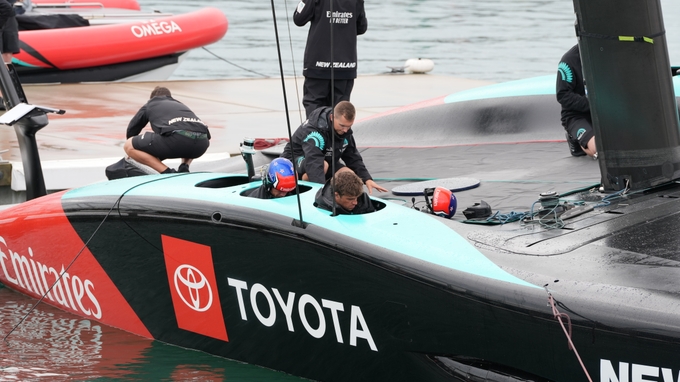
Chris Draper was driving from the port side today with Nathan Outteridge skippering in the starboard helm position and the consistent pairing of Andy Maloney and Iain ‘Goobs’ Jensen were on trim with Jo Aleh in the fifth seat with a barrage of displays and read-outs before her.
For Emirates Team New Zealand the pressure is on with the expected launch and first sail in the coming days of Luna Rossa’s AC75, as well as La Roche-Posay Racing Team expected at the end of the month with the sister-ship to ‘Taihoro.’
The racing in Sardinia was a reminder of just how close this next America’s Cup is going to be, and just how serious the Challengers are about ending the winning run of the Kiwis who are going for an unprecedented four-in-a-row in Naples starting from the 10th July 2027. The team will certainly be aware of just what the atmosphere is going to be like in Italy who are hosting the America’s Cup for the first time and the white-hot intensity of what is shaping up to be a memorable regatta.
The Kiwis will be back in Europe for the second Preliminary Regatta in the Cup’s hometown of Naples from the 24-27th September 2026 and will be looking to go one better than their podium finish in Sardinia. The race for the Louis Vuitton 38th America’s Cup is real, and coming quickly.
Recon Report – 4th June 2026
Key Points:
– New front foil wings
– Long stoppage due to mechanical issue
– Several unusual manoeuvres.
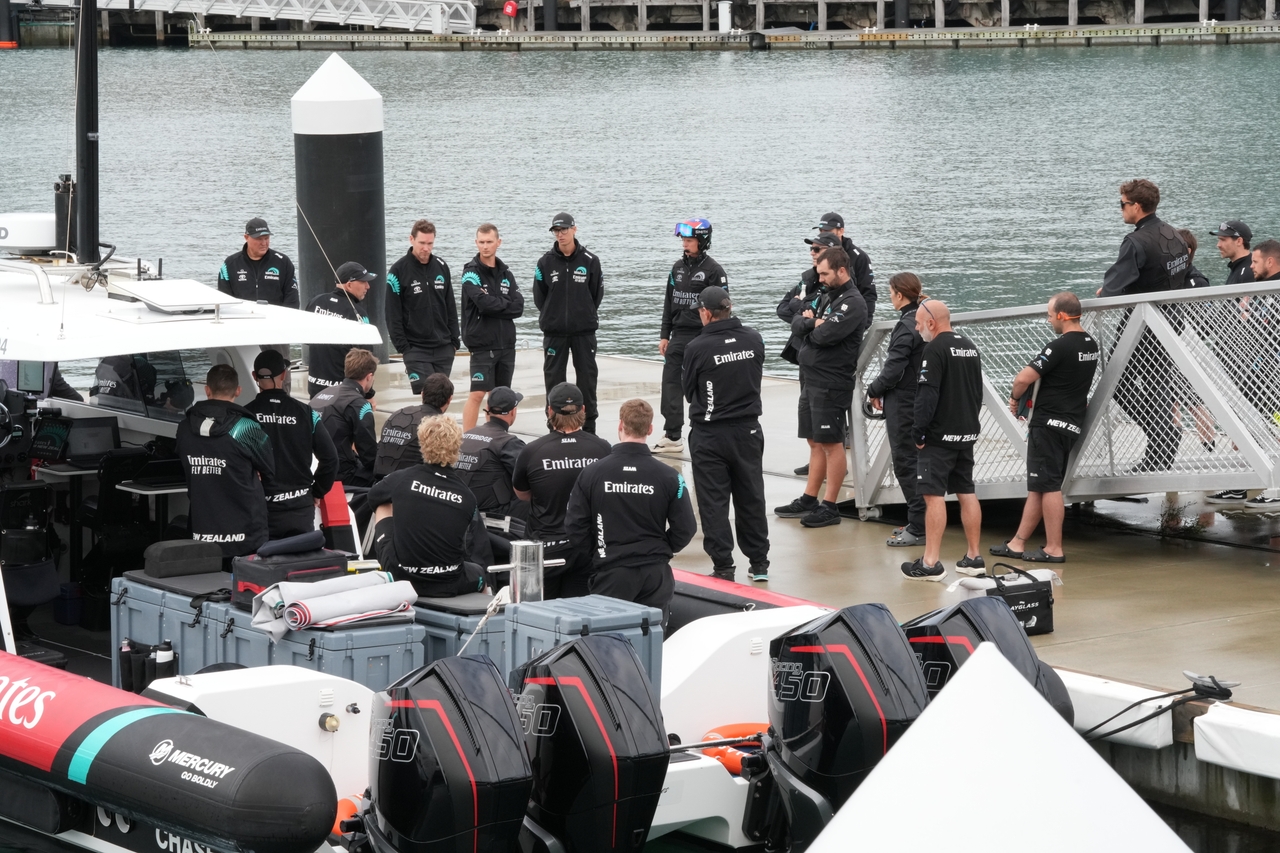
Rolled out of the shed at 9:15am with new front foil wings declared as FW7D and FW8C. All available sensors appeared to be attached. LiDar, Piezo tubes, mast and bowsprit sensors and foil cameras. Mast went in at 9:30 and boat was in the water by 9:49. Aleh, Outteridge, Maloney on Starboard and Draper, Jensen on Port. Foils were tested at 10:20 and left the dock at 10:56.
ETNZ towed out to North Head, hoisting up m2-0 and J3-3 at 11:39. Up and foiling at 11:45. Starting in the lee of Rangitoto with a wind of 8-10 knots wind at 336 degrees. Once up and foiling, long tacks up the channel in the moderate swell and choppy waters kicked up with the wind against tide. ETNZ spent noticeably longer on port perhaps to follow the channel and test the foils in bigger sea state. Wind was a slightly stronger 12-14 knots further out near Motutapu. Heel remained reasonably steady but with noticeable adjustments to boat pitch fore and aft and considerable depth in the top of the mainsail at times. ETNZ also would on port ease to a reach and then back up to close hauled. Whether this was part of testing or to keep in the waviest part of the channel.
After sailing near to the end of Motutapu. ETNZ then sailed over to the lee of Whangaparoa. The sea state was considerably flatter here and the wind was a more settled 10 knots. It was at this point that ETNZ performed several windward board drops and raises of the starboard board only. It was curious that they did not alter course during these board drops, perhaps suggesting that the goal wasn’t to test gliding but was done for other reasons. Possibly to analyse entry and exit of the foil in consistent conditions or another possibility could be related to the subsequent mechanical failure of the mainsail system. After the board drop and raises ETNZ sailed briefly downwind before stopping ending the first session at 12:24.
ETNZ then had lunch and switched to the J2-3. During the lunch break several technicians went on board and took tools below deck near the mast and main on the port side. Over an hour was spent on this unknown issue.
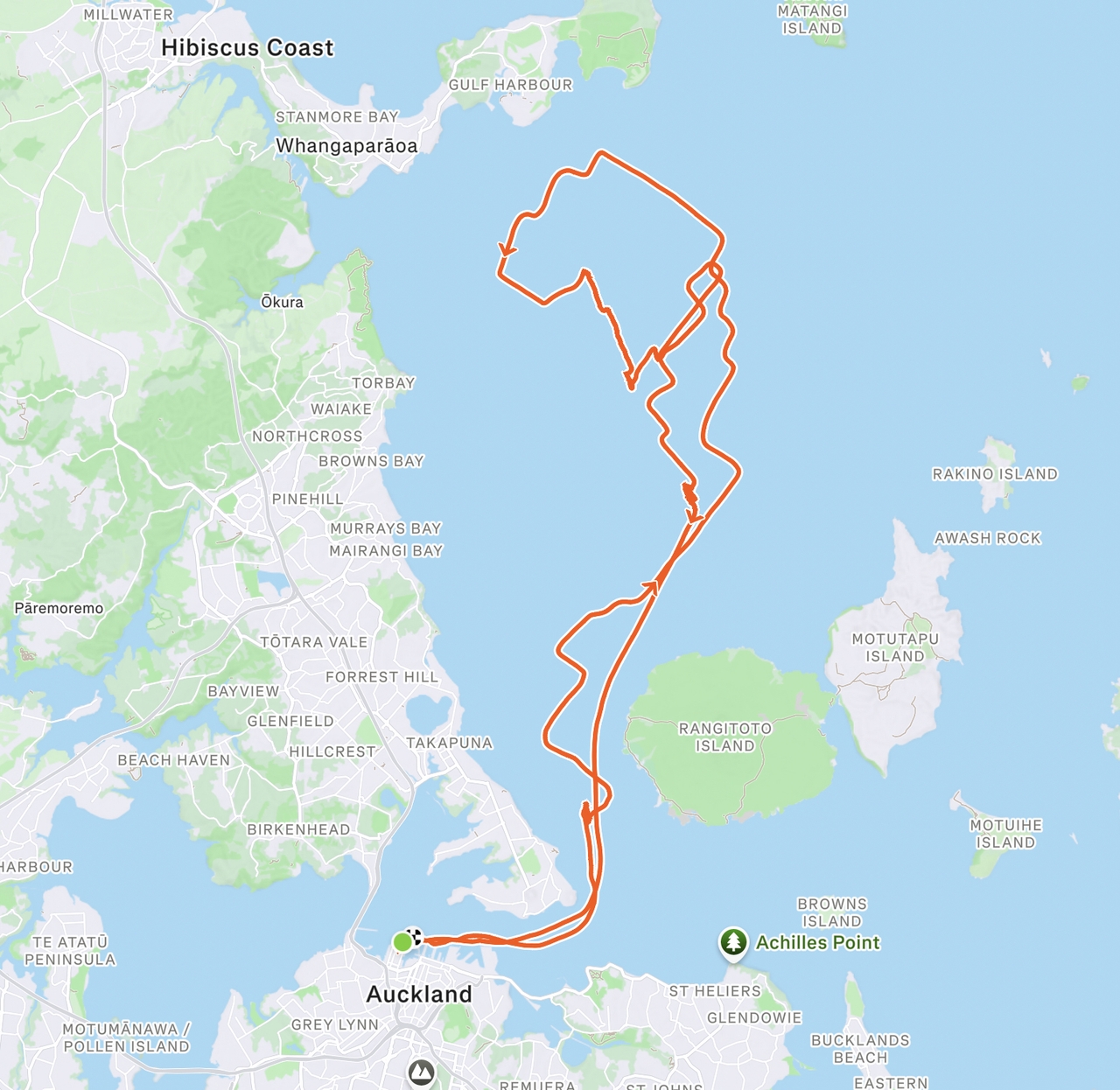
At 14:02 a VIP was loaded on board and ETNZ towed up in a much lighter 5-7 knots. They performed multiple manoeuvres and noticeably struggled coming out of the gybes. Suggesting the unknown issue could be related to the mainsail or mast hydraulics. After 10 minuets of sailing ETNZ stopped, made some quick changes then towed back up onto the foil for another short sail before ending the second session at 14:31. At this point more technicians came back on board looking at both below the deck next to the mast port side and also in through the traveller at the back. During this time the bottom of the main was considerably tight and never eased. After an hour of trying to solve the issue, rain built over the city and the wind died off. ETNZ ended their day at 15:25. Dropping sails and arriving back at the dock 16:00.
Overall what began as a strong testing session in light wind but high sea state conditions seems to have ended early due to mechanical issues.