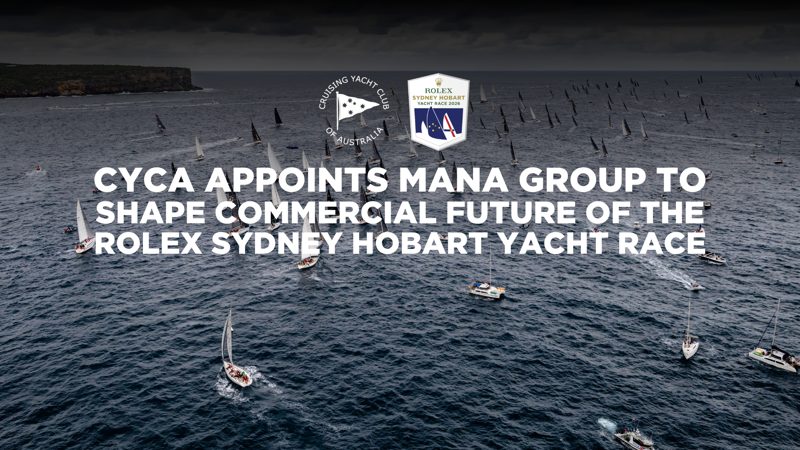
The Cruising Yacht Club of Australia has brought in commercial specialists Mana Group to reshape the business behind one of sailing’s most storied ocean races. The move signals serious intent to grow the Rolex Sydney Hobart’s revenue without diluting what makes it work: a Boxing Day start from Sydney Harbour that has gripped Australian sport for over eighty years.
Mana Group’s portfolio reads like a who’s who of Australian sporting institutions. They handle the TCS Sydney Marathon, Australian Athletics, Swimming Australia, and the Stawell Gift among others. Their appointment to the CYCA suggests the club recognises that a race drawing 1.3 million television viewers and nearly 9 million digital users needs grown-up commercial structures to sustain itself long-term.
The brief is comprehensive. Mana will review how the race sells its rights, architect a new sponsorship approach, hunt for broadcast and digital income, tighten data systems, and build a platform capable of supporting growth. Justine Kirkjian, the CYCA’s chief executive, described it as an investment in the club’s future. “Mana Group’s experience working with sporting organisations, major events and commercial partners made them a strong fit,” she said.
What’s interesting here is the tension baked into the task. Trent Taylor, Mana’s chief executive, acknowledged it directly. “The Rolex Sydney Hobart Yacht Race is part of Australian sporting folklore. Events like this deserve to be treated with care,” he said. “Our role is to help create the commercial foundations that will support the Rolex Sydney Hobart for decades to come. That means thinking beyond sponsorship sales to how rights are structured, how partnerships are designed, and how commercial value is created without compromising the heritage that makes the race so special.”

For New Zealand sailors and sailing enthusiasts, the Hobart matters. It’s the race that defined offshore racing for generations of Kiwi crews. Watching a major event institution like the CYCA essentially audit its own commercial model offers a masterclass in how heritage organisations stay relevant without selling their soul.
The numbers back the mandate. The race reaches eight and a half million digital users during race week. Rolex has been aboard for twenty-four years. The CYCA itself claims over 3,300 members and 17,000 annual visitors. That’s not a small operation pretending to be big. That’s a big operation that finally has the commercial tooling to match.
Whether the outcome is new sponsors, restructured broadcast deals, or a reimagined digital strategy, the underlying lesson is this: the best races don’t stay great by accident. They stay great because organisations take their own stewardship seriously, and sometimes that means bringing in the experts to ensure the money follows the mission rather than the other way around.