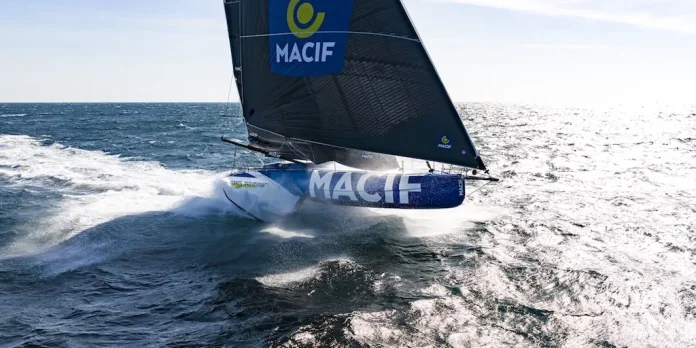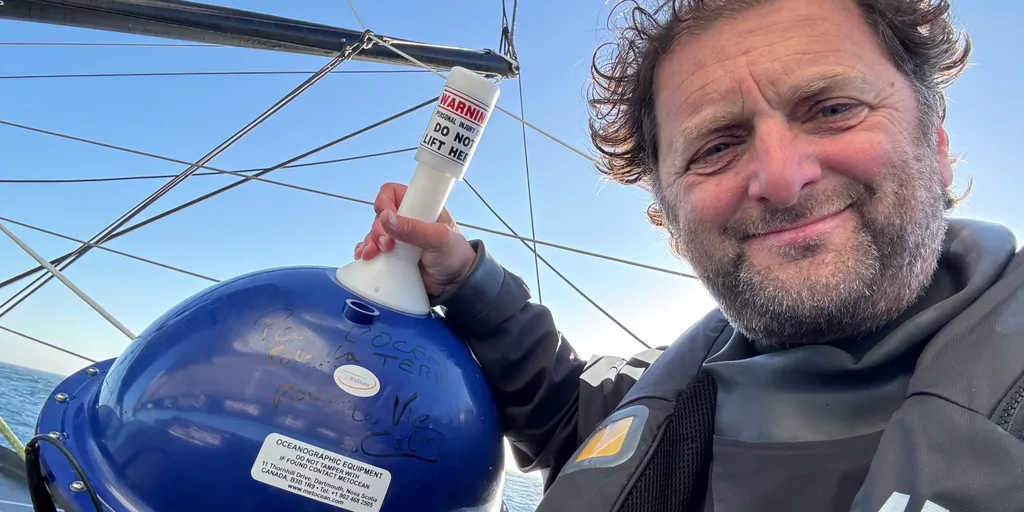
Sam Goodchild is threading one of the trickiest passages in ocean racing with the precision of someone who has learned the hard way. The British skipper aboard MACIF Santé Prévoyance has committed to the North Channel, the narrow waterway between Ireland and Scotland, because the numbers work. Strategically it makes sense. In execution, it demands discipline that borders on restraint.
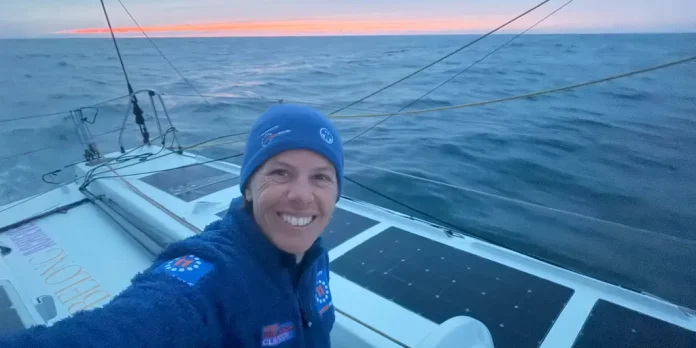
After days charging across the Arctic and dancing with the polar circle, the IMOCA fleet is finally turning south. The high latitudes are falling away. But pressure is building rather than easing. Élodie Bonafous and Arnaud Boissières are making their own calculations, their own bets on what the Irish coast and beyond will hand them. Each skipper is fighting their own race now, and the route to Les Sables d’Olonne has plenty of teeth left.
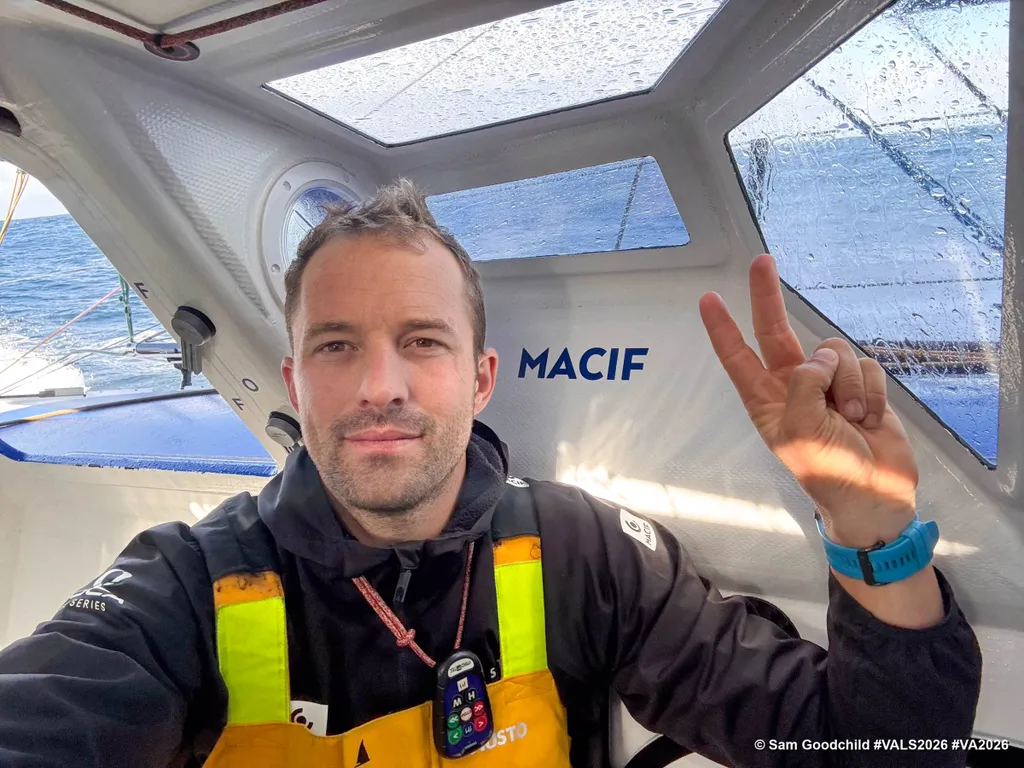
Goodchild is finding the North Channel almost beautiful in its clarity. He has sailed it before in smaller boats—Figaro Beneteau, MOD70—and that familiarity is worth its weight when you are alone on a foiling 60-footer and the margins for error have collapsed to nothing. The coast slides past, sometimes just three nautical miles away. He watched dolphins arrive as the sea flattened. They vanished before he could film them. It was, he said, a nice moment. He meant it.
What matters more, though, is the sea state itself. After a battering through higher latitudes, calmer water feels like reprieve. The cost is the wind. Descending off the Irish hills in chaotic bursts, it demands constant attention and leaves no room for sloppiness. Goodchild has accepted a compromise that most racing skippers would find difficult to swallow. He is sailing at roughly 60 percent of the boat’s potential, deliberately ceding speed for control. All his sail changes, all his manoeuvres happen in pockets where he has room, where a gust or a traffic encounter won’t turn tactical into catastrophic.
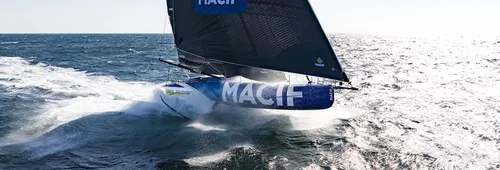
This is the logic of the channel: narrow, unforgiving, crowded. You play the cards in front of you, not the ones you wish you had. He should exit Saint George’s Channel by early morning. A transition zone waits beyond, but every competitor—whether they hugged the Irish coast or bolted west—will have to cross it. What settles after that is the real separator. Once he threads through, the wind will rebuild. The pressure systems chasing the fleet will close the gap. And Goodchild reckons the angle back to France will favour those who came inside.
For now, he sails at half-throttle through a corridor that has humbled better sailors than him, knowing the road home gets faster once he clears it.