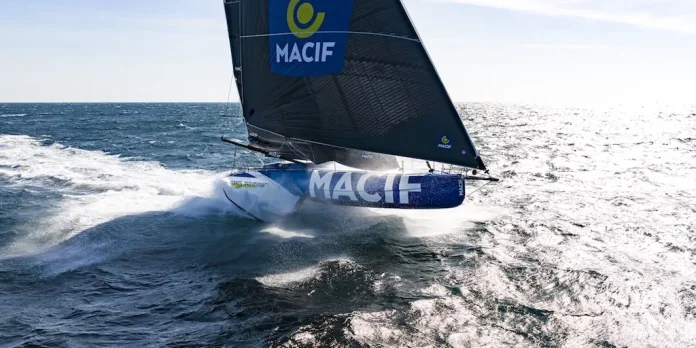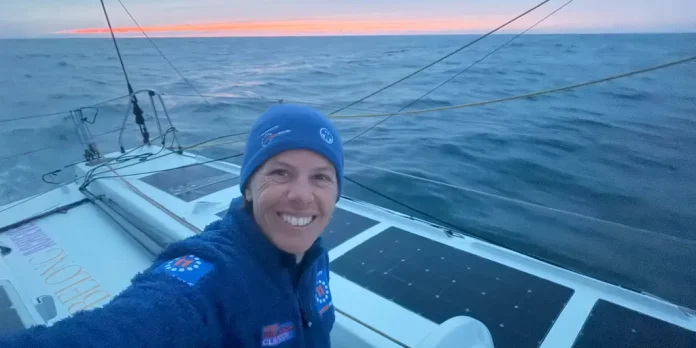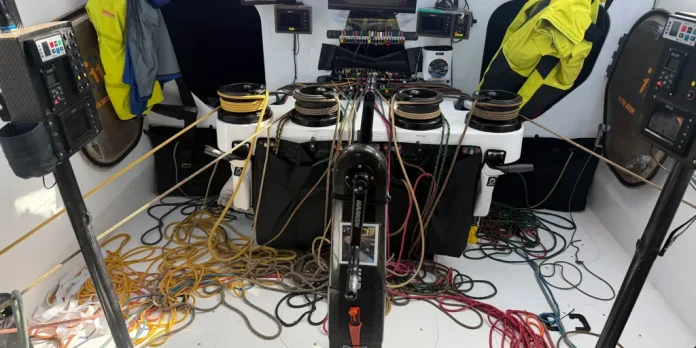
Sailors racing across the Arctic Circle in single-handed IMOCA yachts tend toward the stoic. Forty knots of wind, seas that tower and collapse without rhythm, the grinding exhaustion of four weeks alone with your boat—these things demand focus and discipline.
Francesca Clapcich and Arnaud Boissières, though, have found another way through the Vendée Arctique. Both are treating the ordeal as much as a chance to laugh as to win.
What separates them from their rivals—Sam Goodchild locked onto victory calculations, Élodie Bonafous tallying the miles, Ambrogio Beccaria cheering his progress, Violette Dorange radiating pure joy, Nico d’Estais contemplating the magnitude of what he’s doing—is the register they’ve chosen. Humour.
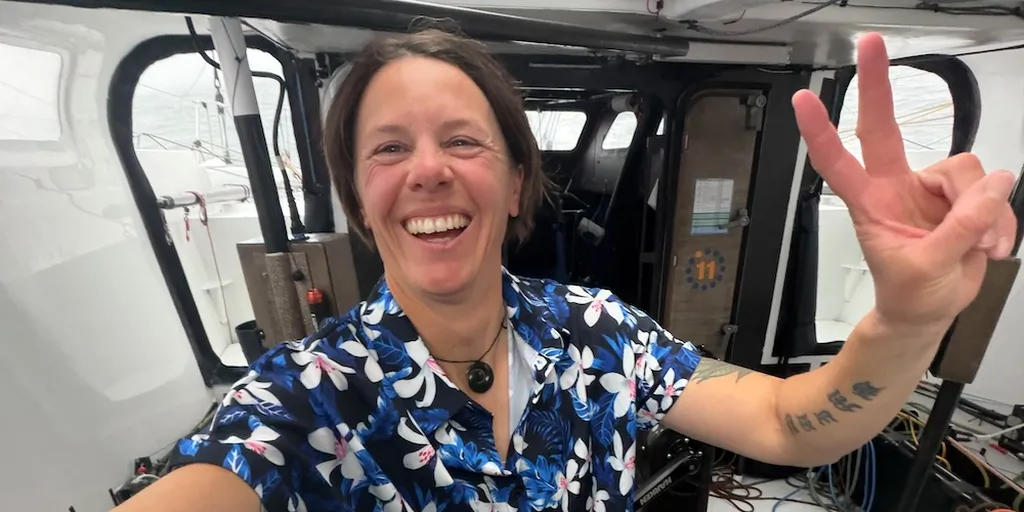
Clapcich, the Italian-American sailor aboard 11th Hour Racing, appeared in video footage during the polar crossing wearing a Hawaiian shirt. Bright blue, white and pink florals blooming across the fabric. Utterly wrong for latitude 66. She’d ditched the foul weather gear and beanie. No grimace, no sweat-soaked determination. Just a wide grin and a summer top.
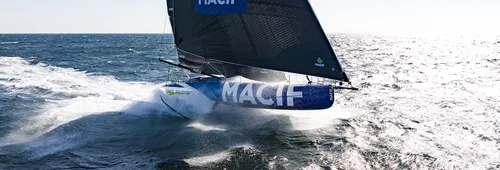
“I put on a summer top for the polar circle crossing,” she said, the absurdity of the thing perfectly intact.
The defiance matters. Up there, at that latitude, the water temperature sits a few degrees either side of freezing. Wind doesn’t pause. Sails demand relentless trimming. The horizon offers no comfort—it offers no variation at all. These are conditions that can hollow you out if you let them.
That Clapcich and Boissières have chosen instead to send jokes and incongruities back to land speaks to something deeper than mere personality. They’re not denying the hardship. They’re refusing to be defined by it. A Hawaiian shirt at the Arctic Circle is a small rebellion, but it’s rebellion all the same.
The IMOCA circuit draws a particular breed of sailor, ones who share the core fundamentals: raw seamanship, the capacity to sail through anything, absolute commitment to their boats. What they do differently—how they process the crossing, what they choose to broadcast—that’s where the individual emerges. Some chase victory with tunnel vision. Others parse the experience into manageable increments. Others still find the joy in endurance itself.

Clapcich and Boissières, somewhere in the North Atlantic or Arctic waters, are choosing levity. The conditions don’t care. The boat demands the same precision regardless. But out there, where it matters most—in the mind, in the spirit—they’ve decided to keep things light.