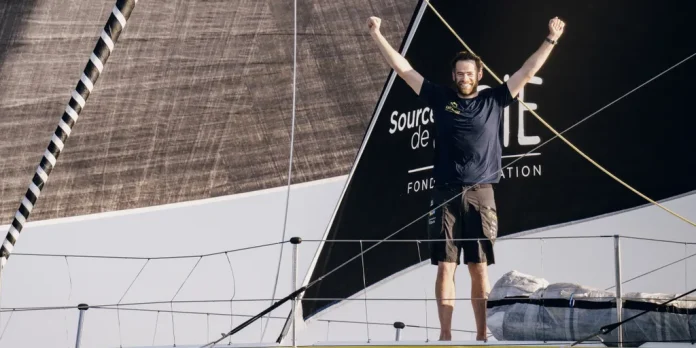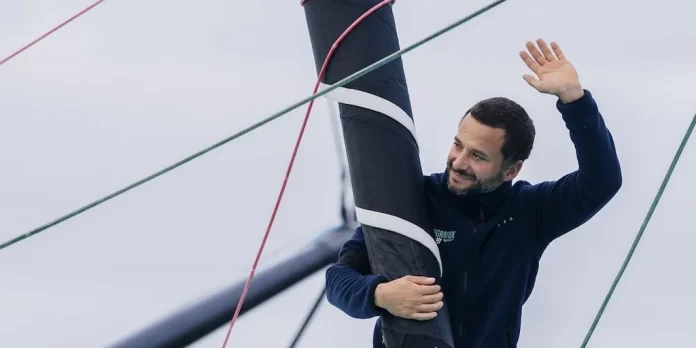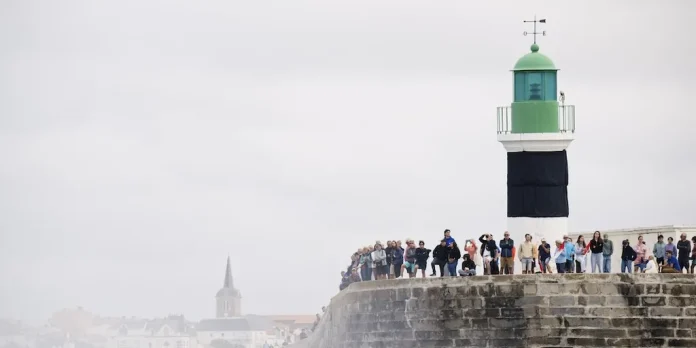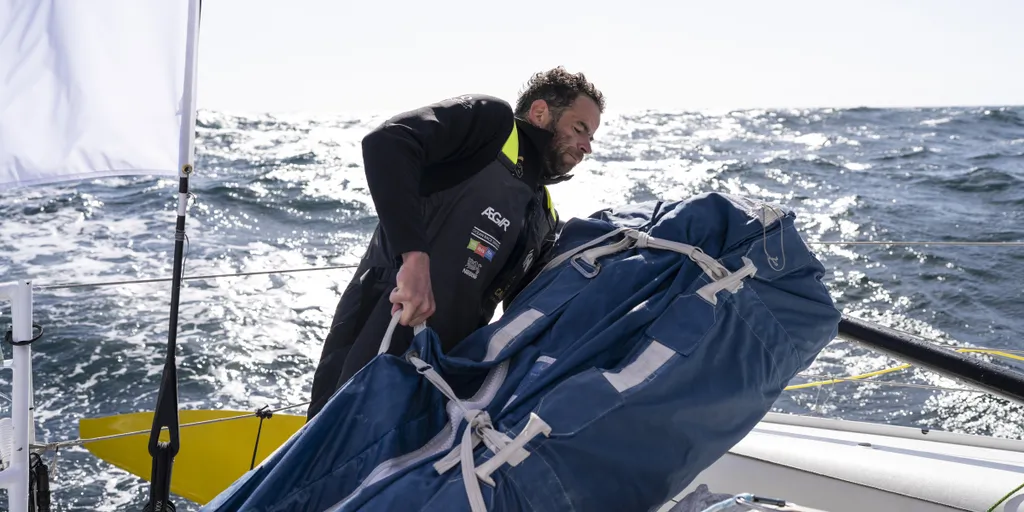
Nico d’Estais nursed Café Joyeux toward the finish line on Wednesday evening, less than 100 nautical miles from Les Sables d’Olonne after more than nine days wrestling the North Atlantic. Behind him, Arnaud Boissières aboard APRIL Marine – recherche co-partenaires refused to concede, grinding away at the gap with every metre gained. Further back, Manu Cousin pressed on in Coup de Pouce, sailing toward Ireland in 25 to 35 knots and determined not to surrender to exhaustion or circumstance.
The final stretch of the Vendée Arctique – Les Sables d’Olonne rarely gifts anyone an easy passage. What makes these last miles unforgiving is that three skippers remained fully committed, squeezing the maximum from each one.
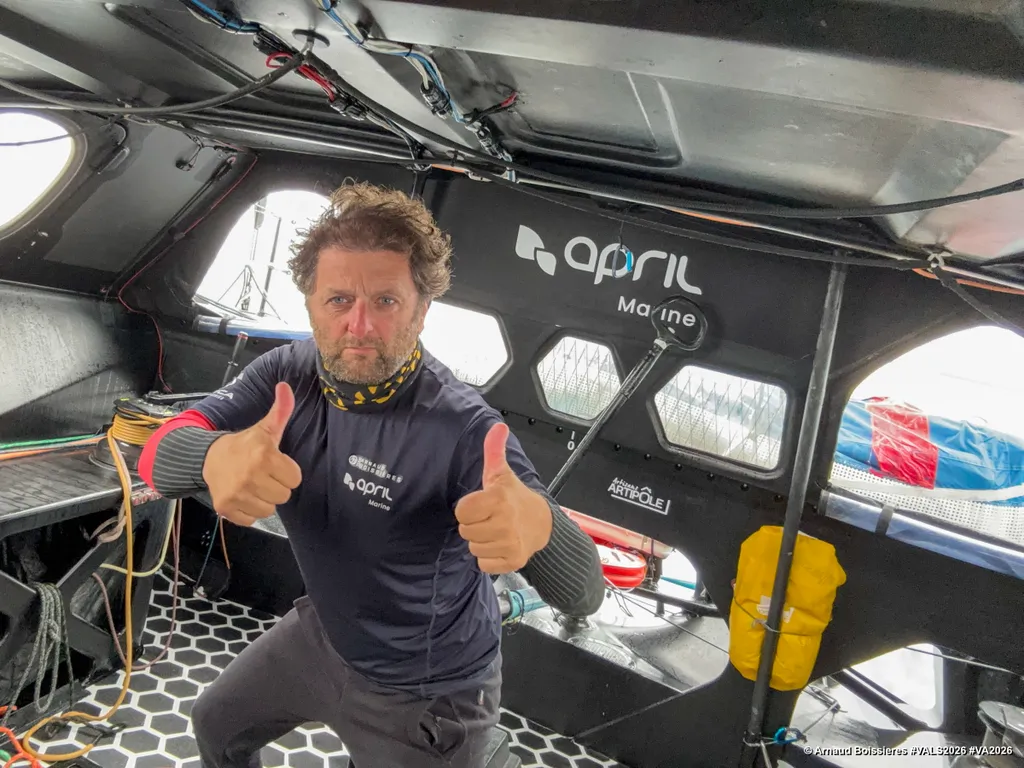
D’Estais had spent a week battling the depressions and 30-knot gusts of high latitude sailing, where the sea turned mean and relentless. The turn south across the Celtic Sea and English Channel brought a different challenge. The wind began to fade as the French coast drew closer, forcing him to finesse his positioning rather than simply survive the next gale. The respite came at cost: flat water and good boat speed could not hide the fact that light winds penalised aggressive strategies. After days of being hammered, this momentary calm proved both blessing and trap.
“I took advantage of that window to really recover,” d’Estais explained. “It was stable enough to rest before hitting the Breton and Vendée coasts.” But he remained alert. Anticipating the slack conditions ahead, he chose to hug the coastline near Belle-Île-en-Mer on Wednesday morning, gambling on thermal effects to keep him moving as bigger breeze retreated.

The arithmetic worked against him regardless. His lead, once solid, had begun to erode as his boat slowed. Boissières, still catching pockets of fresher wind, crept closer. “I’d built a bit of an advantage, but Cali came back,” d’Estais said. “We’re not in the same place and we’re not in the same wind. I can see my lead shrinking as I slow down, but he’ll enter this zone too. Whatever happens, I stay focused to the end.”
Boissières was not yet resigned. He stood to lose that extra pressure within hours, his opportunity fleeting. “The wind should gradually shift and we’ll probably need a few jibes, but the overall trend looks favourable,” he said, knowing that one wrong move in the doldrums could cost everything he’d fought for.
For d’Estais, the finish line represented far more than a result on a trophy. The Vendée Arctique marked a deliberate stepping stone toward the Vendée Globe, a race New Zealand sailors know well. This race was never just about winning or surviving the North Atlantic. It was about learning what this boat, this body, and this mind could endure when truly tested.