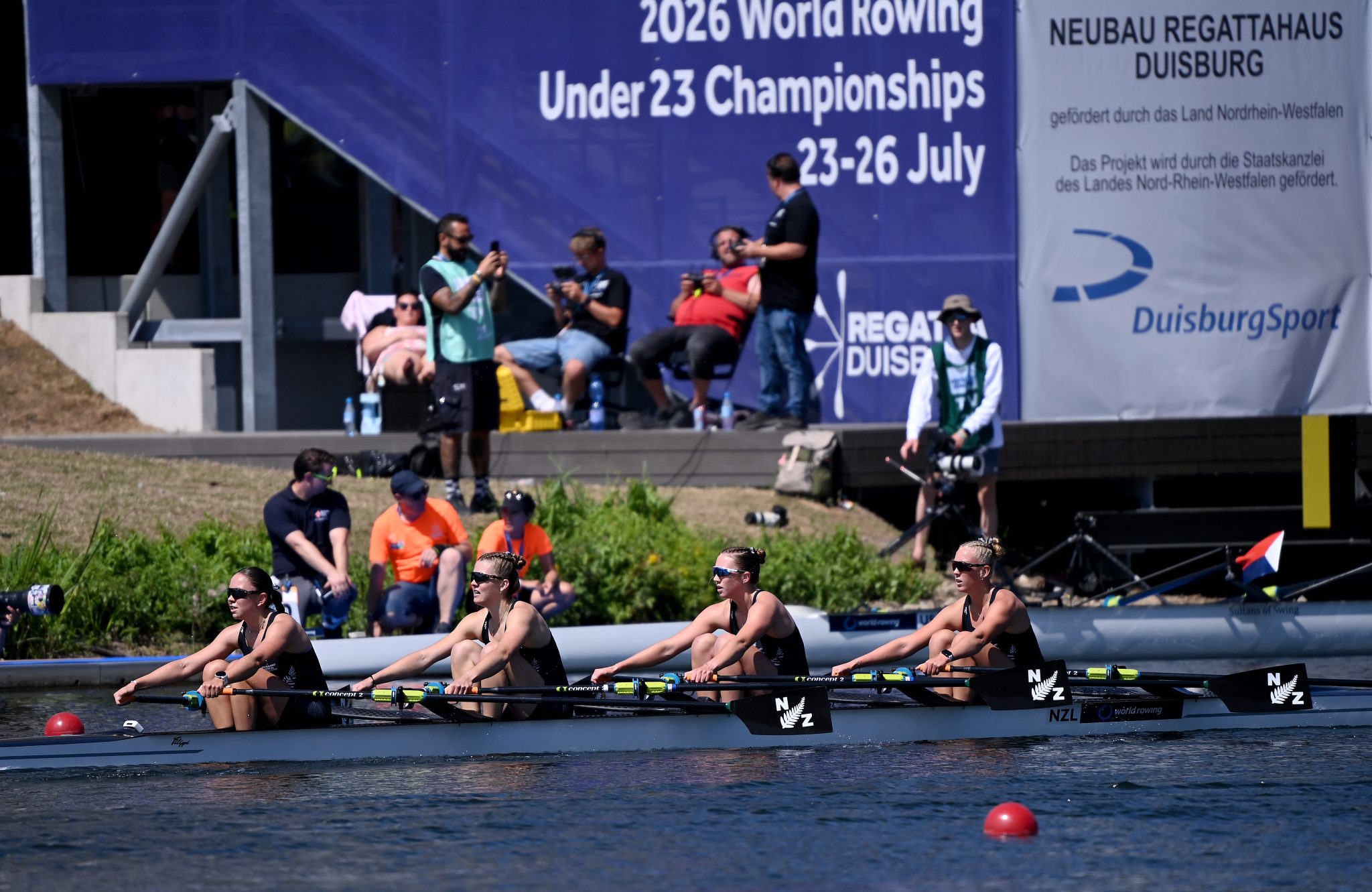
New Zealand’s young women’s quad learned exactly what elite international rowing looks like when they lined up against the world’s best at the U23 World Championships in Duisburg, Germany, finishing sixth in the A Final with a time of 6:45.84.
Madison Neale, Emma Bagrie, Tegan O’Dwyer and Harriet Thompson faced a brutal lesson in global competition. Two of them were making their international racing debut, and the gulf in speed became apparent quickly. Coach Mark Stallard had warned them beforehand about the opposition. “The others are big humans, real big humans. And good humans,” he’d said, watching them head to the dock for what would be the most demanding 2000 metres of their young careers.
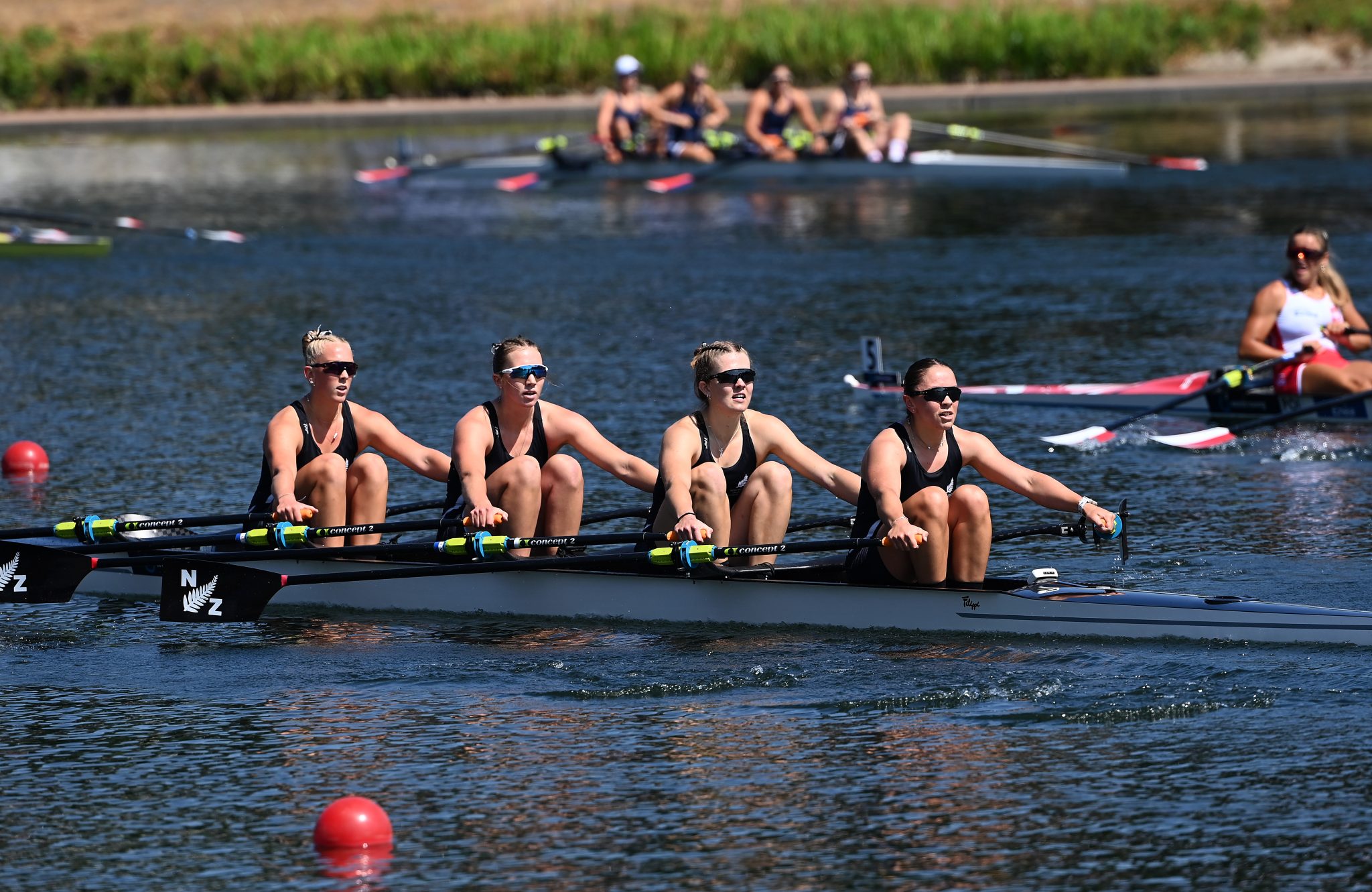
The USA took gold in 6:28.83, claiming just their second-ever medal in the women’s quad event. Great Britain took silver, Italy bronze. New Zealand sat outside the medals but carried something more valuable than a placing: they’d made the A Final against the odds, qualified on time from their heat despite crossing last in a four-boat field. That alone represented progress for a crew still finding its way at this level.
Stallard’s calm confidence in the hours before racing told the real story. He’d spent four hours between heats and finals cleaning the boat repeatedly, walking the course, drinking coffee, trying to occupy himself like “a dog with two tails not sure where to go or where to look.” His crew came off the water excited after their warm-up, understanding the magnitude of what was about to unfold.

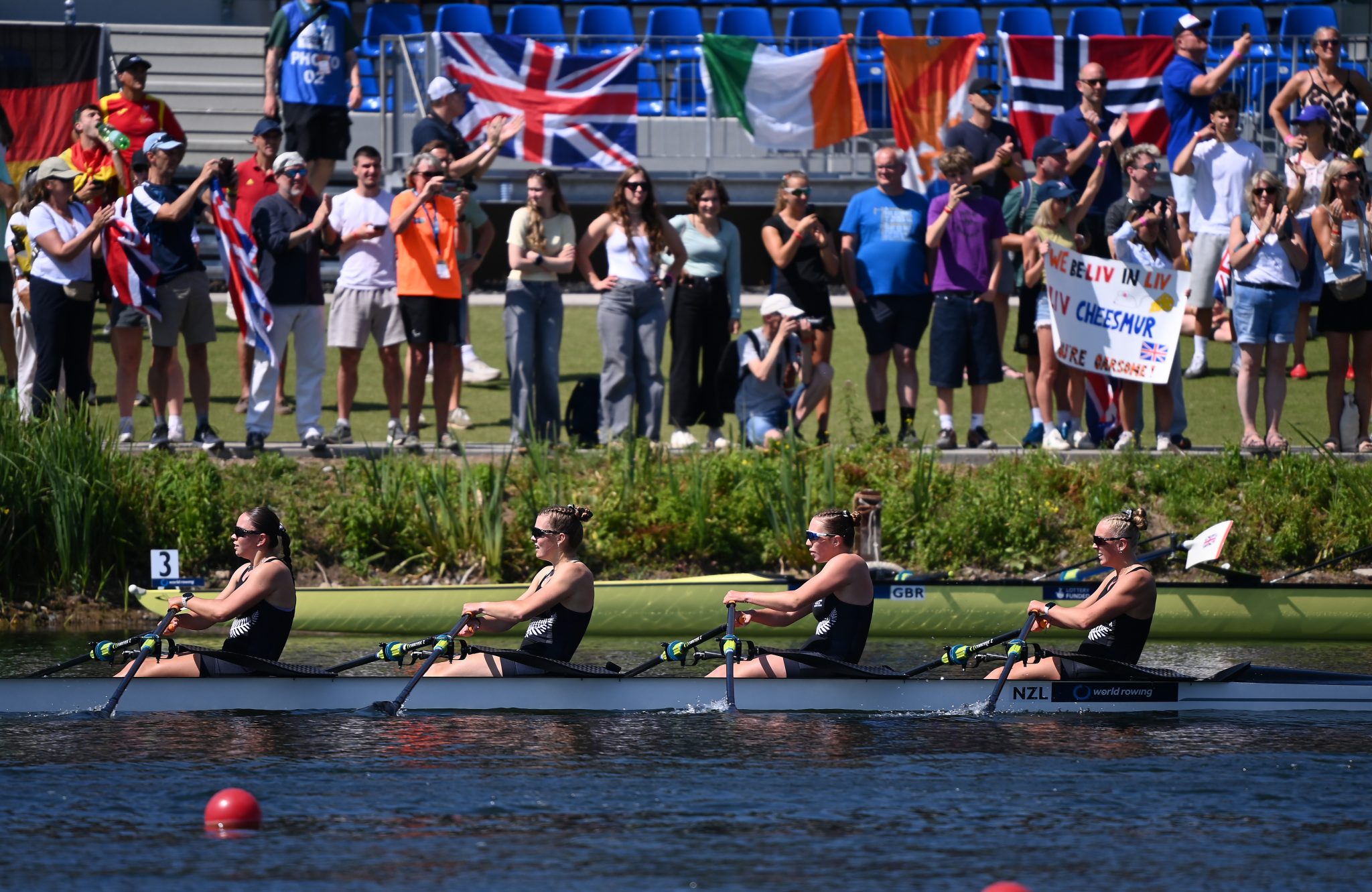
Emma, one of 14 Stanford athletes at the regatta, rowed alongside her fellow freshman Sumner Kerr, who stroked the American gold medal boat. “The standard here is just so high, and it’s really cool to be around that,” Emma reflected. “We’re proud of how far we’ve come.”
Tegan, who has two more years of U23 eligibility remaining, couldn’t wait to return. “It’s a whole different level of speed out here, but proud to make it where we did, and to be competing in the final was awesome.”

For Stallard, disappointment in the result masked something broader. These four rowers had now stood on the biggest stage and survived. “In that disappointment, they’ve got to see a way forward,” he said. The coach himself remained energised by the experience of coaching at a world championship, standing amongst the best in the sport. “It’s the place to be if you want to coach. I just like the whole thing about it.”
New Zealand’s men’s eight would face their own test later that night, racing for gold in the championship’s showpiece event.