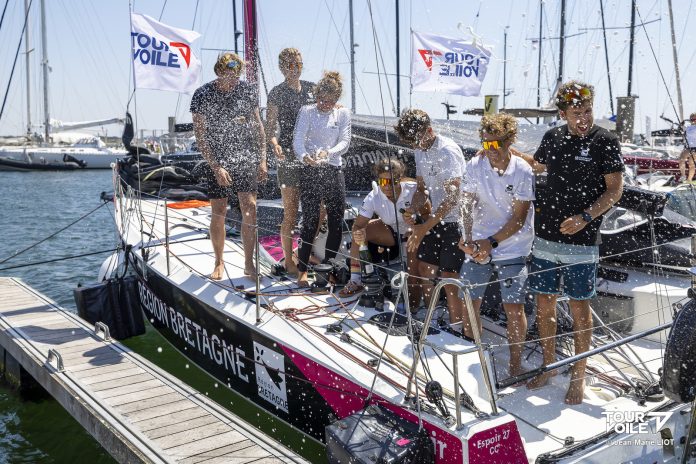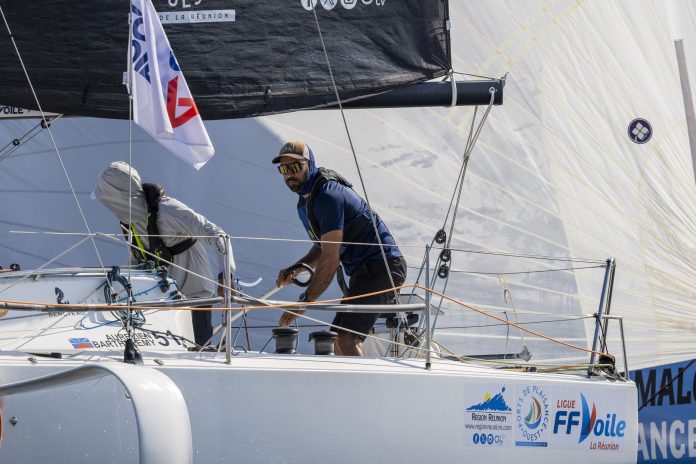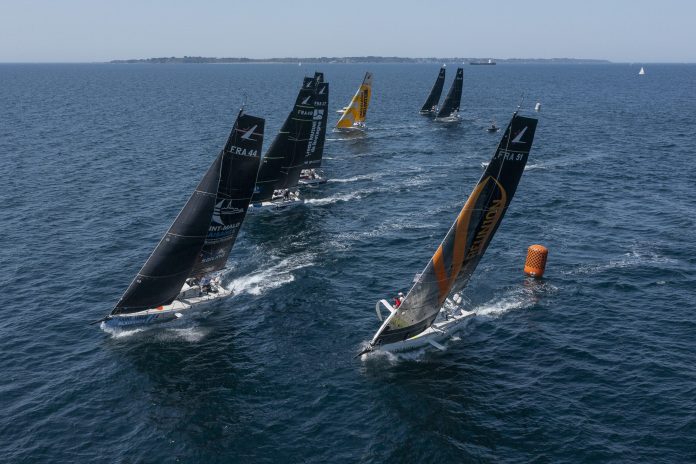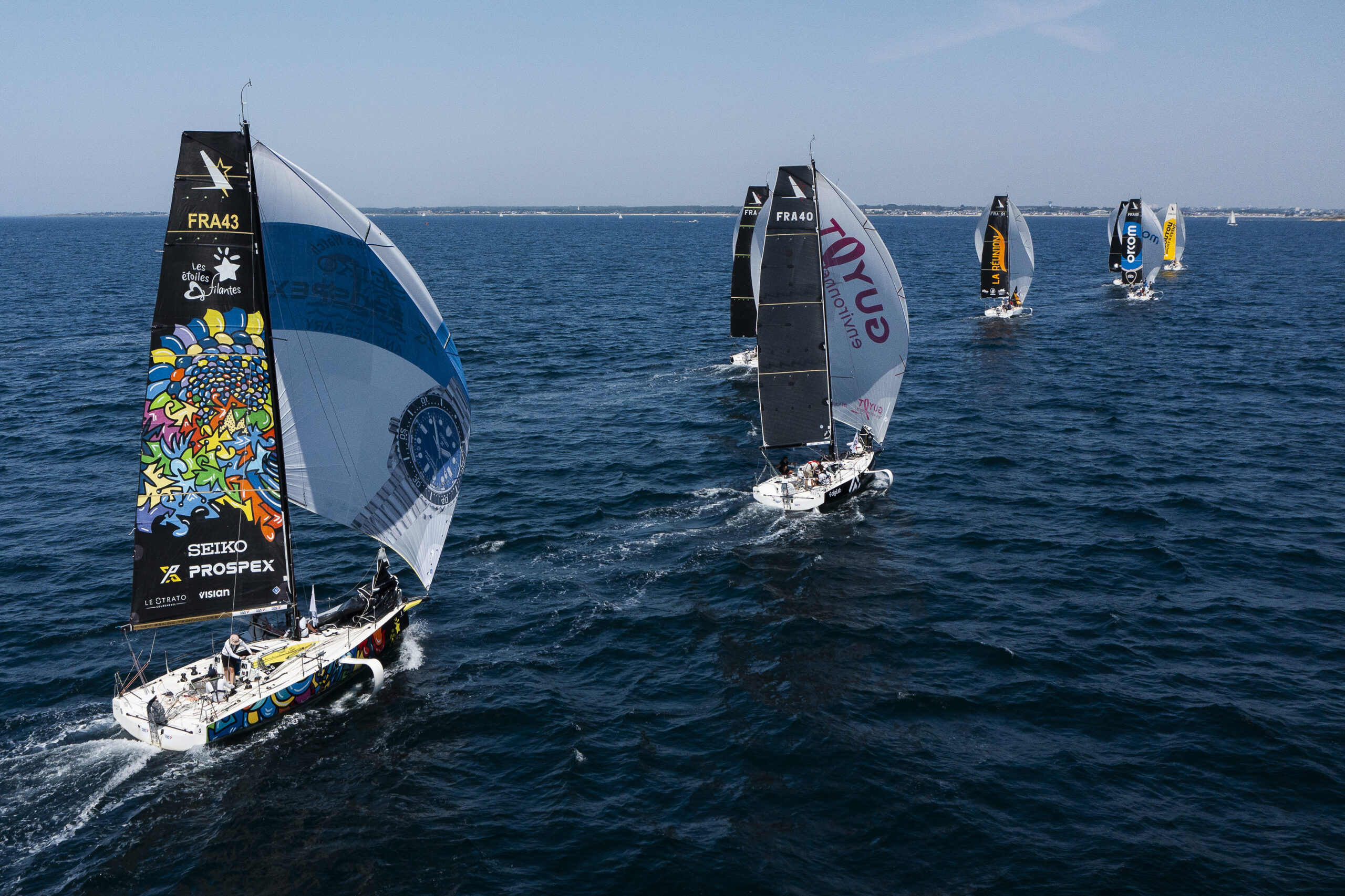
The Tour Voile 2026 offshore racing series drew to a close Sunday evening in Larmor-Plage, bringing nearly three weeks of competition to a formal conclusion. As organisers, partners, officials and competitors gathered at the Société Nautique de Larmor-Plage overlooking Lorient’s anchorage to celebrate the winners, something broader than trophy cases became visible: a season that had blended competitive racing with genuine progression, mixed-generation mentorship, and the discovery of France’s finest sailing grounds.
The Figaro Beneteau 3 fleet contested 32 races across five host cities—Cherbourg-en-Cotentin, Saint-Malo, Plérin, Camaret-sur-Mer and Larmor-Plage. Despite challenging weather at times, the format alternating between structured inshore racing and offshore passages proved its worth. Close competition remained the norm from start to finish. Région Bretagne – CMB Espoir claimed overall victory in an event that revealed what makes Tour Voile distinctive: a meeting place where high performance sits alongside learning, where generations cross paths naturally, and where women’s participation has become integral rather than exceptional.
A training pipeline with teeth
Nearly 100 competitors took part, with an average age barely 25 years old. The statistic animated comments from officials across Brittany’s sailing community. Pierre Pouliquen, vice-president of the Brittany Region, framed the event as central to a long-term strategy to develop young offshore racers before they progress to bigger challenges. The region has invested in the sport through a public-private partnership, with particular focus on Port-la-Forêt’s Pole for Offshore Racing. “These young sailors will perhaps be the champions of tomorrow,” Pouliquen said, “but regardless, they will leave here with invaluable experience.”
Jean-Luc Denéchau, president of the French Sailing Federation, described Tour Voile as a “remarkable accelerator of experience,” noting the value of seasoned sailors navigating alongside newcomers to offshore racing. The federation announced plans to expand the event from the next edition onward, introducing a second division in the Grand Surprise class dedicated to university students—a deliberate move to widen the feeder pathway into the Figaro Beneteau programme.

Local pride, national reach
Stéphane Lohézic, vice-president of Lorient Agglomeration, stressed the event’s role in establishing the region as a centre for maritime innovation and skilled employment. “It is an exacting competition,” he said, “but also popular, accessible and welcoming—and that proximity between sailors, partners, volunteers and spectators is part of its identity.”
Marianne Rousset, mayor of Larmor-Plage, welcomed the event’s finish in her commune for the first time in her role, noting the collective effort across ports and local authorities that made it possible. She highlighted the inspiration young competitors offered through their engagement, tactical awareness and adaptability.
Marcus Hutchinson, vice-president of the Figaro Beneteau Class, pointed to the growing success of the boat in the Tour format. “The fleet remained extremely close, and competition was constant across all race formats,” he said. The homogeneity of competition reflected the event’s structural richness: match racing, coastal courses and offshore passages all mattered equally.
Looking ahead
Organisers Mathieu Sarrot and Emmanuel Bachellerie acknowledged early uncertainty when entries fell short of hopes, but said satisfaction quickly took over. “The improvement across the entire fleet from first to last day was spectacular,” they reflected. They praised the spirit among competitors, the quality of host cities and their port facilities, and conversations with local partners—particularly in Brittany—that suggest strong appetite to continue. “In four editions, we are beginning to see real markers form,” they said. “That is solid ground for what comes next.”