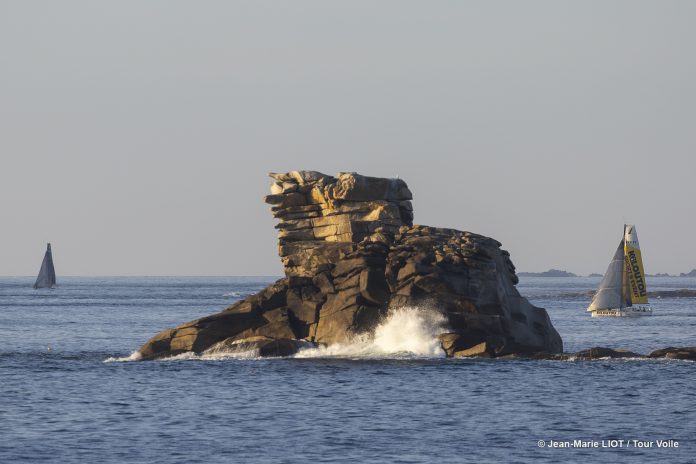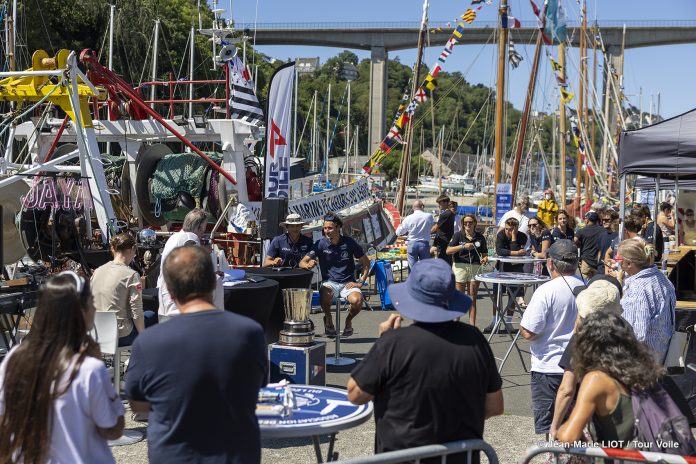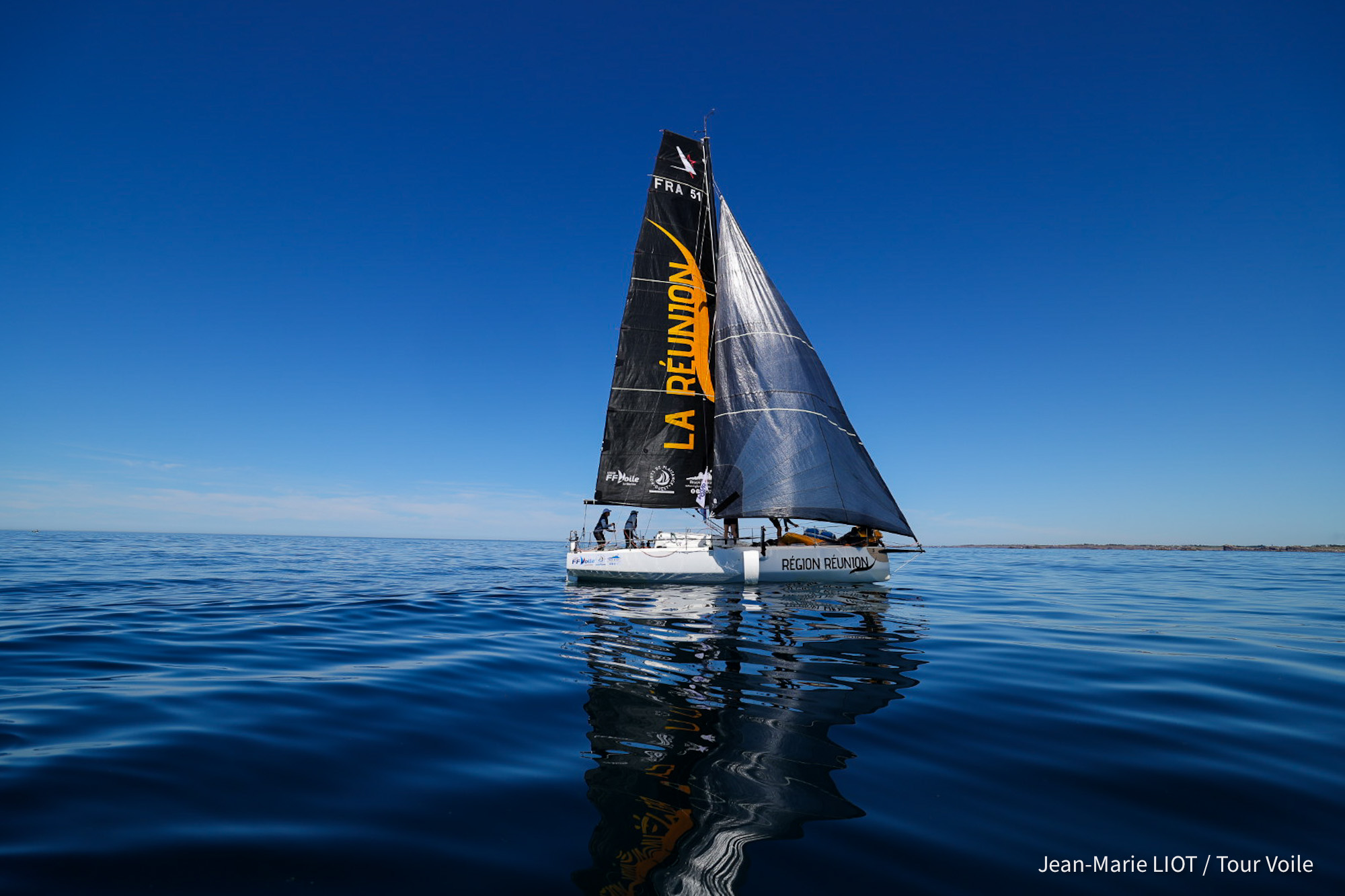
After a gruelling third stage that stretched into the early hours of the morning, the Tour Voile fleet finally arrived at Camaret-sur-Mer late Tuesday night, with the finish line moved to the Four lighthouse due to the absence of wind in the Iroise Sea. The delayed arrival proved less costly than it might have been, thanks to the flat conditions greeting crews on Wednesday morning—a rare gift of calm water that offered time to rest, service boats, and recover before the afternoon’s racing.
The reprieve is brief. Boats will depart at 13:30 for a series of windward-leeward courses built within Camaret Bay, with race director Yann Chateau planning three legs and potentially a coastal race of 11 nautical miles if conditions allow, with an expected return to port around 19:00. The morning’s flat calm is expected to give way to a light thermal breeze as the day progresses—a modest window that Chateau is determined to maximise.
Tactical Conditions on Tap
The shift from drifting in currents to structured racing will reset the competitive dynamic. These races are expected to be short, intense, and tightly contested, played out on a small field where thermal effects, tidal streams, and coastal topography will shape every decision. In a fleet where no team has established sustained dominance, the afternoon’s regatta promises to remain wide open.
Louise Acker of PAPREC by Normandy Inshore Program acknowledged the uncertainty ahead. “The weather models don’t all agree, and I don’t think the thermal will set up very strongly,” she said. “You have to nail your starts and exit the dead zones quickly to stay ahead. The bay is at the intersection of two areas I know well—Douarnenez and Brest—but I’m still learning the local effects here. The level of sailing has climbed another notch since the start of Tour Voile. Gaps are closing, everyone can put together excellent races now, and teams are bringing in fresh crew. Small water and micro-weather are areas I enjoy, so hopefully that works in our favour today.”

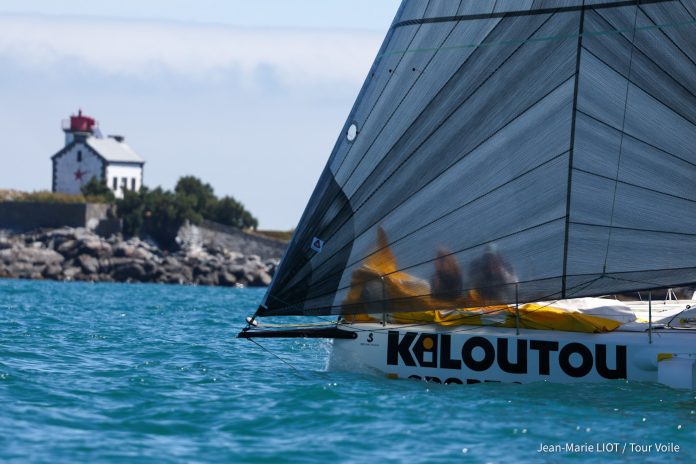
Eliott Coville (Dunkerque – Kiloutou) highlighted the unpredictability of Camaret Bay itself. “It’s a closed bay with a timid, unstable wind. Nobody knows when the breeze will establish or how it will develop. Between the Four and Raz de Sein, there’s enormous current—we’ll be managing water movements along the Breton coast all afternoon.” He also noted a distinctive feature of Tour Voile: crew rotation. “We have no one on deck today from yesterday’s offshore leg. The bench matters hugely in this event. Fresh crew brings energy and can deliver real performance gains.”
Théo Gonin of CER – Ville de Genève, a newcomer to the event arriving just days ago, views the afternoon as an opportunity despite the challenging conditions. “It’s my first time sailing here, and I’m joining the Tour during a tactical day in a closed bay with current and site effects,” he said. “Small air and micro-weather are conditions we know well in Switzerland, so we’ll try to make them work for us.”