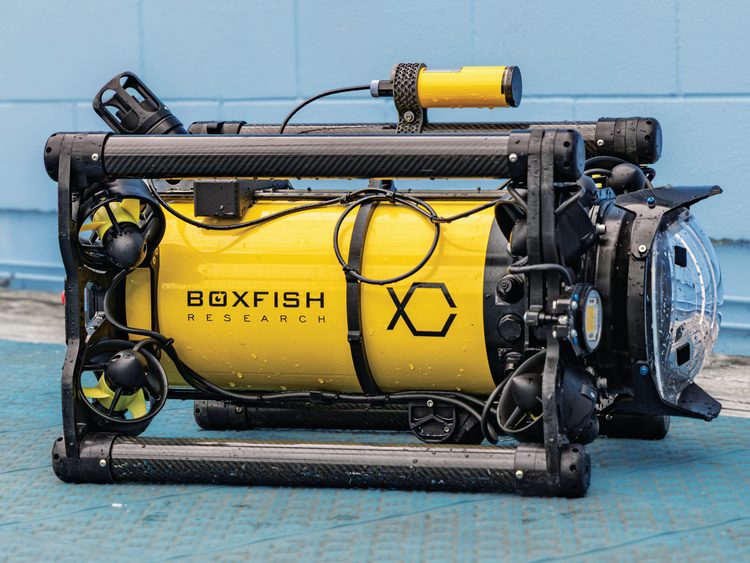
Auckland-based Boxfish Robotics was established in 2016 by three engineers (all diving enthusiasts) who began tinkering with a smorgasbord of technologies to develop a better way of recording life/objects underwater. Effectively, hobbyists wanting to enrich their diving memories.
Today, those experiments have evolved into a series of sophisticated submarine drones (divided into ‘tethered’ and ‘untethered’ models) used all over the planet. Supremely versatile, hardy and manoeuvrable, they record ultra-high-definition video/stills. They also survey seafloor contours and use multiple sensors to capture data such as water salinity, temperature, pH and turbidity.
All very useful information for clients such as marine biologists, underwater surveyors, geotechnical engineers, underwater asset managers (responsible for dams, cables and pipelines), filmmakers, marine archeologists, explorers, maritime heritage specialists and environmental researchers.
That versatility has taken the drones to extreme (and remote) locations. They’re able to operate at depths of up to 1,000m and have a lateral range of approximately 3,000m. They’re able to operate in the sub-zero temperatures of the Arctic/Antarctic, and in the steamy water around underwater volcanoes.

Boxfish?
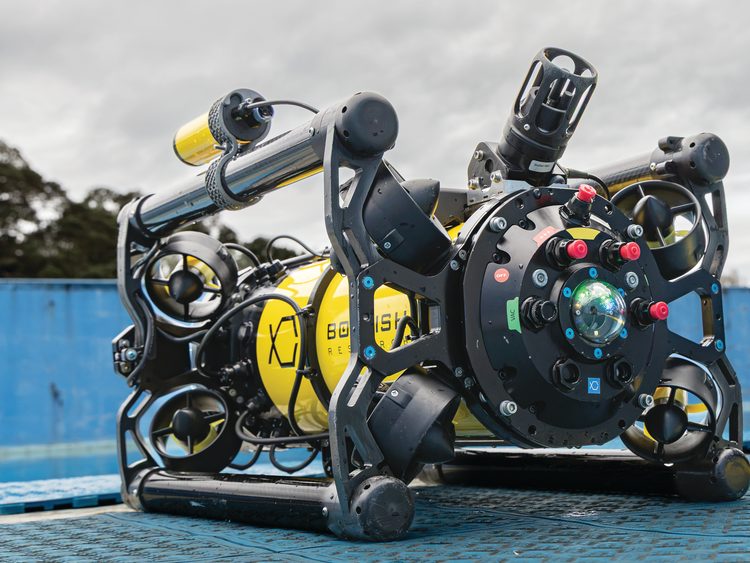
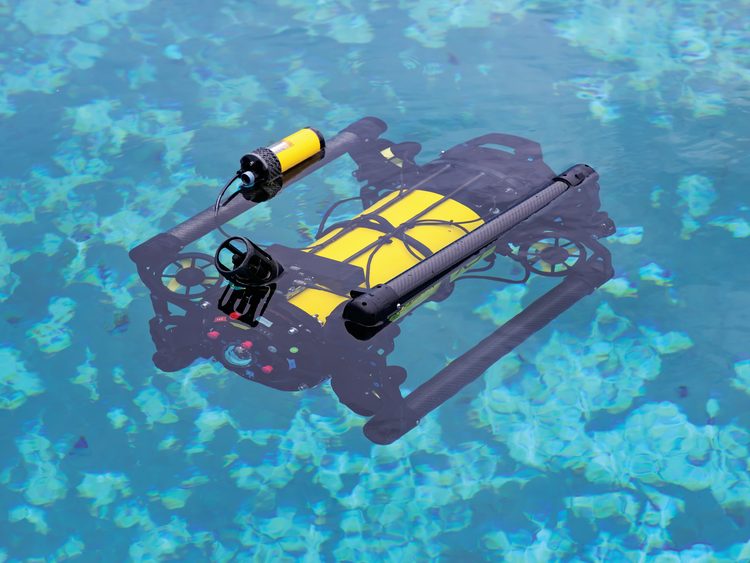
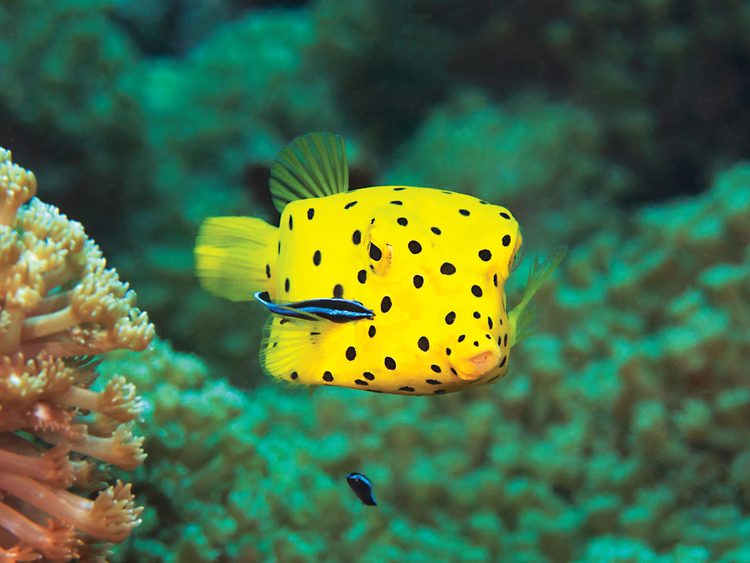
They’re named after their resemblance to the tropical boxfish – square and yellow with large eyes – and also because of their extraordinary manoeuvrability and ability to hover and maintain station very precisely – just like aerial drones (and boxfish). That stability is fundamental to capturing sharp, high-resolution photos and video (up to 8K).
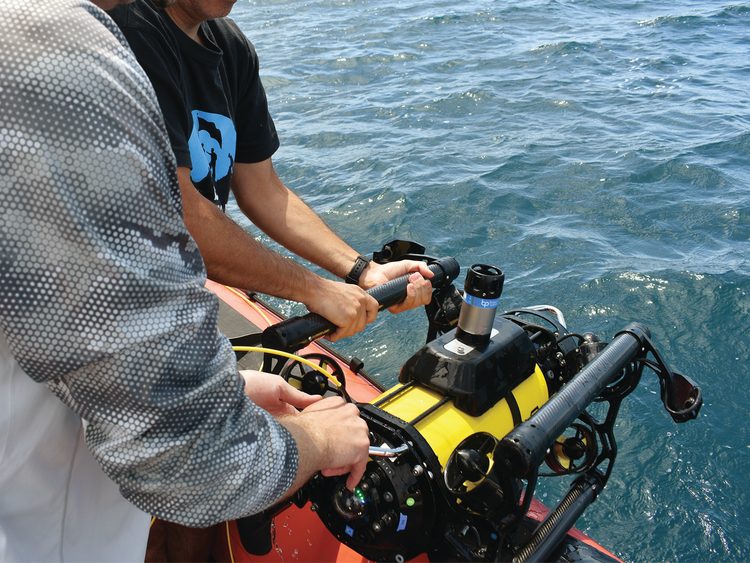
Size and weight are key advantages. They’re not much bigger than a medium-sized piece of luggage and weighing in at 25kg are easily carried on commercial flights. They can be deployed from a small runabout – no need for specialist support vessels or motherships with cranes.
In essence, their ability to venture freely into dark, confined areas, extreme depths and hostile environments – and for a relatively low cost – is unprecedented in submersible technology. Perhaps most crucially, they are underwater tools that don’t endanger human lives.
How it works
The basic Boxfish platform combines an anodized aluminium body housed within a carbon fibre/aluminium framework. Mounted around the framework’s perimeter are eight multi-directional thrusters – working together to manoeuvre the drone within its 3D environment. A central camera is at the front of the unit.

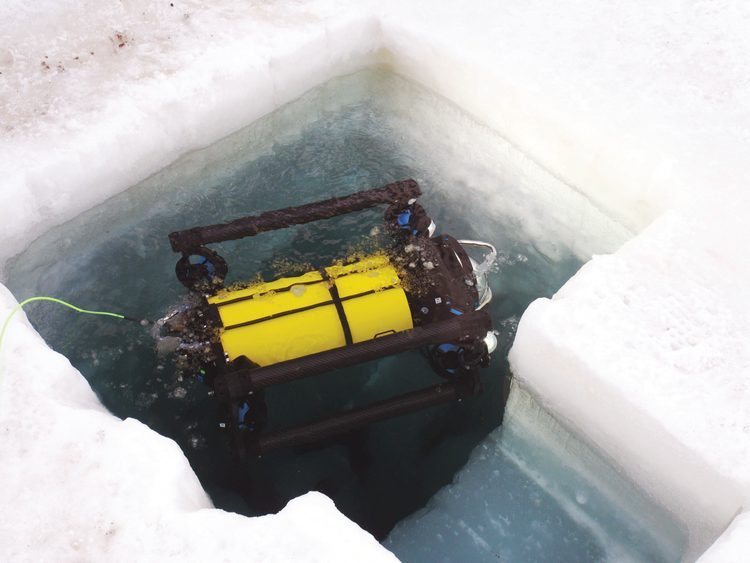
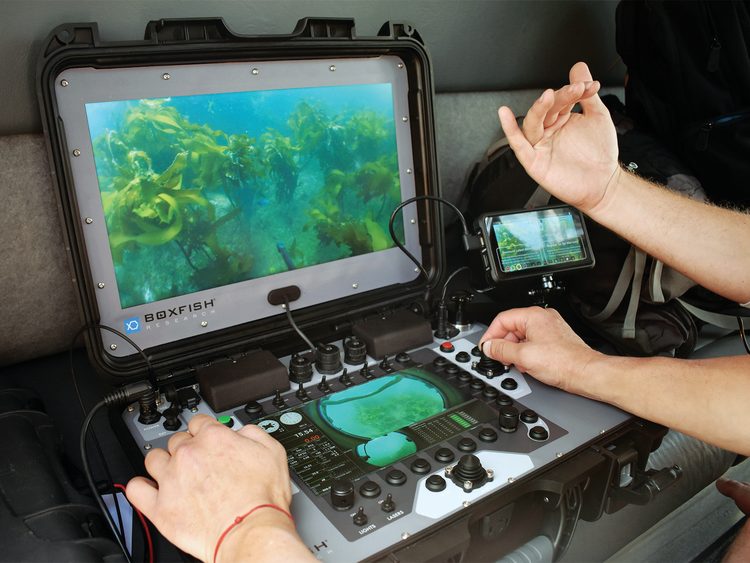
Tethered (piloted) drones are connected to a surface control console via a kevlar-encased fibre-optic umbilical. The operator steers the drone (using joysticks) and views its progress via the console screen. While the operating depth is limited to 1,000m, lateral range is up to 3,000m. The onboard lithium-ion battery lasts for up to 10 hours.
LEDs provide lighting (20,000 lumens). In addition to the main camera, the units are also fitted with two smaller, navigation cameras – front and back – for ‘situational awareness’. These give the pilot a view of the drone’s surroundings, allowing him to navigate safely. Data is recorded and uploaded to the control console in real time via the fibre-optic cable.
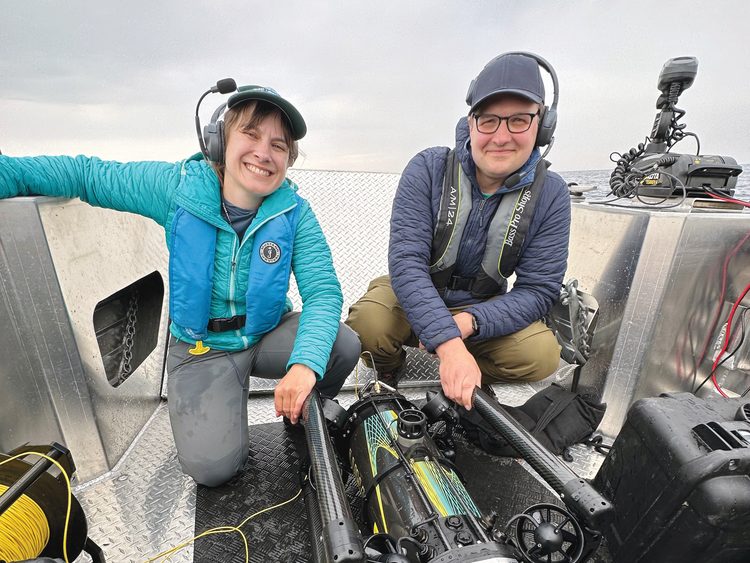
Untethered (no umbilical) drones roam freely but their route/tasks are pre-programmed into the onboard computer. They are often deployed for survey work, where the seafloor is mapped in a ‘grid’ pattern created around predetermined coordinates. They are connected (wirelessly) to a transponder on the surface, which allows monitoring and provides the reference for the drone’s GPS co-ordinates.
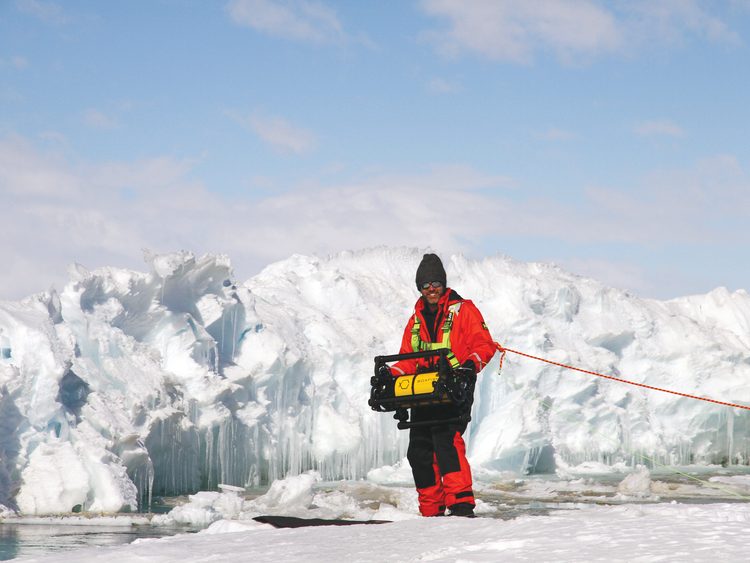
Being an an autonomous unit the video is recorded to the onboard computer. The obstacle avoidance technology is supported by machine vision cameras and an acoustic sensor. Recorded data is downloaded when the drone returns to the surface.
There is also a more sophisticated untethered model which extends its operational parameters thanks to a ‘docking station’. This is an anchored, underwater ‘garage’ to which the unit returns to upload recorded data and recharge its batteries (both wireless technologies), before venturing out for another task.
Preserving coral reefs
The planet’s coral reefs are in dire straits. These fragile ecosystems have been decimated by pollution, invasive species and global warming. Scores of organisations all over the world are racing to stop the destruction and develop strategies to rebuild damaged reefs.
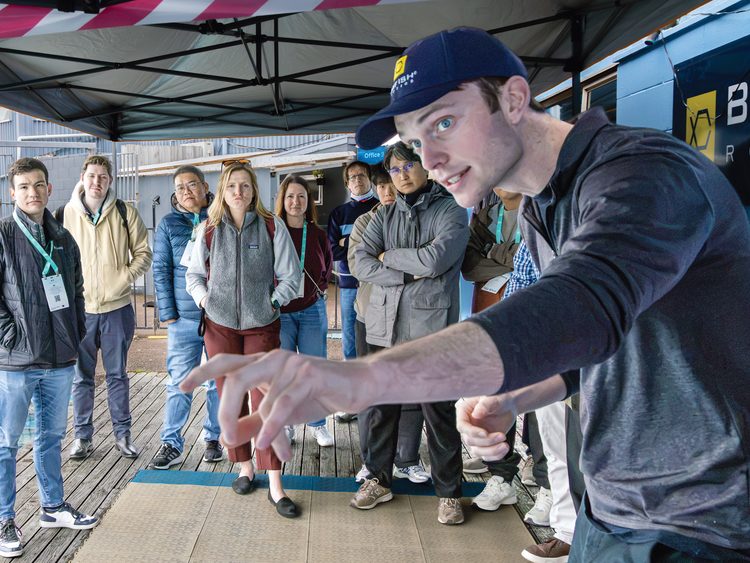
In July this year the 16th International Coral Reef Symposium was held in Auckland, attended by a high-level delegation of marine scientists, policymakers and conservationists. Boxfish Robotics presented a live demonstration of its technology to the gathering.
The drones are ideal not only for recording high-definition video of reefs, but also for regular, precision monitoring of selected areas. The data can be used to measure the scale and rate of destruction, as well as the impact of remedial actions such as coral nurseries and reseeding.

Projects
Boxfish clients are found in diverse industry sectors, but as a scientific tool (primarily) the drones are usually customized, fitted with various sensors relating to specific needs. As is reflected by scores of case studies, applications are almost limitless. Here are a few examples:
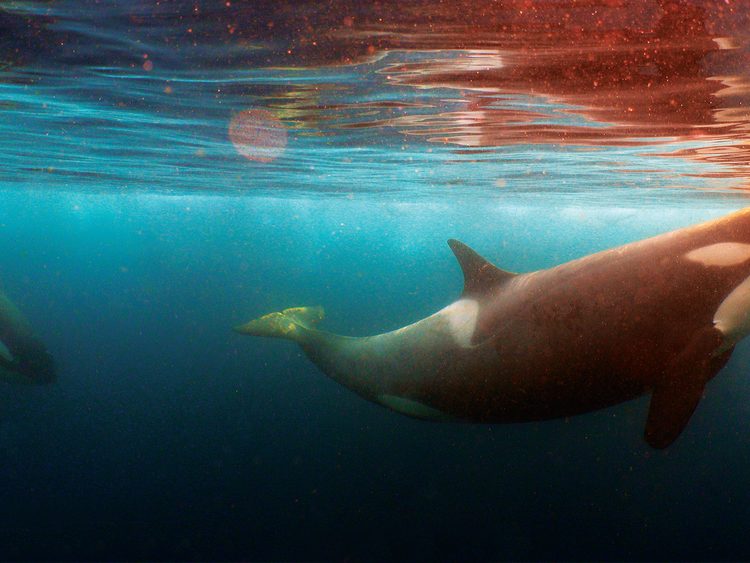
Antarctic orcas – researchers were able to observe and record orca behaviour with greater flexibility and freedom. The drone ventured far beyond the conventional ‘ice hole’ limitations which typically relies on an orca swimming into the proximity of a stationary camera lowered down a hole. With the drones, scientists were able to follow the animals in their home environment. The Antarctic projects also discovered new species of marine life. The data was collected within the expedition of Dr Regina Eisert (TPAonIce).
The Terraces – the drones helped in the search for the elusive pink and white terraces in Lake Rotamohana near Rotorua. Once hailed as the Eighth Wonder of the World, these massive silica formations were located on the lake’s shore but disappeared after the 1886 Mount Tarawera eruption.
Amelia Earhart’s Plane – the drones were part of an expedition (2021) searching for the famous female aviator’s plane which went missing in 1937 near Papua New Guinea.
RMS Niagara – lying in 120m off the North Island’s east coast, the Niagara is one of New Zealand’s most famous wrecks. She sank after hitting German mines in 1940, and having just left Auckland was carrying full fuel tanks (and lots of gold which was mostly recovered). The project involved monitoring the state of the hulk, with the drone confirming that the wreck is leaking oil and, as such, is something of a ticking, environmental time bomb.
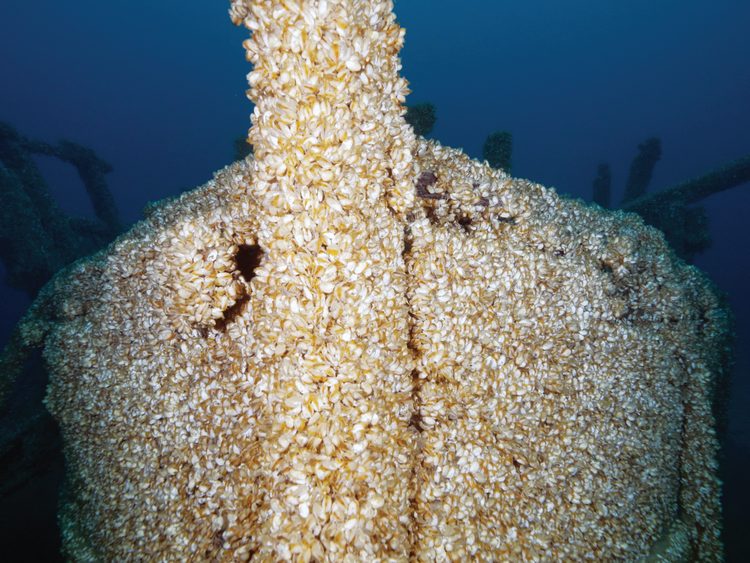
Quagga Mussels – Canada’s Inspired Planet Productions makes marine documentaries. The company used Boxfish drones to document the invasion of quagga mussels in North America’s Great Lakes. The lakes are also infested with zebra mussels but the quagga problem is far worse.
Both species are thought to have arrived in the Great Lakes on ship hulls. Overwhelmed by the mussels, the lakes’ native marine species have nothing to eat and spawning is sporadic (at best). This project also discovered a missing shipwreck (see Africa sidebar).
Finding Africa
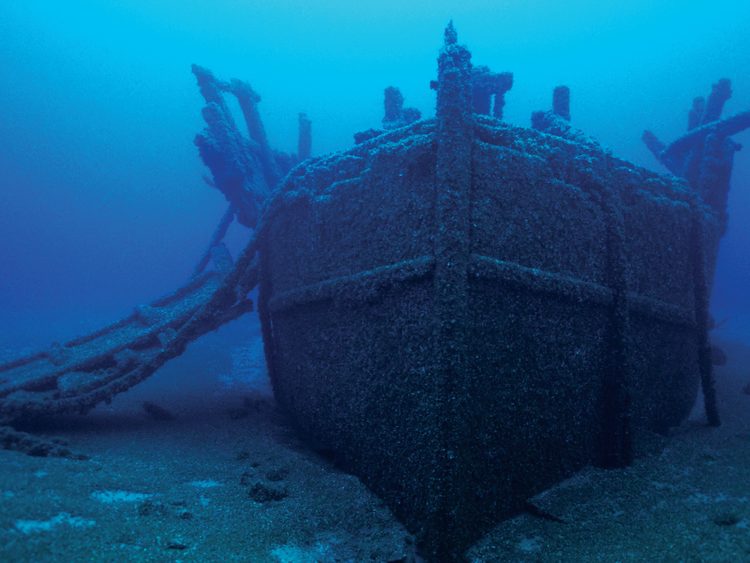
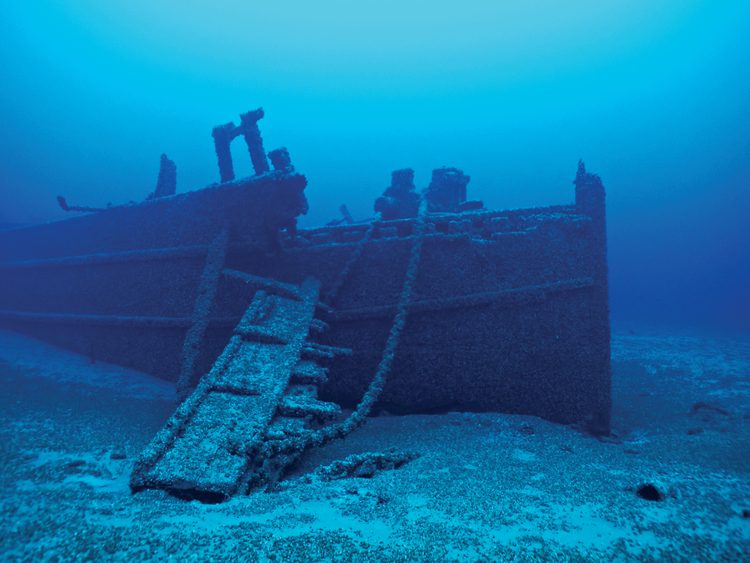
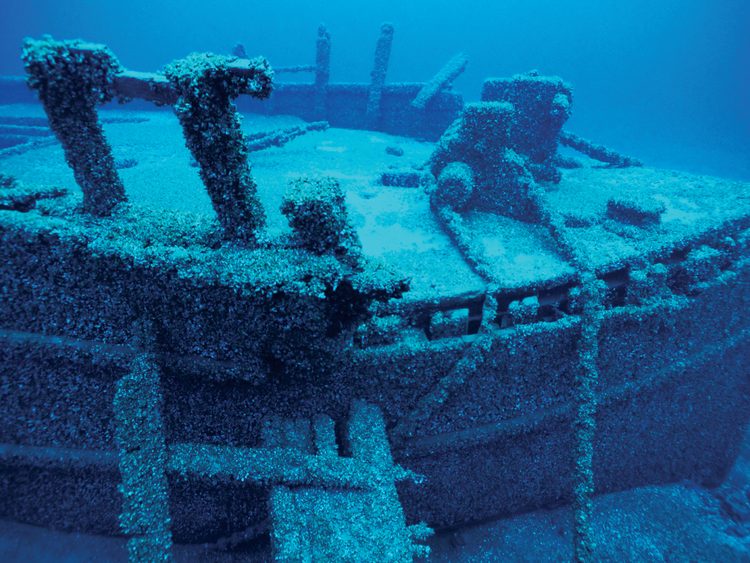
An unexpected bonus of the Boxfish drone used for documenting the infestation of quagga mussels in North America’s Lake Huron was the discovery of a wooden steamship missing since 1895.
The 148-foot Africa vanished while delivering coal from the US port of Ashtabula (Ohio) to Owen Sound, Ontario. Caught in a winter storm, she was forced to cut free the barge (the Severn) she was towing. The barge drifted ashore, but the Africa disappeared with the loss of 11 lives.
The Canadian film crew (Inspired Planet Productions) discovered the wreck by chance, lying upright at a depth of 85m. The team was filming a documentary (All Too Clear), revealing how the quagga mussels have destroyed the biodiversity in the Great Lakes.
Some 131 years after she disappeared, the Africa is perfectly preserved but encrusted with mussels. (Scan the QR code on the left to view some of the quagga/Africa footage).
Making movies
Boxfish drones are particularly popular in the underwater documentary industry. One model in the range – the Luna – has been tweaked to meet the sector’s high-definition filming requirements.
While all models carry a high-end camera, the Luna is fitted with Sony’s full-frame, 8K version. Film crews appreciate the camera’s superior low-light capabilities. For tethered drones, the fibre-optic umbilical uploads footage to the surface console at 10 gigabytes per second – ideal for 4K video. For 8K video (much larger files) the data is stored onboard the drone and downloaded when it returns to the surface.
Stability is critical for capturing high-quality footage. The moviemaking drone is trimmed to achieve neutral buoyancy, creating a naturally stable platform that can hold position efficiently in the water. Because the vehicle neither sinks nor floats, the thrusters require less effort to maintain depth and position, helping to extend battery life. The aluminium and carbon-fibre construction provides the strength needed for field operations while minimising weight.
Technology partners
In the 10 years since its inception Boxfish has teamed up with numerous organisations around the world – companies that often are also clients – and which sometimes supply pieces of the specialist equipment that goes into each drone.
These ‘technology partners’ also help to identify new opportunities and solutions to tricky requirements. The Inspired Planet film production company, for example, has provided valuable insight into the needs of underwater films crews, helping guide the development of the next generations of underwater filming tools.
Boxfish (the creatures) are relatively slow swimmers and rely on stability rather than speed when feeding. They use their fins to hover, brake and turn sharply. Boxfish drones behave in much the same way. Compact, efficient and very clever.
Another example of Kiwis thinking outside the square or, perhaps in this case, outside the box.