Forty nations, new boats and a Wellington father-and-son crew line up at the second World Sailing Inclusion Championships, ahead of an expected decision on the Brisbane 2032 Paralympic programme.
Racing starts today at the 2026 World Sailing Inclusion Championships in Portimão, Portugal. World Sailing says 222 athletes from 40 nations are entered across nine medal events. The inaugural championships in Mussanah, Oman, last December drew 154 athletes across four classes.
Sailing has been missing from the Paralympic Games since Rio 2016. The International Paralympic Committee (IPC) dropped it for Tokyo after ruling it did not meet its minimum criteria for worldwide reach, and it was also left off the programme for LA 2028. World Sailing lodged a bid with the IPC last December for Para sailing’s return at Brisbane 2032. The IOC has said the Olympic and Paralympic sports programme decisions are expected towards the end of this year.
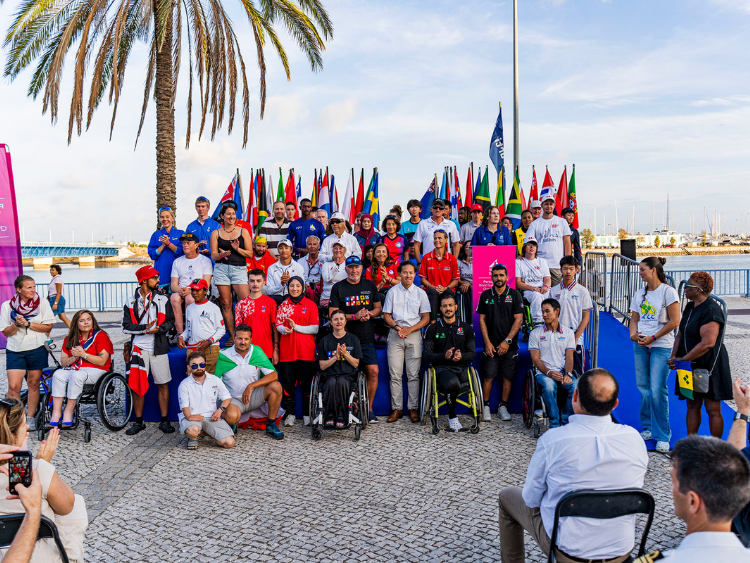
World Sailing President Quanhai Li tied this week’s racing to that bid at Sunday’s opening ceremony. “Every start, tactical manoeuvre and finish line crossed proves that Para Inclusive Sailing is high-performance, vibrant, and expanding across the globe,” he said.

The programme is broader than it was in Oman. The Challenger trimaran makes its world championship debut in the one-person multihull event. Vision-impaired crews race RS21 keelboats, and Para Inclusive WingFoil appears as a demonstration discipline. The Hansa 303, RS Venture Connect and 2.4mR fleets continue.
Barbados, Jamaica, St Kitts & Nevis and Vietnam are among the nations competing at the championships for the first time. Many newcomers have come through World Sailing’s Inclusive Development Programme (IDP).
Jamaica’s Andre Daley began sailing in June through an IDP in Antigua, following a scuba-diving accident in 2025. “That was my first time sailing. I learned how to sail, learned the parts of the boat, and learned a lot. I’m still learning this week as well,” he said.
Thailand’s Tanat Upatising normally races an SV14 at home. He attended the three-day development programme in Portimão before racing and is sailing the RS Venture Connect for the first time. “I hope we can take what we’ve learned here back to Thailand and keep building, so that we can grow from an emerging nation into something more,” he said.

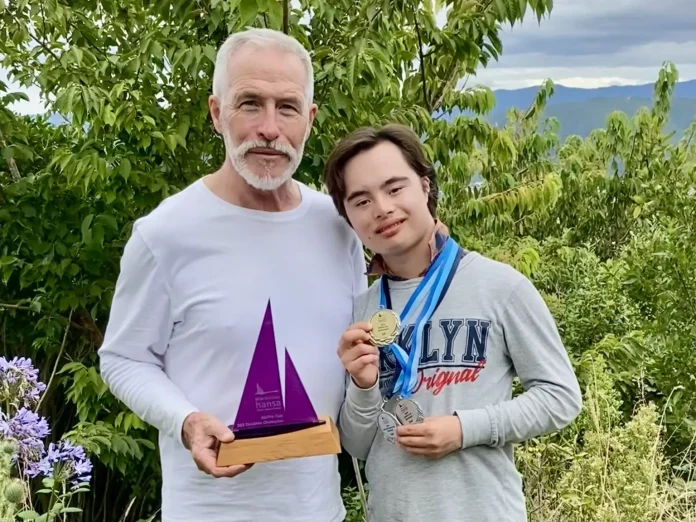
Wellington’s Xervier Doney is one of the pathway stories World Sailing highlighted before the regatta. The Sailability Wellington sailor is racing the Inclusive Two-Person Keelboat in a Hansa 303, with his father, Paul, as crew (see our earlier story).
The America’s Cup is backing the championships, continuing a collaboration with World Sailing announced last December. Under that arrangement, the first tranche of funding went to travel grants, coaching and equipment for emerging nations. The remainder was earmarked for classification, officials and the structures behind the Brisbane bid. Announcing the deal, Grant Dalton said: “Sailing is an inclusive sport at all levels, and we would like to see a future with para sailing as part of the America’s Cup, with the possibility of a para sailing team competing in the AC40 Class.”
The Hansa 303 fleet includes Britain’s Rory McKinna, who won the class in Oman, and Poland’s Piotr Cichocki, last year’s two-person champion. Home sailor João Pinto also races; he finished second to McKinna in Oman and is ranked world number one in Hansa 303 singles.
Racing continues until Saturday 10 October. The event is run with Vela Solidária, the Municipality of Portimão and the Portuguese Sailing Federation.