It may surprise many boaties to learn that there is currently no reliable way to navigate underwater. GPS signals– and indeed almost all radio waves – are rapidly absorbed by water, leaving a compass and dead reckoning as the only practical navigation tools available to divers. So, when Suunto announced the Nautic dive computer, featuring built-in GPS, a digital compass and inertial navigation, it generated considerable excitement within the diving community.
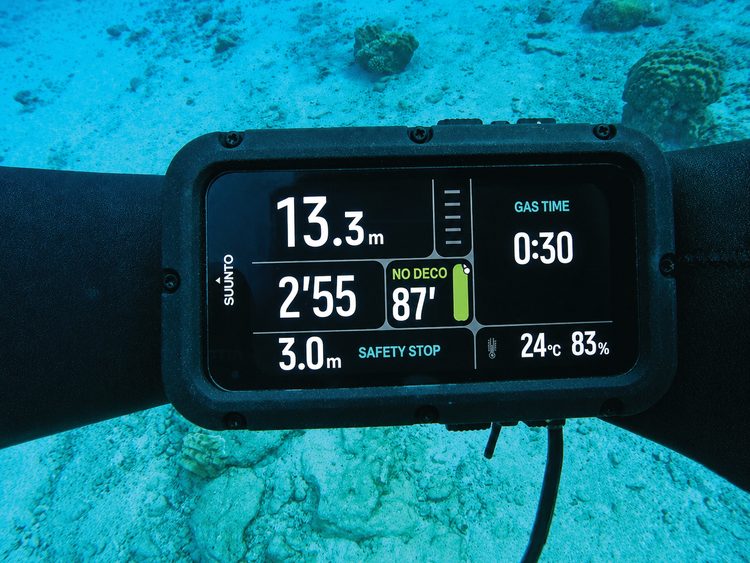
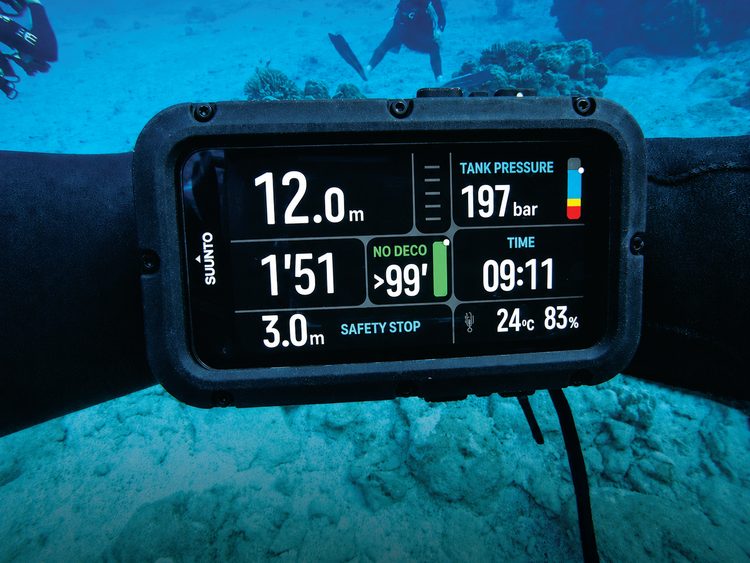
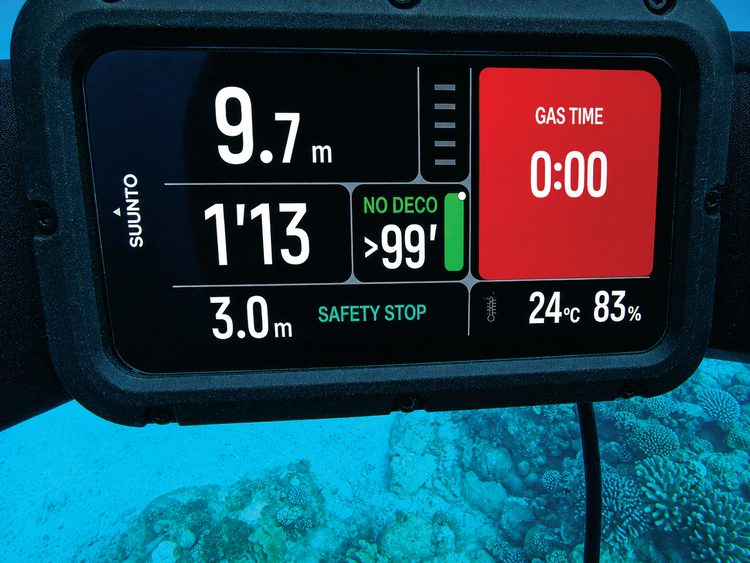
The large, bright 3.25-inch AMOLED display is among the best in the industry and is exceptionally easy to read in a wide range of conditions. The unit also boasts several thoughtful features, including a 40-hour battery life and a built-in LED torch for additional versatility. The bungee-strap wrist mounting system is one of the easiest designs I have used, particularly when fitting or removing the computer while wearing bulky dive gloves.
The dive computer features include everything you would expect from a premium model, including support for an integrated wireless tank pod that transmits cylinder pressure directly to the unit. It supports multiple gas mixtures and offers comprehensive dive metrics suitable for both recreational and technical divers. The display is fully customisable, allowing users to choose exactly which information and warnings are displayed. It can also be inverted to suit either the left or right wrist, while a button-lock function prevents settings from being changed accidentally during a dive.
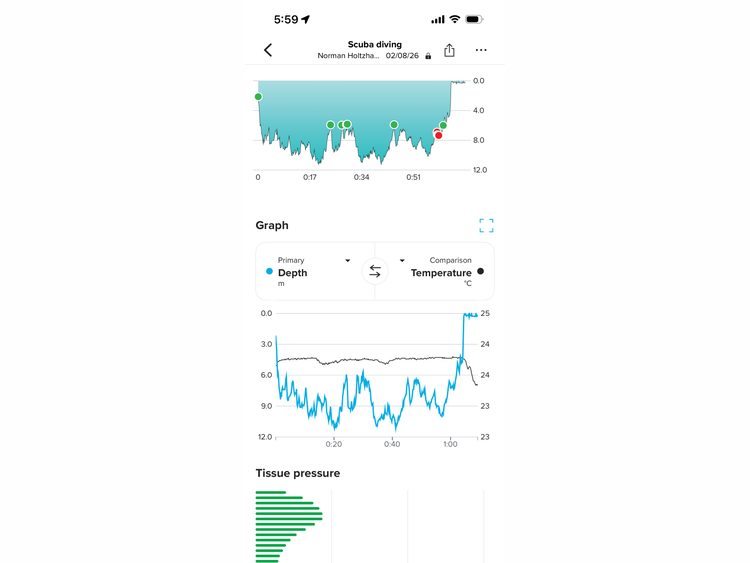
However, the real innovation lies in the Nautic’s navigation capabilities. Above the surface, the GPS receiver and mapping software support downloadable charts that can be used to navigate to the dive site. Once underwater, where GPS signals are no longer available, the Nautic relies on its digital compass with tilt compensation, depth sensor and accelerometer to build a detailed three-dimensional record of the dive. This is linked to the GPS position recorded when entering and leaving the water, creating a remarkably accurate reconstruction of the entire dive. The tracking process runs continuously in the background, although it is not displayed in real time during the dive.

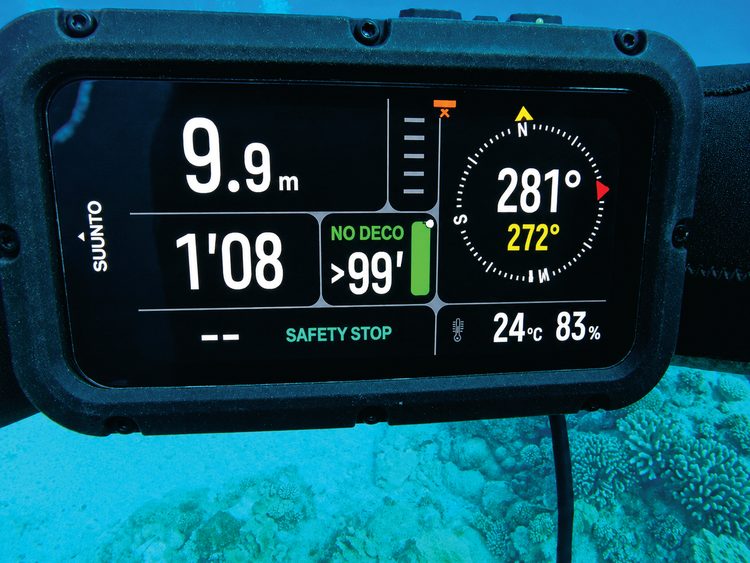
The compass itself is particularly intuitive. Simply point the unit in the direction you wish to travel, press the heading button, and the display continuously indicates which way to turn to stay on – or return to – that heading. It is a simple feature, but one that makes underwater navigation considerably easier.
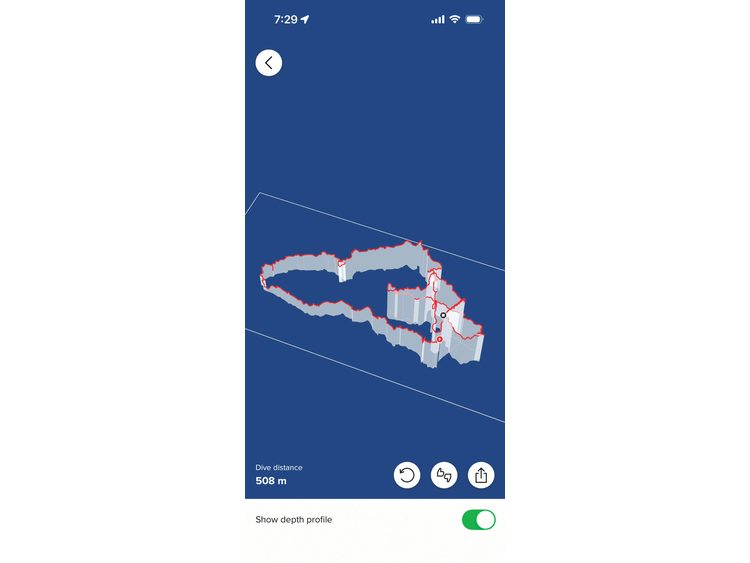
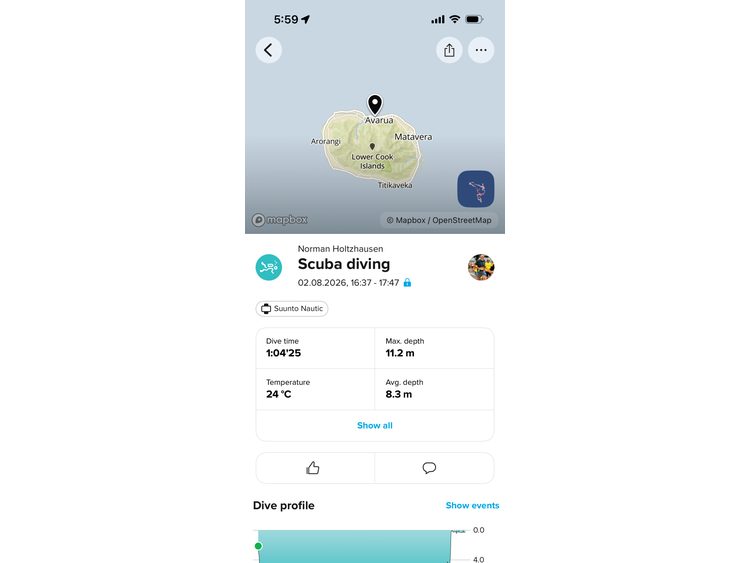
After the dive, synchronising the Nautic with the Suunto smartphone app reveals one of its most impressive features: a fully interactive three-dimensional representation of the dive. This displays your depth profile, direction of travel and estimated underwater track, while also calculating the total distance covered. The 3D model can be rotated and viewed from any angle, and detailed graphs are available for depth, water temperature, tissue pressure and any alarms that were triggered during the dive.
The Nautic is equally useful above the surface. It can be used as a handheld chart-plotter and digital compass, while integrated tide and weather widgets synchronise through the smartphone app to provide up-to-date local conditions.
This is an impressive piece of technology that brings genuinely new capability to the dive computer market. For the recreational diver, it is quite possibly the only dive computer you will ever need. I have used it on every dive since receiving it, and I would not want to be without it.

Further information: www.suunto.com