Designed for tides first, boats second
Broome sits on the south western edge of the Kimberley region in northern Western Australia, around 2,400 kilometres north of Perth. For those unfamiliar with the area, the defining challenge is not distance alone but tide. The region experiences some of Australia’s largest tidal ranges, creating long expanses of exposed beach and shallow water that can restrict conventional rescue vessels for hours at a time.
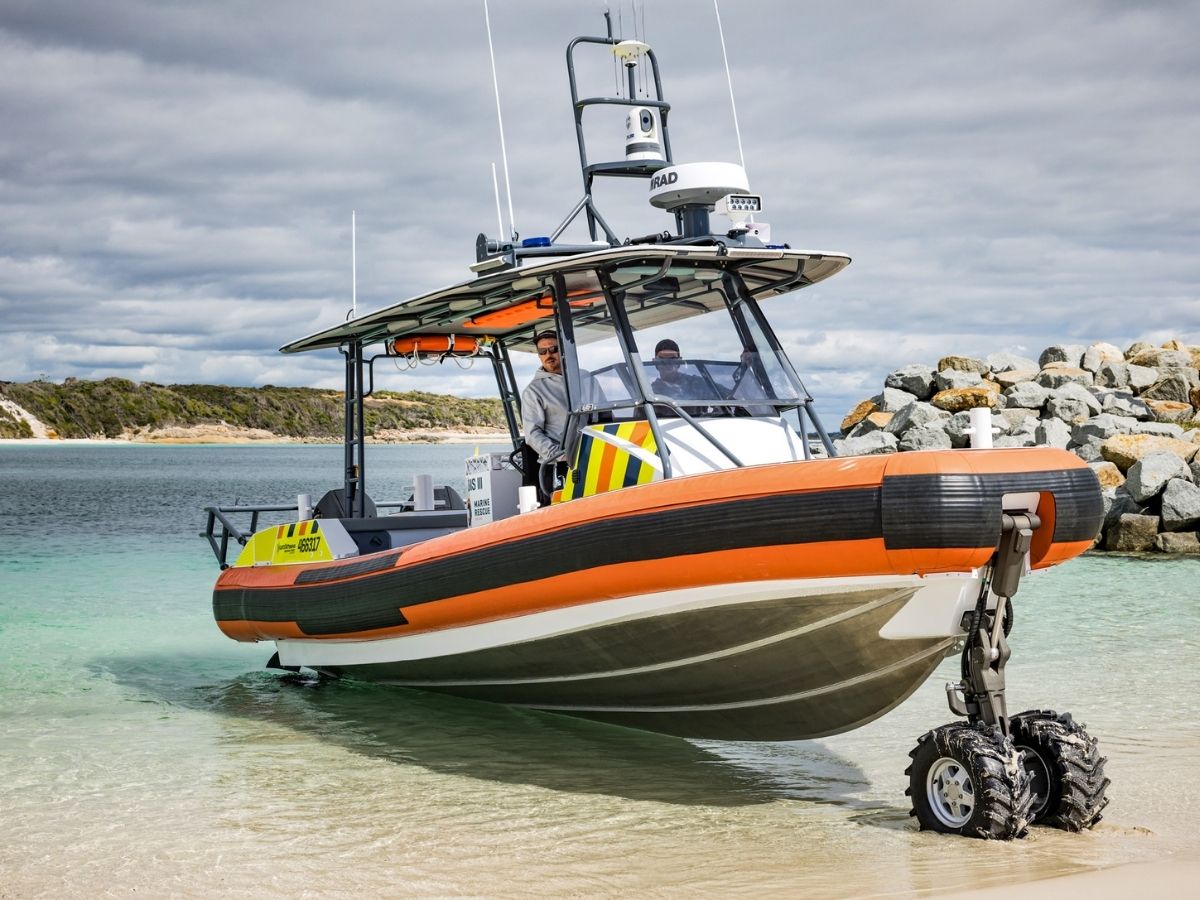
That reality shaped the design brief for IBIS III, the new amphibious rescue craft built by Westerberg Marine for the Broome Volunteer Sea Rescue Group. At the centre of the concept is Anura’s S45 Electric Over Hydraulic amphibious system, allowing the vessel to move seamlessly between land and water without relying on ramps or deep water access.
From its base at the Port of Broome, the volunteer rescue unit covers an operational area stretching from 80 Mile Beach in the south to Cape Leveque in the north. That responsibility spans more than 300 kilometres of coastline, much of it remote, shallow, and exposed. In this environment, amphibious capability is not a convenience. It is a requirement.
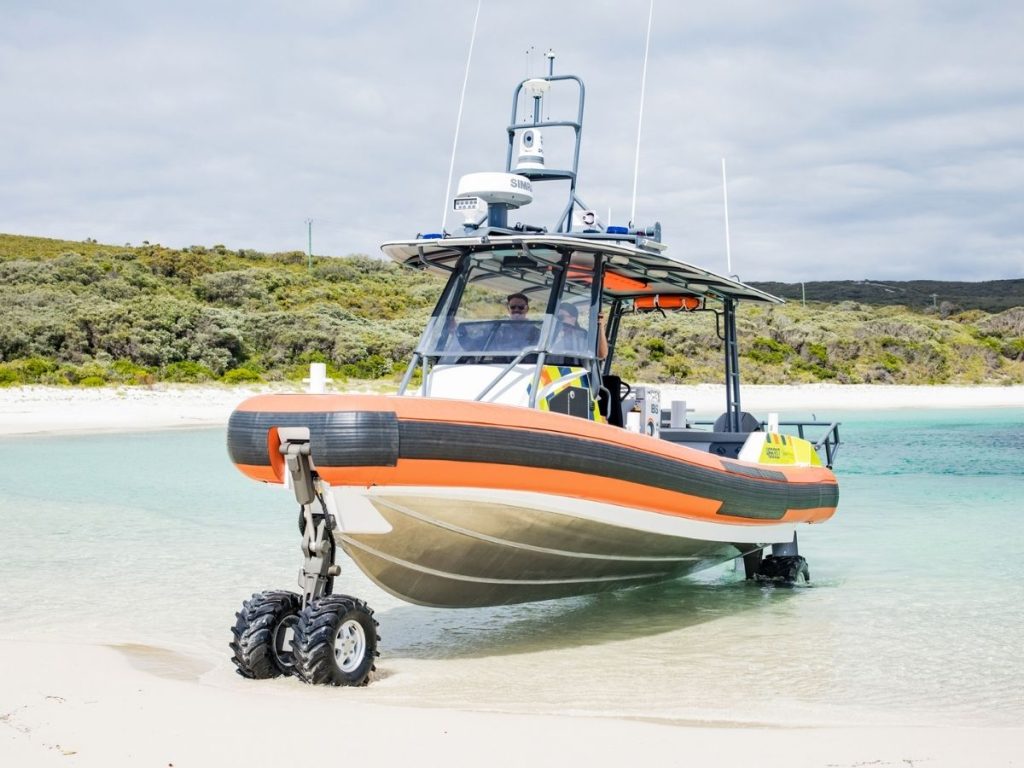

Anura system at the core
The Anura S45 system provides retractable wheel driven mobility, delivering high traction, strong ground clearance, and robust load carrying capacity. These characteristics are critical for Broome’s tidal flats, where crews often need to launch directly from sand or traverse long beach sections to reach the water.
By integrating the Anura system into a purpose built rescue platform, IBIS III allows crews to respond regardless of tide state. It also enables recovery operations in areas where returning to a ramp would be impractical or impossible within the required timeframe.
The system’s integration marked a first for Westerberg Marine, requiring close collaboration throughout the build.
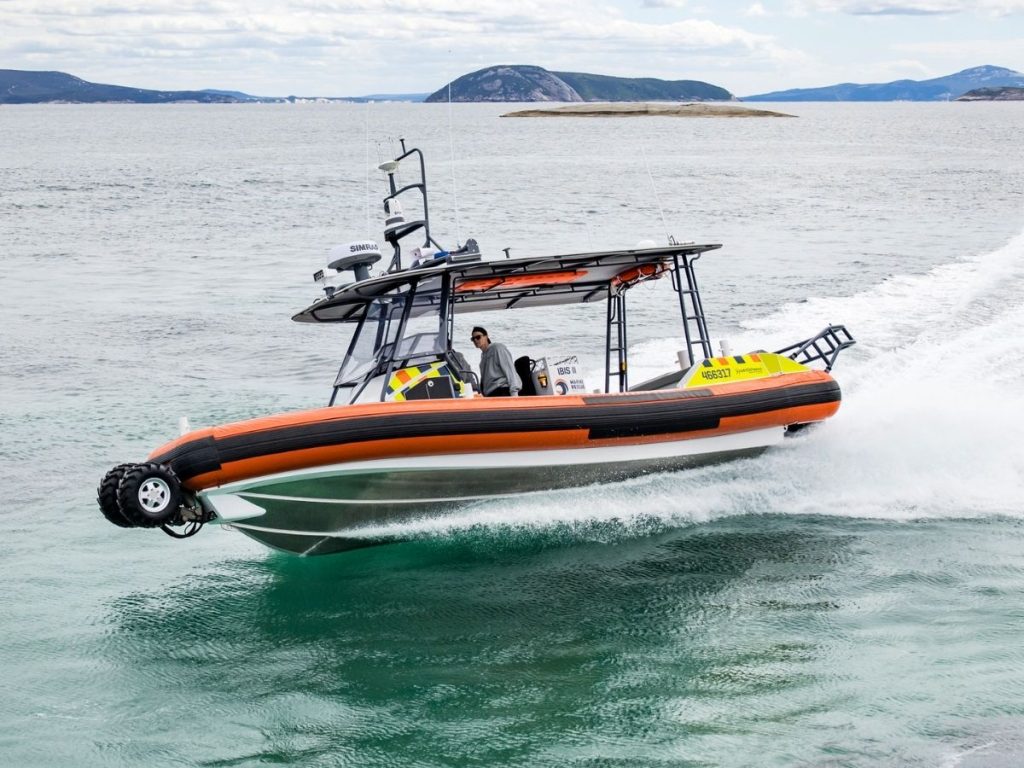

Trials in operational conditions
The vessel was delivered in late November 2025, with three members of Broome Marine Rescue, including the unit commander, conducting sea and land trials during handover. These trials were carried out in real working conditions rather than controlled demonstrations.
Operator feedback focused on handling, control, and the smooth transition between land and marine modes. The ability to shift confidently between environments without hesitation was identified as a key strength, particularly when operating along tidal beaches and shallow approaches.
IBIS III was manufactured at Westerberg Marine’s Albany facility before being transported north for testing in Broome’s operating environment.
The rescue platform
IBIS III is built on Westerberg Marine’s proven 9.5 metre alloy RIB platform. Power comes from twin Mercury SeaPro V8 300 horsepower outboards, selected for durability and sustained rescue work rather than outright speed.
The vessel is fitted with advanced communications equipment, Simrad navigation systems, and integrated emergency lighting. Together, these systems support emergency response, patrol duties, and coordination across the unit’s large coverage area.
While the electronics and propulsion are familiar elements in modern rescue craft, the amphibious system fundamentally changes how and when the vessel can be deployed.
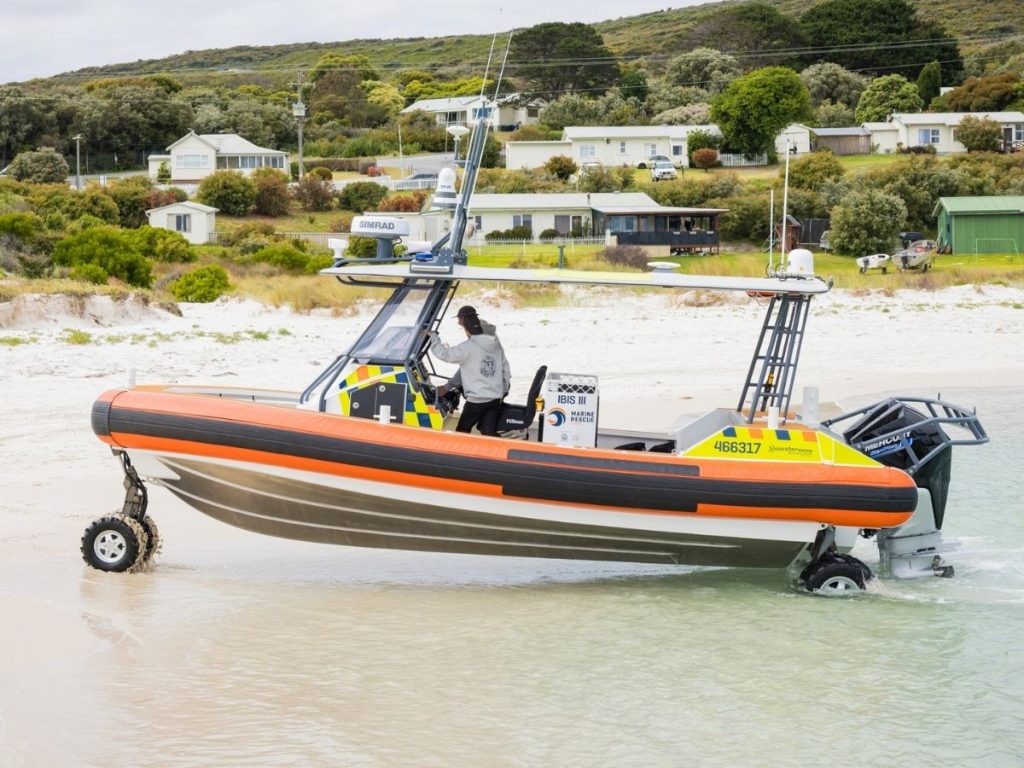
A milestone build for Westerberg Marine
For Westerberg Marine, the project represented its first amphibious rescue vessel and a significant technical step.

Rhys Jones of Westerberg Marine reflected on the process.
“This was our first vessel incorporating the Anura amphibious system, and it represented a significant learning journey for our team. Anura’s expertise and support throughout the process were invaluable, ensuring a smooth build and an excellent final outcome. We thrive on tackling technically demanding and innovative projects, and we’re excited to continue this partnership on additional vessels now underway.”
Founded in the 1970s, Westerberg Marine is a long established Western Australian builder known for custom aluminium construction and vessels designed for hard use. While the brand may be less familiar to New Zealand readers, its approach aligns closely with the expectations of commercial and rescue operators operating in tough conditions.
Anura also highlighted the strength of the collaboration.
“The Westerberg Marine team were professional, pragmatic, and highly collaborative throughout the project, qualities we value immensely in our build partners. Their commitment to quality and their willingness to push into new territory made this an exceptional first project together. We look forward to supporting the next stages of their growing amphibious programme.”
Following the successful Broome trials, Westerberg Marine reports strong interest in amphibious vessels, with three new enquiries progressing as solid opportunities. The company is now advancing its next amphibious project, a seven-metre craft scheduled for handover in May 2026.
Anura’s S45 Electric Over Hydraulic amphibious system