Maritimo 100 lines up for the Rolex Sydney to Hobart Yacht Race for two clear reasons. Bill Barry-Cotter still enjoys sailing offshore, and he wants to do it on a yacht that works properly over a long race. At the same time, what performs well offshore on Maritimo 100 feeds directly back into how Maritimo designs and builds its boats.
That thinking puts function and reliability first. Comfort is not added for show. It exists because a crew that can operate effectively over days at sea makes better decisions when it matters.
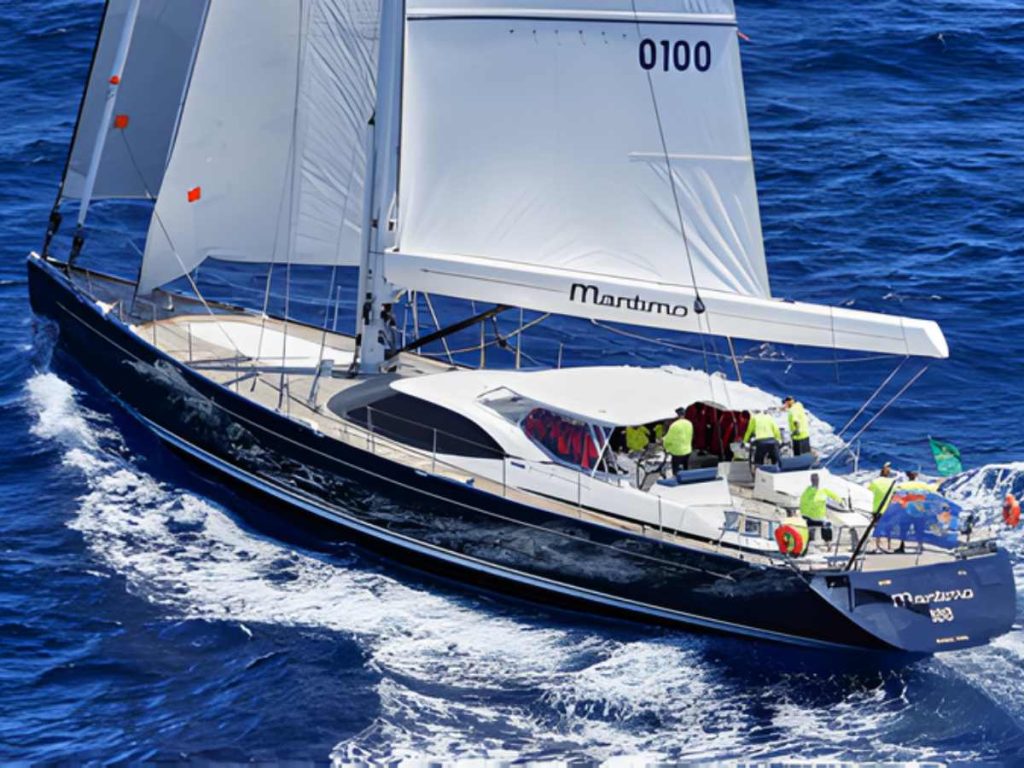
At 30.4 metres, Maritimo 100 is a 100-foot Oyster sailing yacht and one of only two Oyster 100s ever built. Launched in 2012 and designed by Ed Dubois, she carries Oyster’s long-range cruising pedigree into a race environment without abandoning it. Purchased from Newport, Rhode Island in early 2024, she arrived in the Southern Hemisphere with a clear role.
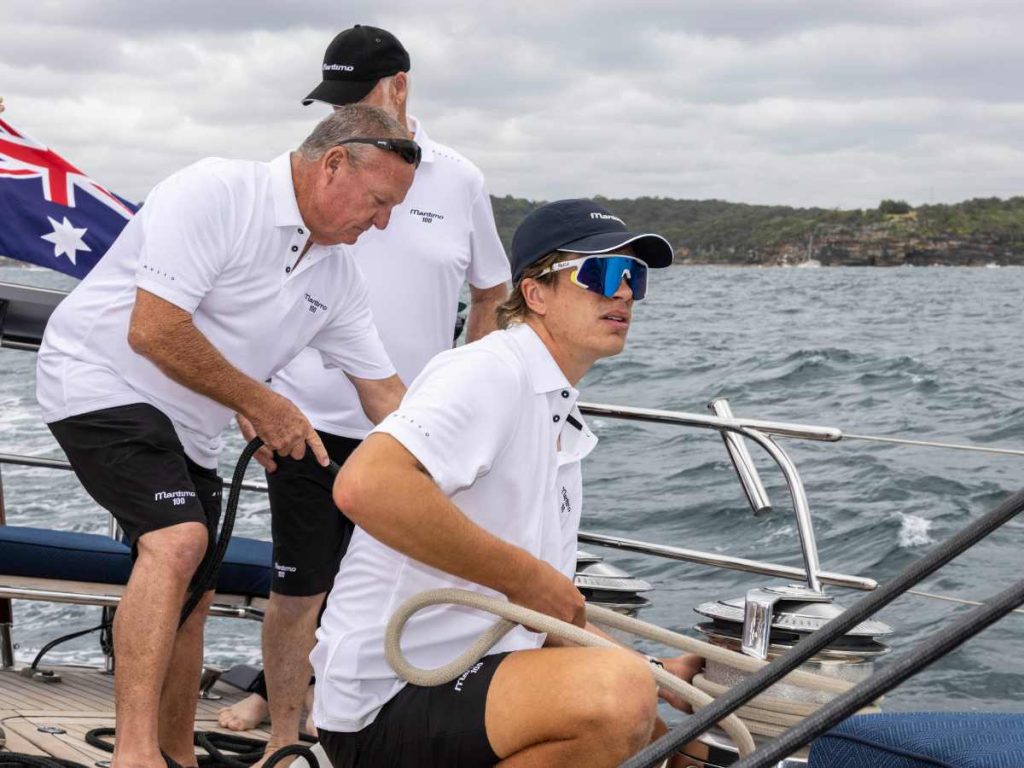
The yacht will be skippered by Peter Jones, marking his 28th start in the race. At 81, Barry-Cotter will also be aboard, sailing with family, long-time friends, senior Maritimo staff, and an experienced core crew familiar with the programme. It is a deliberate mix of familiarity and experience.
Jones says the brief was simple. Engineering came first. Comfort was treated as part of performance, not a compromise. Not because the owner intended to sail every mile, but because crews who can work efficiently stay sharper for longer.
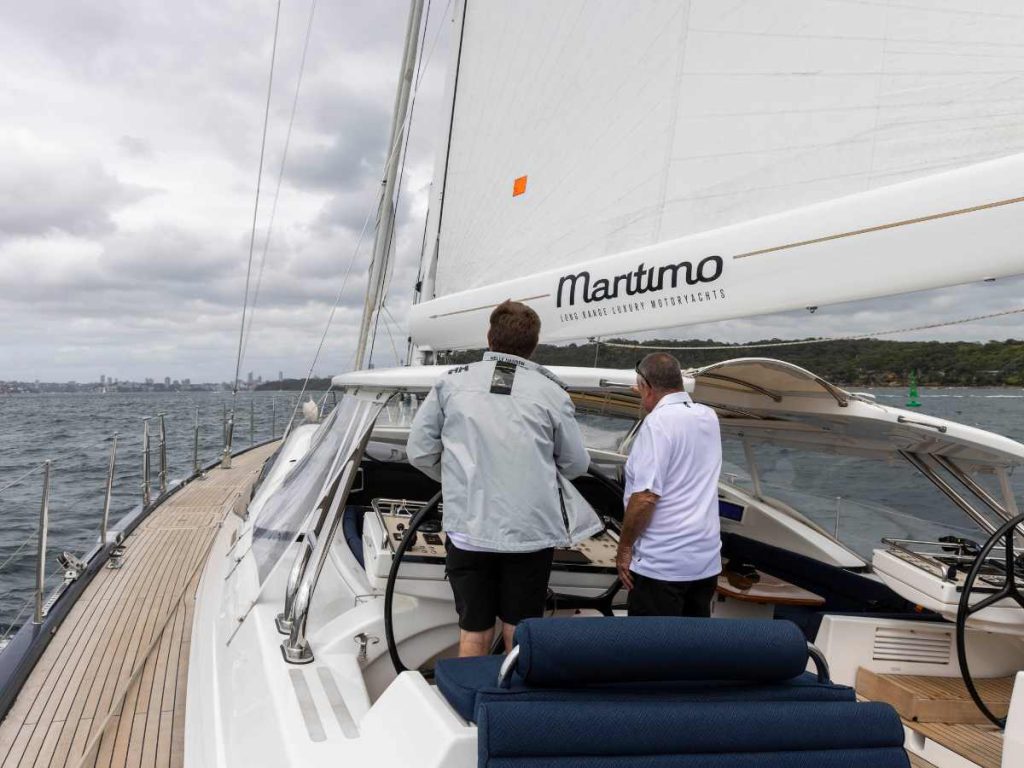
What surprised the team was how well the boat sailed while retaining that balance.
Maritimo 100 does not follow the stripped-back Hobart formula. Weight is carried where it serves the boat. The layout is arranged to function cleanly from start to finish rather than peak for short periods. She is one of six 100-footers competing in the 80th anniversary edition of the race, but her priorities are different.

Those priorities align with Maritimo’s broader interests. Many of the systems onboard mirror those used across the company’s luxury motor yachts. Electrical layouts, plumbing, air conditioning, and general engineering standards are directly comparable.
Manufacturing manager Paul Wrench describes the yacht as a working reference point, because offshore racing exposes problems quickly.
“All plumbing, electrical, engineering, air conditioning, all the facets we put into our luxury motor yachts are on board this boat.”

Build quality becomes obvious once the boat is offshore. As an Oyster build, access and consistency are strong. Lockers open properly. Floor panels lift without effort. Systems are laid out logically. These details reduce workload and fatigue when the boat has been running for days.
The rig reflects the same restraint. A carbon mast is supported by multiple forestays, checkstays, and backstays. Manoeuvres are kept measured to manage load and protect the rig. Repeatable handling takes priority over chasing peak numbers.
The sail wardrobe is substantial, with around 1,670 square metres available, but it is used conservatively. The team moved from cruising sails to a mid-range cruiser-racer inventory. A new mainsail and reaching headsail were added, along with a jib and staysail on the inner forestay. Running rigging was also upgraded to reduce friction and physical effort.
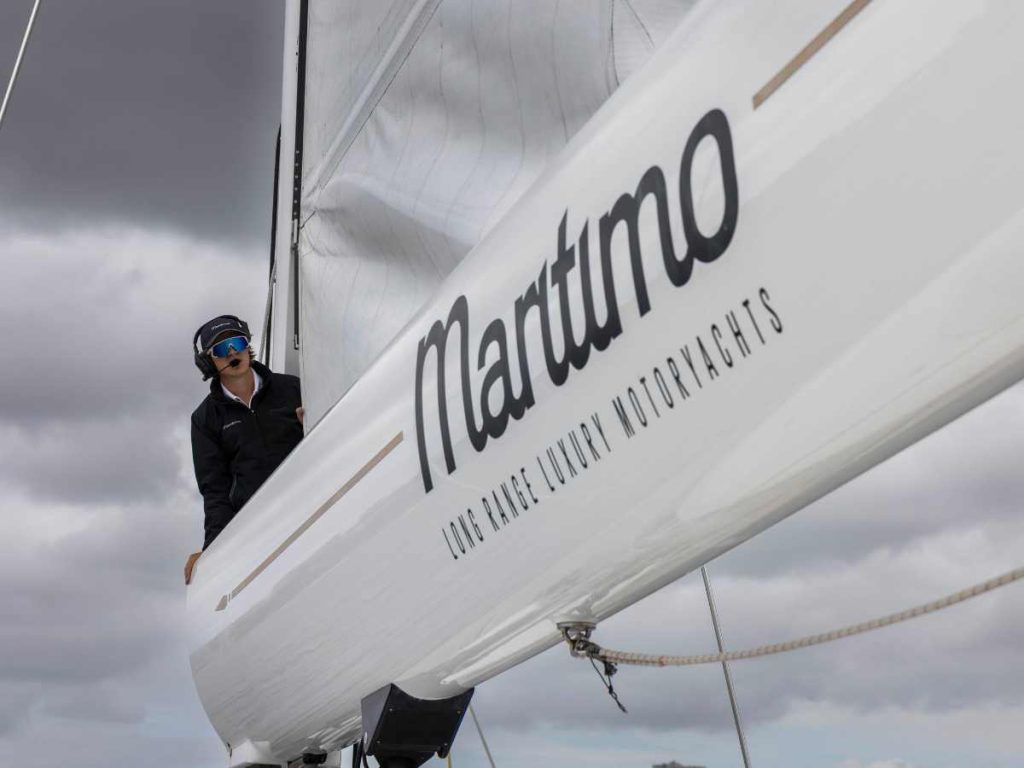
Last year’s preparation was rushed and sail damage followed. This year, the advantage is straightforward.
“We had some damage to the sails which slowed us down quite a bit.”
Every sail is now available for the full race.
Below deck, the yacht is arranged to support continuous operation. The cockpit is protected and usable, with refrigeration under both cockpit tables so food and drinks remain accessible without disrupting watches. Inside, there is space to navigate, eat, and rest. Air conditioning runs throughout. The galley is equipped for offshore use, with gimballed cooking, large refrigeration capacity, underfloor freezers, and a coffee machine included for practical reasons.
The repower programme delivered a clear outcome. Fuel consumption dropped from around six litres per mile to two. Offshore racing places sustained load on machinery. Systems that perform here earn trust elsewhere.
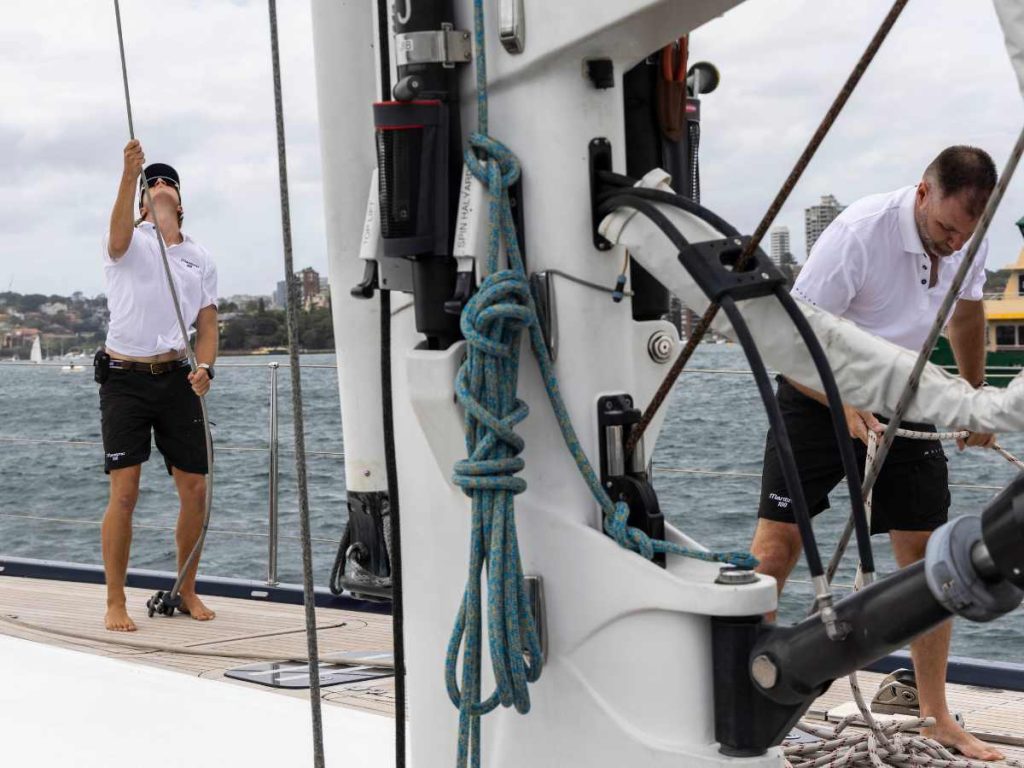
Maritimo 100 is not chasing hardship or spectacle. She is built to sail well, operate cleanly, and finish intact.
For Barry-Cotter, the programme reflects a lifetime in boatbuilding and competition.
“It will be a once in a lifetime opportunity for me to do this race with a group of people who have been involved in my companies over the past 60 years,” he says.
That perspective explains why Maritimo keeps returning to the Sydney to Hobart. The race still rewards boats that work, crews that endure, and decisions that hold up over time.