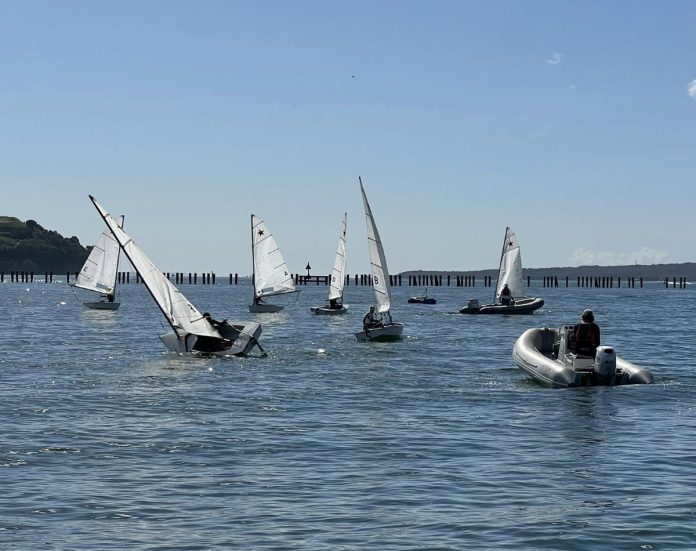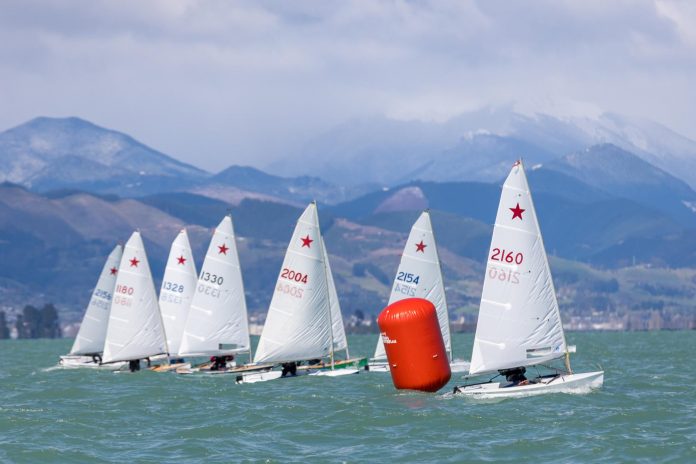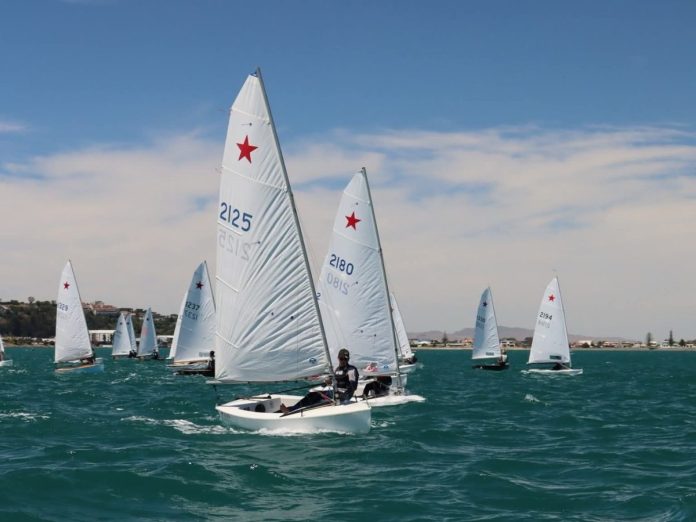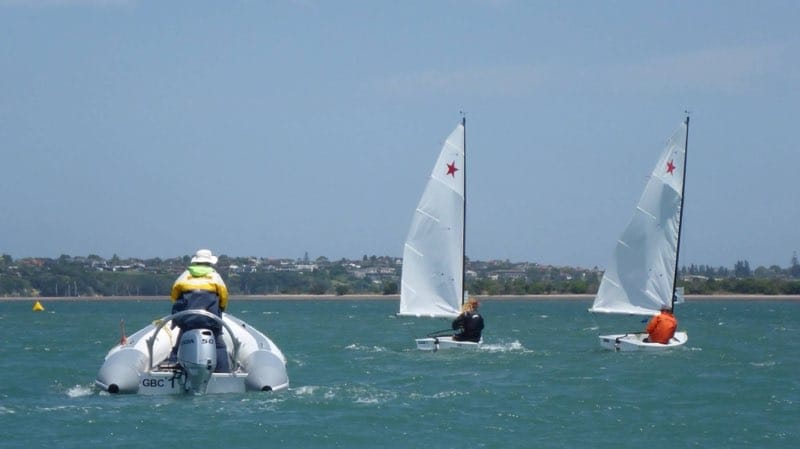
The Starling Match Racing National Championships return to Glendowie Boating Club over Waitangi Weekend, bringing together a tightly selected group of teenage sailors for one of New Zealand’s most closely watched youth regattas.
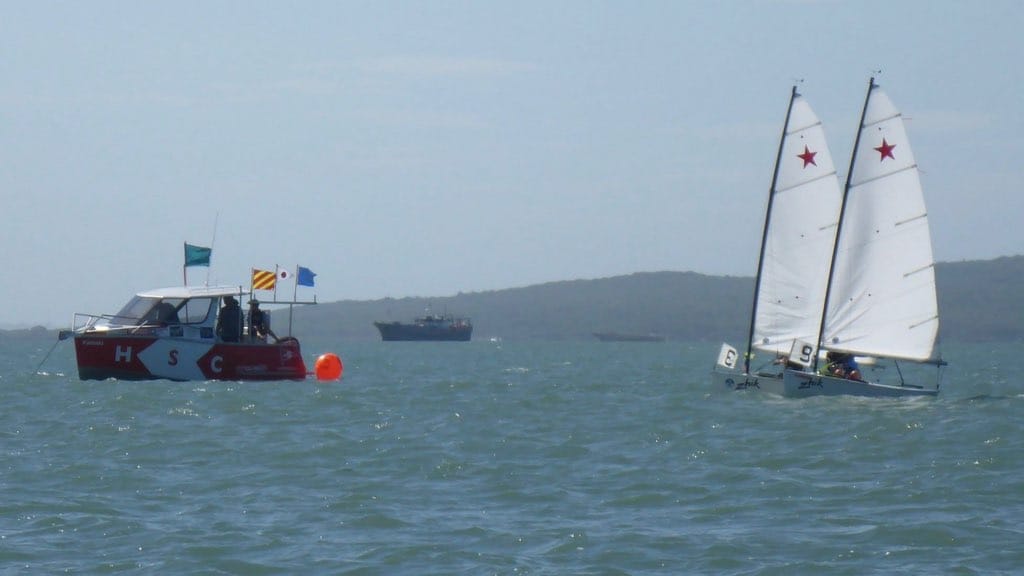
Raced in identical Starling dinghies, the event remains New Zealand’s only youth match racing championship and one of the few pathways where sailors are exposed early to boat-on-boat racing, umpired penalties, and direct tactical pressure.
The Starling itself is a New Zealand-only class, sailed nowhere else in the world. That uniqueness carries through to the nationals, where the format removes equipment variables and places the outcome squarely on judgement, timing, and execution.
Selection through performance
Entry to the championship is limited to 12 sailors. Most qualify by winning their regional match racing trials. Where trials cannot be run, wildcard places are allocated from neighbouring regions. The process is deliberate and restrictive.

Every sailor on the start list has already demonstrated an ability to compete in close quarters and make decisions under pressure. The fleet is small by design, and the standard across it is consistently high.
Many competitors have grown up around the sport, spending years racing, coaching, or supporting from the shore. Match racing tends to reveal that background quickly. It rewards discipline and awareness rather than straight-line speed.
A history that has held its line
The Starling Match Racing Nationals have a long record of producing sailors who later move into the top levels of the sport.
Past winners include Peter Burling and Tom Saunders, both of whom won the title twice before progressing to Olympic and professional sailing careers. Their names sit alongside a wider group of former competitors who have gone on to sail internationally.

That history is one of the reasons the regatta continues to attract attention from coaches and selectors. Performance here is often seen as an early indicator of how a sailor handles pressure and consequence.
Six identical boats
The Starling Class Association owns six identical boats used exclusively for the championship. That structure defines the racing.
With no equipment differences, outcomes are shaped by starts, penalties, positioning, and risk management. Boats are rotated through the fleet, removing any advantage from familiarity. Errors are visible and immediate.
It is a format that places responsibility firmly on the sailor.
Racing under scrutiny
Racing at Glendowie is closely observed. Judges, coaches, parents, and class officials all watch how sailors conduct themselves as much as how they finish.
The regatta often highlights who can recover after a mistake, manage a lead, or close out a tight match. These moments matter more than raw results.
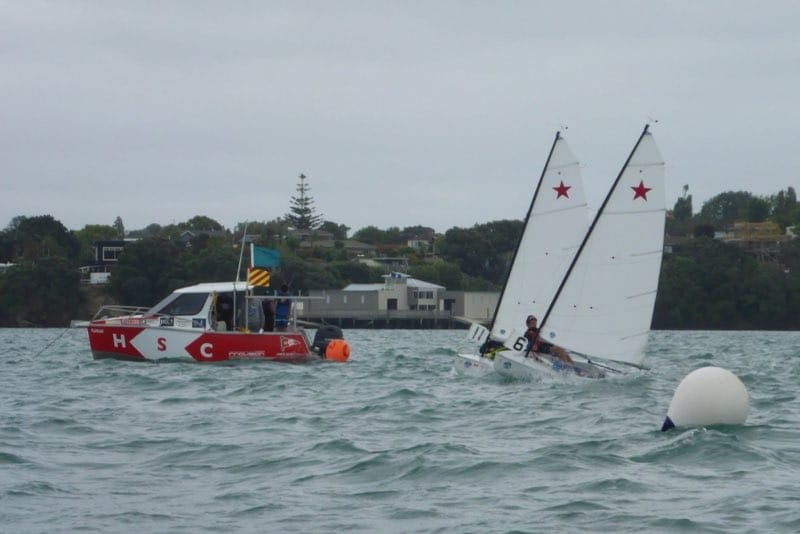
For many of the sailors involved, this will be their first exposure to a regatta where every decision is challenged directly by another boat.
2026 selected sailors
Regional qualifiers

-
North Harbour: Blake McKinnon
-
Auckland: Leo Brown
-
Bay of Plenty: Thomas Linklater
-
Eastern: Ekhi de Jager
-
Nelson / Marlborough: Thomas Yvon
-
Canterbury: Charlie Bridger
North Island wildcards
Finloe Gaites, Nelson Meecham, Hugo Smith, Nate Soper, Joe Roper
South Island wildcard
Lucy Luxford
Reserve
Stavro Purdie
Practice racing will be held on Friday 6 February, with championship racing on Saturday 7 and Sunday 8 February at Glendowie Boating Club.
A regatta that still carries weight
The Starling Match Racing Nationals remain a fixed point in New Zealand’s youth sailing calendar. The format has not softened over time, and neither has the standard required to succeed.
For those selected, the weekend offers an early measure of how they respond when racing becomes personal, immediate, and unforgiving. That remains the reason the regatta continues to matter.