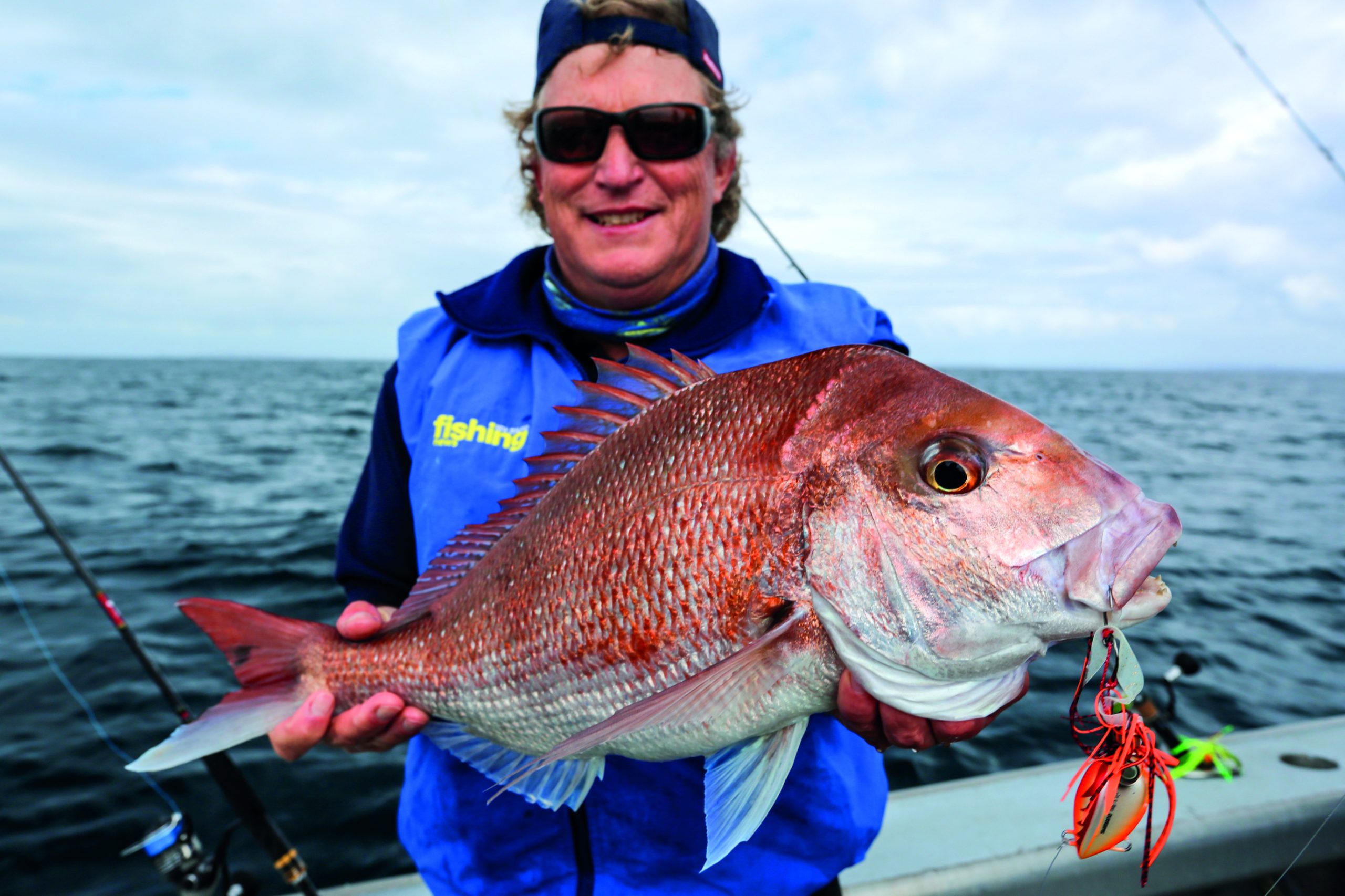
On the plus side, my affliction means I’ve used – and still own – hundreds of different lures, and while nearly all of them work, some definitely work better than others. Interestingly, factors such as the time of day, water quality, depth and clarity, tidal current strength, and the type of baitfish present in the area can influence which lure colours, weights, shapes, and actions snapper prefer. Which is why tackle shops have so many options on display.
So, to save you some of the money and time I’ve spent over the years, I’ll share my six favourite snapper jigs, in no specific order, based on my experience…
Shimano Lucanus slow-jig
This is one of the true OGs of the slow-jigging world. When initially introduced with its somewhat alien appearance, many anglers were skeptical as to its potential, yet 15 or 16 years later, the Lucanus range remains a favourite with snapper and anglers alike.
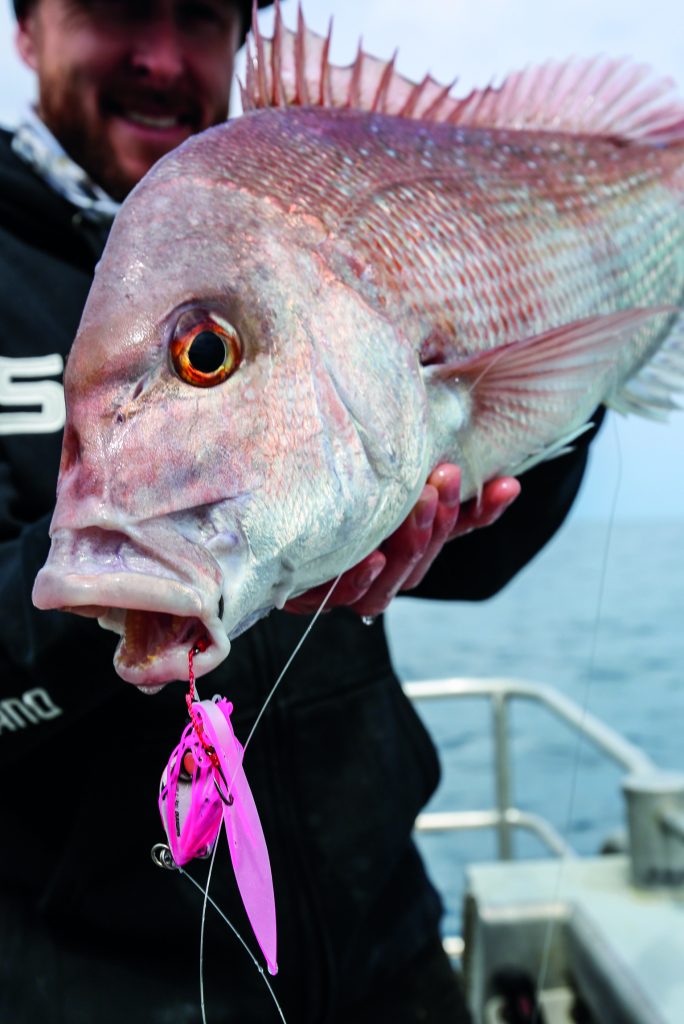
Proven colours: The brightest pinks and oranges tend to work best, including Coastal Crab, Sunset Crab and Pink Shrimp, although chartreuse (Green Shrimp) also has its moments.

Suggested weights: 60-80g in depths between 20-30m; 100-150g in 40-60m; 150g to 100m.
Suggested lure action: Nearly all the lures in this list tend to work best when retrieved from the seafloor using a slow- to medium-speed mechanical-jigging action. This consists of a series of lift-and-drop rod motions, with the reel’s handle mirroring each rod action, making a half-turn of the handle as the rod tip is lifted and another half-turn as it is dropped back towards the water again. These repeated rise-and-fall motions bring the lure’s tendrils and tentacles to undulating life, which snapper find hard to resist, and keep the lure in the ‘bite zone’ for longer during the ascent (typically five to 10 full winds before dropping the lure down again). And since anglers are lifting the slow jig for half of the time, they are potentially simultaneously setting the hooks into any biting snapper.
Another option is to drag these lures along the seafloor; their scudding motions produce puffs of sand and silt, much like mantis shrimps, crabs, and flounders create, attracting hungry snapper as a result.
Shimano Colt Sniper Wonderfall Jigs
This range of relatively small lures tends to punch above its weight, with large snapper and big kings often falling for its charms. While the Wonderfall’s shape is unremarkable, its realistic colours and patterns are top-notch. I just wish Shimano still did the Flatfall Jig range too, as I reckon this was even better!


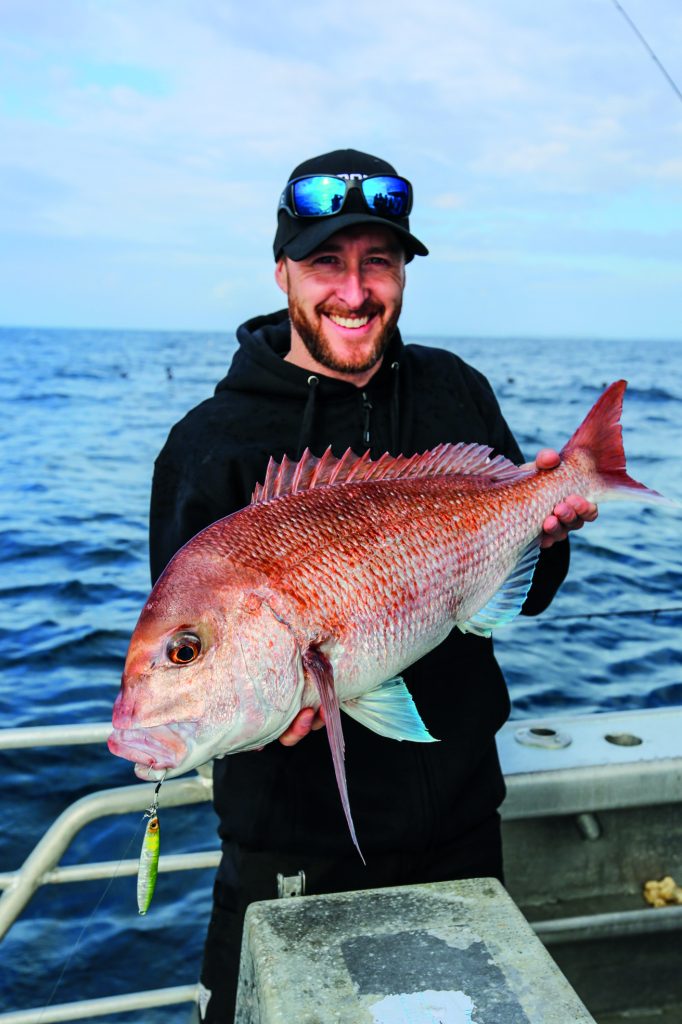
Proven colours: Orange Zebra, Pink Silver, Blue Sardine and Blue Pink.
Suggested weights: 30-40g in water to 30m; 60g in 30-40m; 80g in 40-50m.
Suggested lure actions: A simple lift-and-drop yo-yo type action often does the trick, as does medium-speed mechanical jigging. In both cases, anglers may need to cast well ahead of the drifting boat so the lure has time to get down to the bottom, providing more time for the vertical lifting and dropping movements during which the jig is at its most effective before the current sweeps it out the back.
Ocean Angler Slider/Daiwa Kohga Bay Rubber
I have combined both bulbous-headed brands here, as there isn’t much difference in what they look like or how they perform. These sliding-head-type lures are probably the biggest-selling slow jigs in New Zealand, the OA Sliders especially, and for good reason, as both are lethal.
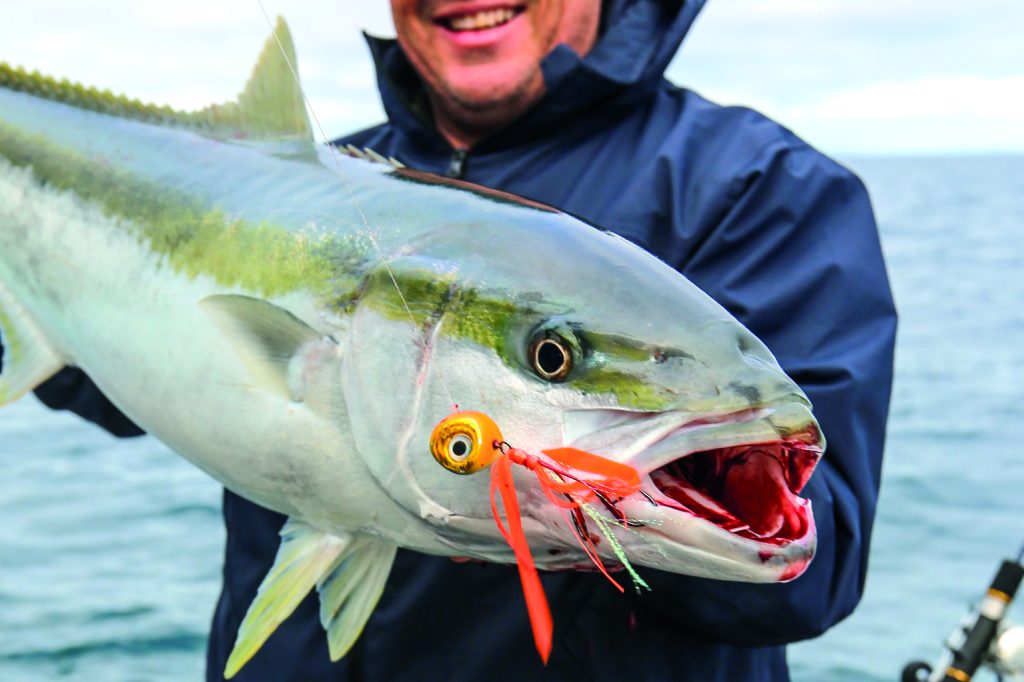
for good reason…
Proven colours: Those in bright orange or pink are super consistent, although Ocean Angler’s Orange Black (with a UV-reflecting black head) can be a star at times.
Suggested weights: This style of lure should be retrieved as vertically as possible, so to maintain better contact with the lure, a little heavy is better than too light. Therefore: 40-60g in 20m; 60-80g in water to 30m; 100-140 in water to 40 or 50 metres; and 200-240g in deep water, or if the wind and tide are making things difficult!
Suggested lure actions: Slow, mechanical jigging works best, but simply leaving the rod unattended with the lure out the back and bouncing along the bottom can catch some surprisingly big snapper at times.
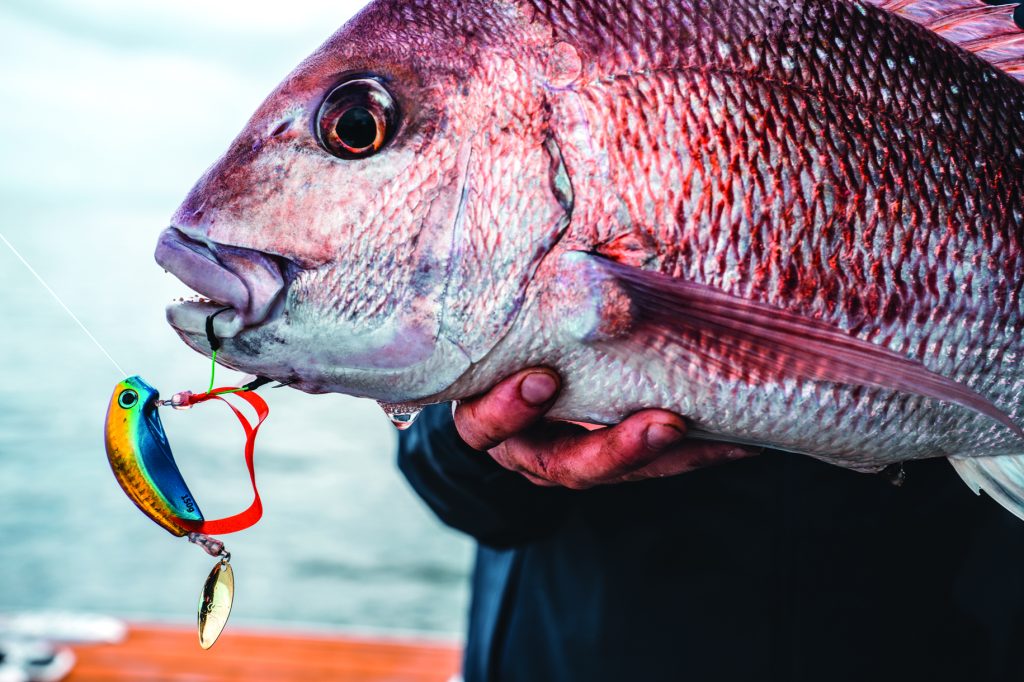
Daiwa Kohga Blade Breaker
These lures look pretty bizarre, with their ‘magic bean’ shape, twirly tendril, and a rotating propeller at the rear, but they are already proving to be ‘the latest and greatest,’ often outperforming proven winners.

Proven colours: Orange and Blue-Pink.
Suggested weights and actions: They should be treated the same as standard ‘slider’ jig types, with similar weights suiting various depths/current strengths and the same techniques to get the best from them.
Ocean Angler Fish Fingers
These lures are hard to beat. A very slender form sees them swooping down at speed to reach waiting fish super quickly. The jigs’ minimal natural action makes them easy for fish to grab, while undulating tentacles on the assist rigs are very attractive.
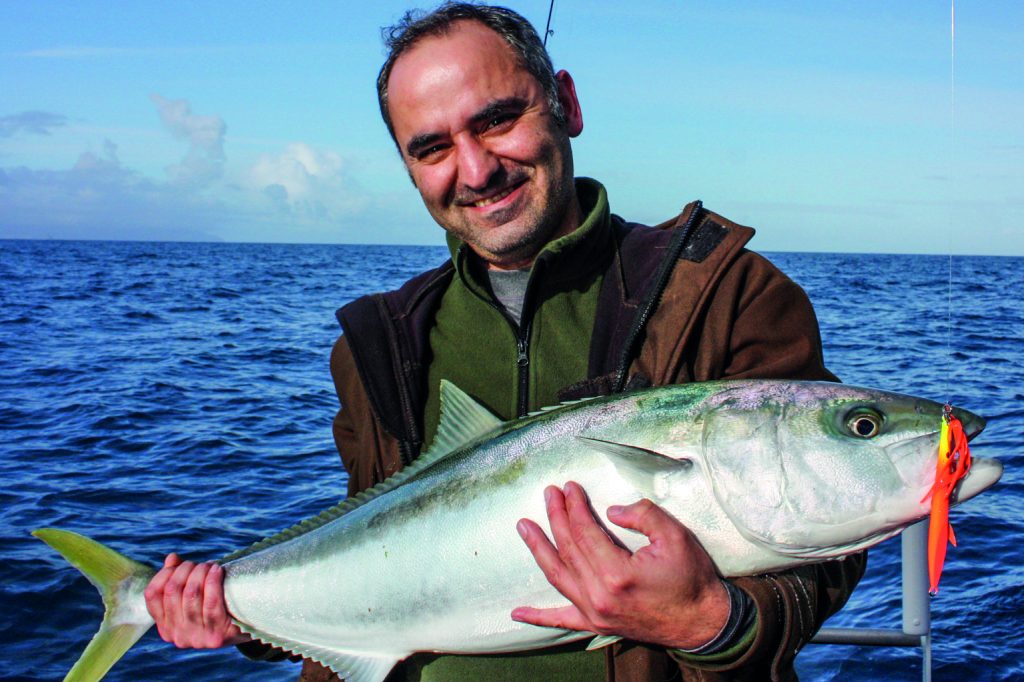
Proven colours: Probably Pink Silver and Orange Lime, although Bruised Banana has its days, and Black Pink often catches the biggest snapper of the day.
Suggested weights: I mostly use 100g as it’s a great size for snapper and kingfish, but the Fish Finger’s slender shape means 80g can still be effective in 40-50m, especially if lobbed ahead of the drifting boat when conditions aren’t ideal.
In the past, I found the heavier 120 and 140g versions useful when depth, wind, and current made for challenging conditions, but their extra weight meant the small hooks sometimes ripped free when bigger snapper shook their heads. The Fish Finger design has since changed into a two-component ‘slider’ configuration, so the components separate, lessening the likelihood of the hooks shaking free.
Suggested lure actions: Mechanical jigging rules. If you want snapper, a slow to medium pace does well – about five to 10 winds off the bottom is sufficient – while faster and longer retrieves work well for medium-sized kingfish.
Oceans Legacy Hybrid Contact
I love this range of lures; if you can get one down to where the fish are, it will almost always catch!
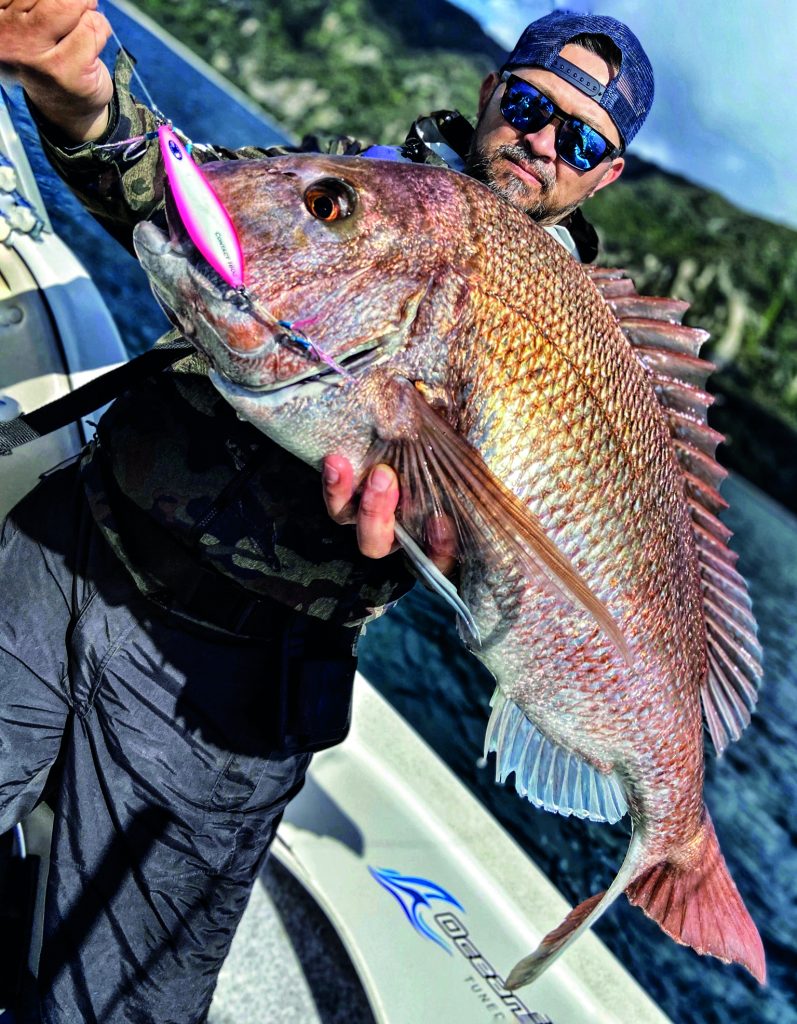
As the name suggests, this lure has aspects of others in the Oceans Legacy stable, and all of them do a pretty good job. The Hybrid Contact is very much a compromise between the slimmer, faster-sinking Long Contact and the wider, more fluttery Roven Slow Jig. The result is a relatively fast-sinking lure with a nice flutter that triggers aggressive bites.
Proven colours: Pink Glow is the clear favourite, followed by Blue-Pink, and Orange, but Black Silver definitely has its fans!
Suggested weights: 40-60g in water depths between 20-30m, while 90-160g is better for 40-50m – even 200g can be surprisingly effective on snapper at times!
As usual, tidal flow, wind strength, and fish size will determine which lure weight is best.
Suggested techniques: this is a very versatile lure that can be yo-yoed, mechanically jigged, or slow pitched. The last technique usually involves a slightly longer jigging rod than usual, so the lure can be lifted and ‘pitched’, flipping it lengthwise so it flutters nicely on the descent, the rod then chasing down the slack line with the angler alert for bumps or sudden slackening that signal biting fish. Strike and set the hook!
Honourable mention
If a seventh jig was allowed, it would be the diminutive Flea. Made from super-heavy tungsten, this tiny lure attracts a wide variety of species in all sizes, and has saved the day for me on so many occasions.