Three tenders, three slightly different jobs
A good tender becomes one of the most used boats on board. It is the run ashore for supplies, the way to visit neighbours in the anchorage, or the small platform that lets you sneak out for a fish.
The company is young, but the founders have a combined experience in excess of 40 years.
Chris Jellie has built the MicroTender range around those everyday tasks. The lineup consists of three boats: the MicroTender Mouse, the MicroTender Mini, and the larger MicroTender Max.

The smallest model, the Mouse, measures about two metres long and roughly 1.6 metres wide. Despite its compact size, Jellie says stability was one of the key design goals.
“This is our entry level model. It’s very stable, you can stand on the side of this and it’s not going to flip.”
The hull is not a full catamaran, although it shares some of the same stability characteristics.
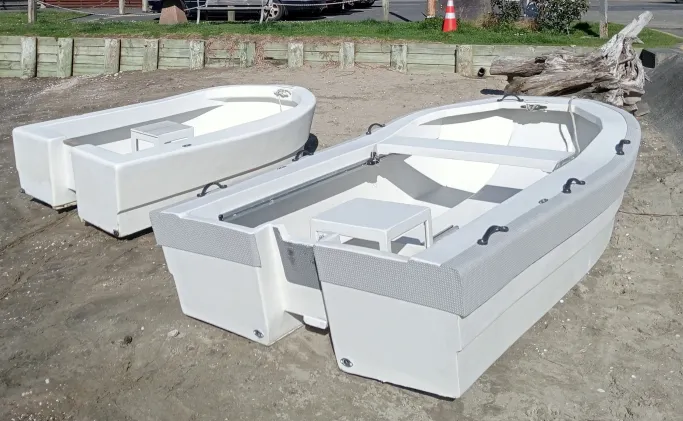
“This is not a true cat. It curves in at the bow but it has almost the same features as a catamaran.”
Built to suit the owner
Rather than offering a fixed specification, the boats are built to order. Owners can choose how simple or how equipped they want their tender to be.

“We’re a custom boat that basically is made to order. If you can think of something that you’d like added, then we can make it.”
Even on the smallest boat there are a range of practical touches available. These include adjustable seating, a helm pod, grab handles, cup holders and storage options such as anchor bags.
The cockpit can also be built as self draining.
“We can make a self draining cockpit so if it rains it just empties itself.”
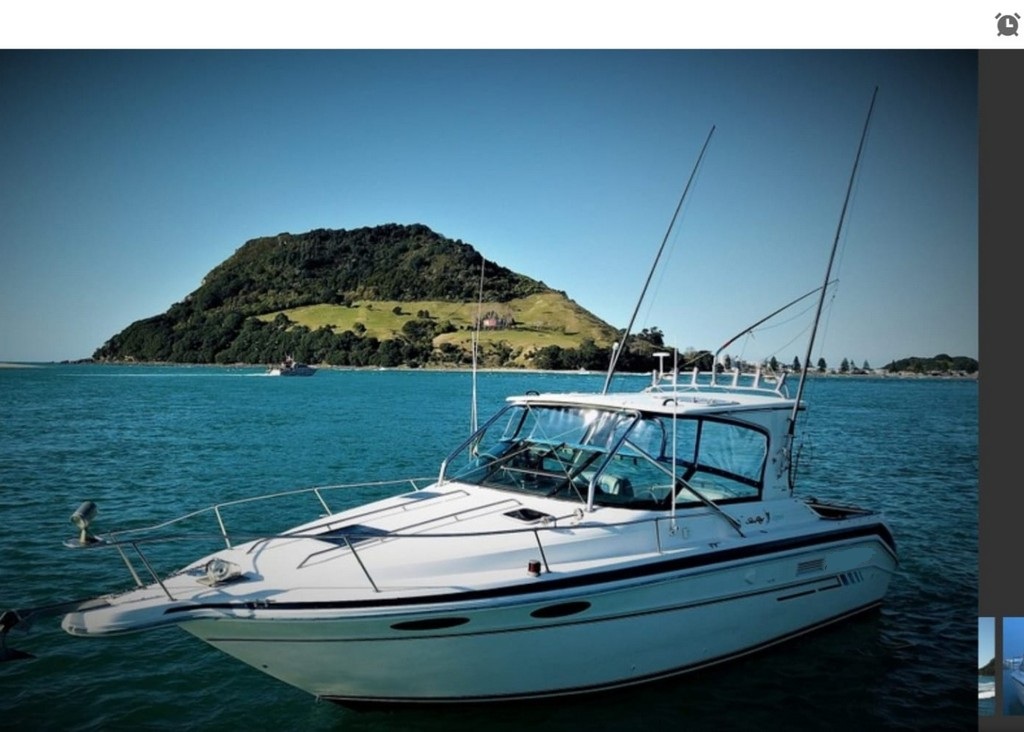
For many cruisers, protecting the mothership is just as important as the tender itself. Large bumper fenders can be fitted around the hull to prevent the dinghy knocking against the main boat while tied alongside.

Keeping weight down
One of the big selling points is weight. Many tenders become awkward to handle once they are loaded with fuel tanks, motors and gear.
The MicroTender Mouse weighs around 30 kilograms in standard form, while a carbon fibre version drops to about 25 kilograms.
Jellie says the light weight has appealed to a specific group of owners.
“We’ve aimed at that market where people are retiring. Their bodies get a little bit sore if it’s anything like mine and they want something light and stable that they can pull up onto the boat.”
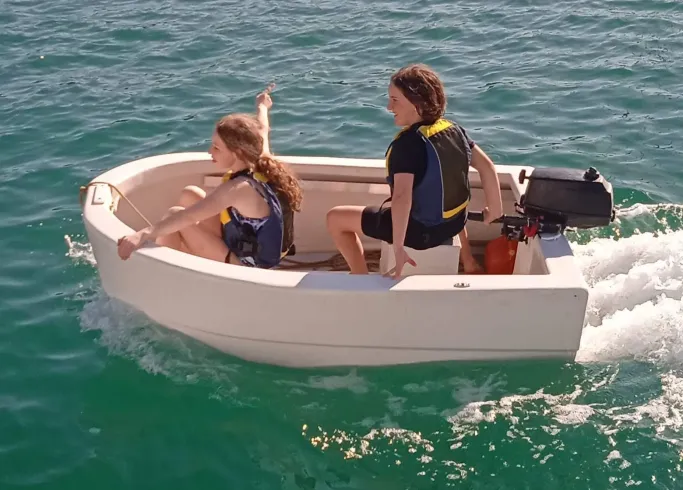
The MicroTender Mini moves into composite construction and offers more room, although the trade off is a higher weight of around 55 to 60 kilograms.
The largest boat, the MicroTender Max, stretches to around 2.6 metres and is designed more as a small fishing platform than a basic dinghy.
Petrol or electric power
Power options depend on the model and how the owner intends to use it. Smaller tenders can run electric motors, while petrol outboards remain popular for those wanting more speed.
“We can put on about a 5.8 horsepower on the smaller boats,” Jellie explains. “With the MicroTender Max about a 9.8 is about where it would sit.”
Electric propulsion has also proven practical for quiet exploration. Jellie recently used one of the boats with a small electric motor during the Stillwater Boat Club river fishing contest.
“Last weekend we had the Stillwater Boat Club annual river ripper fishing contest and I ran around in one with an electric motor on the back. I was in the water an hour and a half, two hours and it still had heaps of battery left.”
The quiet motor even provided a bit of stealth.
“I could sneak up on all the fishermen and they didn’t know I was there.”
Pricing and availability
Because the boats are built to order, pricing varies depending on the materials and the level of customisation.
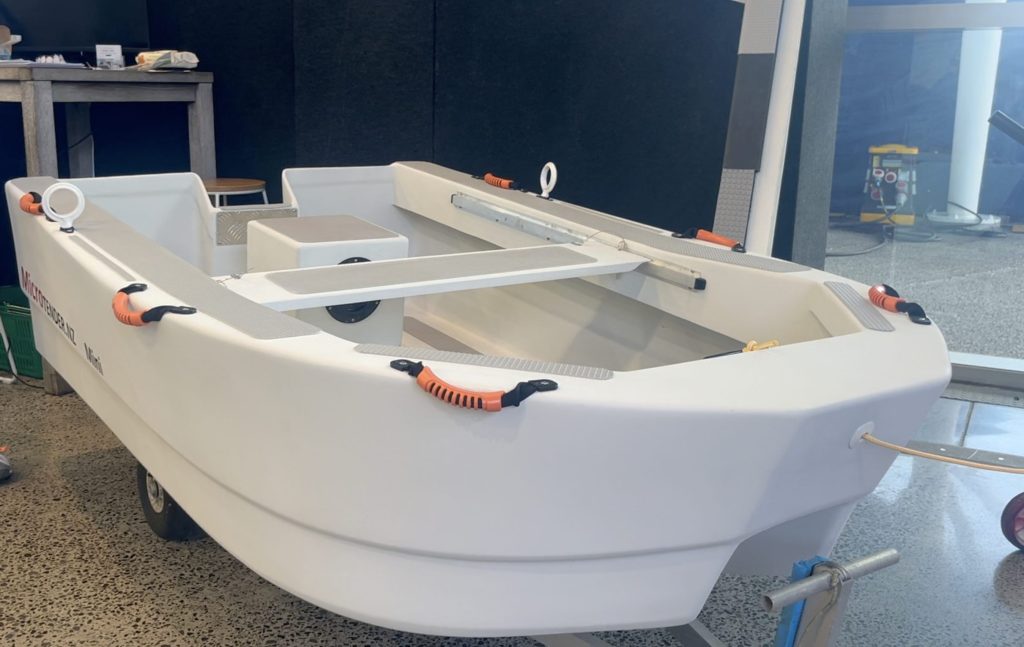
Entry level models begin at around $6,000, with the final figure increasing as additional features are added.
For Jellie, the concept behind the range is straightforward. Build a tender that is light enough to handle, stable enough to trust, and versatile enough to serve more than one role around the boat.