A life less ordinary: restoring wooden boats.
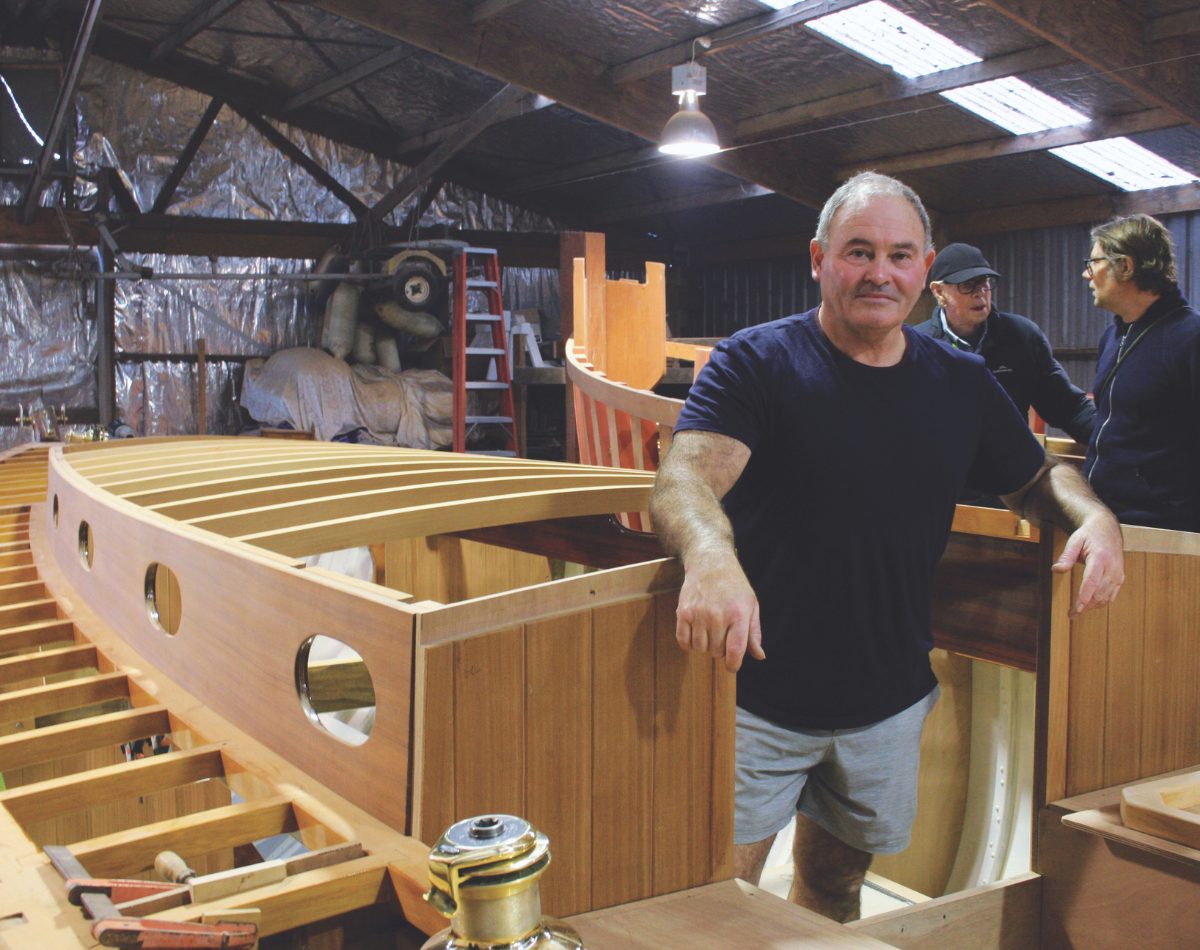
On July 12, 2025 between 150 and 200 wooden boat enthusiasts flocked to Peter Brookes’ boatyard in Waimauku to see for themselves Peter’s work in progress on restorations and rebuilds.
“Seek and ye shall find,” as the saying goes. But what I found in Waimukau was amazing.
Of course it must be known to classic boat fans that Mr. Brookes is no rookie to wonderful workings in wood. It has been the love of his life, “an infinite capacity for taking pains,” as the saying goes for those who seek perfection.

Peter has been messing about in boats since he was 12 years old. Although he was born in Auckland, he moved with his parents to England, where he followed in his father’s footsteps, started sailing, and also doing up smaller wooden craft, honing the already natural talent he had inherited.
Already a seasoned sailor, Peter achieved the title of skipper at age 14, his first paid employment in charge of the Vivette, a famous gaff-rigged cutter. Two years later he began his apprenticeship in his father’s yard. But he was already so experienced in practical work he soon decided to go it alone in his own business restoring classic yachts such as the West Solent Class.
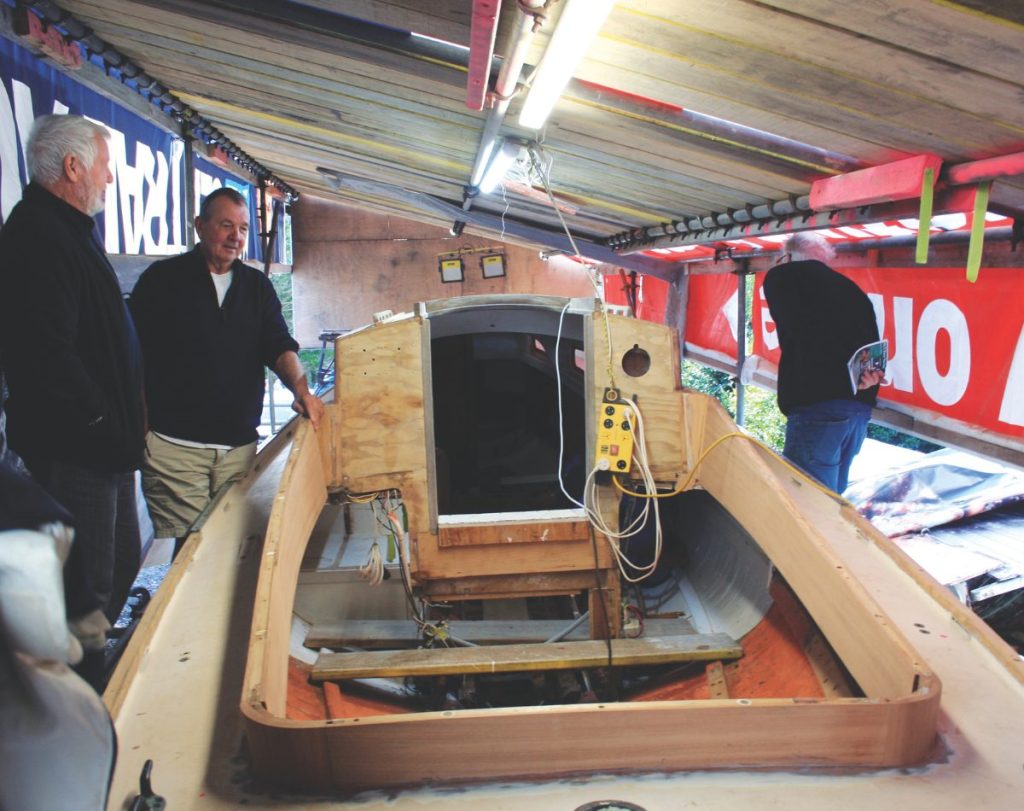
His reputation there eventually followed him to New Zealand where he’d gone with his parents and his own family in 1999. His clients in Europe were quite happy to ship their restoration jobs here, his first overseas assignment being the 30m Vivi all the way from Cowes, Isle of Wight. Semi-restored classics such as Tawhiri, a 38ft Colin Wild sloop, and the 38ft Fife-designed carvel-built Impala.

Peter has almost as much literature on timber construction as he has photographs of old but much revered classic yachts in his yard.
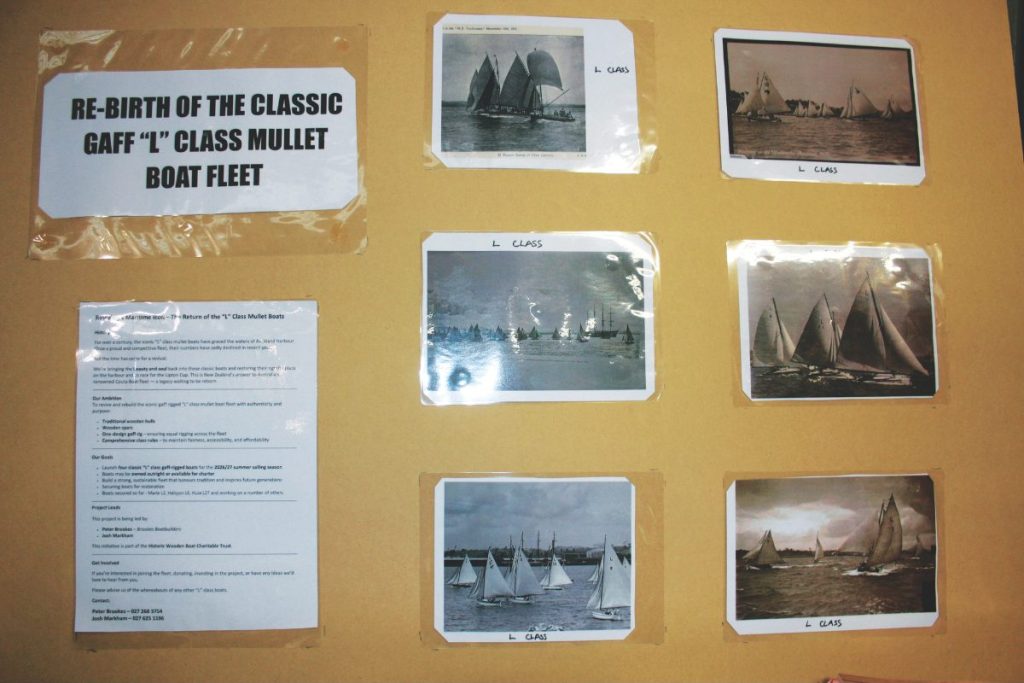
The iconic mullet boats, for example, were reborn as a racing fleet thanks largely to Peter’s campaigning. The old ‘mulleties’ with their shoal draft hulls and enormous spread of canvas could scud downwind faster than anything afloat at the time. They were designed to get their catch to market as fast as possible, for obvious reasons. Little wonder that they’re racing again today, with hi-tech gear, and now sailing faster than ever.
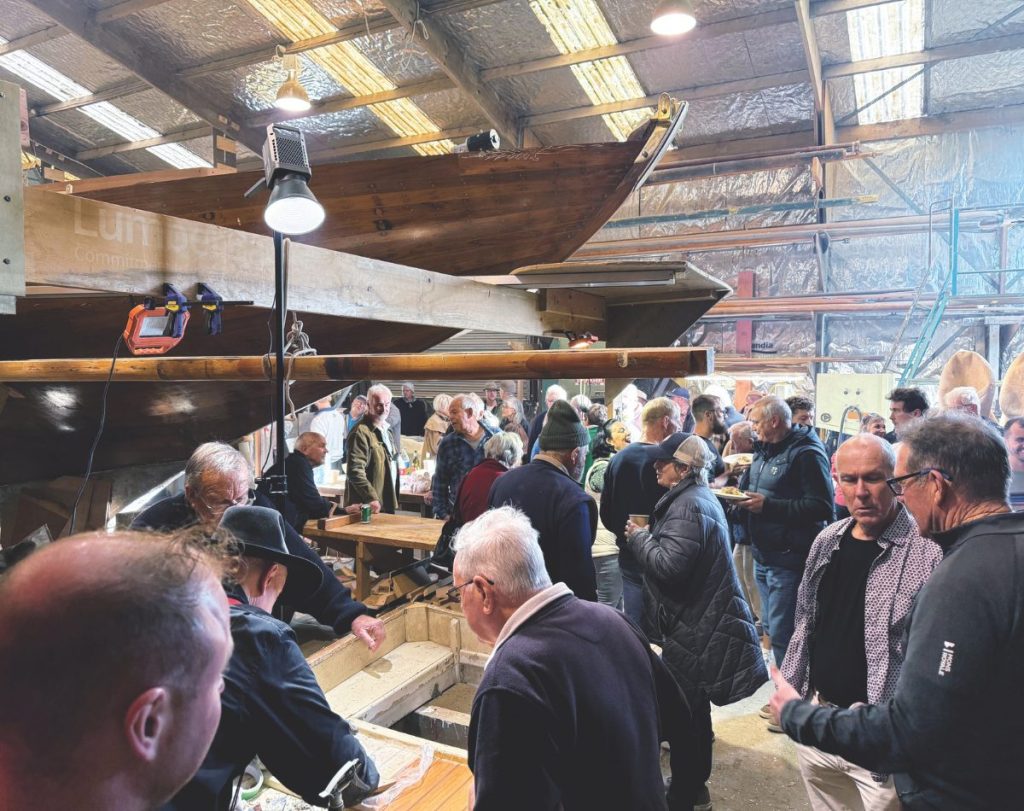
When I drove up the long country road to the Brookes estate, I discovered a plethora of classic boats outside Peter’s big boatshed. At the perimeter of a huge lawn, the original homestead, built around 1924, had also been restored. I doubt that Mr Brookes would leave such a lovely old mansion to benign neglect. He most likely treated it as another project, also worth the effort of tender loving care.
The big yacht I found most fascinating in the shed, still under construction, was the Hannah Mae, a replica of the 50ft Bristol pilot cutter designed by Peter’s father and now built from scratch by Peter in kauri carvel planking over massive ribs. This was obviously a very special, very personal project.
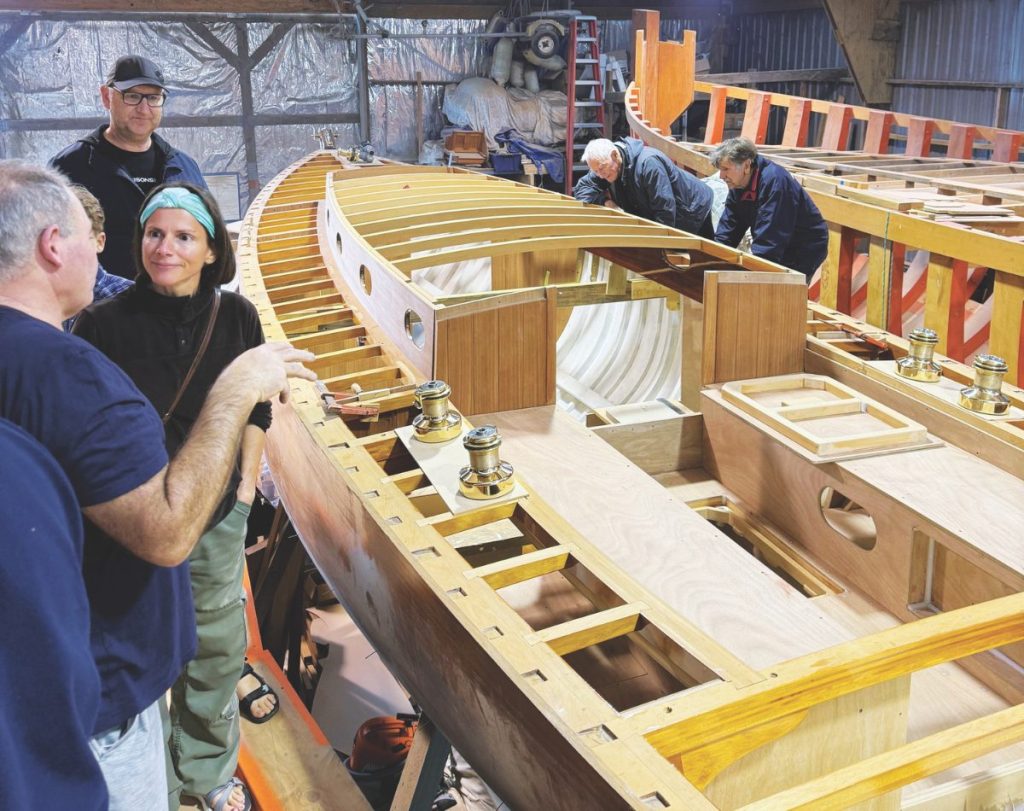
Outside, in front of the shed, were more covered rebuilds to see. There was a huge Lidgard launch, a 1904 Logan sloop, a 38ft Colin Wild sloop, a 42ft American-built Island Packet as a full refit, even an old original 22ft mullet boat. The entire enterprise was mind-boggling and hard to take in with one visit. I busied myself walking the planks, climbing ladders, asking questions, and taking photographs.
I also discovered quite by chance a remote connection. Peter Brookes had restored Iorangi, once a gaff-cutter, now changed to Bermudan rig, that I had crewed on from around 1970 when Graham Smout owned her. Small world. I believe she still graces our waters.
It seems that I must instinctively have had a soft spot for wooden boats. During the great fibreglass production era of the late 1970s I decided to build a Lotus 9.2 in kauri. Over 140 of this very popular Alan Wright design were produced in fibreglass, but only about 10 in kauri. On the front bulkhead, I placed a bronze plaque that read:
IF GOD WANTED US TO HAVE FIBREGLASS BOATS,
HE WOULD HAVE CREATED FIBREGLASS TREES