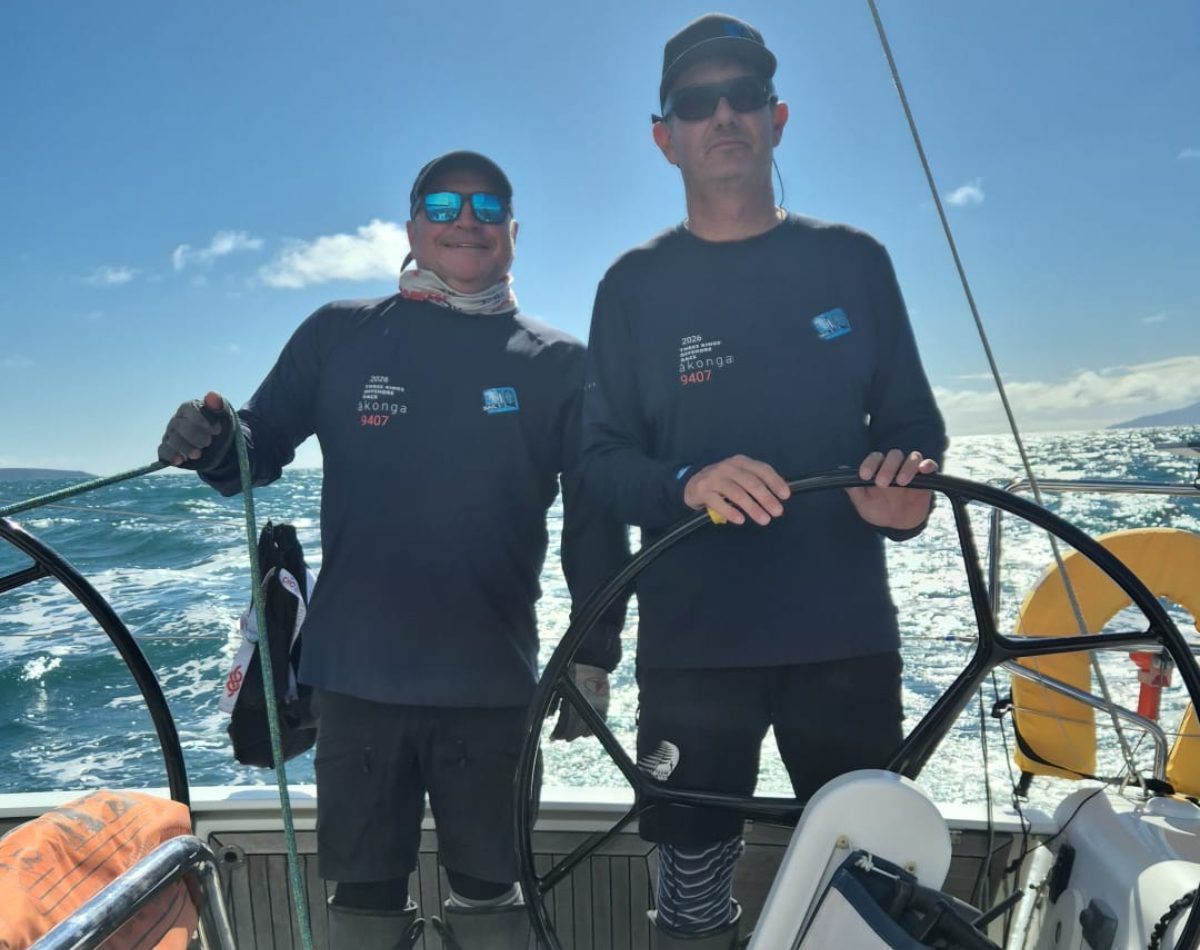
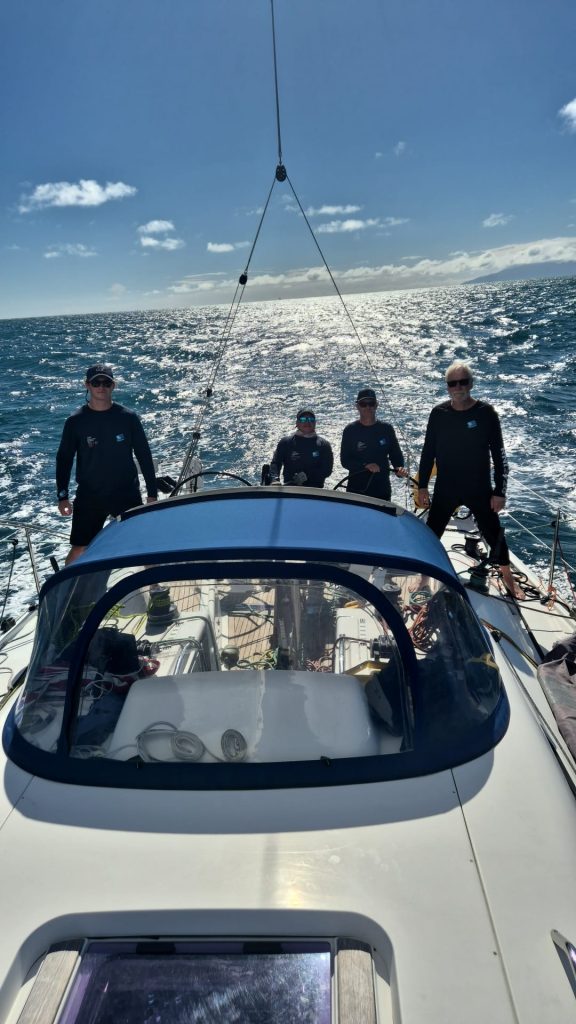
Nick Roberts and the crew of the Dehler 41 Ākonga called in from the water on the final leg of the 2026 Three Kings Race. What followed was a masterclass in offshore problem-solving.
The voice on the phone was relaxed, almost cheerful, which told you something about the kind of sailors these people are. Nick Roberts, owner and skipper of the Dehler 41 Ākonga, was somewhere north of Kawau Island, match racing a friendly rival toward the finish, with a patched spinnaker drawing nicely and slow-cooked beef pies waiting below. Twelve hours earlier, his world had looked considerably less comfortable.
It started before the fleet even reached the Three Kings. A shackle on the roller furler swivel broke, sending the number one jib toward the water. The crew tied it down and reached for the storm jib, the only headsail they had a spare halyard for. Problem solved, for now. But the fix created a downstream consequence: the number one’s halyard was still aloft, and without it, their options upwind were severely limited.
They filed that problem away and pressed on.

What came next, Roberts says, was truly biblical. Overnight, just off the Whangarei coastline breeze built to 35 knots, seas climbed to around three metres, and a gennaker they pushed into service came back torn. Lightning arrived, the fork variety, then thunder, then rain so heavy it seemed to have weight. The wind, for a period, came from every direction at once.
“Mate, there was fork lightning, knife lightning and spoon lightning,” navigator Andrew Hall offered. “We had the full set of cutlery.”
The stuck halyard still needed dealing with. The solution was straightforward in theory: send someone up the rig to retrieve it. In 30 knots of breeze, with the boat moving, the theory becomes something else entirely. That job fell to bowman Ryan Mills, stepping into his first major offshore campaign as part of Roberts’s Sydney to Hobart build.
Mills went up, grabbed the halyard, and brought it down. The crew relaunched with the number three jib and later, when conditions softened, were able to use the number one as well. The stuck halyard problem, born from the original roller furler failure, was closed.
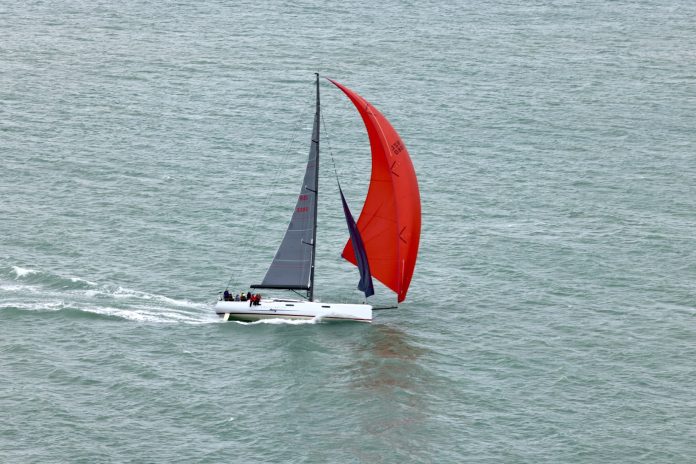
But Mills wasn’t finished. Later in the night, with the repaired gennaker back up and driving, tears appeared in the sail. Mills and Hall patched it while it was still flying, still up in the air, in the dark.

By the time the call came through to Boating New Zealand, the crew had unanimously declared Mills “Man of the Match”.
The race is a qualifying event for four of the five crew, all of them targeting the 2026 Rolex Sydney to Hobart. The requirement is a 250-mile passage together. By the finish, 80 percent of the crew will have completed over 500 miles. Box well and truly ticked, whatever the position at the finish line.
Twenty years on: Nick Roberts returns to chase his 10th the Sydney to Hobart
And positions were still being contested. Carpe Diem, skippered by Rowan, a friend and rival from the 2026 Doyle Sails Round North Island Two Handed Yacht Race, had been making gains through the night while Ākonga went, as Roberts put it, a little off-piste in the fatigue hours. By mid-morning the two boats were visible to each other north of Kawau, trading miles to the finish.
“They’re following us at the moment,” Roberts said, with the careful optimism of a man who has done enough offshore racing to know that nothing is settled until the line is crossed.
What was settled, though, was this: every piece of gear that broke found a fix. Every problem the night threw at them was answered. The storm jib came out when it was needed. The halyard came down. The kite was patched and re-set.
At 3am in a lightning storm north of the Hauraki Gulf, Ākonga’s crew found out what they’re made of. The answer, by any measure, was plenty.