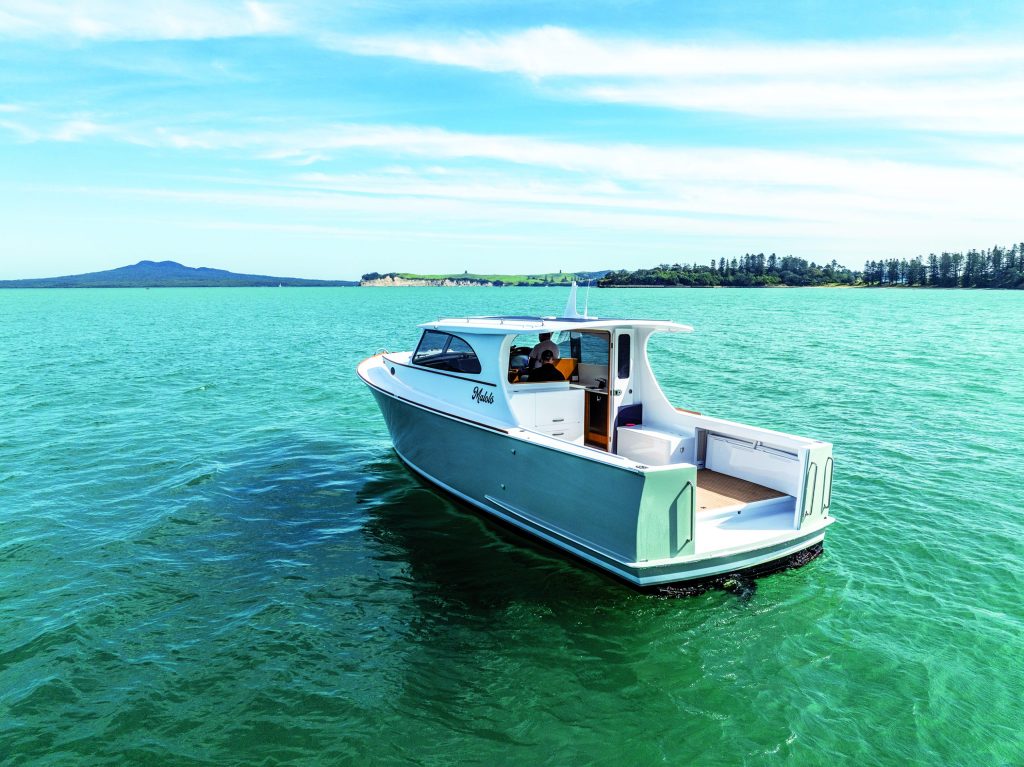
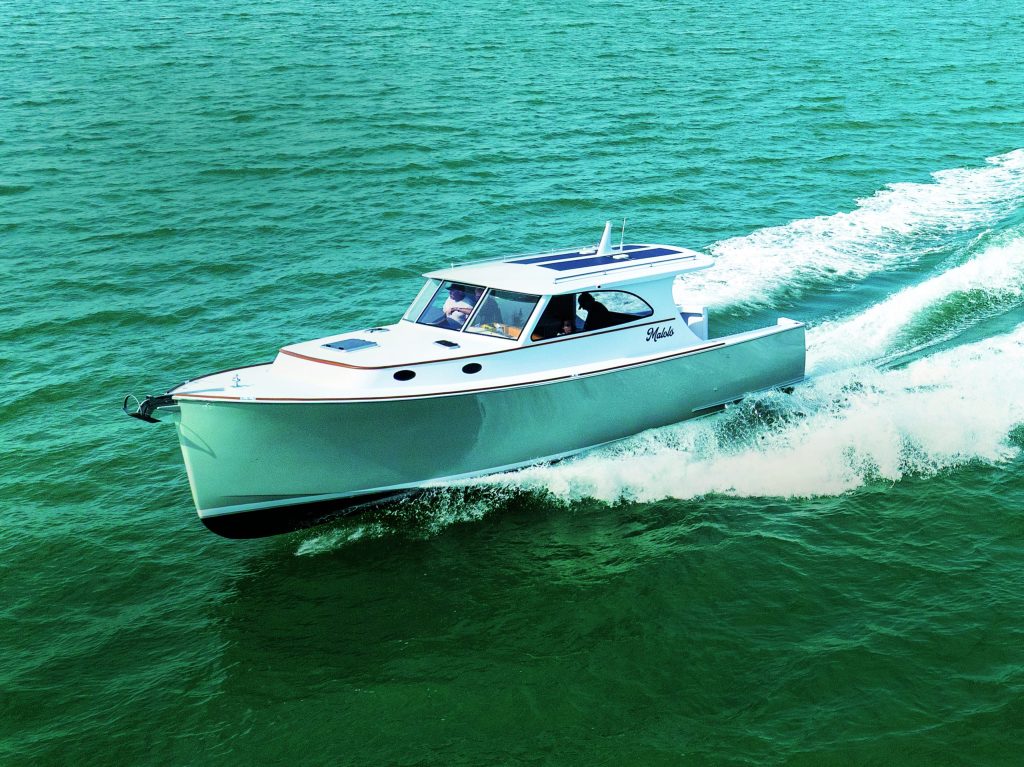
With her plumb bow and traditional lines, Malolō could easily be mistaken for a meticulously restored 1930s classic. She is, in fact, a recently-launched creation from the pen of Nick Peal – a clever blend of ‘period’ design and modern technology. With one over-arching theme: keep it simple.
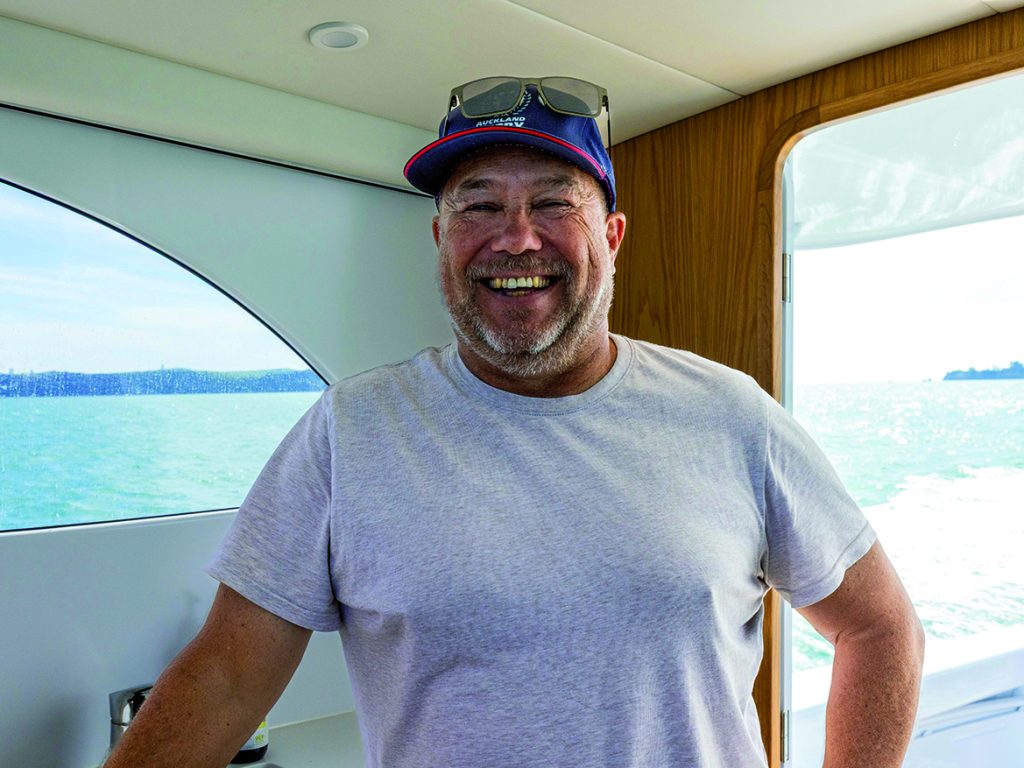
The 10.6m launch belongs to Auckland’s Brent Metson and Nicola Lamont. She’s the result, he confesses, of a decades-long obsession with building a custom-design “shaped by my own preferences and specifications.” At the core of his vision was a focus on timeless styling and simplicity. Features, he says, that probably stem from his formative boating years as a sailor.
“I’ve sailed most of my life – mainly skiffs. And as any sailor will tell you, boats are more reliable, fun and easier to handle when the systems aren’t complicated. They also tend to go better when they’re lighter.”
When Brent finally migrated to power about 20 years ago (a shift driven by the arrival of children), those simplicity and weight considerations were put on hold. “We bought a Genesis 320 – and she was great – until the children got too big. So we upgraded to a 40-foot Don Senior flybridge.
“But as children do, they eventually followed their own trajectories and the Don Senior proved too big for us. So we sold her and suddenly we were boatless. Inevitably, that dormant custom-build vision resurfaced – something smaller and easy to handle.”
He took his ideas to designer Nick Peal whose plans were soon rendered into digital files, allowing for a CNC-cut jig. It was delivered to Wayne Olsen’s Horizon Boats and the project began.
Power-weight equation
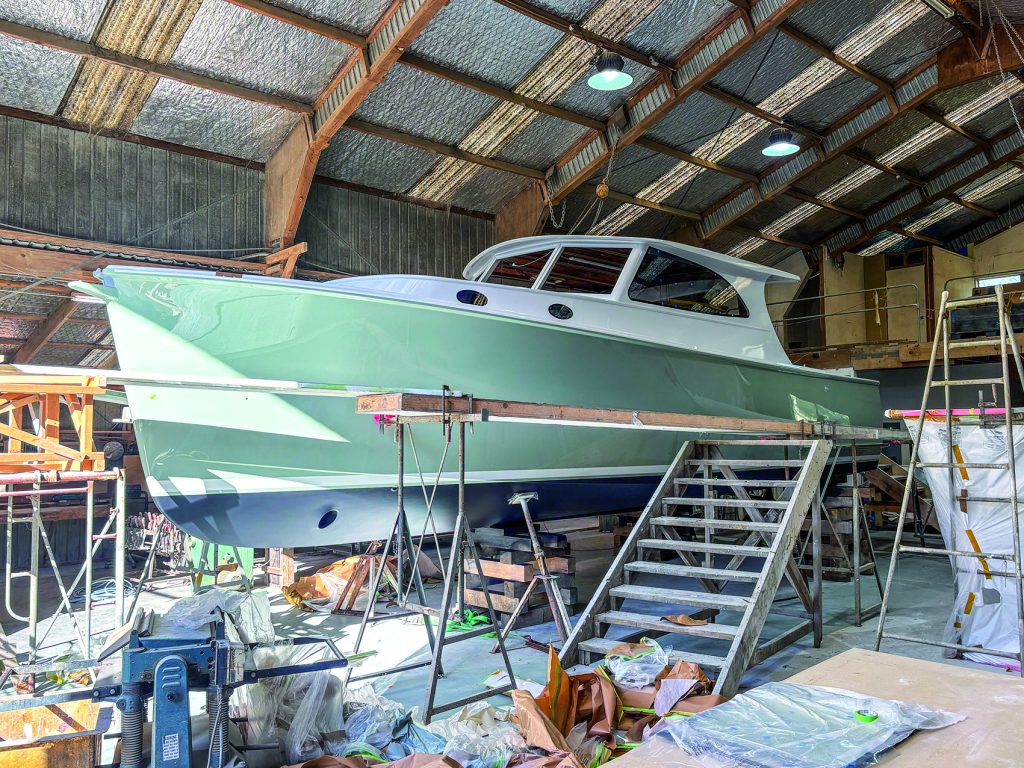
The launch is built with layers of gaboon ply – the varying number of laminates dictated by the structure’s stiffness/structural requirements. Her bottom is 21mm, the topsides and bulkheads 12mm, with laminated ply frames. Two layers of 400gsm double-bias glass cover the entire hull. The ‘flat’ run-off was designed for easy planing (very effective) and the centre tunnel delivers a near-flat prop-shaft angle (8o).
All up Malolō weighs around five tonnes at half load – with just over 400kg of that owned by the straight-six 315hp Yanmar (naturally-aspirated, turbocharged). Brent – a mechanical engineer – was firm in his choice of engine.
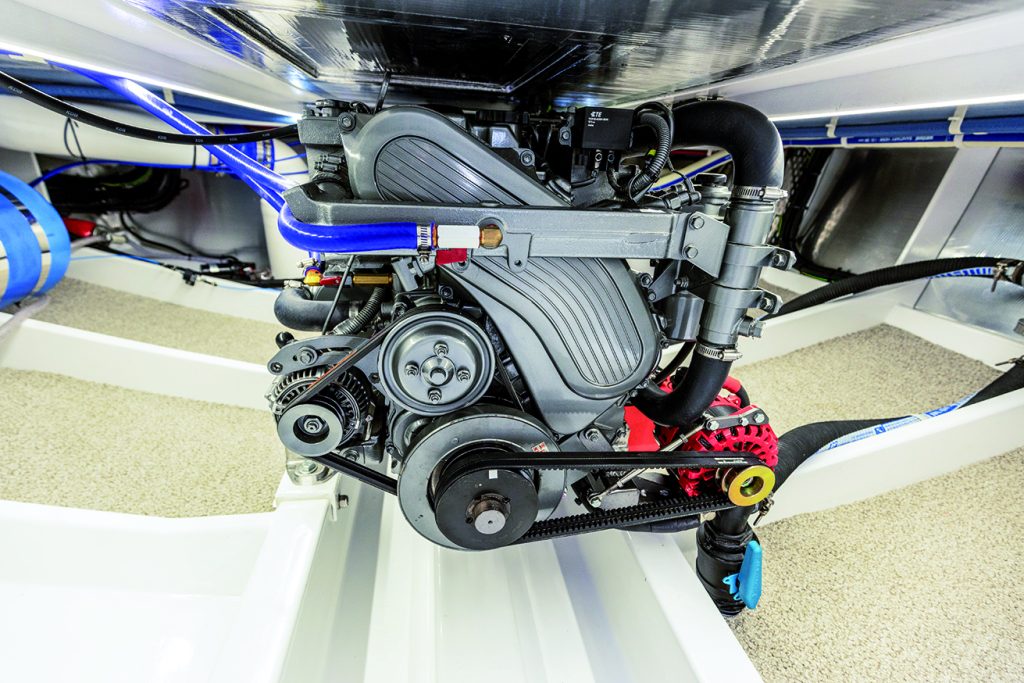
“I like straight-sixes because I believe they have better ‘harmonics’ – fewer out-of-phase vibrations and less distortion around the crankshaft per cycle of the engine. They’re smooth, robust and reliable. Scores of workboats are fitted with this engine, and for many years Toyota used the same block for its 4.2-litre Landcruiser.
“Secondly, in accordance with my ‘keep-it-simple’ mantra, I wanted an engine that wasn’t electronically-controlled and susceptible to gremlins.”
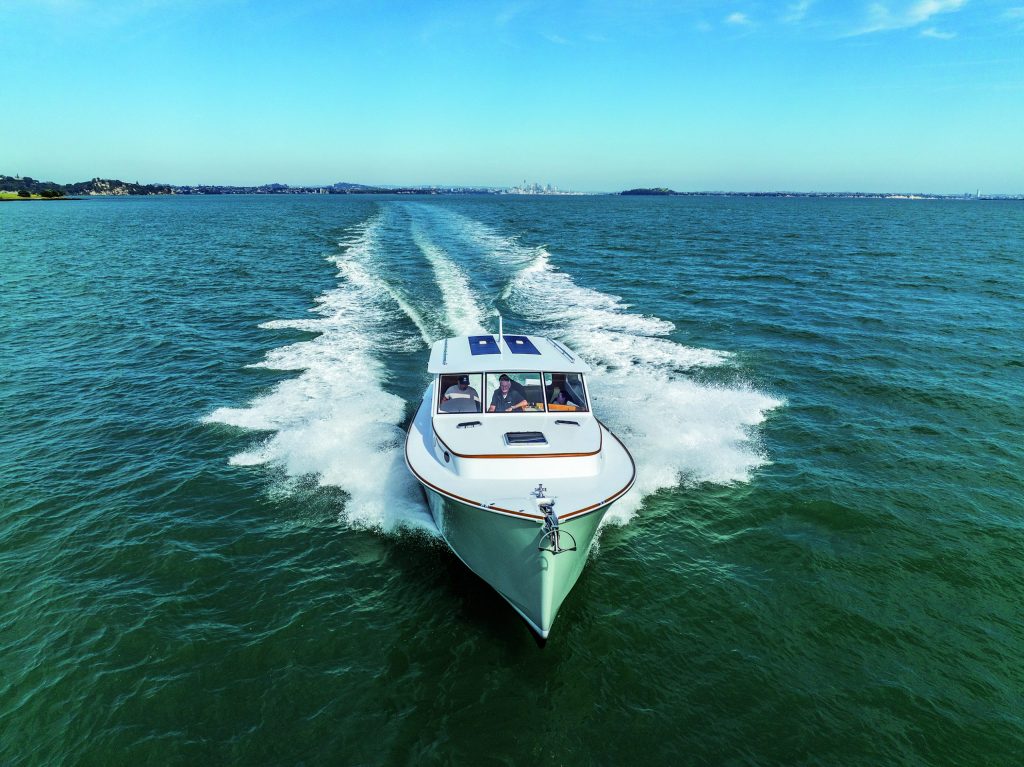
The 315 horses and light, easily-driven hull make for a happy relationship: the Yanmar revs to 3,800rpm and delivers a top speed of 27 knots (sweat-free 22-knot cruising). She planes at under 10 knots and at cruise speed consumes 1.34 litres per nautical mile – plenty of range from the 600-litre diesel tank.
Engine vibrations are minimal – persuasive reinforcement of Brent’s straight-six belief, but perhaps also helped by the self-aligning thrust bearing between gearbox and prop-shaft. Manufactured by Wiri-based Beattys, the thrust bearing is fixed to the frames/bearers. It transfers prop’s axial thrust to the hull rather than the gearbox and engine mounts.
“Effectively,” says Brent, “it turns the engine into a stationary power plant without any load. I’m sure this also helps to preserve the engine mounts.” It’s a spacious, pristine engine room – I like the cosy, carpet-lined bilges – but do NOT spill any oil/diesel while changing filters. The Yanmar breathes through air intakes in the cockpit – eliminating the need for hull penetrations.
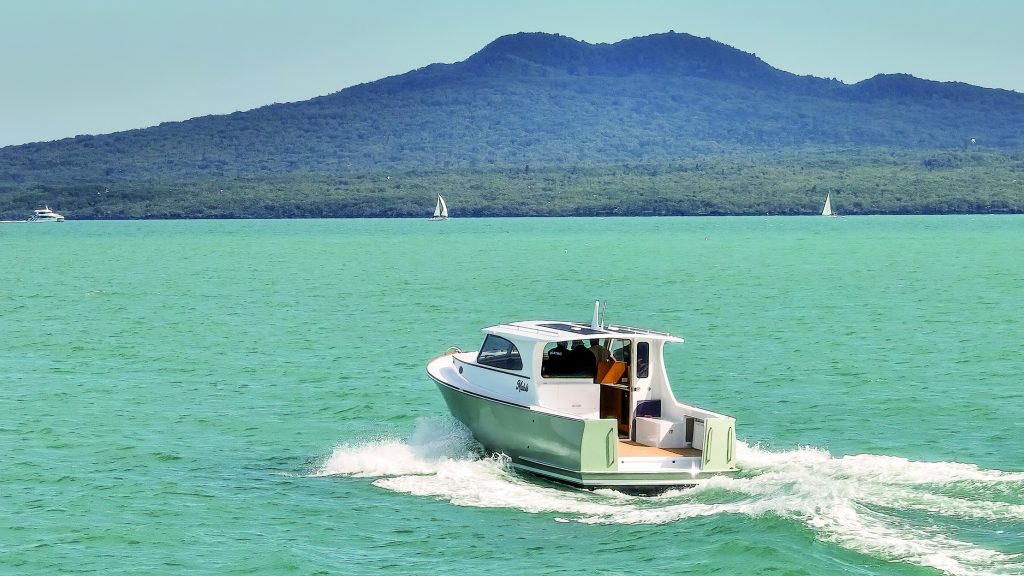
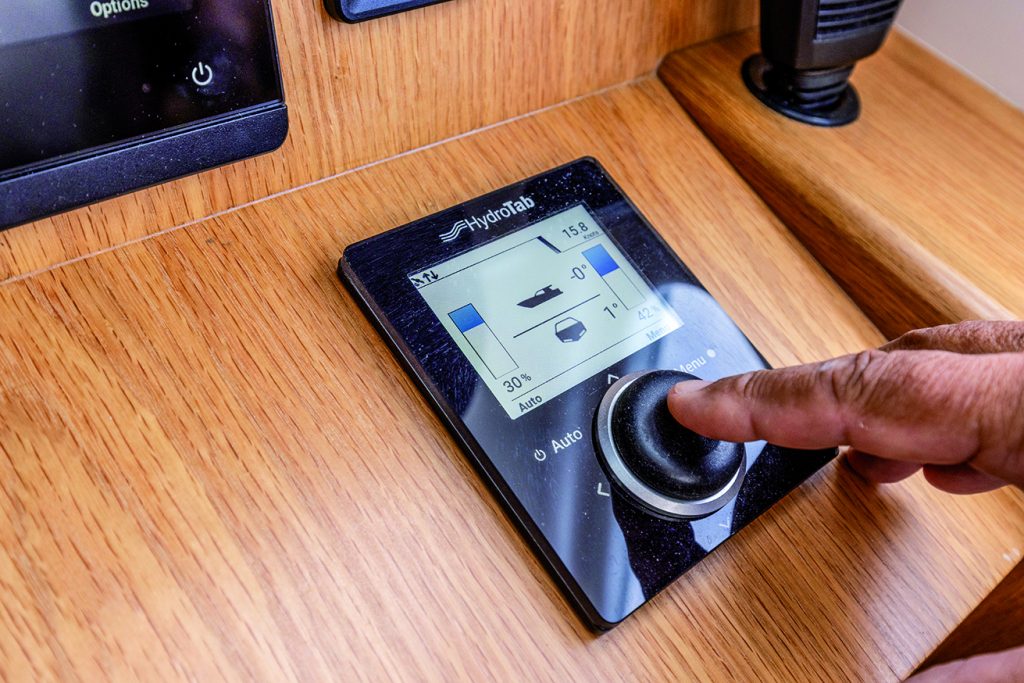
In confused seas the vessel’s attitude is corrected by interceptor-style HydroTabs (distributed locally by Lusty & Blundell). “They’re fully automatic (with manual override) and I like them,” says Brent, “because they’re actuated by a pneumatic bladder rather than worm drives or gears. Less complicated.” Easing the vessel into her berth is aided by a bow thruster – a much-appreciated novelty for Brent.
Electric-savvy
Sailors never really lose their instinctive conservatism around batteries and electric power, and so it proved with the owners and Malolō. The base infrastructure comprises an AGM start battery, another for the bow thruster, and three 200 amp-hour lithium house batteries.
The Yanmar’s 70-amp OEM alternator looks after the engine and bow thruster batteries, while a second 250-amp Balmar alternator (de-rated to 160-amp) takes care of the 600-amp lithium battery bank. “I’m told that because lead-acid and lithium batteries speak different ‘charging languages’, it was easier to keep their jobs separate.”
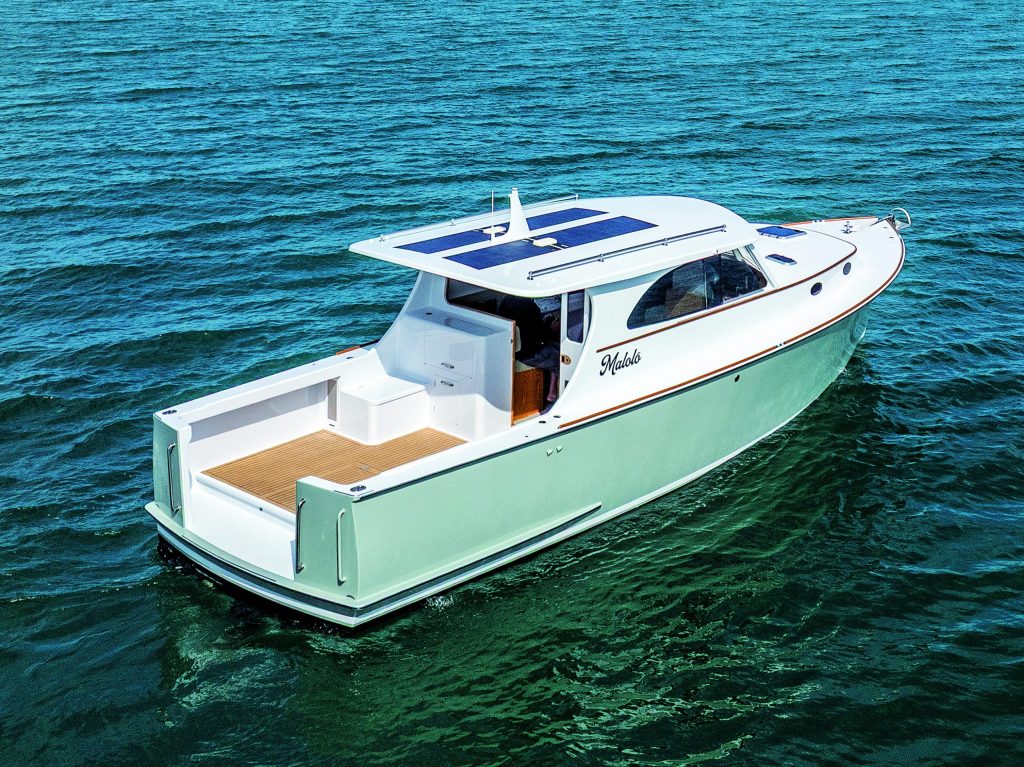
Supplementing the Balmar’s job are four solar panels on the roof (550 watts) – sleek, flat models that are as wonderfully unobtrusive as they are effective. This charging regime works a treat: “we can’t get through the power – we have shore power but haven’t needed to use it yet.”
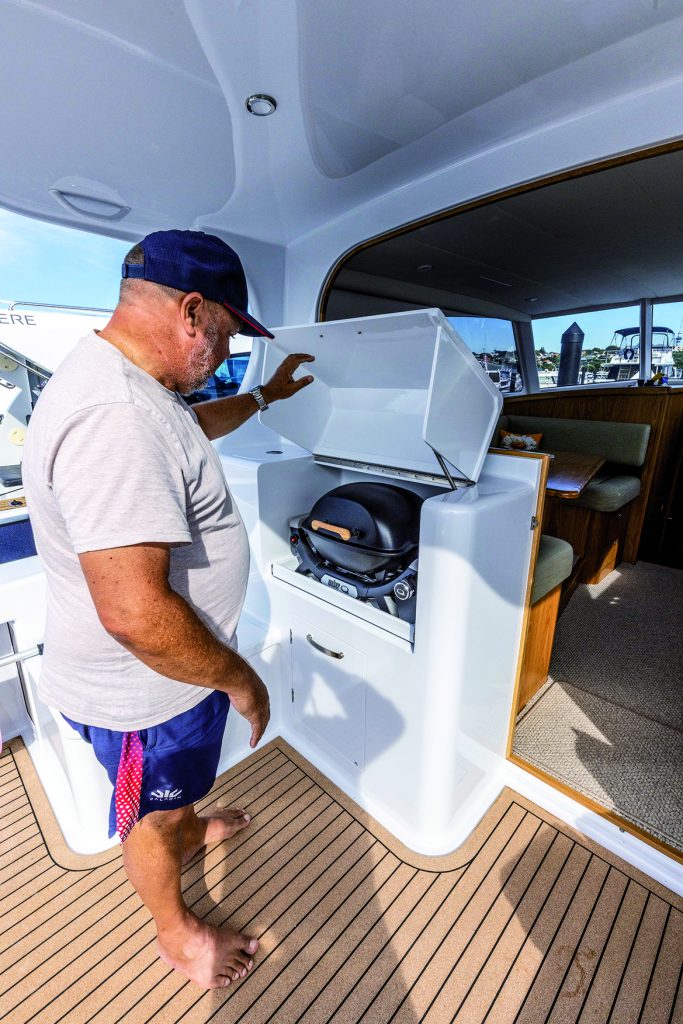
Most of the load comes from two fridges – a switchable fridge/freezer unit in the cockpit, and a second, drawer model in the saloon. Unusually, there is no built-in oven: instead, meals are prepared in a compact, plug-in, bench-top induction hotplate running off an inverter. It’s supported by a gas BBQ in the cockpit – an arrangement that covers all cooking options.
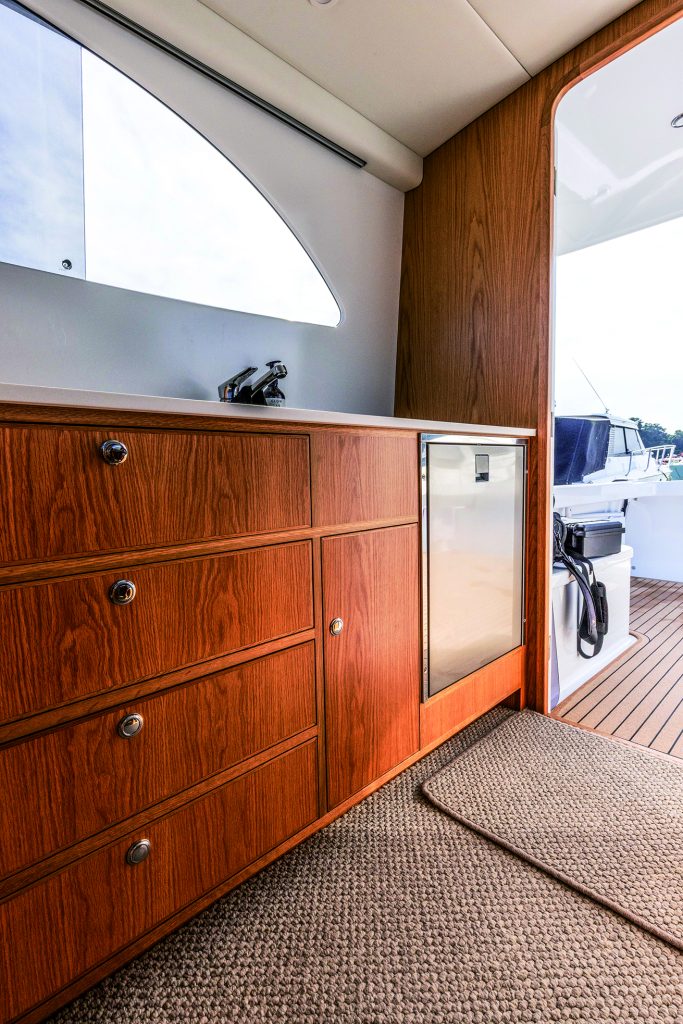
Also unusually, Malolō’s sound system runs off the inverter. Brent is something of an audiophile and has installed a serious 240-volt amplifier with high-end speakers (in the saloon roof).
Hot water is courtesy of engine plumbing but can also be produced by the Eberspächer diesel heater (a nifty, hydronic model that produces heat and/or hot water). She carries 300 litres of water with two flexi-tanks as reserve.
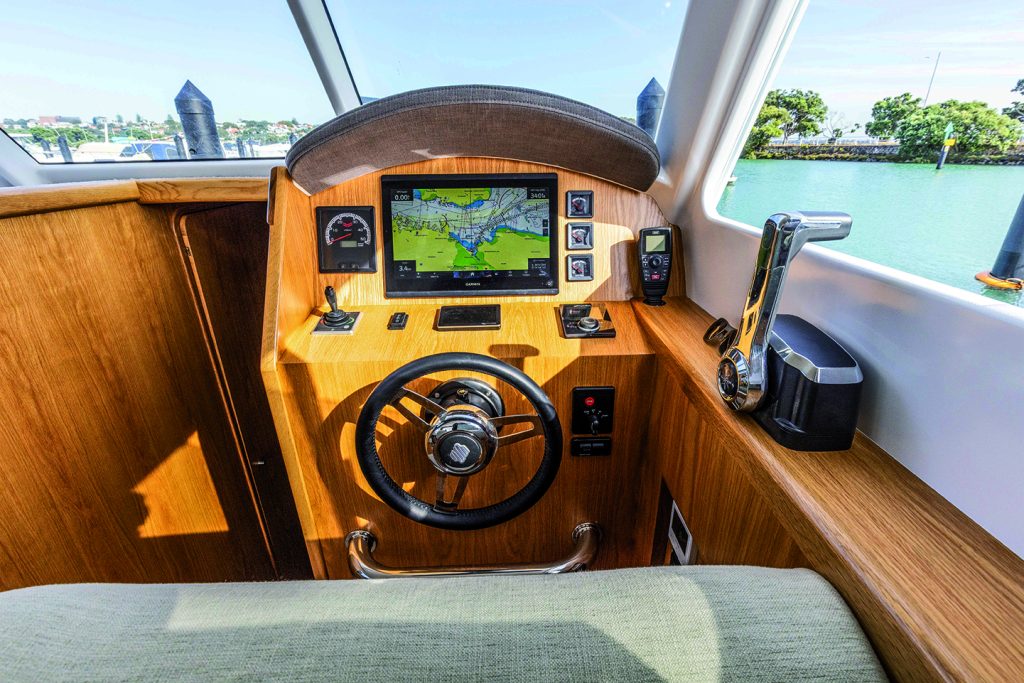
The helm station is more evidence of Malolō’s minimalist ‘feel’ – a clean, uncluttered area that lets you absorb data at a glance. Dominant among the instruments is the 16” Garmin MFD. Another item worthy of mention here is the joystick for the Vetus bow thruster. A variable-speed model (useful for ultra-delicate maneuvers), it’s equipped with a ‘lock’ button. This allows Brent to leave it operating for a few seconds while he tends lines (ideal for shorthanded parking).
No boarding platform?
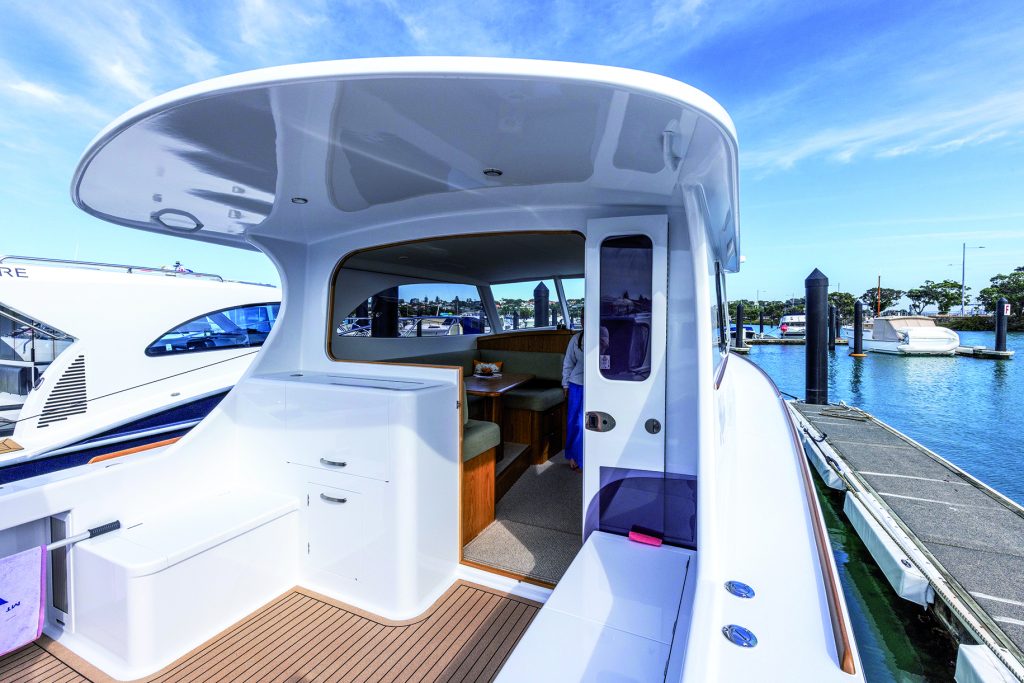
Yes, there is one, but it’s a little unconventional: it’s forward of the transom, contained within the cockpit. Stepping on to it from a pontoon/tender is easy enough – and the design offers numerous advantages. Chief among them is maximizing the usable cockpit length within the LOA (easier parking and it helps to meet the 12m berth’s limitations). There’s a custom, clip-on boarding ladder for swimmers.
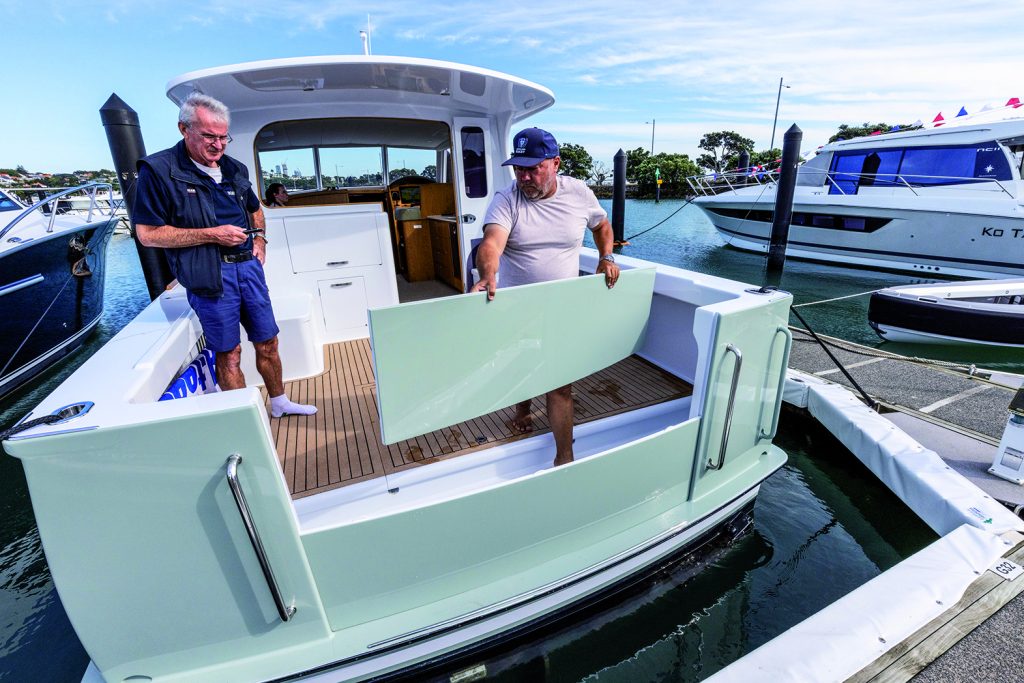
But the smartest part of this feature is the width of the transom ‘entrance’ – precisely crafted for pulling Malolō’s 2.7m OCT tender into the cockpit. A fuss-free tender solution when moving between anchorages. The ‘removed’ section of transom was repurposed into two ‘drop-in’ washboards that slide into recesses either side, keeping the cockpit safe for adventurous younger folk or when making coastal passages.
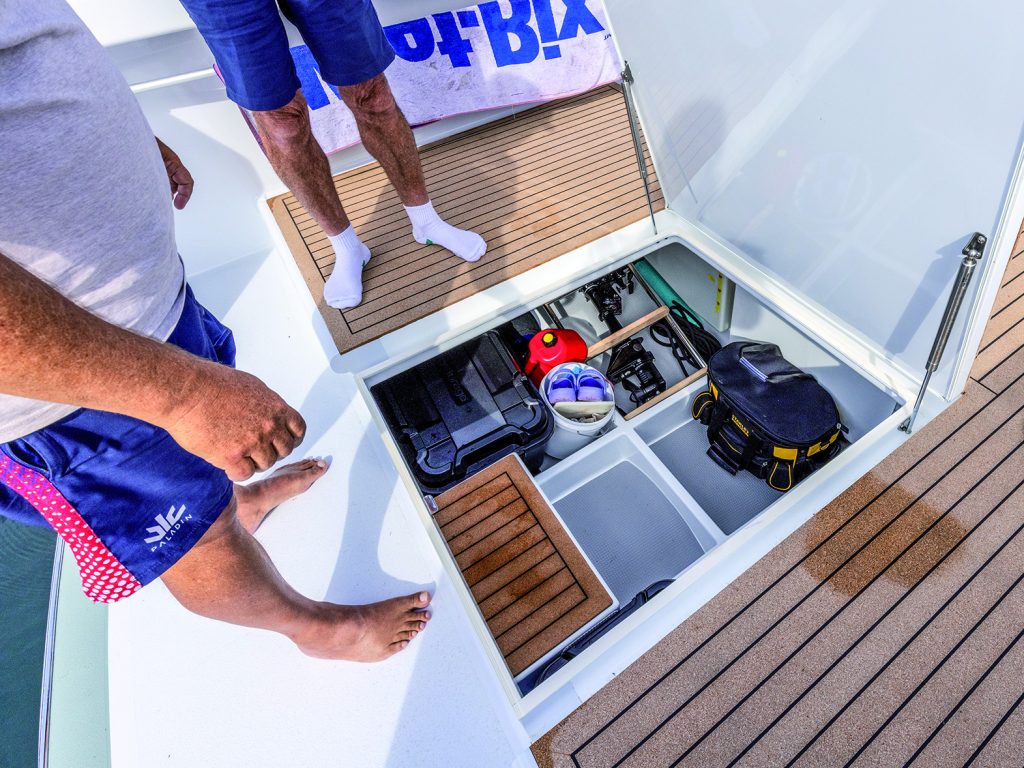
That OCT, it seems, is uniquely versatile. Malolō doesn’t have a cockpit table, but the two oblong flotation devices that fit under the tender’s bulwarks are perfect substitutes. There are plenty of cockpit lockers – and a sizeable lazarette – for stowing all the standard accessories, including the tender’s 3.5hp Mercury. Hard-wearing cork covers the cockpit floor.
Low/easy maintenance is a central principle in this vessel. There are plenty of examples – a good one is the toe rail. It looks varnished but is actually covered with 3M’s Di-Noc vinyl product. Brent says it should last 10 years before replacing (a period that would typically require multiple sessions of conventional sanding/varnishing). He designed the integrated fairleads around the toe-rail profile (cast in bronze and chromed).
Up front, to protect that plumb bow during anchoring, Brent has fitted a Lewmar CrossBow extendable bow roller. It keeps a swinging anchor clear during drop/retrieval and retracts as the anchor reaches near-horizontal.
Interior
The clean outside lines migrate smoothly to the spacious interior, where you’ll find a warm palette dominated by oak veneer cabinetry, white ceilings and oat-coloured carpeting. As might be expected with the owners ‘simple’ directive, it’s a pragmatic layout. There are relatively few doors, for example – even the cabin lockers tend to be doorless ‘recesses’ built into the bulkheads.
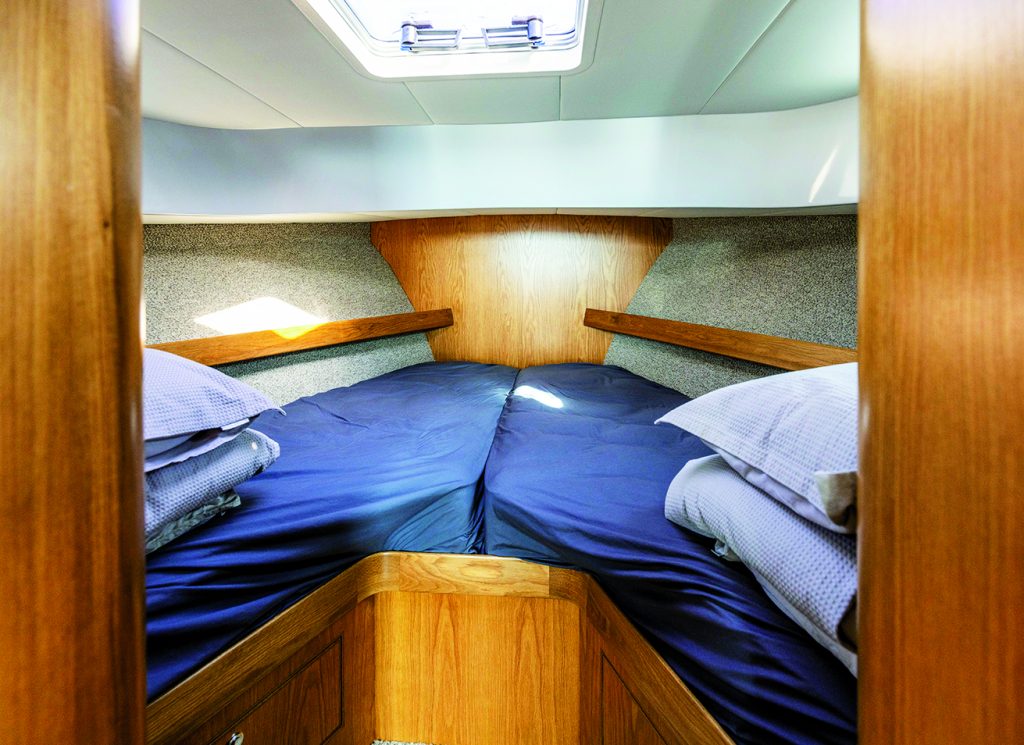
Accommodation comprises three king-single berths – a semi-V berth in the forepeak and a starboard single further aft (most cruising is Brent and his wife). Both cabins are serviced by a single bathroom (it does have a door…) with a separate shower.
The saloon settee also converts into a single berth, and it’s particularly roomy when the saloon table alongside is ‘deconstructed’. Equipped with a nifty, detachable top, once removed it reveals a much smaller ‘occasional’ table – ideal for two glasses of wine – but creating more space for the sleeping guest on the settee.
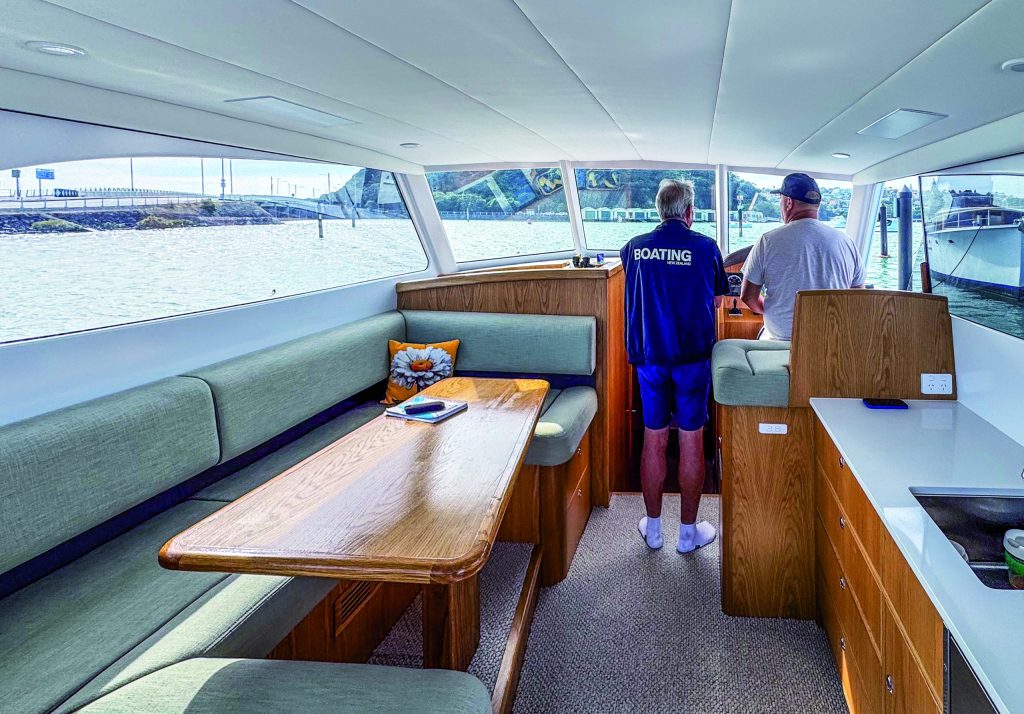
Saloon, galley and cockpit are well-integrated – aided by the large window in the aft saloon bulkhead, and the bifold doors alongside. On hot summer days, when everything is open, this arrangement provides an uninhibited ‘flow’ between the different spaces – conducive to easy conversation throughout.
Malolō is Samoan for ‘rest and relax’ and she presents those attributes in spades. The culmination of years of boating experience and careful planning, she meets multiple objectives – “small enough for my wife and I to handle, but big enough for safe, economical cruising to Northland or the Mercury Islands.”
Most importantly, she’s simple to use – in the nicest sense of the word.