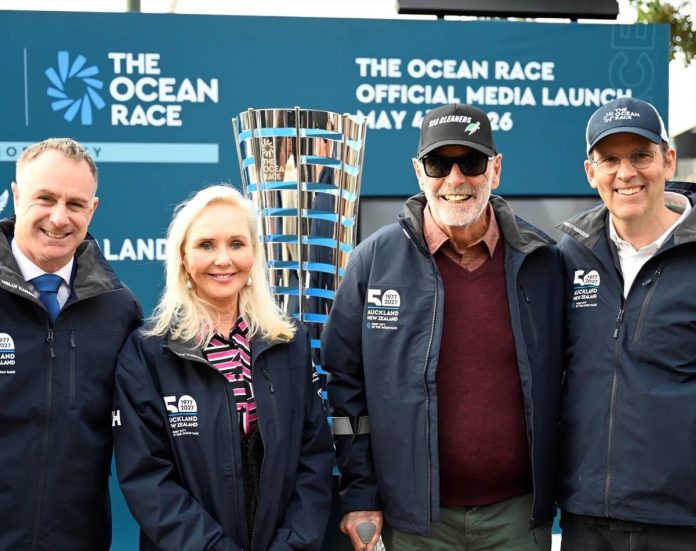
At 21 years old, Richard Brisius was battered and cold somewhere in the Southern Ocean when the first faint outline of New Zealand appeared on the horizon. Then came the scent, green and earthy, carried on the wind off the Northland shore. He ran Cape Reinga, threaded down through the Hauraki Gulf past Devonport and into the Viaduct. The crowd was packed in. The noise was extraordinary.
That memory, more than four decades old, set the tone for an announcement in Auckland today that confirmed the Ocean Race will return to New Zealand in February 2027, with a government investment of up to $4 million and a stopover running from 20 February to 14 March.
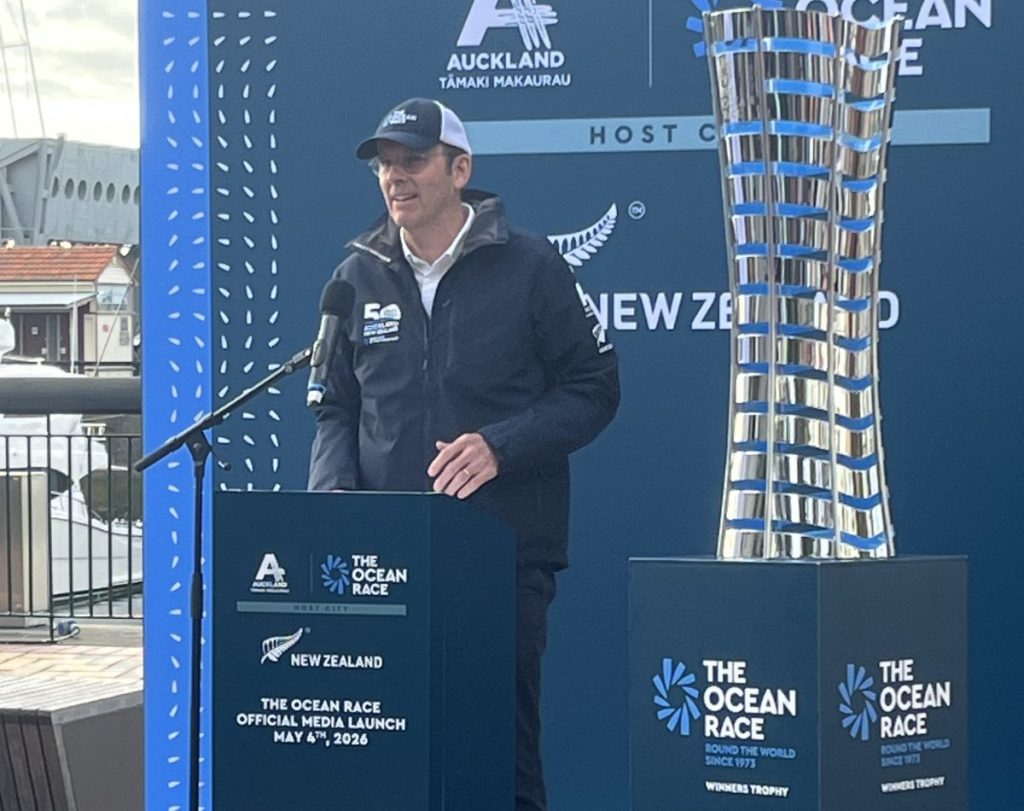
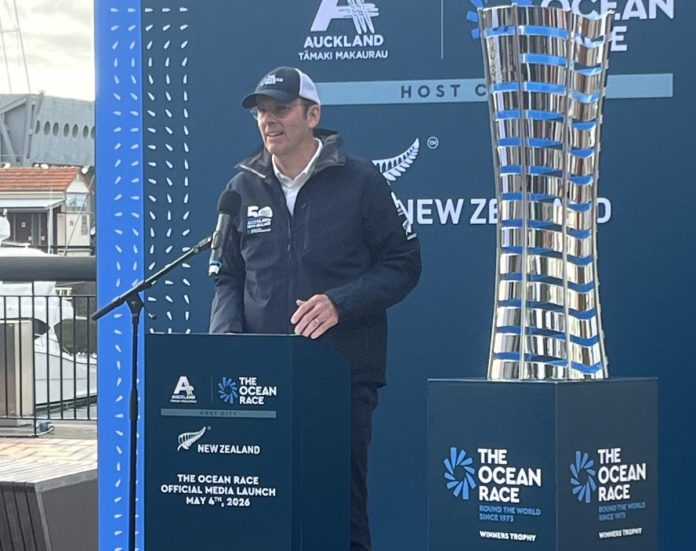
Brisius, now co-owner and race chairman, told a gathering at the Viaduct that included Minister of Tourism Louise Upston, Auckland Mayor Wayne Brown, and a room full of New Zealand sailing royalty exactly what Auckland means to the event. “This is the spiritual home of the Ocean Race,” he said. “And to me it’s a personal thing because New Zealand and Auckland is something I really care about.”
But Brisius hadn’t flown to Auckland just to celebrate history. He came with a challenge, aimed at a nation he believes has drifted away from the race it once dominated. “The Kiwis used to be the kings of the ocean,” he said. “They used to rule the round the world race. And what’s happening now is that the breed of New Zealand round the world racers is a diminishing species. It’s not extinct yet, but I think this cannot continue.”
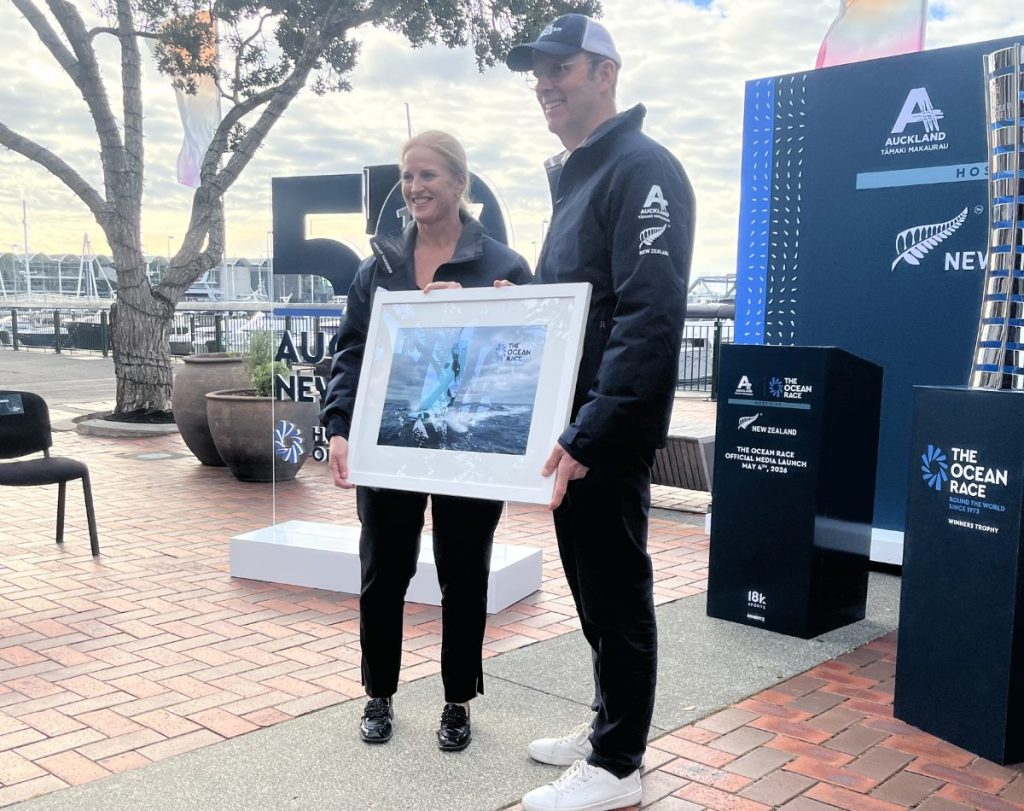
He pointed to the current generation of top Kiwi offshore sailors, doing outstanding work as crew on the world’s best boats, but not leading campaigns of their own. The IMOCA class, he argued, offers a genuine pathway back, with budgets more manageable than in previous eras and the return on investment higher than ever. “You have the right to claim it back,” he said. “The dominance of the round the world racing. It’s not going to happen overnight, but I’m sure it can happen.”
Conrad Colman, who is assembling a New Zealand campaign for the 2027 race under the Aotearoa Ocean Racing banner, got a direct mention. “We have Colman who is trying hard,” Brisius said. “He’s doing the Ocean Race Atlantic and we’re looking forward to seeing more Kiwis coming back.”
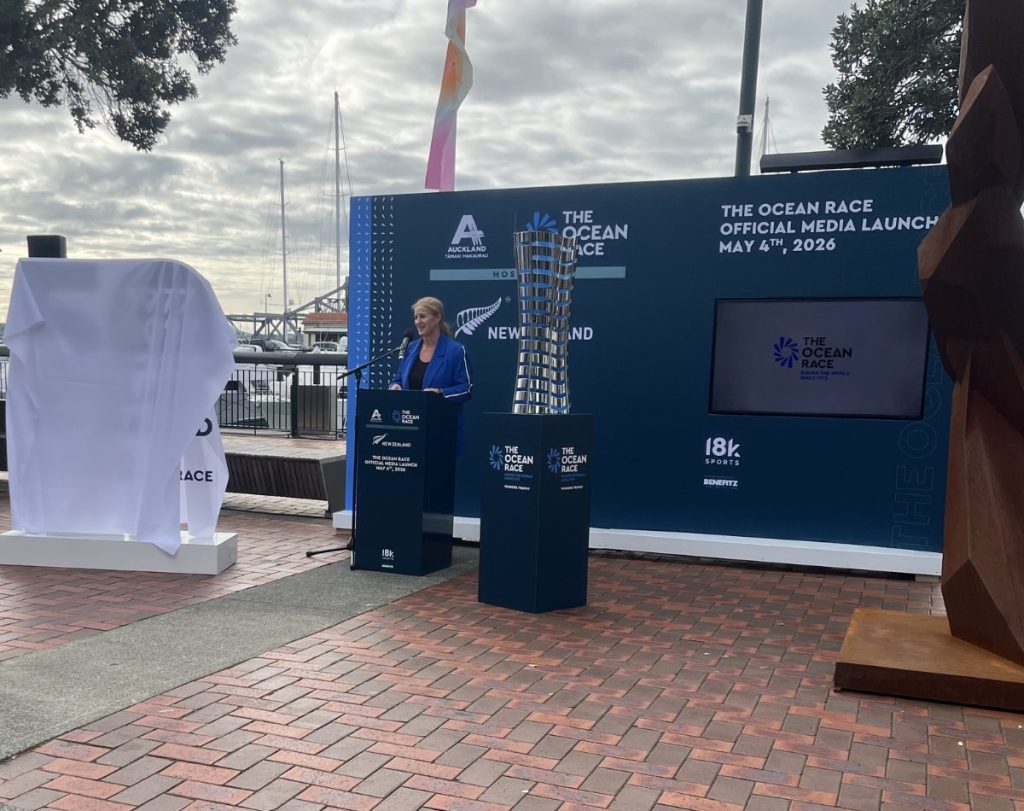
The opening leg from Alicante, Spain to Auckland will be 14,000 nautical miles, the longest uninterrupted stage in the history of the event, taking crews through the North Atlantic, the South Atlantic and the Southern Ocean before making landfall in New Zealand. Brisius made no apologies for the scale of it. “We believe in the Ocean Race that we should always make things a bit harder. If it’s the same as last time, it’s not hard enough.”
Minister Upston, who grew up in Auckland as the daughter of a sailor and described the race as “a really big deal in our family,” put a number on the government’s confidence. The investment of up to $4 million reflects an expectation of sustained economic return, driven by a stopover of up to six weeks for some teams, translating into longer hotel stays and increased spending across hospitality and accommodation. “The length of the stopover is a key driver of those returns,” she said, “turning the event into a sustained period of activity rather than just a brief spike.”

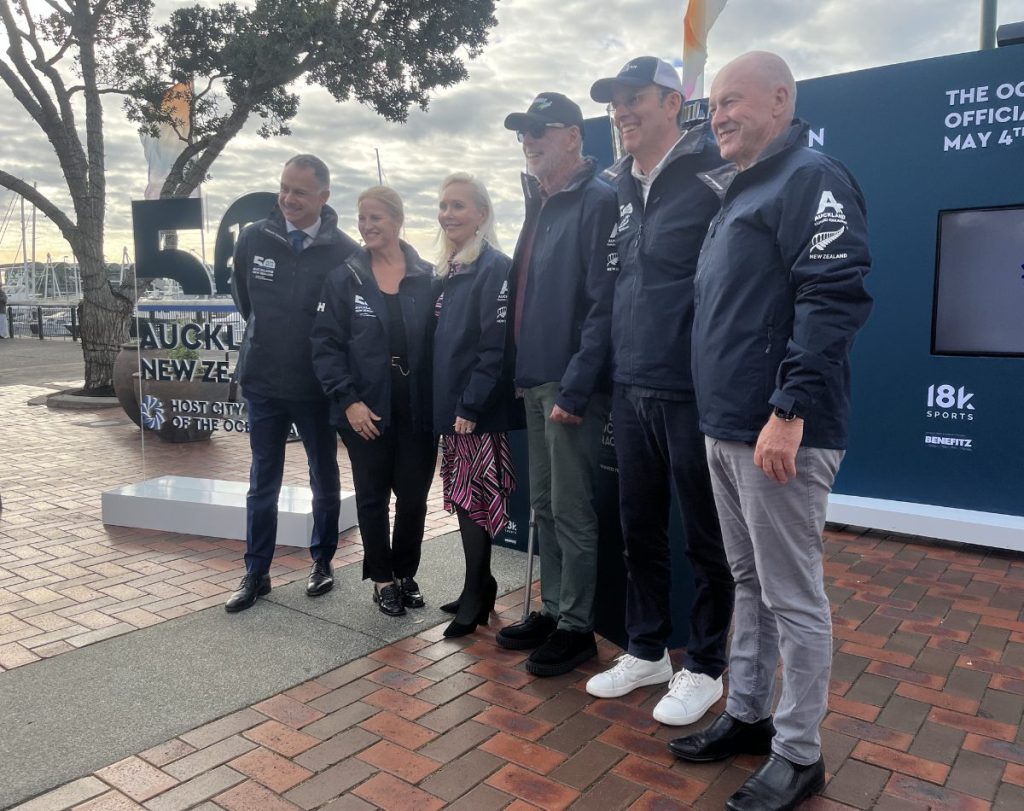
Mayor Wayne Brown described the race as a sport of heroes and reminded the room that Auckland’s maritime identity runs deep. He took a moment to acknowledge the environmental data gathered by race boats on every passage, touching on the microplastics crisis, before confirming, tongue-in-cheek, he had declined the organisers’ open invitation to sail the first leg himself.
On the water, the programme shapes up as follows. Leading boats are expected into the Waitemata Harbour around Saturday 20 February, with the Ocean Life Park opening the same day and running free to the public for three weeks through to the Grand Departure on Sunday 14 March. A coastal race is scheduled for Saturday 6 March, with pro-am events on the Hauraki Gulf rounding out the racing programme before the fleet departs for Brazil. When the race was last in Auckland in 2018, half a million people passed through the race village.
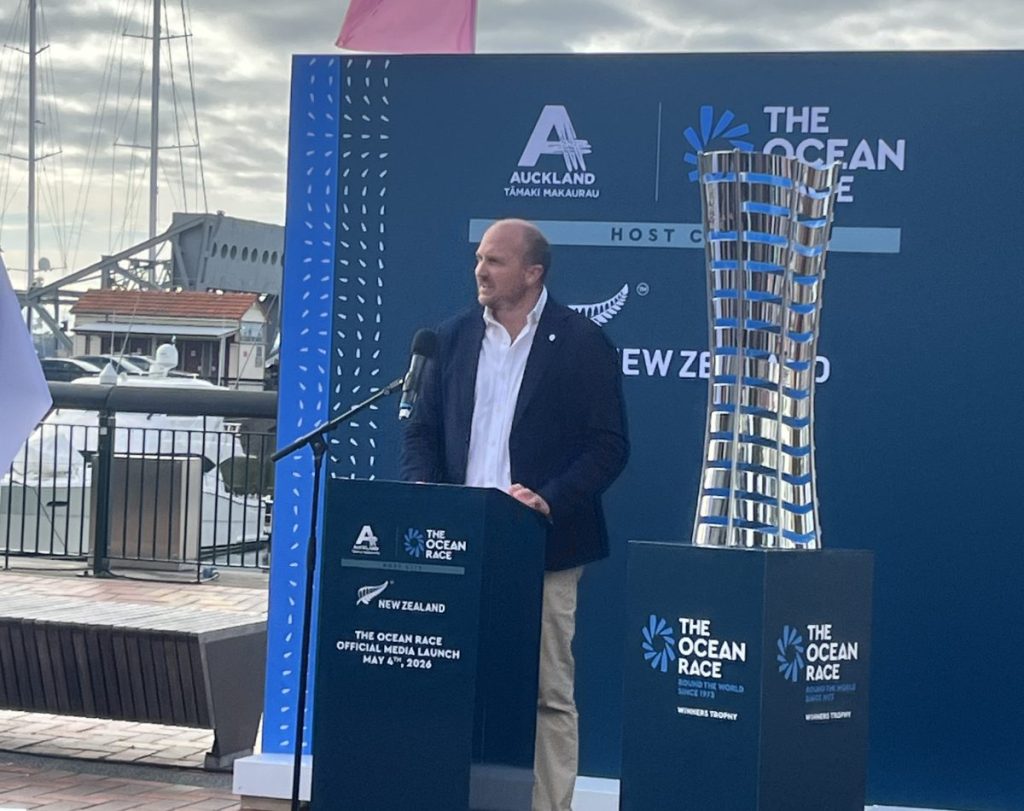
A three-part documentary series was announced by William Thomas of 18K Sports. The series produced with Sky New Zealand and NZ On Air will tell New Zealand’s story across the Whitbread, Volvo Ocean Race and Ocean Race eras. The Sir Peter Blake Trust was confirmed as the official charity partner, with organisers committing to raise funds for the Blake Foundation and honour his legacy throughout. A Sailability Auckland Learn to Sail programme for people with disabilities will run alongside the event, something Upston said matters personally to her as Minister for Disability Issues.
Brisius closed with a challenge that landed in a room full of people who understand exactly what he meant. “When those boats fly into the Waitemata Harbour, we don’t want you just to be watching. We want you to see the New Zealand flag back on the water, inspiring a nation and inspiring the world.”