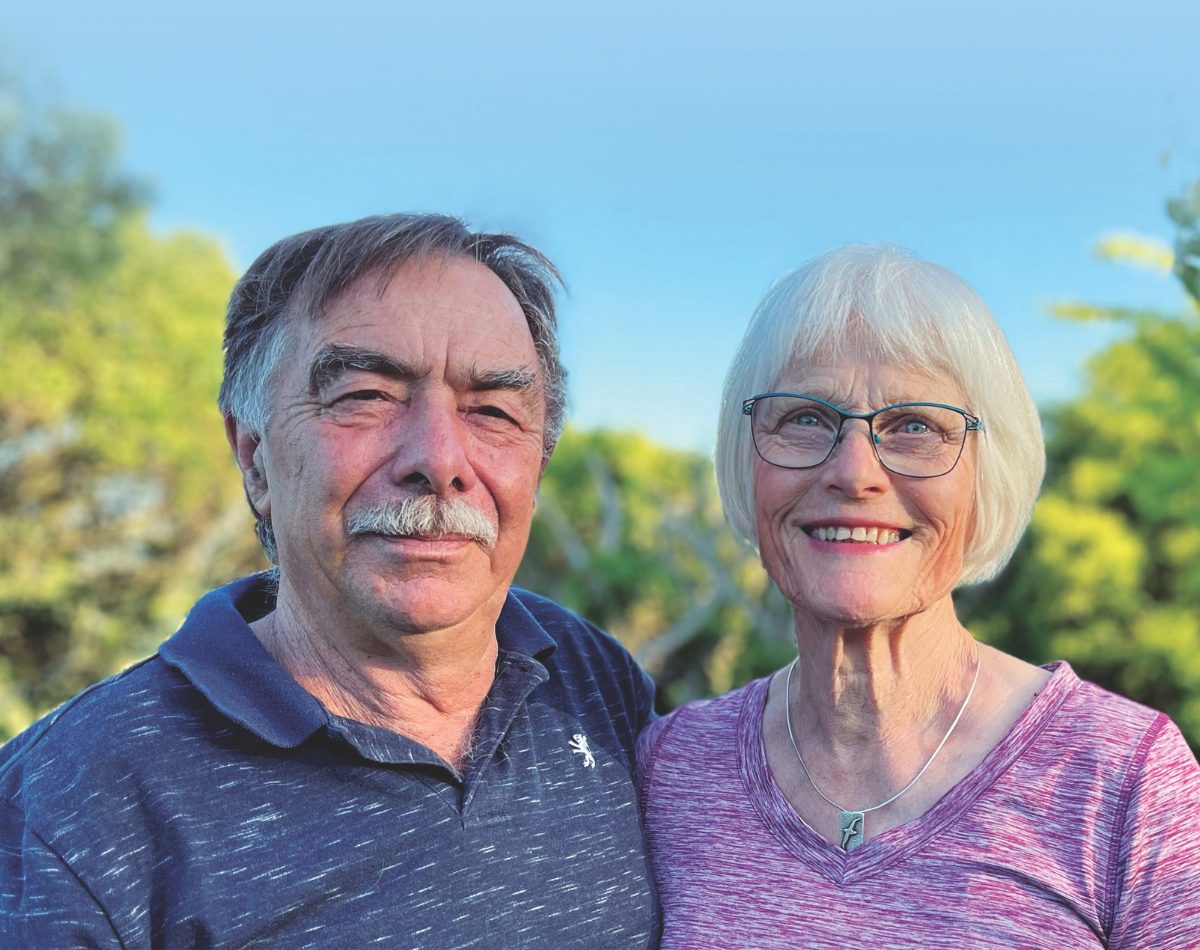
While world circumnavigations are seemingly routine these days, the challenge of obtaining a suitable yacht and funding a voyage remains as difficult as ever. Eric and Cathy Gray’s decade-long circumnavigation is a wonderful example of hard work, discipline, and teamwork. This is their story.
Early Life and a Shared Dream
Born in 1954, Eric’s father, Chris, was a Lines Overseer at the Tauranga Electric Power Board (TEPB). Located next door to the TEPB office on Sulphur Point was the Oliver & Gilpin yard and slipway. The company had been founded by the late Willie Oliver and the late Ted Gilpin around 1953. Around 1968, Oliver wound up the company and sold the yard to Phillis Dumbleton, who later sold it to Leo Dromgool. Renamed Tauranga and Mt Manganui Slipways Ltd, a couple of years later Gilpin took over the yard’s management, with Oliver working there too.
The slipway was in constant use, and during his school holidays, Eric helped move boats off the slipway and onto the adjacent hardstand with a Ferguson TEA tractor and greasy planks. This holiday job led to Eric starting his boatbuilding apprenticeship under Oliver in 1972.
Prior to this, Eric and Catherine (Cathy) Clulow, aged 17 and 15 respectively, had met and soon discovered they shared a dream of travelling the world. Naturally, Eric was keen on doing it by yacht, and early in their relationship, the couple decided that would be their goal when the time was right.

Eric spent the first three years of his apprenticeship mostly building carvel-planked fishing boats. Around 1975, he decided it was time to move on and spent the remainder of his apprenticeship with the late Tim Lees at his Sandspit boatyard. By now he and Cathy had married, and Eric’s parents bought them a section just up the road from Lees Boatyard. With the aid of a State Advances mortgage and working nights and weekends, Eric and Cathy built themselves a house.
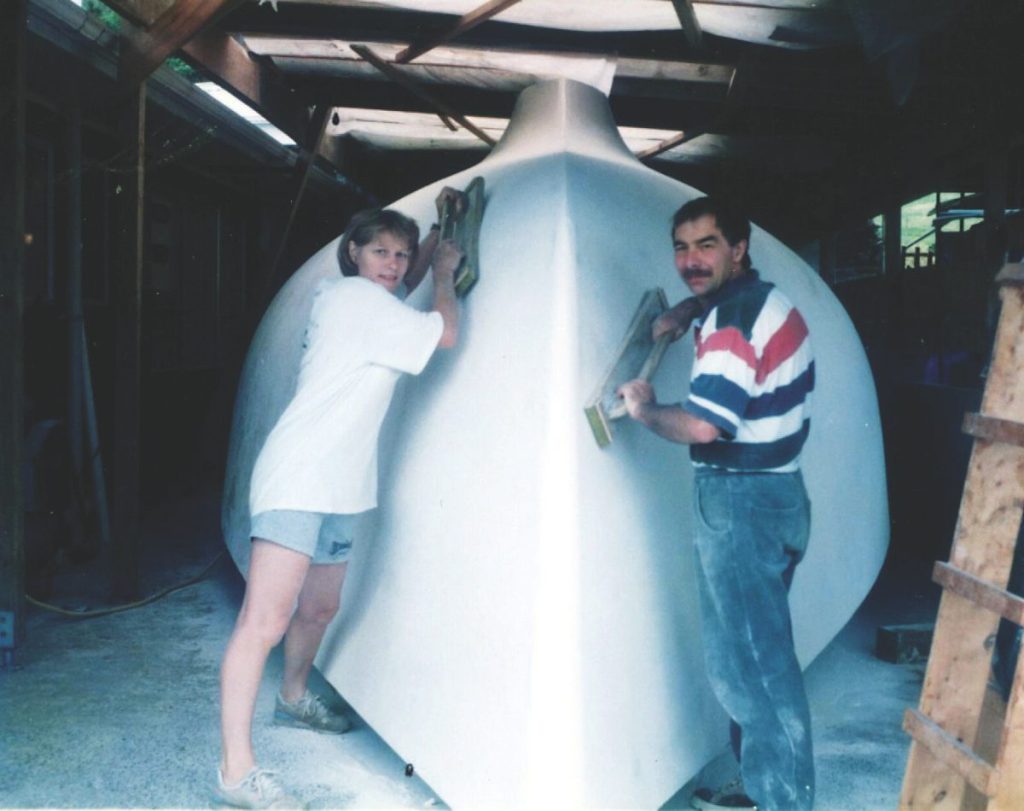
In 1979, the couple moved to Australia. Over the next five years, Eric worked for several Australian production boatbuilders: a year with John Duncanson in Adelaide and four years with Seton Reynolds of Setoncraft Boats in Gosford, just north of Sydney.
At Setoncraft, Eric fitted timber interiors into GRP production yachts, including the popular Compass 18 Careel, designed by David Rose, and another popular Setoncraft model, the Spacesaver 27 keeler.
In 1984, the couple, now with their son Ryan, returned to their Sandspit house, and Eric resumed his old job at Lees Boatbuilders. Over the next decade the couple welcomed daughter Kellie and were kept busy with careers and parenting. Tim Lees died after a short illness in 1992, and his son Greg took the business over, with Eric helping ease the transition. Around 1994, the couple decided it was time to begin their long-held dream of sailing the world. Eric wasn’t happy doing the voyage in a second-hand yacht, so he set about designing and building his own.

Designing and Building Erica
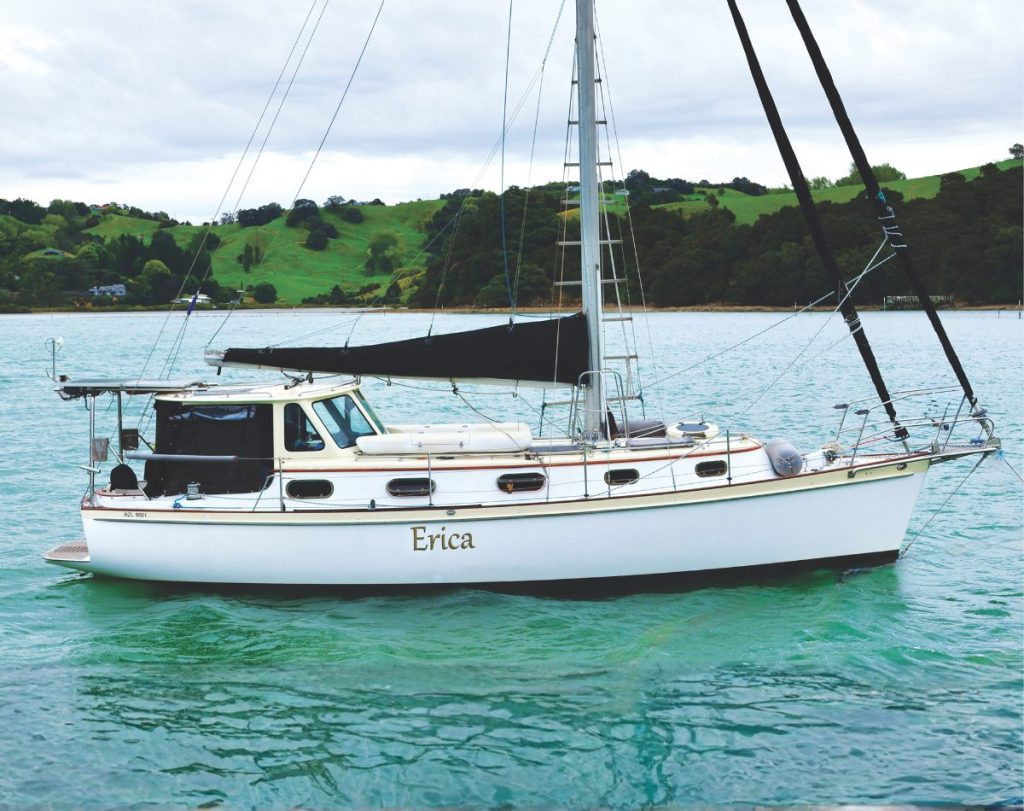
Eric was very clear about the yacht’s basic concept: a long keel to ease slipping, shallow draft for ease of navigating inland waterways, plenty of beam for stability and interior space, and to help keep the costs down, an overall length under 40 feet.
“Nothing I designed was particularly new; all the ideas came from years and years of talking to people who had done it.”
Eric started with whittling away at a half model, which he then had the late Mike Trotter convert into a proper lines plan using his MacSurf computer program.
“This was new technology at the time, and being so accurate, it saved me a huge amount of lofting work.”
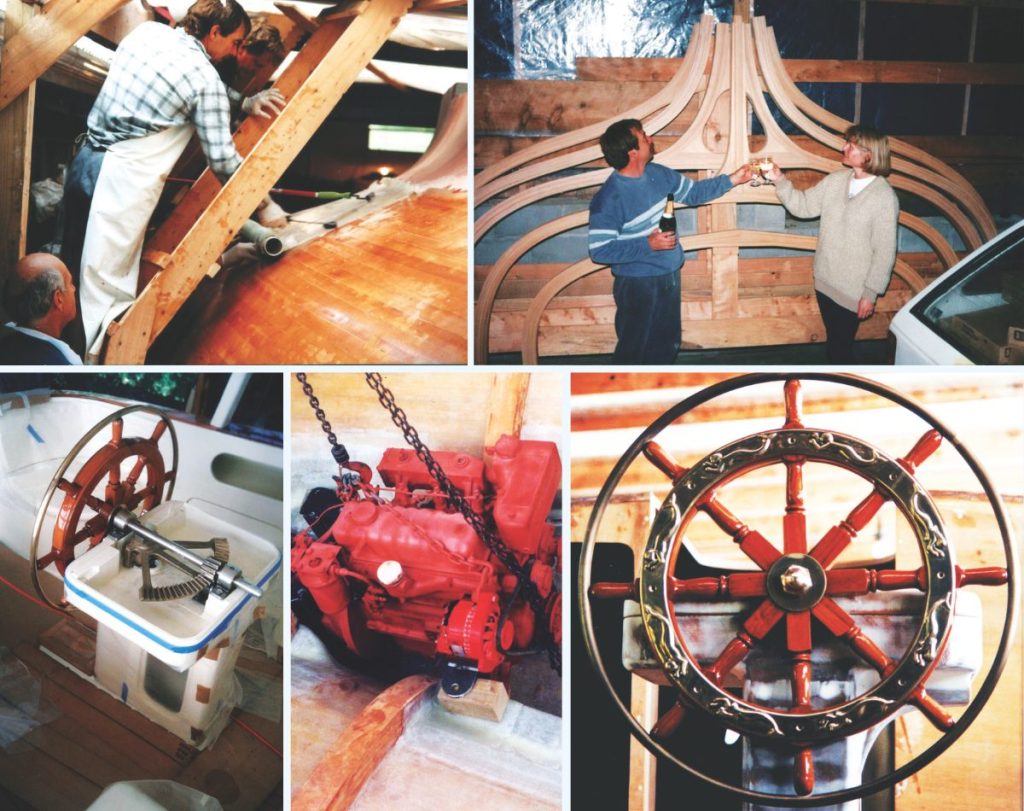
Eric obtained several macrocarpa trees that had been blown over on Motuora Island in Cyclone Bola, which he towed back to Sandspit for milling. The macrocarpa was used for moulds and temporary framing. However, the yacht was built in kauri, supplied by boatbuilder Barry Jones, who incidentally had also served his time with Tim Lees.
“She’s built like the proverbial brick outhouse. While some people said she’s far too heavy, she has a huge margin to withstand the likes of cyclones and bangs against wharves.”
The frames were laminated kauri sized 80 x 80mm, mounted on 900mm centres, with the hull strip-planked in 35mm kauri, glued with epoxy. To minimise wastage, rather than using concave/convex machining, Eric planed each kauri plank to suit its neighbour. The completed hull was then glassed inside and out with heavy DB glass and epoxy. Decks, coamings and cabin top are 25mm laminated plywood, glassed over. Eric cast the three-ton lead ballast to run the full length of the keel so that, when aground, the yacht would sit on that, rather than on timber.
Thinking ahead to lessen the maintenance, Eric sheathed the underwater sections in Copper Bot. Given the shallow draft, to maximise upwind performance he installed an electro-hydraulically operated daggerboard, taking the draft from 1.3m to 2.1m when lowered. The tanks — fuel, water and black water waste — were built in plywood, timber, DB glass, and epoxy and have proved trouble-free for 25 years now.

One obvious external feature is the substantial doghouse over the companionway.
“Everyone we spoke to who’d been offshore said a solid dodger was essential, so I added that before we left,” said Eric.
Another of Eric’s design requirements was a deck-stepped mast no taller than 12m, so that, when unstepped, it would fit aboard the yacht. The penalty of a low mast is lessened sail area, which combined with the yacht’s all-up weight of around 11 tons, meant modest performance in light airs. However, an experienced offshore sailor told Eric there is never a shortage of wind in the tropics, so a lowish rig wouldn’t be an issue.
“And he was 100% right.”
Eric took 14,000 hours spread over six years to build their yacht, and the evidence of his painstaking handiwork is everywhere; from the bowsprit to the boarding platform, virtually everything has been lovingly crafted by hand. Rather than buying stock fittings, Eric built nearly everything himself. For example, the steering system, portlights, and hatches.
To fund the build, Cathy worked full-time as a practice nurse and midwife, predominantly in Auckland but including a year-long stint in Saudi Arabia.
“That was hard, but you just have to knuckle down and do it,” she said.
Erica was launched in 2000, and the couple sold their Sandspit house, moved aboard, and sailed to Tauranga to complete the fitting out process. This took another four years, not least due to having to replace the 1970s-era NOS Perkins 4107 engine Eric had originally fitted with a new four-cylinder 50hp Kubota.
Setting Sail
In 2006, the couple finally set sail for Tonga with their daughter Kellie joining them for the first few legs. Early on, Eric had decided the so-called milk run was the most pragmatic route.
“There’s enough adventure in sailing around the world without looking for trouble. We didn’t go anywhere where we weren’t welcome or where the weather was too tough.”
Their final route was Tonga, Fiji, New Caledonia, Australia, PNG, Indonesia, Malaysia, Thailand, Sumatra, Chagos Archipelago, Cargados, Mauritius, Reunion, Madagascar, South Africa, Namibia, St Helena, Fernando De Noronha (Brazil), French Guiana, Trinidad & Tobago and various other Caribbean islands, Bahamas, USA, Cuba, Grand Cayman, Panama, Galapagos, French Polynesia, Cook Islands, Tonga, and back to New Zealand.
Ten and a Half Years at Sea
In all, they were away ten and a half years. While they had the usual storms and tricky moments, not surprisingly given their preparation, their voyage was essentially trouble-free. Proving her structural integrity, Erica was twice lifted on the base of her rudder by surfacing whales, both times without damage.
The only real mechanical issue they encountered was a blown gearbox in the Caribbean, which necessitated some bush machining. This repair lasted until they reached North Carolina, where they replaced the gearbox with a new one.
“That was a big lesson; we should have fitted a new engine and gearbox from the beginning,” said Eric.
Fifty to 60 years ago, visiting circumnavigators were treated as honoured guests and fees were waived or minimised. These days, visiting yachties are treated as well-heeled tourists and charged accordingly.
Lacking an independent income, the Grays funded the 10-year voyage as they went. This entailed Cathy taking two to three months off each year to work as a specialist midwife in places like the Australian outback, with Eric remaining onboard Erica to undertake maintenance and repairs.
The Grays encountered many other couples and families doing the same voyage and became friendly with many of them. However, they noted that only half of those who started a circumnavigation completed it. Interestingly, the two most common reasons for non-completion were shipwreck and relationship breakdown.
Coming Home
The couple arrived back in New Zealand in 2016 and set up in Tauranga, using Erica for local cruising. Finally, in 2023, the couple made the big call to sell her. Selling the yacht that they had poured their time, money, and energy into for over 30 years wasn’t easy.
“It was a huge loss to let her go, but you have to be sensible. And we’re doing other things now, which is good,” said Cathy.
Eric and Cathy Gray’s story is proof that you don’t need a bottomless pit of money or a lottery win to achieve your sailing dreams. Hard work, discipline, and teamwork can achieve almost anything.
“If you can dream it, you can achieve it,” said Cathy in conclusion.
Eternally wise words from a couple well qualified to say them.