By Victoria Low
In 2025, The Magenta Project set out to answer the question of how much of the dial has moved since the 2019 Strategic Review of Women in Sailing, which highlighted the uncomfortable truth of what it was like to be a woman in our sport.
The result was the 2×25 Review — the most comprehensive study of gender equity in sailing in the past six years, drawing on responses from 2,500 people across 68 countries.
Six years on, the findings still did not make comfortable reading. Sixty- five per cent of women in sailing report experiencing discrimination, 42 per cent of people in the sport are aware of incidents of non-accidental violence, and 49 per cent do not know how to report abuse.

The 29 per cent pay gap in professional sailing exists not because of unequal pay, but because women lack access to high-level roles and elite racing experience.
These are not abstract statistics. They describe the lived experience of women in clubs, on racecourses, and in coaching and officiating roles across the globe — including in New Zealand.

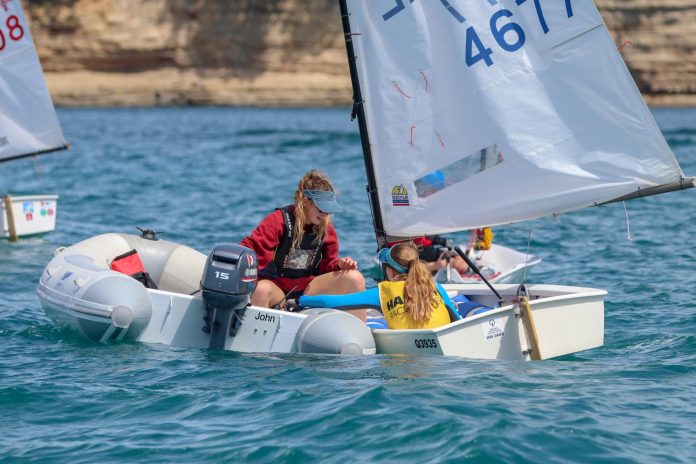
Yachting New Zealand has done more than most. The Women and Girls in Sailing strategy, the She Sails NZ brand, support for women-only regattas, and the Starling Girls Accelerator Programme are all evidence of genuine commitment. The early signs from the Starling programme — stronger female representation in the top 10 at class nationals — suggest that targeted investment in pathways works.
But hard work remains.

As the 2×25 Review highlights, the initiatives that tend to work in the early stages of equity programmes are visibility initiatives, creating spaces where women feel welcome, celebrating female participation, and making the sport more accessible at the entry level.
Visibility alone does not change the structures that determine who progresses, who gets appointed, and who ends up at the decision-making table. The 2×25 Review is clear on this point: the barriers that prevent women from advancing in sailing are structural, not attitudinal.
Yachting New Zealand’s Starling Girls Accelerator Programme is showing encouraging signs.
Women are not absent from coaching, officiating, and leadership roles because they lack ambition or ability. They are absent because the pathways are not designed with them in mind. Appointment processes that rely on informal networks, progression routes that do not accommodate caring responsibilities, and a culture in which the people who make decisions about who gets opportunities tend to look for people who look like them.
So, what does this mean at club level, where most of the sport actually happens? It means moving beyond events and visibility campaigns and asking harder questions. Who is on your committee, and how did they get there? What does your appointment process for coaches and race officials look like, and who does it favour? When a woman raises a concern, does she know what to do and trust that something will happen? It means making inclusion a condition of how your club operates, not an add-on to it.

Clubs that are serious about this do not just run women’s regattas; they examine their governance structures, their coaching appointments, their safeguarding policies, and their culture, and they ask honestly whether any of those things get in the way. And it means being willing to sit with some uncomfortable data.
Victoria Low, CEO of the Magenta Project. Photo / Supplied
The 2×25 Review found that 49 per cent of people in sailing do not know how to report abuse. That number should give us pause. Knowing a policy exists is not the same as knowing how to use it, and closing that gap is something every club can act on today.
Yachting New Zealand is well placed to lead this next phase. The foundation is there. The strategy exists. What is needed now is a shift from programmes that invite women to structures that ensure they can stay, progress, and lead. The 2×25 Review is not a verdict on what sailing has failed to do. It is a map of where the work still needs to happen.





New Zealand has always punched above its weight in the sport. There is no reason it cannot do the same on this.
Victoria Low is the CEO of the Magenta Project and former Head of the World Sailing Trust, where she led global work on participation, gender equity, and authored World Sailing’s strategic review on women in sailing.
Click here for the full 2×25 Review.
Originally published by Yachting New Zealand.