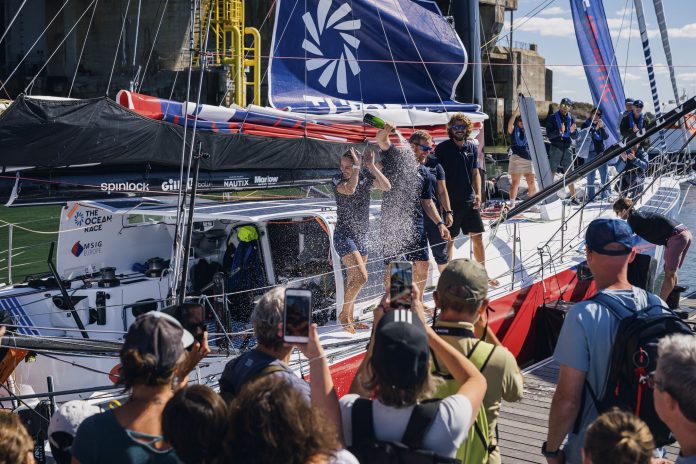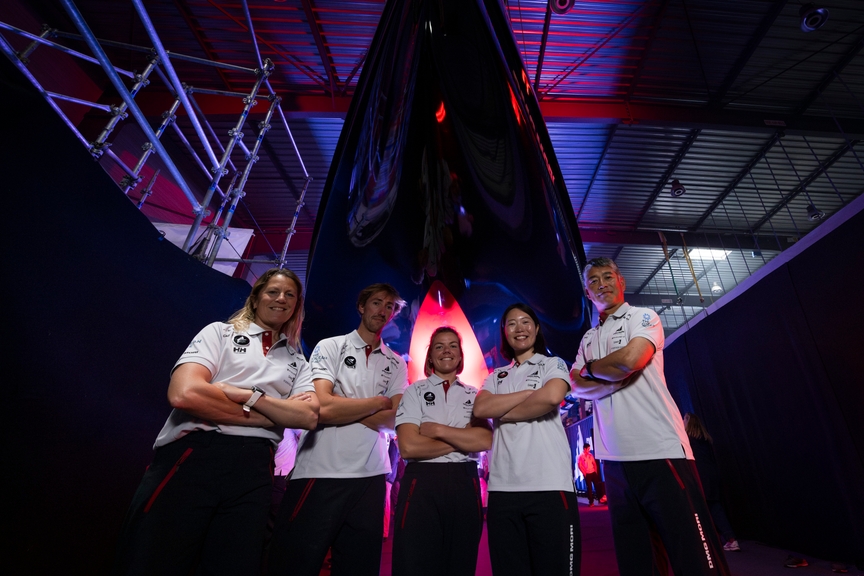
Kojiro Shiraishi stood before friends, family and media in Lorient this week to unveil the DMG MORI GLOBAL ONE, a boat that marks a genuine departure from the current IMOCA fleet. The Japanese skipper has made it clear this will be his last racing machine, and he’s spared no effort in making it count.
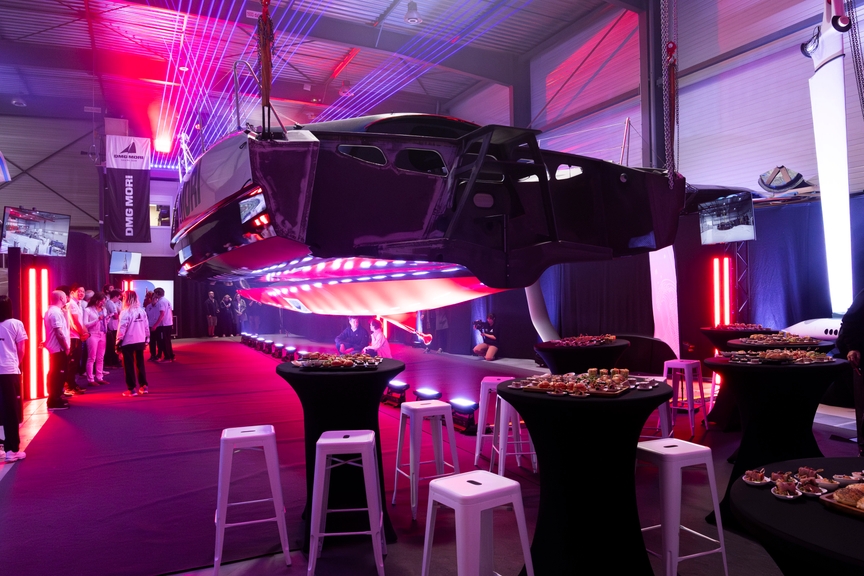
The hull breaks from convention in striking ways. Designer Guillaume Verdier has shaped it along the lines of a trimaran’s central hull, a choice that promises earlier foiling, reduced wave impact, and less drag overall. Most IMOCA designs have long been conceived around heeling heavily, but Verdier saw an opportunity. “We’ve been designing boats to heel over but that’s not how we are sailing when we race around the world,” he explained. “So we pushed the other way. We designed a foil to be more upright.”
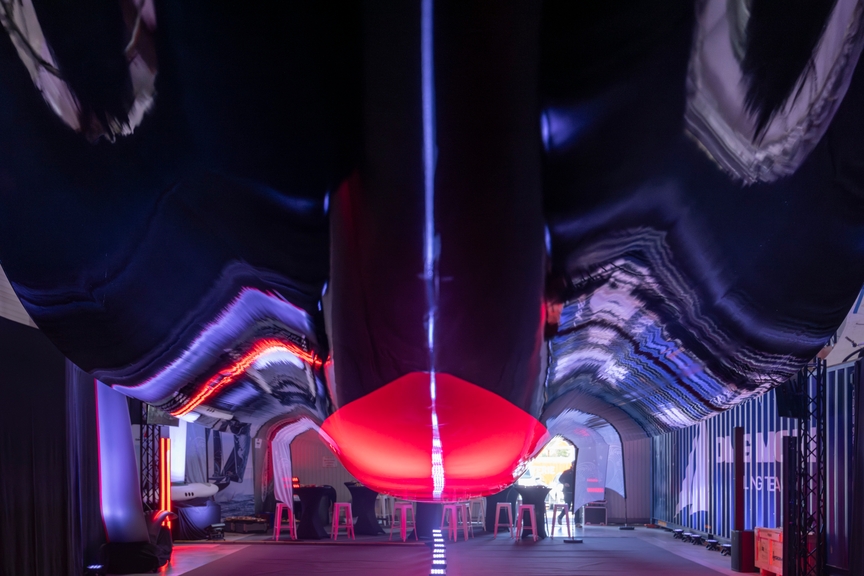
Shiraishi gave Verdier explicit instruction to think freely. “I asked him to have a free mind, free ideas, no limits, and that’s how we ended up here,” the skipper said. The result is a fully integrated package where hull form, foil, aerodynamics and rudder all work together as one system.
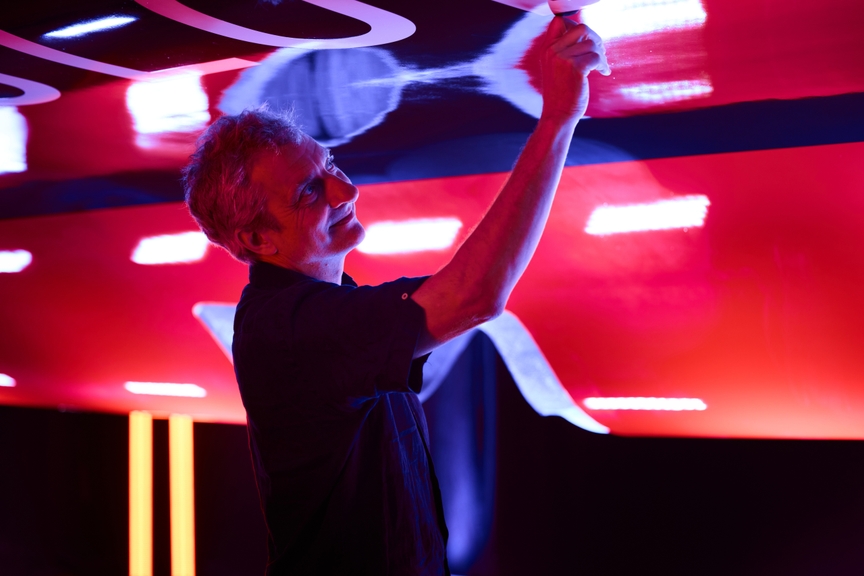
Verdier acknowledges the design carries inherent risk. “It’s very different, which is always a bit scary. We did a lot of work on the shapes and we thought there was a new possibility.” But he also believes the payoff extends beyond raw speed. The new shape should deliver a gentler motion in heavy seas, potentially offering sailors a less punishing experience than the boats they’ve been racing. “The sailors have been suffering so much the way the boats have been before. We hope this is more like the feeling of sailing on a multihull with a lot less wetted-surface.”

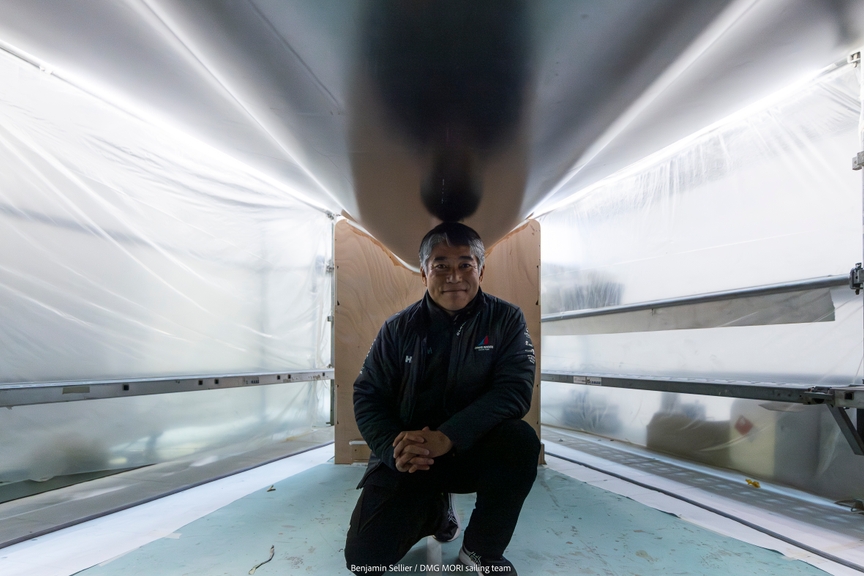
Sam Davies, who will race alongside Shiraishi in The Ocean Race Atlantic in September, is keen to get going. “We can see right away the new evolution in the hull shape, which is different from any IMOCA out sailing today. It will be really fun to learn to sail,” she said. Davies noted that the timeline is tight, with the team shipping across to New York in less than two months. “We’re all quite impatient to get sailing. In ‘new boat’ terms that isn’t a long time, but we’re very confident as Kojiro has an incredible shore team and everyone is highly motivated.”
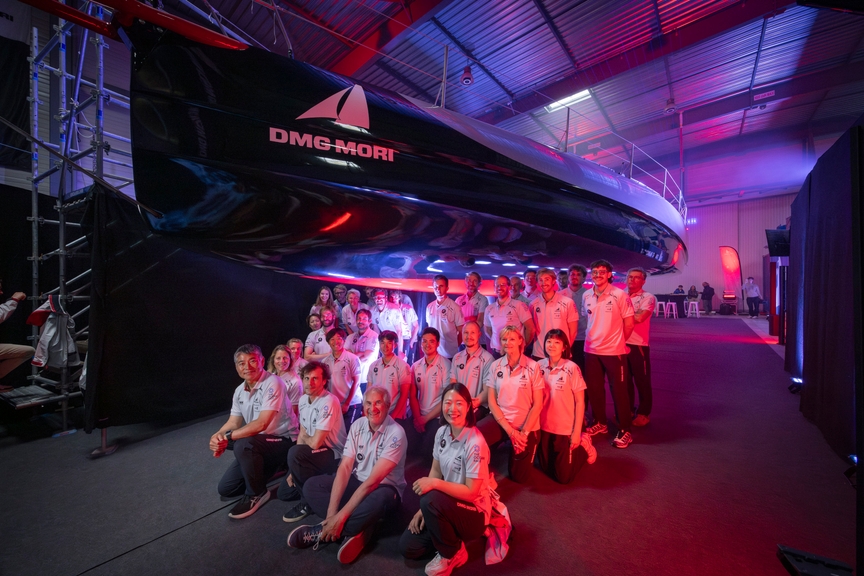
The boat will spend about four more weeks in the yard before launching, followed by sea trials and final preparations for the Atlantic crossing. The round the world race itself kicks off in January 2027. Team manager Jacques Caraës summed up the mood well: “It’s a new page in IMOCA design. The boat should be very stable, and foil earlier. This is what we are hoping.”