The waters of the Firth of Clyde have seen a lot of sailing history. But there are moments when the past comes back so completely that time seems to have stood still. This week is one of them.
The 2026 Richard Mille Fife Regatta is under way on Scotland’s west coast, bringing together 22 William Fife-designed yachts for a week of racing and celebration across the same waters where most of them were born. It is an occasional and irreplaceable event, and this sixth edition runs from 4 to 12 June at Largs, only the second time in 13 years the Fife fleet has gathered there.
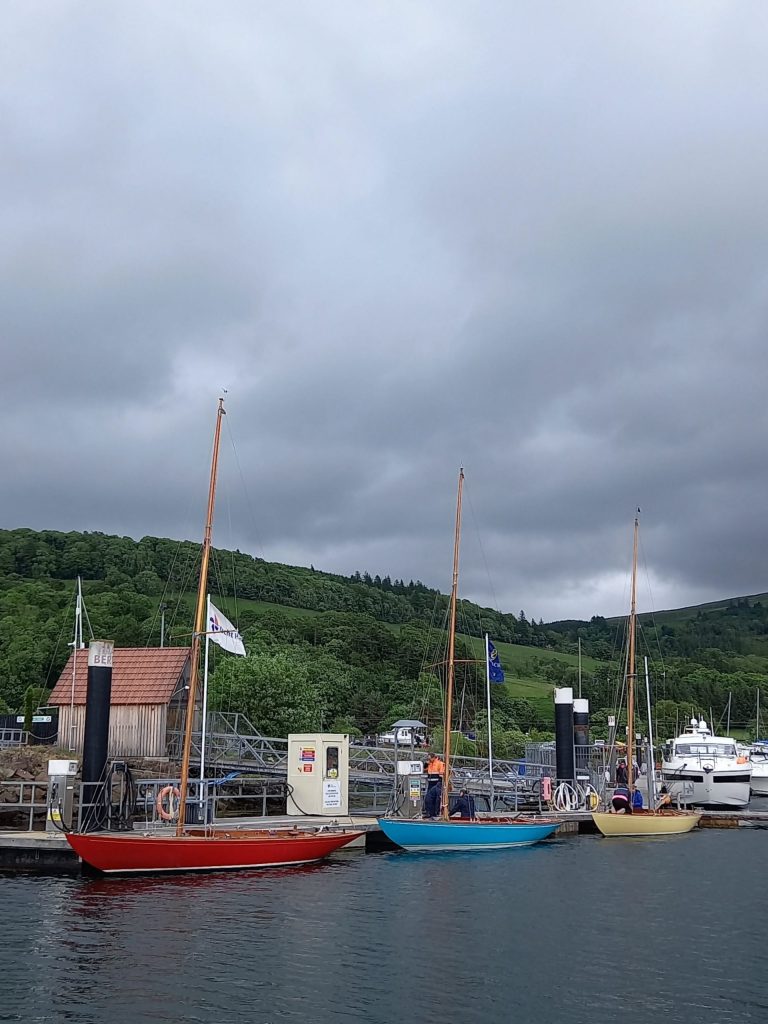
This morning, Scotland time, they will sail in procession past the former Fife boatyard in Fairlie, the village on the Clyde coast that gave the world one of its greatest yacht designers, before the first race, The Cumbraes Race, of the series gets underway.
“The story of the Fife yard and the yachts it built is part of the story of Fairlie where I grew up and live,” said Fiona Houston, Regatta Director. “To have them return to the Clyde and to share their history with their owners and crew is wonderful. They are beautiful wherever they travel in the world but never more so than in their home waters.”

William Fife III
The Fife yard at Fairlie operated across three generations of the same family, but it was William Fife III, born in 1857, who earned the dynasty its lasting international reputation. Working from his father’s and grandfather’s yard from an early age, he was designing and building notable racing boats by his thirties, with clients in Britain, the United States, and Canada. At his peak he dominated large sailing yacht design in Britain alongside G.L. Watson, and his work extended to the highest levels of the sport: he drew the lines for two of Sir Thomas Lipton’s America’s Cup challengers, Shamrock in 1899 and Shamrock III in 1903. He was inducted into the America’s Cup Hall of Fame in 2004.
The hallmark of a Fife yacht is the carved dragon at the bow. Over a career spanning more than 60 years, William Fife III designed and built more than 600 yachts, and the survivors are now among the most prized classic vessels in the world.
The fleet
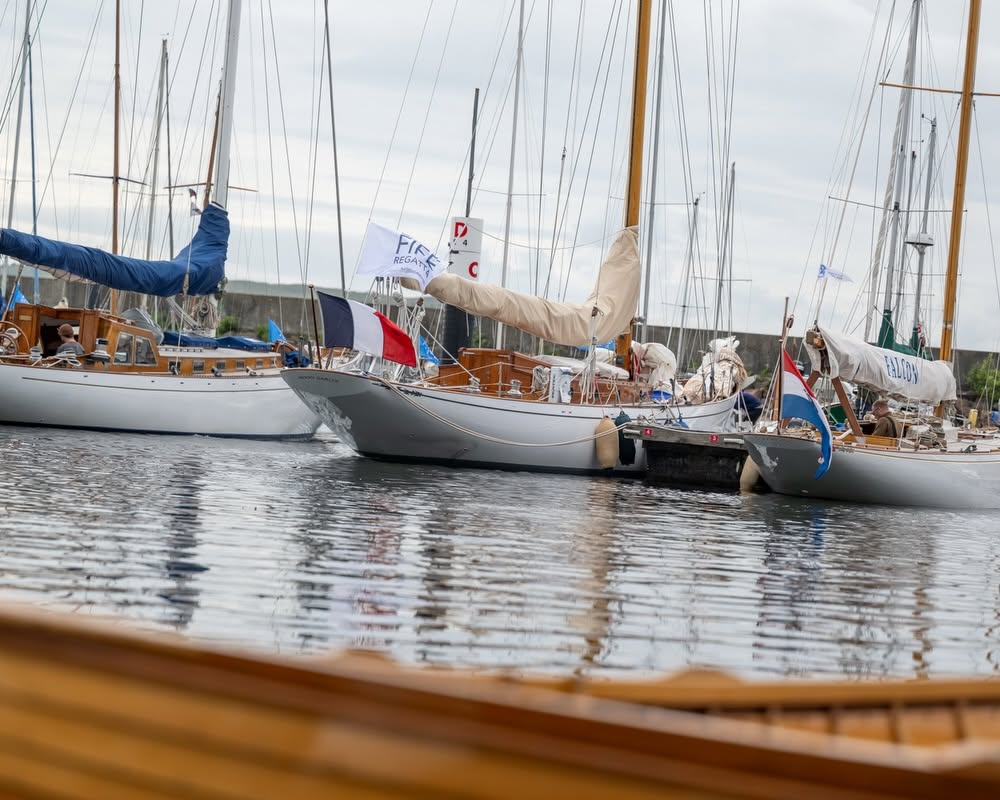
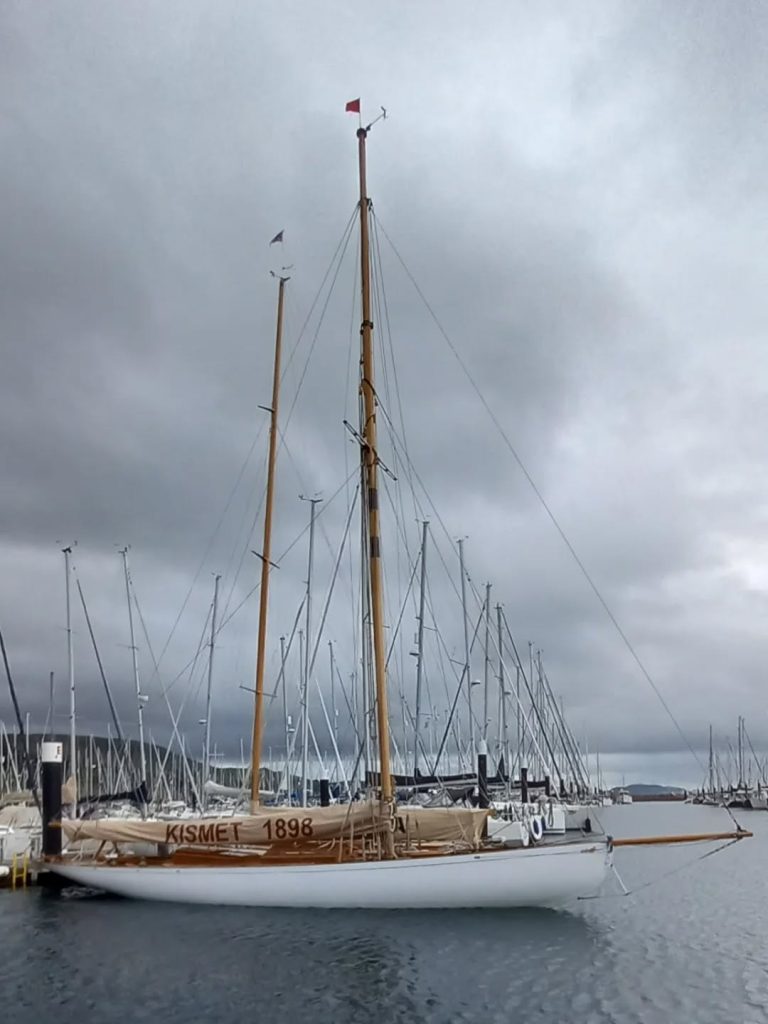
The yachts gathered in Largs for this week’s regatta represent the full span of that legacy. The oldest is Uandi, a 30-foot lugger launched in 1897. Close behind her is Kismet, a 55-foot gaff yacht from 1898, and Sibyl of Cumae, a 51-foot linear rater built in 1902.
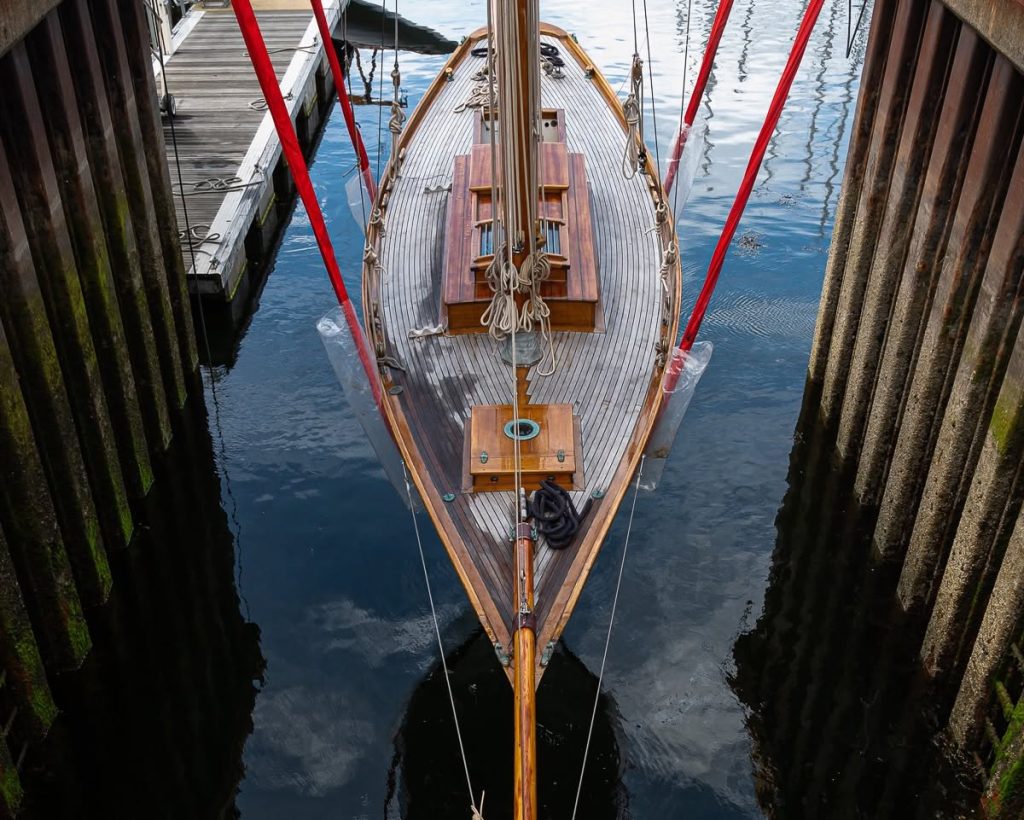
At the other end of the scale, Kentra anchors the fleet with sheer presence. At 104 feet overall, this gaff ketch from 1923 is one of the great surviving examples of 1920s cruising luxury, her teak decks and mahogany interior largely original after more than a century afloat.

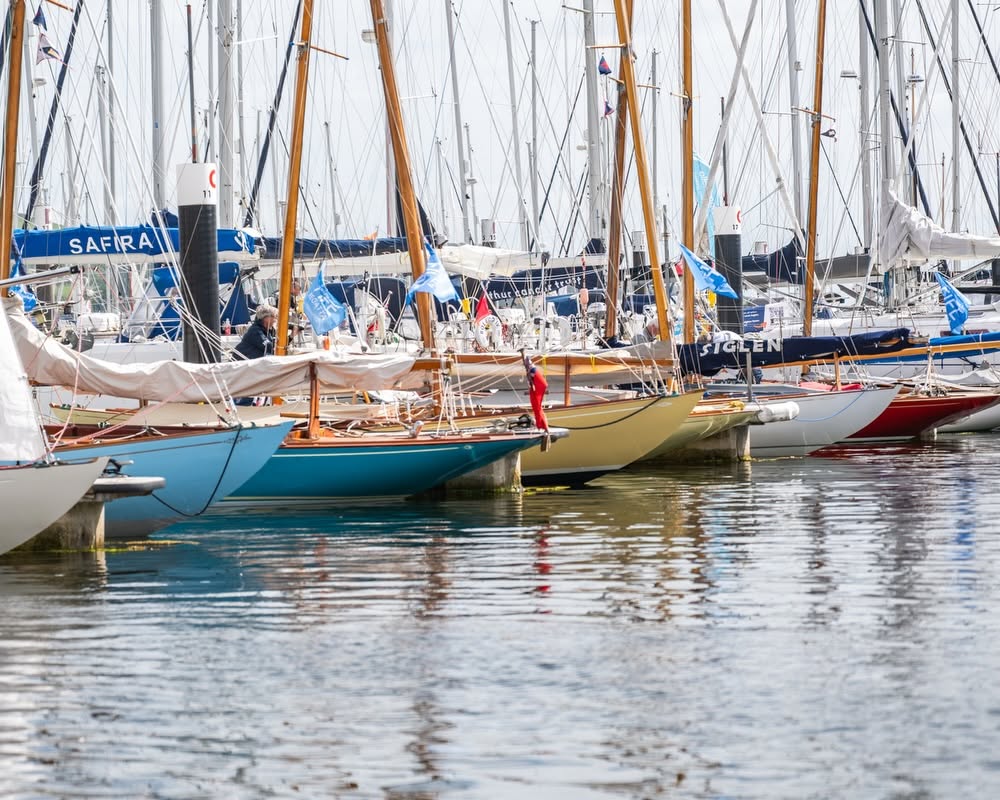
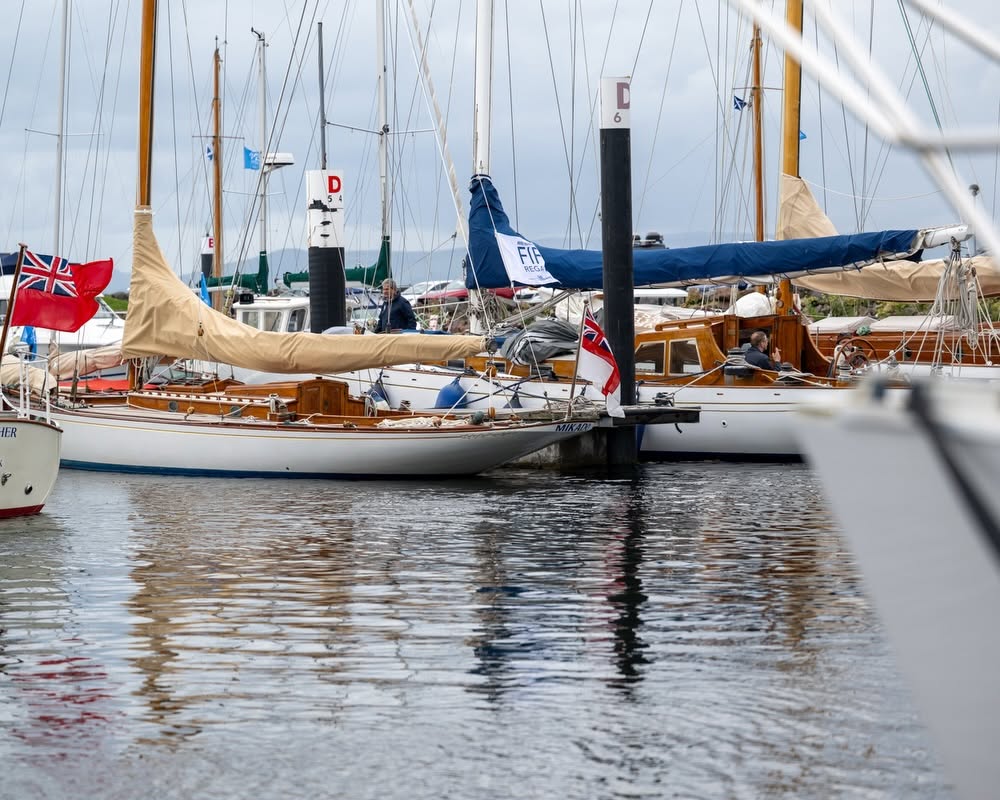
The fleet is a genuine cross-section of what Fife designed and built. There are two International 8 Metre class racing yachts, Falcon (1930) and Saskia (1931), built at the height of the International Rule era for pure competitive racing. There is Mikado, a 1904 Clyde 30 built for Sir William Corry that has outlasted nearly every other vessel built to the same rating rule. There are the tiny 24/25-foot Conway One-Design sloops Coila, Coralie, Peggy, Sian II, Siglen, and Vega, designed specifically for club racing at the Royal Anglesey Yacht Club, identical boats built for members to race each other on equal terms. Alongside them are two Menai Strait one-designs, Intombi and Lotus.
One vessel in the entry list comes with an interesting footnote. Cruinneag III, the 63-foot ketch from 1936, was not designed by Fife but by William Campbell and built by Dickies of Tarbert. Both Campbell and the Dickie brothers had served their apprenticeships directly under William Fife III at Fairlie, and it shows in every line of the boat. Her inclusion as a special guest yacht speaks to how far the Fife influence extended beyond the yard itself.
The races
The week constitutes five races, which can be likened to a classic car cruising rally.
The first race follows the Parade of Sail past Fairlie and encompasses what looks to be a figure 8 around Great Cumbrae and Little Cumbrae Islands, leaving and departing Largs Yacht Haven, a journey of roughly 13 nautical miles.
On Sunday, the second race, the Rothesay Race, starts off Largs Yacht Haven and navigates past the Inverkip turning mark before crossing the firth to finish right in Rothesay Bay on the Isle of Bute—a distance of approximately 10 to 15 nautical miles.
On Tuesday, following a reserve day on Monday, the fleet completes a scenic cruise to Kames via the Kyles of Bute before the third race, the Loch Fyne Race, gets underway. The Loch Fyne Race is a stunning coastal passage stretching approximately 12 to 18 nautical miles, finishing deep within Loch Fyne just off Portavadie.
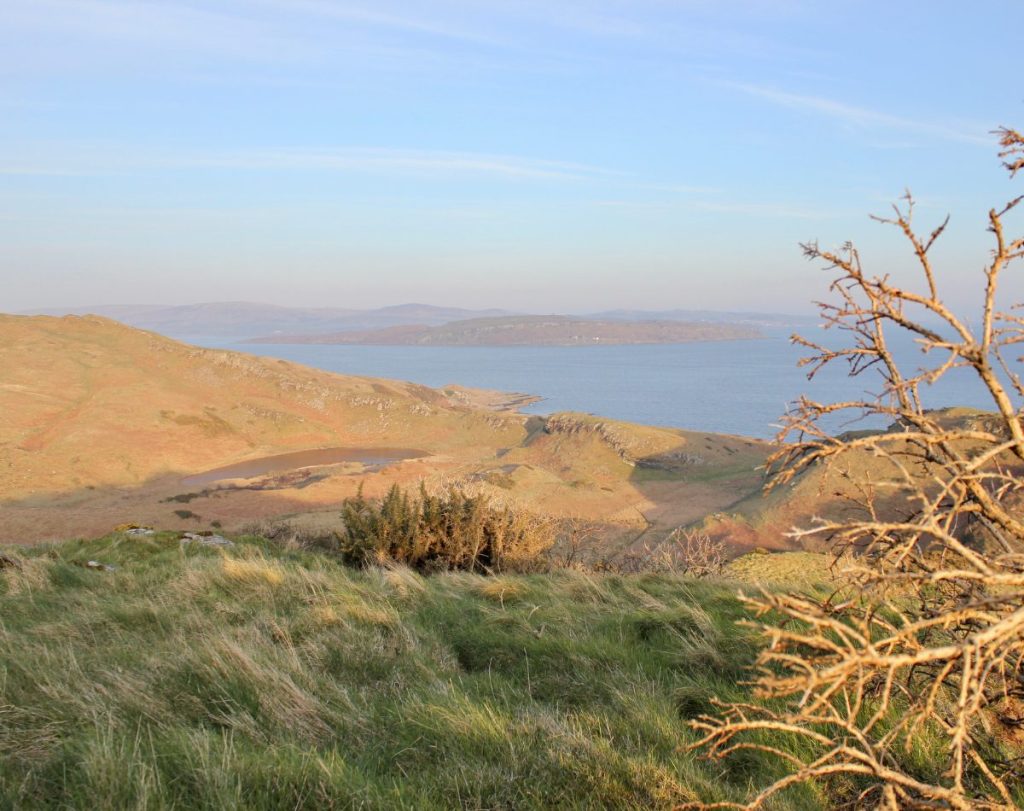
On Thursday, after a Wednesday reserve day, is the Bute Race, a longer route from offshore Portavadie heading back to Largs Yacht Haven near Fairlie. The fleet will round Garroch Head on the Isle of Bute and cross between Great Cumbrae and Little Cumbrae, a route of approximately 37 nautical miles.
The last race, the Kings Course, held on Friday 12 June, takes the fleet along a more direct route just off Rothesay Bay and back again to conclude the event.

It is a route through some of the most sheltered and scenic sailing waters in Scotland.