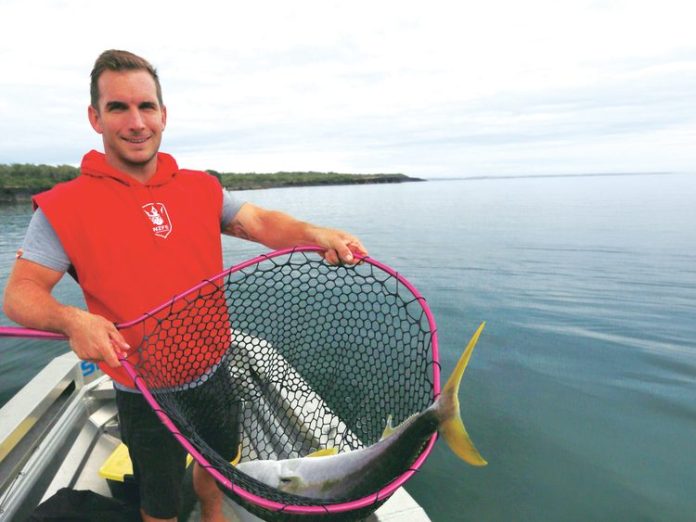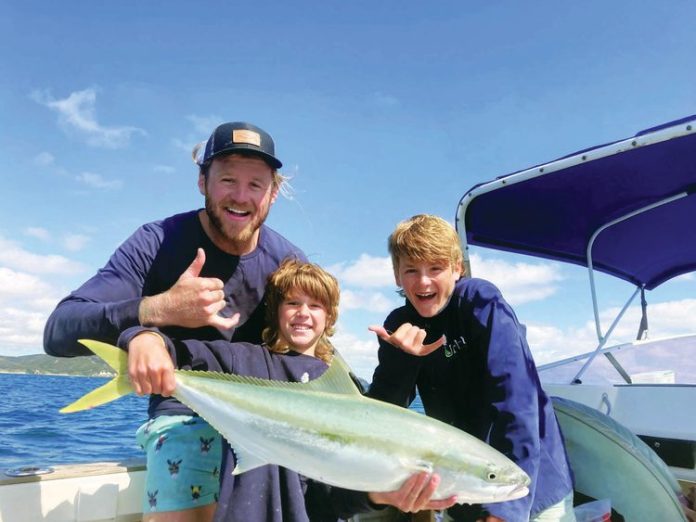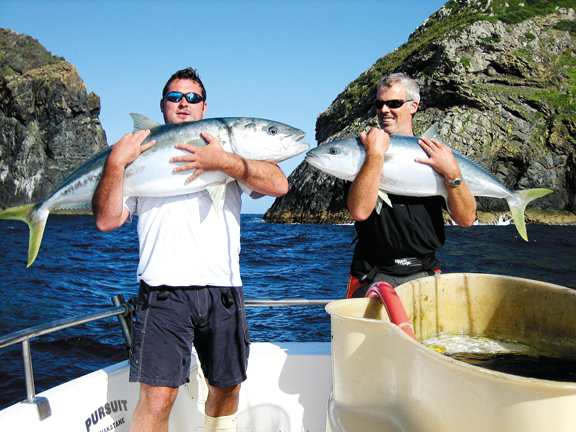
Live baiting for kingfish has been around as long as anyone can remember, and to this day, if you want to catch a really big kingie, it remains the choice of most serious captains. Techniques like mechanical jigging and stick baiting do land big fish, but for sheer consistency, nothing beats a lively bait in the right place. The other advantage is obvious: even those of us who aren’t in peak physical shape can do it comfortably, at least until hook-up time.
Targeting kingfish by live baiting is as much about getting bait as it is about where you deploy it. Good quality live baits, and sometimes plenty of them, will produce far better results than cutting corners. Time spent catching healthy, lively bait and looking after it properly is never wasted. The fresher and more active your bait, the harder it is for a predator to refuse.
The two most common baits remain the kahawai and the jack mackerel, and they are still infuriatingly difficult to find exactly when you need them.
Finding bait in 2026
The biggest shift in live baiting over the past decade has been in how we locate fish, both bait and target species. Forward-facing sonar, now widely available from brands like Garmin (LiveScope) and Lowrance (ActiveTarget), has changed the game completely. Rather than relying on a traditional 2D sounder to identify marks on the bottom or mid-water, you can now watch bait schools in real time and, more usefully, watch a kingfish respond to your bait as it swims. If you are not using forward-facing sonar, you are fishing blind by comparison.

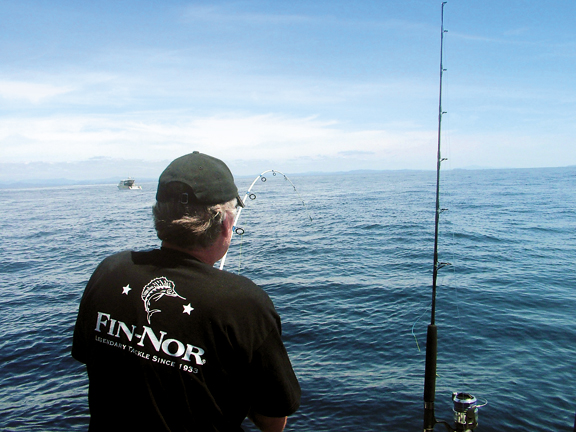
That said, the old instincts still apply. Watch for birds, particularly terns working the surface, or muttonbirds sitting tight off rocky points. Use your sounder to identify dense marks near the bottom or in mid-water before dropping a sabiki rig. Stop the boat on top of the school, not past it.
Bait selection
Good quality sabiki rigs are still the go-to for catching livebait, and it is worth spending money on them. Heavy-duty options with quality hooks are essential when bait fishing, particularly if you are targeting larger baits, because there is a reasonable chance you will hook a kingfish while doing it and a cheap rig will cost you the fish.
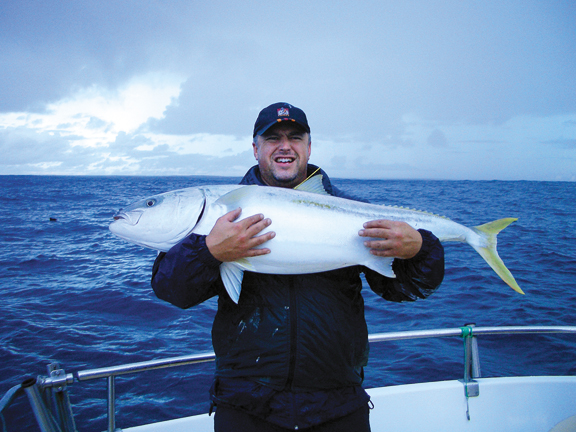
Match bait size to the situation. Very large baits take time for kingfish to swallow, which gives the fish time to reach foul ground before you can come tight. A large jack mackerel remains a favourite for big kingies because its slimmer profile makes it easier for a fish to take cleanly.
Bait care
A good bait tank is not optional. It needs to be adequately sized, with strong water flow and, ideally, an oxygenation system. Overcrowding your tank will kill your baits just as quickly as poor water flow. Purpose-built livewells with aeration and recirculating pumps are now standard on many trailer boats, and portable oxygenated systems are widely available for vessels that are not so equipped.

Handle your baits as little as possible. Lift them straight into the tank and use the back of a knife blade slid down the line to the hook to free them cleanly. Push gently until the hook shank is clear, twist, and the bait drops into the livewell without being touched.
Rigging
Circle hooks have become the standard for live baiting, and for good reason. They dramatically improve hook-up rates on kingfish, reduce gut-hooking, and are now the recommended choice across most fisheries. Sizes between 7/0 and 10/0 are appropriate, depending on bait size. Pair them with 80 to 120lb fluorocarbon leader, which is now more affordable than it once was and offers significantly better abrasion resistance and reduced visibility compared to nylon.
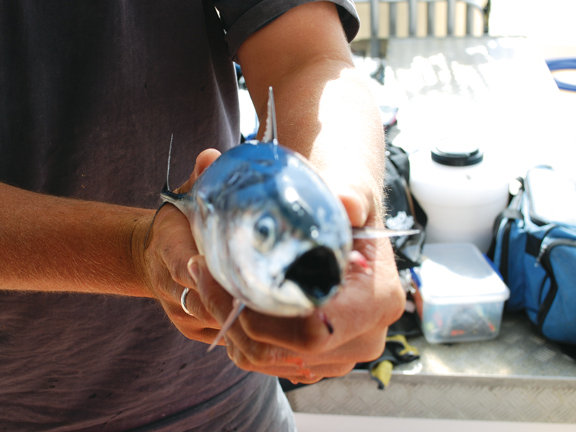
There are three main ways to rig a live bait, and each has its place.
1. The back hook, placed just forward of the dorsal fin with the point angled slightly toward the head, is the most common approach for surface fishing. When the line comes tight, the hook lies along the body and allows a kingfish, which takes prey head first, to swallow the bait cleanly.
You can also hook the bait through its underside, near the tail just behind the vent. This turns the bait on its back and its struggles to right itself make it very lively, which quickly attracts predators. You do go through a lot of baits this way, though, as they become exhausted very quickly. This rig works better for surface fishing.
2. Rigging through the lower jaw or nostrils is the most versatile method and works well for both surface and deep presentations. The hook passes through the nostril cavity, which runs through both sides of the head and provides a secure hold without damaging the bait too much. This rig handles current and deep deployment particularly well, and because the bait faces into the flow, it remains lively for longer. When using circle hooks with this rig, fish with the reel in gear and let the rod load up rather than striking hard.
3. A bridle rig, using a short loop of waxed floss or elastic thread to attach the hook behind the dorsal fin or in front of the bait’s nose rather than piercing the bait with the hook, is now widely used for larger live baits. It allows the bait to swim completely naturally, keeps it alive longer, and is effective whether fishing free-swimming baits on the surface, baits under a balloon or slow trolling baits anywhere in the water column. Rigging takes a little practice and a bait needle, but once mastered it is hard to beat.
Where to fish
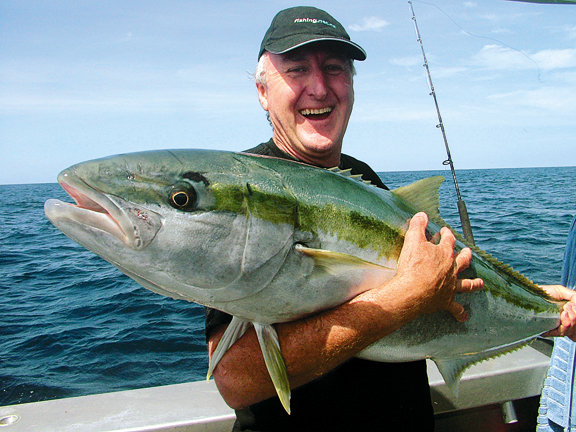
One thing that has not changed is that kingfish follow their food. In the warmer months especially, the areas where you catch your bait will often hold kingfish as well. Once you have a tank of healthy, active baits, look for structure, current lines, and birds working the surface. Forward-facing sonar will let you see whether fish are present before you commit a bait, which saves time and keeps your livies in better condition.
The core principle remains exactly what it has always been: the bait is everything. Spend the time getting it right, and the rest tends to take care of itself.

Originally published in Tradeaboat.