Last month I left John Chapple in late 1956 planning and working on his new 12ft Q Class yacht.
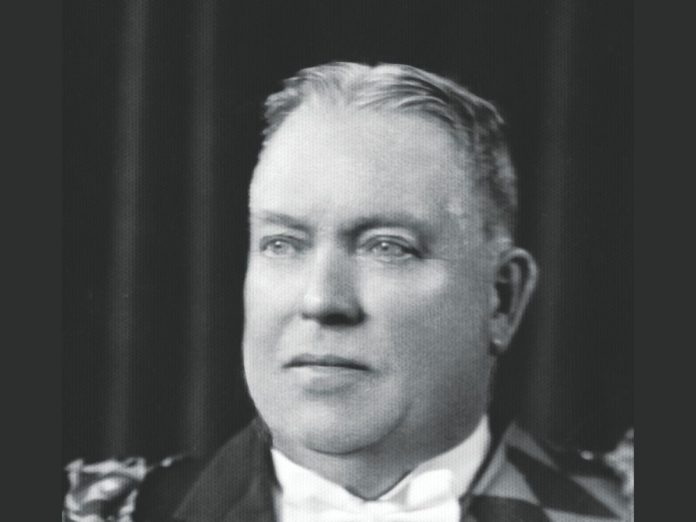
In the season, the Tamaki Yacht Club, on the southern shore of the Waitematā at Mission Bay, ran the races that mattered for the Q Class. It was where the class had matured from its roots in the winter racing at Glendowie Boating Club. We still had the “brown trout” problem of the Orakei raw sewage outfall being released at the start of the ebb, later diverted and treated at Mangere, thanks to our mayor, Sir Dove-Meyer Robinson.
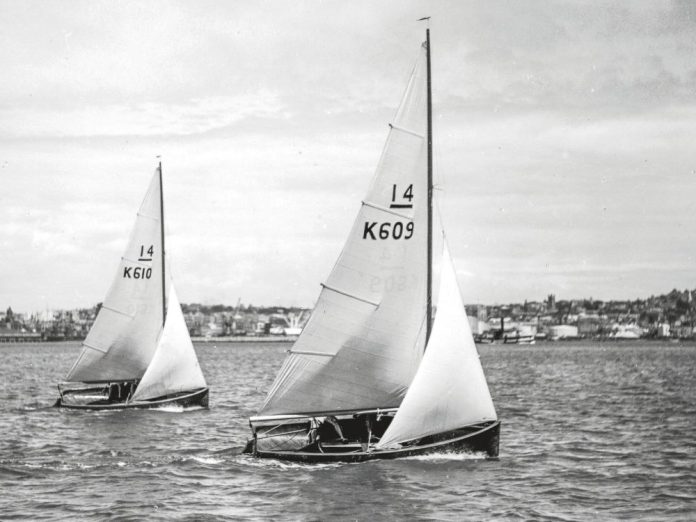
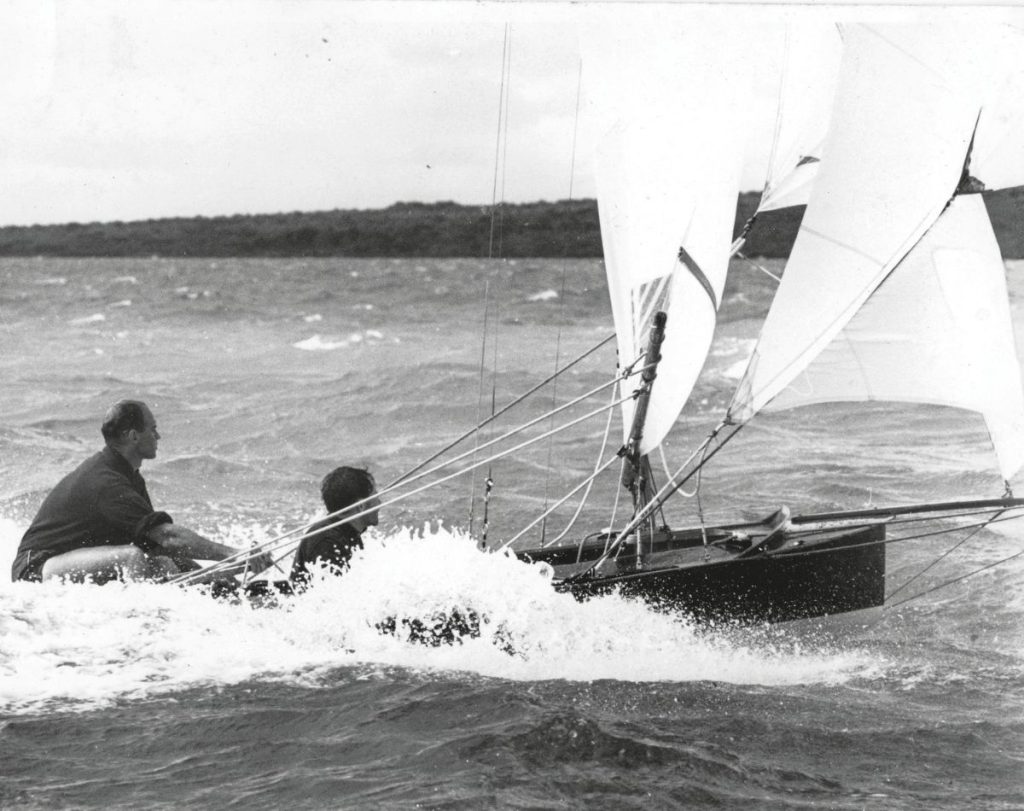
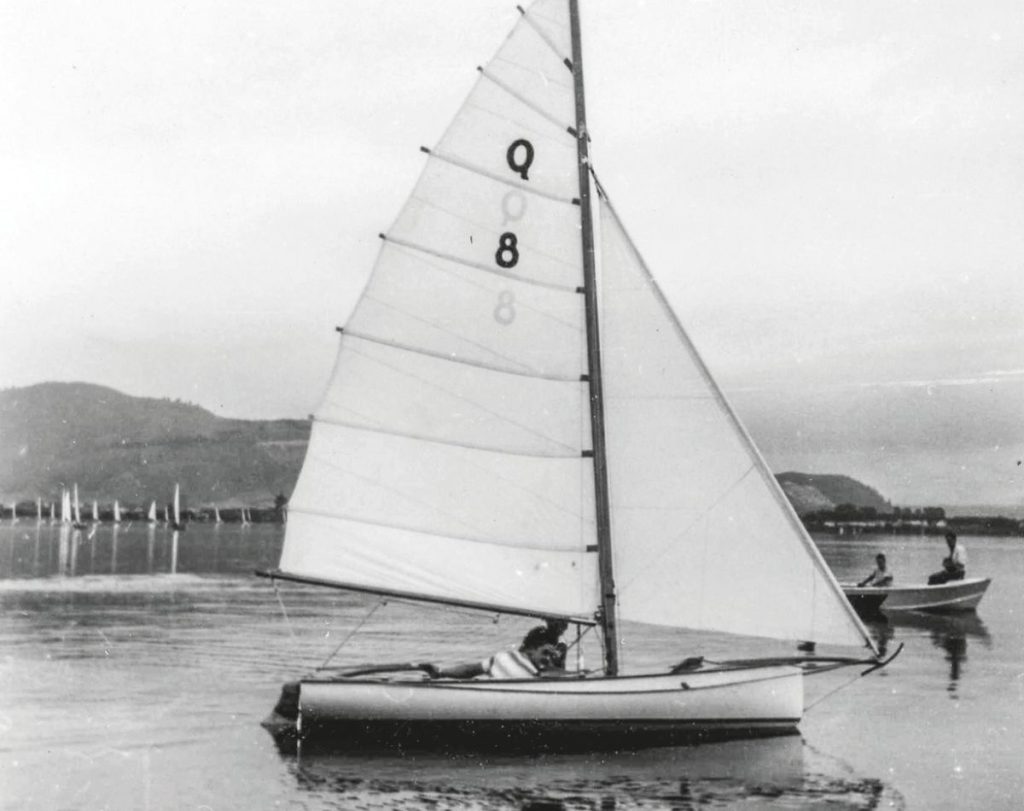
The most successful of the early Pennant-turned-into Q Class boats was John Peet’s Nimble (Q8) to a design by Des Townson of late 1954. Des had absorbed the design philosophies of Bill Couldrey, and Arch Logan through Bill. Nimble was superbly beautiful, superbly built, superbly sailed and fast, despite a modest sail area of 110ft².
John Peet sold her to Bob Salthouse who sold her to John Chapple’s good friend Don Brooke, who took her to the first 12ft Interdominion Championship races in Sydney in January 1957. Nimble won the invitation race but found the very heavy conditions of the championship races a challenge. The Australian square-bilge Gwen designs with their false floors handled the rough water better. Nimble finished third overall, with Peter Nelson and Brian Woods’ Futile (Q4) and Ian McRobie’s Ada (Q2) close behind.
The event was so successful that it was decided to hold it every second year (later increased to annually) in Sydney and Auckland alternatively. So, the next competition was to be held in Auckland in December 1958/January 1959 and that accelerated the Q Class building boom.

John’s new boat retained the basic Glee hull shape aft of the mast, but he made the entry fuller. Her lines forward were halfway between Glee and Dixie so she retained a strong Jack Logan influence. John had learned a great deal from Jack about design and construction, just as he had absorbed a lot of Jack’s techniques of racing small craft on the Waitematā. Jack would say, “The man who knows North Head, wins the race.”
Of course, he meant that it was necessary to learn to read how that little extinct volcano sticking out into the harbour dictated the best line and the best tactics in the huge variety of wind and tide conditions on the Waitematā.
John set up the mould in the garage of his parents’ beachfront property at Channel View Road, Takapuna, and laminated the hull beautifully, “Logan fashion”. He gave her mahogany outer skin a deep clear varnish, white below the waterline. Her mast, a “banana” mast, was a light laminated spar with an after rake at the top to produce a wing-like aerofoil rather like the unstayed Finn’s sail.
A big gulp was the suit of Terylene sails. We had to stump up over £100, by far the biggest expense, but if you didn’t have sails in the new miracle fibre, you were uncompetitive.
This “banana” mast was possibly inspired by a mast Jack Logan had designed in 1952 for the 18-footer Talei built by H. Smith and T. Percy of Suva, whose hull was a clone of Jack’s Komutu skimmer design, harking back to Jack’s father Arch Logan’s radical “skimmer” or “scow” Southerly Buster built for Mark Foy in 1903 to beat the Sydney 22-footers.
That hull form was itself now about to become outdated by the deep-chested 18ft skiffs like Dave Marks’ Daniel Boone, Quartet, and Envy; Howard Pascoe’s Result; and Jack Logan’s own Quandary and Sluefoot. A more recent use of the “banana” mast was on the Australian 12ft National Champion Yandoo which suffered the same fate as Nimble in the breezy inaugural 1957 races in Sydney.

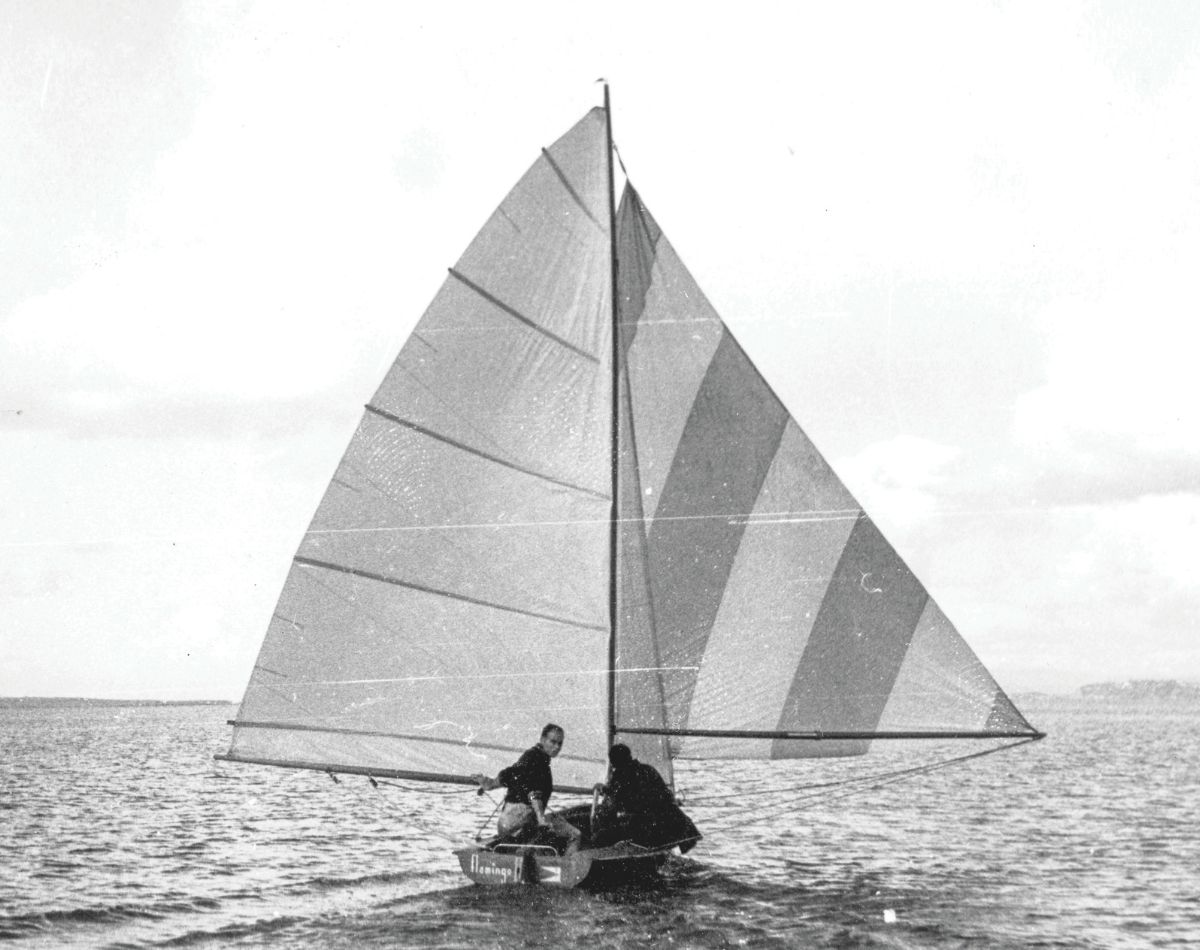
She was registered as Q41. We often called her “Flaming Go”!
From the start, Flamingo showed she was very fast and a delight to sail. John kept her on the property right on Takapuna Beach, often leaving her on her beach trailer on the sand in front of the house.
To prepare ourselves for the racing season, John and I would sail from the beach most evenings and during the weekends, except in the winter months or when the easterlies blew straight in from the Gulf. It was a thrill to pick up a strong westerly a hundred metres or so off the beach and have a blazing kite ride out to the Lighthouse off McKenzie’s Bay on Rangitoto and a hard sail back on the nose. My spinnaker and trapeze work improved greatly.
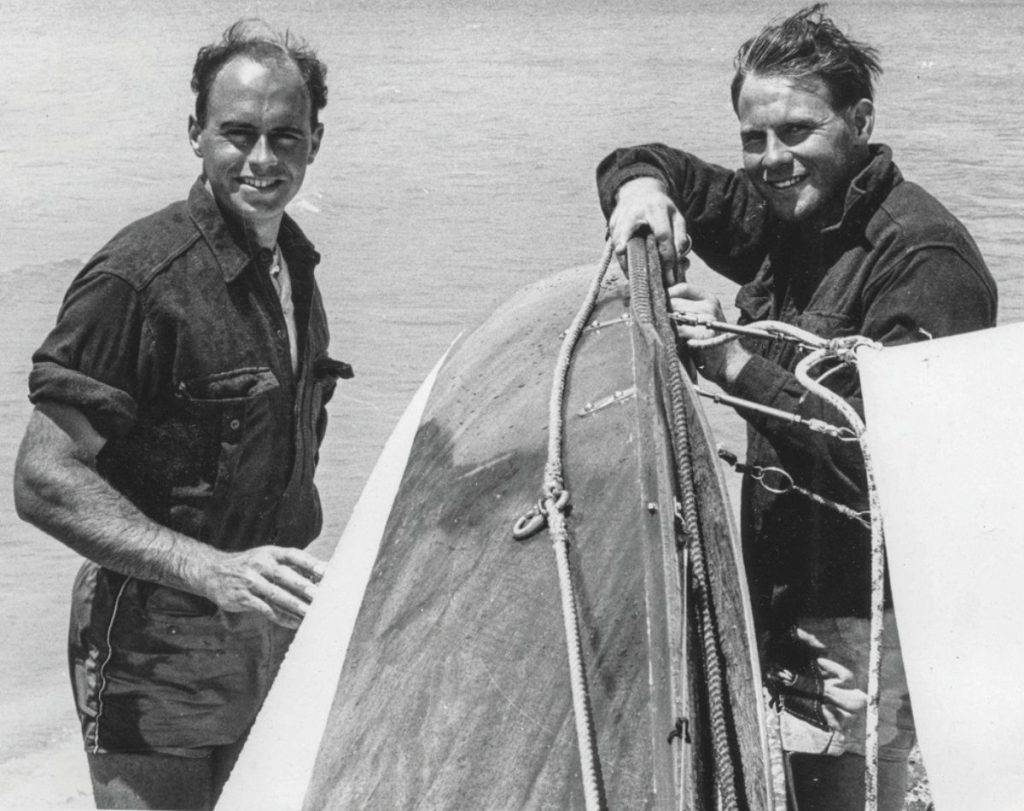
We became a tight team with very few words needed or used. John was taciturn by nature, very like Jack Logan. From sailing with Jack, it was clear that unnecessary words get in the way of efficient sailing. From sailing with some other skippers, it was clear that “scone-doing” is not conducive to a happy crew nor winning silverware.
By the 1957–58 season, Flamingo was on top form, winning the Tamaki Yacht Club Q Class Championship. The “banana” mast had gone, replaced by a stout, straight spar and new sails. We were looking forward to the Interdominion trials coming up at Tamaki in December 1958. However, John Peet had some ideas.
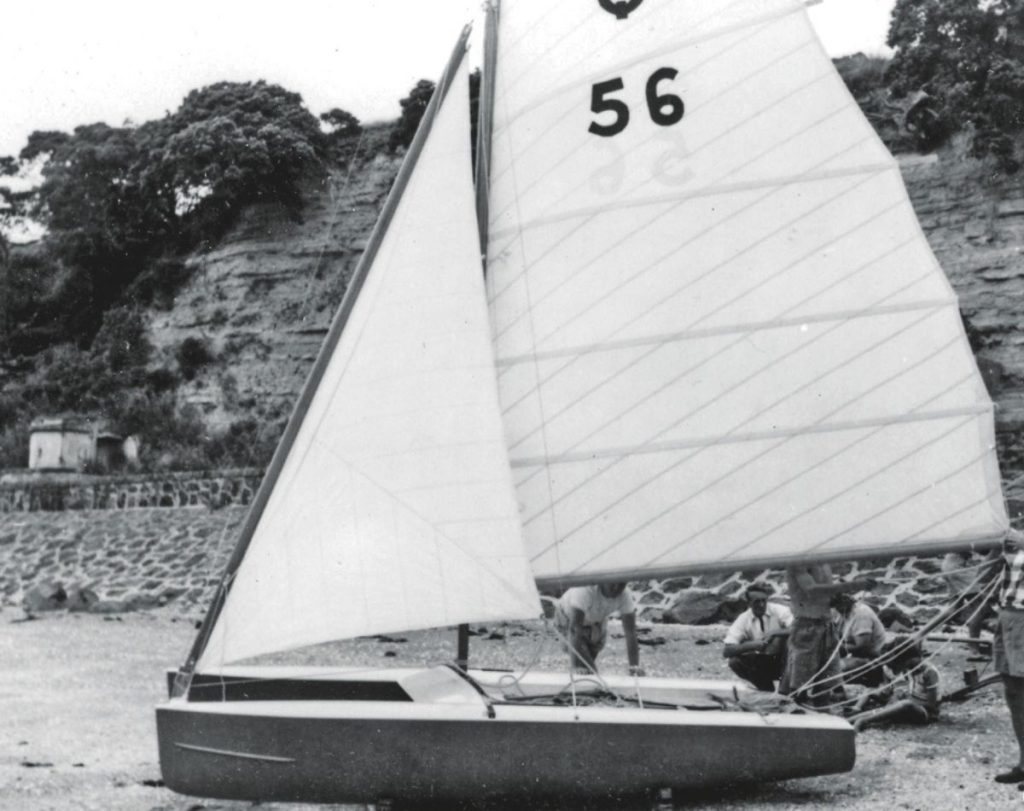
Peet had asked Des Townson’s good friend, boat builder and designer Jim Young, if a catamaran, a leap forward, new thinking, would produce a faster 12-footer. Jim designed for him a small cat with its sail plan well aft to inhibit “tripping”. The cat works quite differently from a single hull, but they are capable of high waterline speeds at optimum angles to the wind. On the wind they can’t point as high as a monohull and are slower downwind but can be faster on a broad reach.
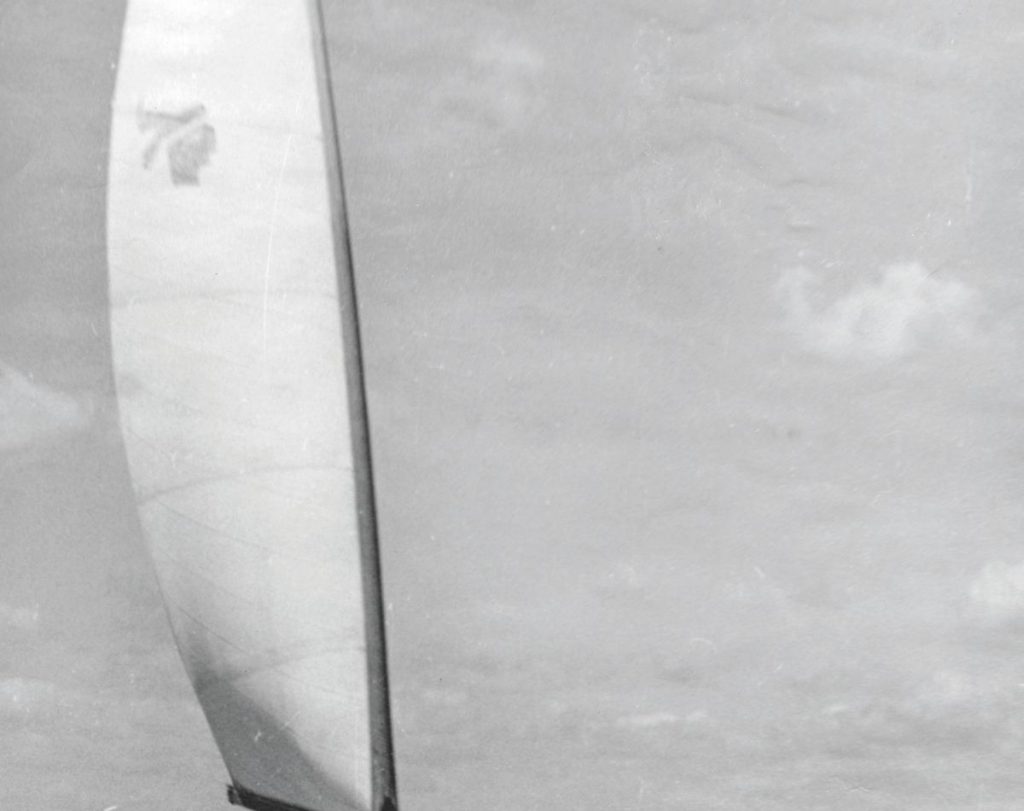
John Peet’s new boat was Kitty (Q56). He turned up with the catamaran at its first race, was derided by those who did not know him well, then proceeded to zigzag over the course, broad reaching up and downwind in an astonishing fashion to beat the monohulls handily. Kitty aced all comers in the trials for the New Zealand team for the Silasec Trophy and went on to win the trophy for New Zealand on the Waitematā.
The Australian crews, men steeped in the skiff traditions of Sydney, were in highly profane disbelief. Catamarans were soon banned. It became common knowledge that some of the Birkenhead Q Class men (I think “Spot” Riley was involved) were experimenting with foils, but regrettably they had neither the materials nor the technology; otherwise we might well have seen a preview of the politics of America’s Cup racing of the future hard on the heels of the catamaran controversy.
Around this time John took on the task from his older brother Jim of finishing a Woollacott hull and decks (I think a 22ft Sheryl). He quickly built a new cabin top and fitted out the hull. I was present at the party when we lit a huge fire on the front lawn of the Channel View Road property, under the Norfolk pines, and melted lots of scrap lead ready for the pour into the keel mould. Neither neighbour complained; the one to the south was the then-mayor of Takapuna.
John was asked to sail an early fibreglass X Class for a demonstration on the Waitematā. I think it was the 1958 Regatta Day. Graham Mander had designed it as a wooden boat, but it had eventually been built by Modern Plastics in GRP, to Graham’s dismay. With no chance to learn the boat, we launched it from Okahu Bay in a medium breeze. After the feather-light Flamingo, the boat felt like a dray. I got the kite up and we started planing down harbour.
I now have no idea what happened but, just off Tamaki Yacht Club with dozens of centreboarders milling around us, the boat fell over and we were swimming. Bugger!
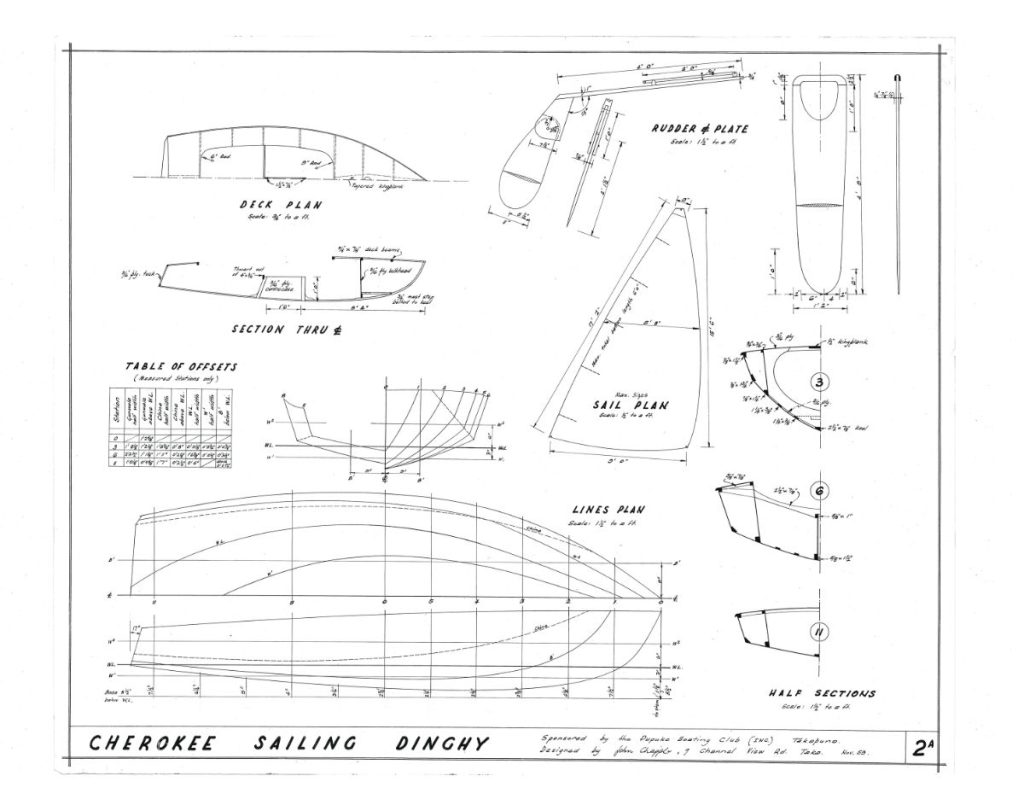
John and I had been founder members of the Pupuke Boating Club (Inc) in February 1959 when it had grown out of the casual racing off Takapuna Beach centred around Muir Douglas’ flagpole. With the prospect of being able to sail on Lake Pupuke at last, the Club commissioned John to design a monotype sailing dinghy for use in training youngsters like John’s younger brother Jefferson.
It was to be easily built by amateurs and to cost as little as possible but still provide more boat than the P Class. The result was the highly successful Cherokee, again its title inspired by a saxophone classic from Charlie Barnet.
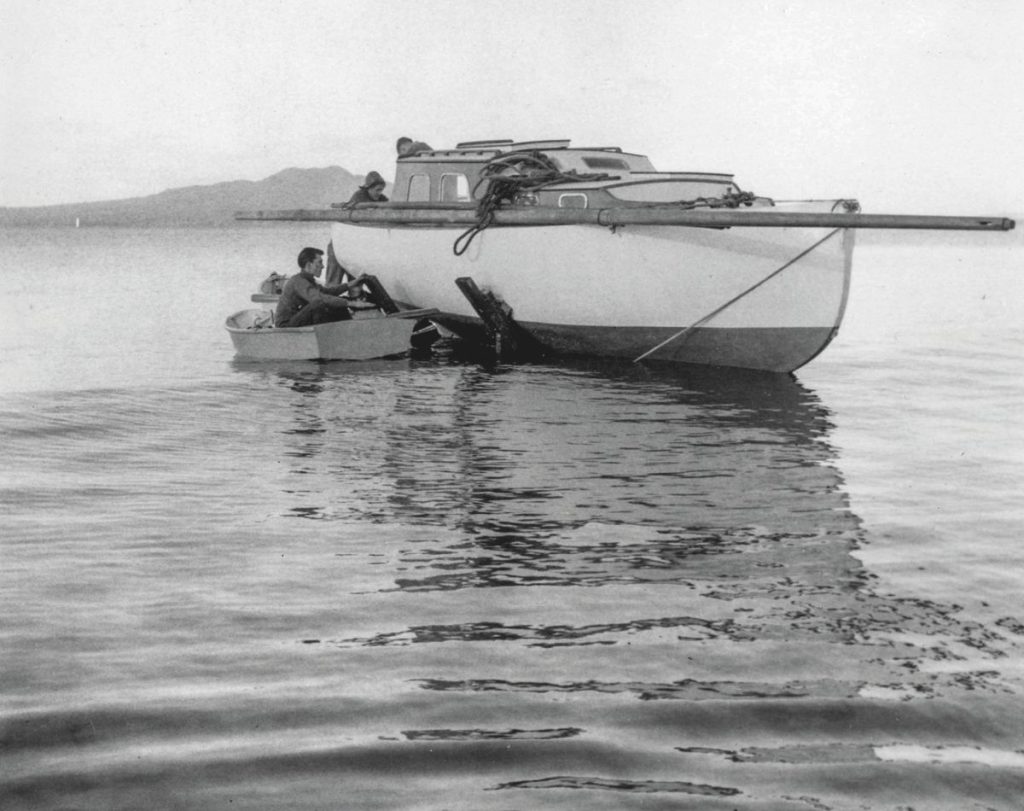
I gave up crewing for John at the end of the 1959–60 season to get married, and swallowed the anchor. He was most fortunate in getting Derek Thomas, a promising Takapuna lad, to take my place. Derek proved to be an exceptional forehand and fitted in with John from the start.
Coming up were the 12ft Skiff Interdominion Championships to be held in Sydney in January 1961.
After the local trials, Flamingo, John and Derek were in the New Zealand team for Sydney, which was composed of six Q Class and six Cherubs. Sea Spray reported:
“These amateur-built boats were lighter, cheaper, faster and were sailed by younger yachtsmen than those of the Australian team.”
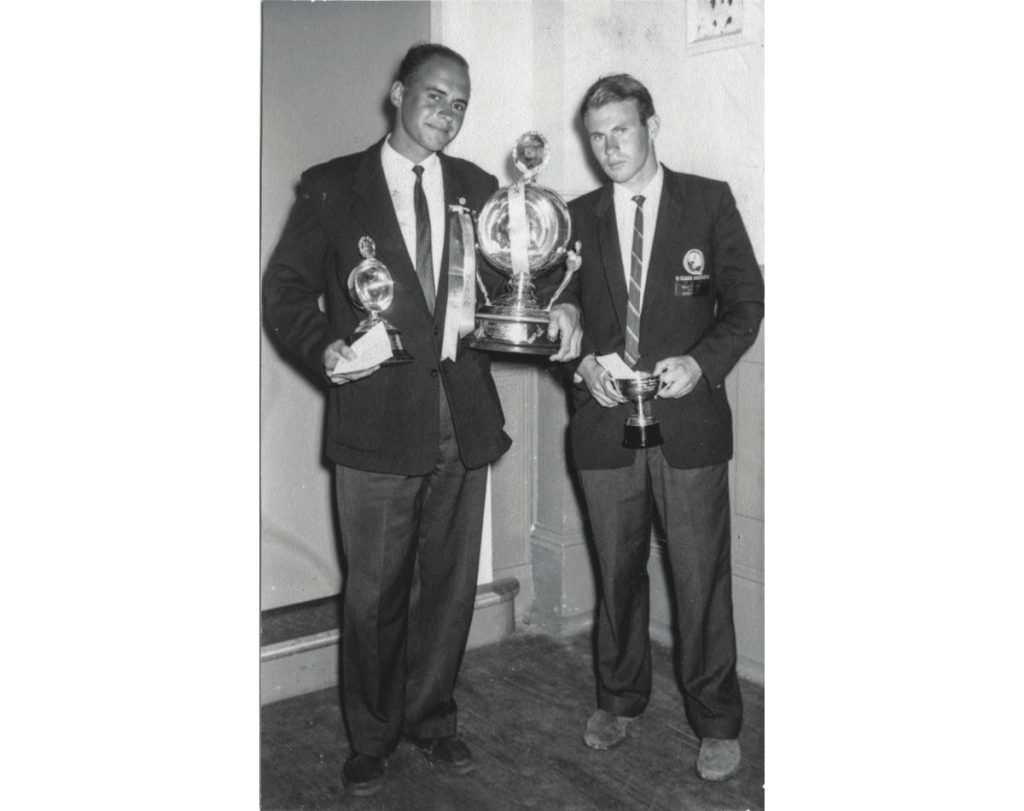
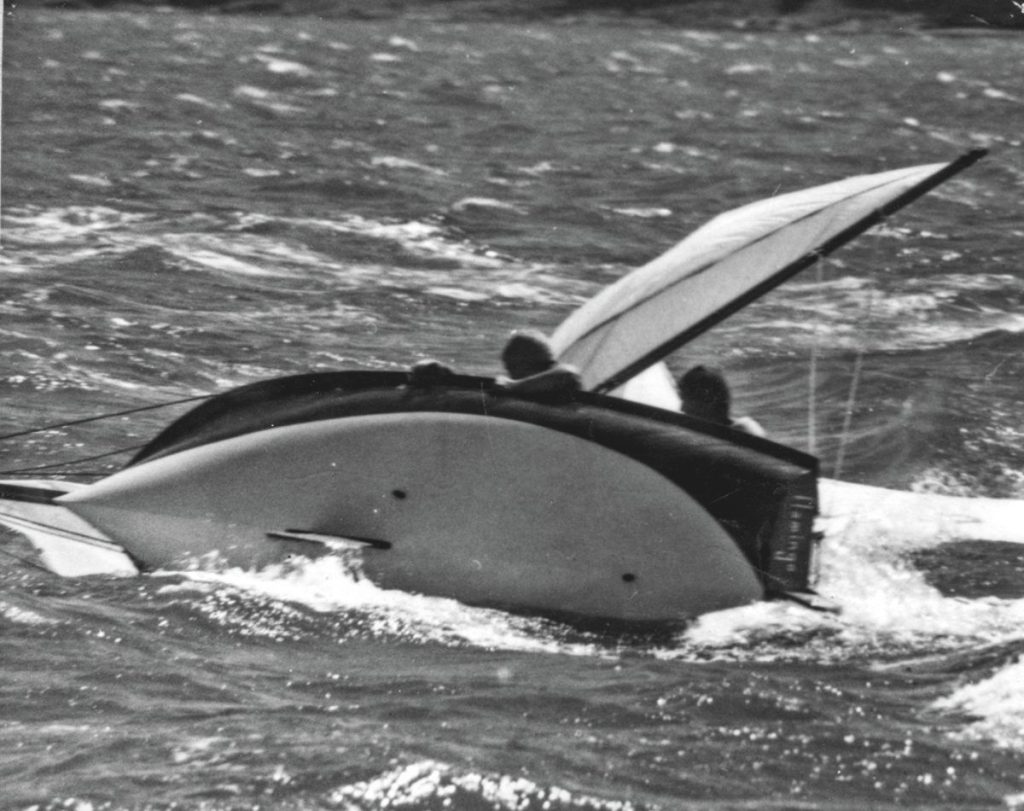
Flamingo won an unofficial invitation race, which was followed by the formal Invitation Race on January 1, 1961. The wind was squally, Flamingo capsized and the Cherub Gazelle came in first, followed by two more Cherubs, which raised the eyebrows of the many Sydneysiders following closely in chartered ferries.
The next day, January 2, 1961, was the first of four heats for the Silasec Trophy. Over the next week, Flamingo won the first two heats, came ninth in the third, and won the fourth, an unassailable win overall. Don Brooke was a fine second with his Magic (Q5).
Don had had a giant share in the success of the event. John Chapple and Derek Thomas had achieved their goal of convincingly winning the Interdominion Championship for New Zealand.
It really is something to represent your country.
Next month: John Chapple wins the Silasec Trophy twice more!