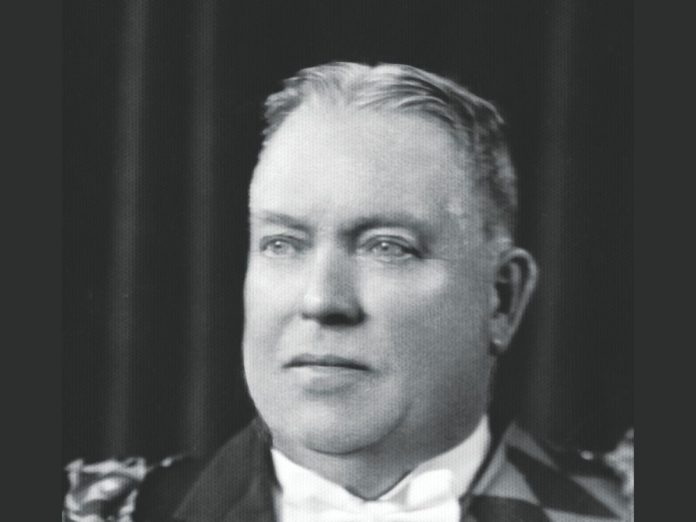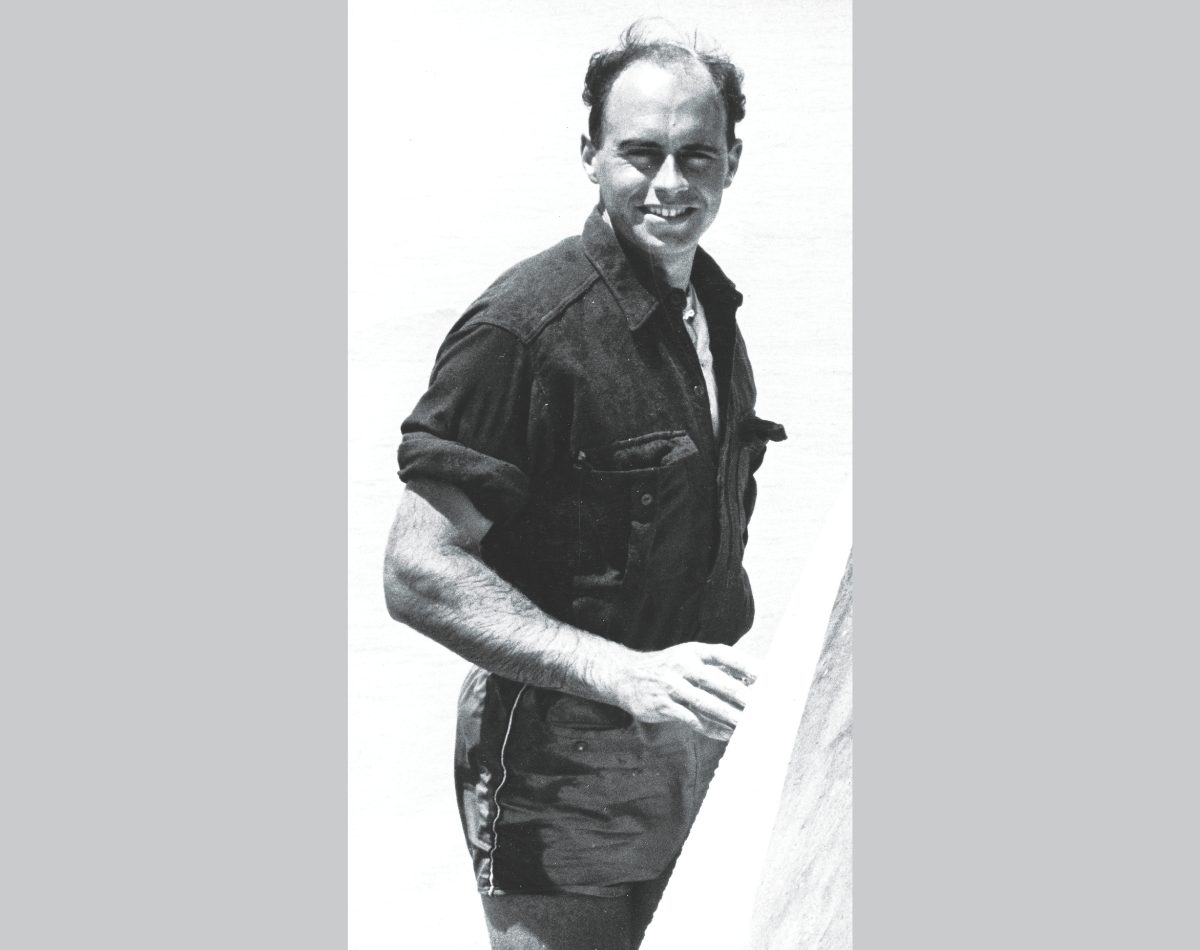
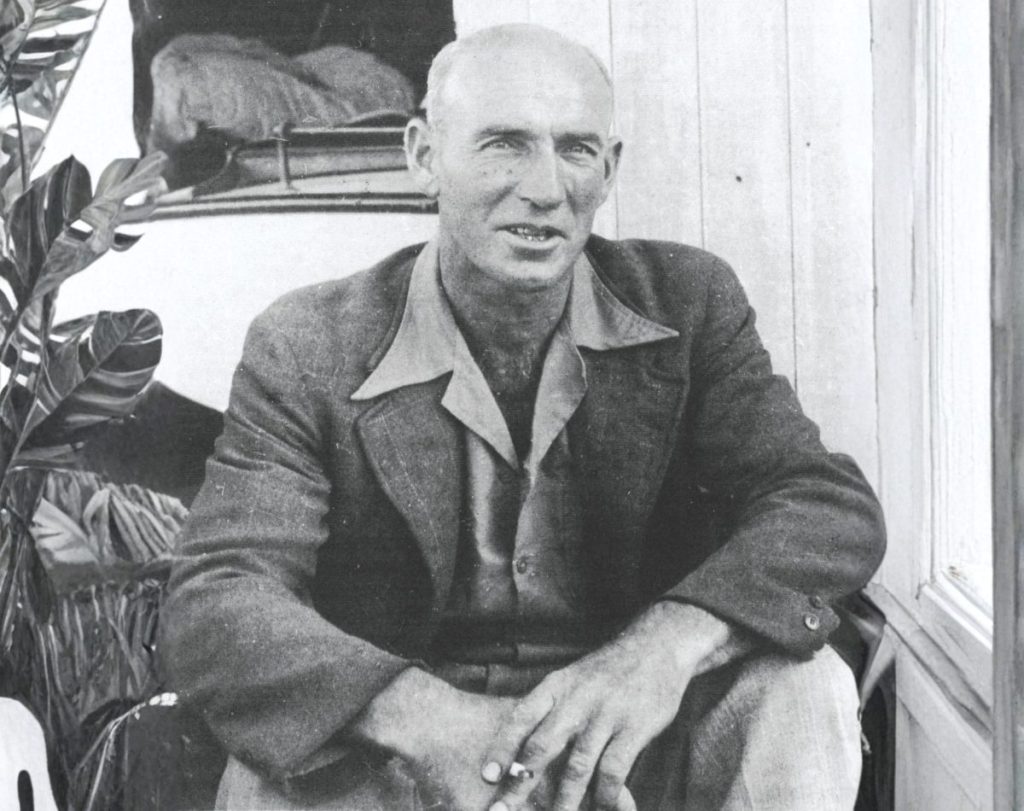
John David Lincoln Chapple died on 26th November 2025. He was a brilliant sailor, yacht designer and human being. He came from a line of people with high ethical standards and intelligence. His grandfather the Rev. James Henry George Chapple was a former Presbyterian, then Unitarian minister who spoke out against the war and conscription and was jailed in 1918 for seditious utterances. John’s cousin Maurice Gee, the celebrated New Zealand novelist, immortalised James Chapple as ‘George Plumb’ in the novel Plumb and its sequels.
John’s parents, Kingsley Chapple and Winifred Chapple (nee Partridge), were teachers. John was born in Te Puke on 22 December 1935 but grew up in Rotorua, where the family lived in an idyllic property on the shores of Lake Okareka, where boating and fly-fishing were major parts of their lives. I first met John in 1952 when he turned up at Takapuna Grammar halfway through the sixth form. His parents had moved from Rotorua to live in Hamana Street just above Narrow Neck Beach, Devonport.
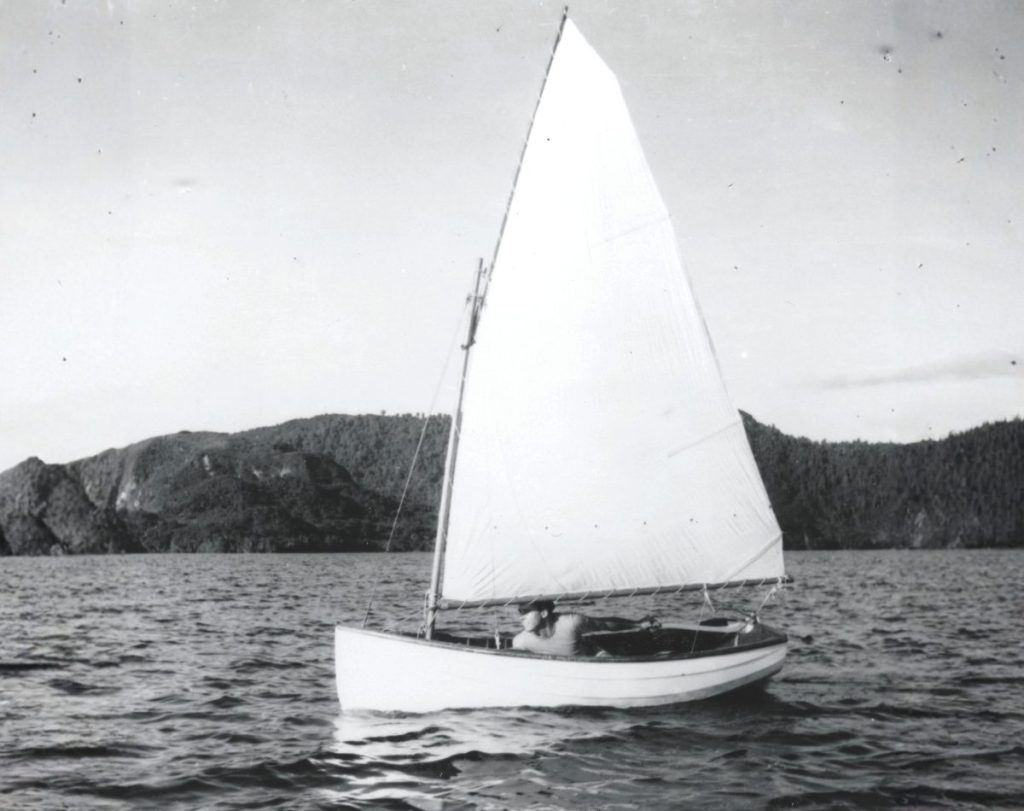
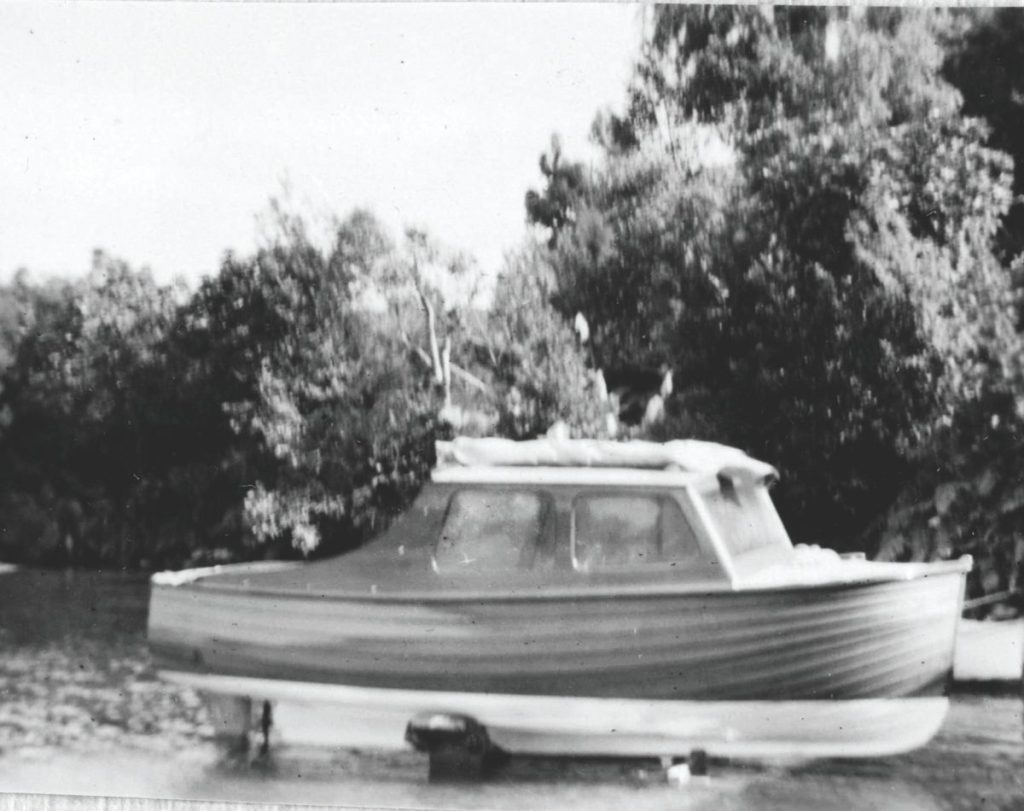
Sometime before, Kingsley Chapple had bought a new deadwood clinker inboard runabout for Okareka from Jack Logan, who lived at Stanley Point and was building boats in a shed on Ngataringa Bay that his father Arch Logan had set up at the foot of his house. John was soon mowing the lawns at the Logan house not far from where I lived in Calliope Road. Jack Logan was a man of few words who did not suffer fools gladly. John eagerly absorbed Jack’s approach to boating: centerboarders, their design, construction and handling; and behaviour in a boat all came from the Jack Logan book.
The entire Devonport area had always been loaded with professional boatbuilders, that end particularly – Bert Woollacott, the Mason brothers, the Davey Darroch, Walter Bailey, Bill Lowe and Willetts families – but the most prominent at the time was Colin Wild in Ngataringa Bay. But on top of the professionals, there were dozens of amateurs working on yacht-building throughout the suburb, most building short-end keelers of Woollacott design. One often saw Bert around Devonport on his bike on his way to guide and give a hand to those amateurs.
Another great influence on John was the Brooke family in Old Lake Road, a hundred yards above the Wakatere Boating Club and just around the corner from Hamana Street. The outstanding yachtsman and designer Jack Brooke had two sons, Don and Robert, who came into John’s life very early. The Wakatere Boating Club was the home of the Frostbite, the highly successful Jack Brooke adaptation of the American Frostbite class.
When the summer of 1952 came around, I invited John to sail with me on my Idle Along Tuna IA18 which I kept on the beach at Torpedo Bay, a beach that has since disappeared. A.W. Butterworth had built Tuna for the 1946-7 season, but she was now outclassed by more modern boats of the class. I used her for cruising and racing off Takapuna Beach, which had the informal beginnings of the Pupuke Boating Club based around a flagpole on Muir Douglas’ beachfront property.
The entrants were a ragtag and bobtail lot of Takapuna and Milford boats: usually a group of Silver Ferns, Muir Douglas’ Rhythm II, the Taylors’ Bobby N, Jim Davis’ Susanne and Milton Mabee’s boat, plus miscellaneous knockabout dinghies, some Idle Alongs, notably Murray Follas’ Khama followed by his Thunderbird, Zeddies, Frostbites and P Classes. On occasion Ralph and Clive Roberts would come around from Bayswater with their crack Zeddie Tawaki, while there was sometimes a visit from crack Narrow Neck Frostbites and later Don and Robert Brooke’s Flying Dutchman Scamper and Ron “Knocker” Daw’s lordly 18-footer Coronet… it was pure End of the Golden Weather.
After a very few races in my Idle Along with John as for’ard hand, he said to me, matter-of-factly, “Harold, you’re a crap skipper.” Without a word, I handed him the tiller and the mainsheet and swapped places. That’s the way it went from that time onwards. I loved being on the water; he had a natural genius for competitive sailing.

John and I had a couple of other common interests: music and Model A Fords. There was a group at Takapuna Grammar who were avid jazz fans, listening to Rhythm on Record every Wednesday night on the YA stations. John learnt the clarinet and tenor saxophone from Pem Shepherd while I bought a double bass from Lewis Eadys on a Friday night and played in a dance band on Saturday night. John later joined a band I was in, headed by Barry Clewett, playing tenor. We would go to the 1ZB Radio Theatre at 7pm on a Saturday to catch the latest local bands broadcasting live on 1YD and go to our gig afterwards. Most of John’s later boats had musical names.
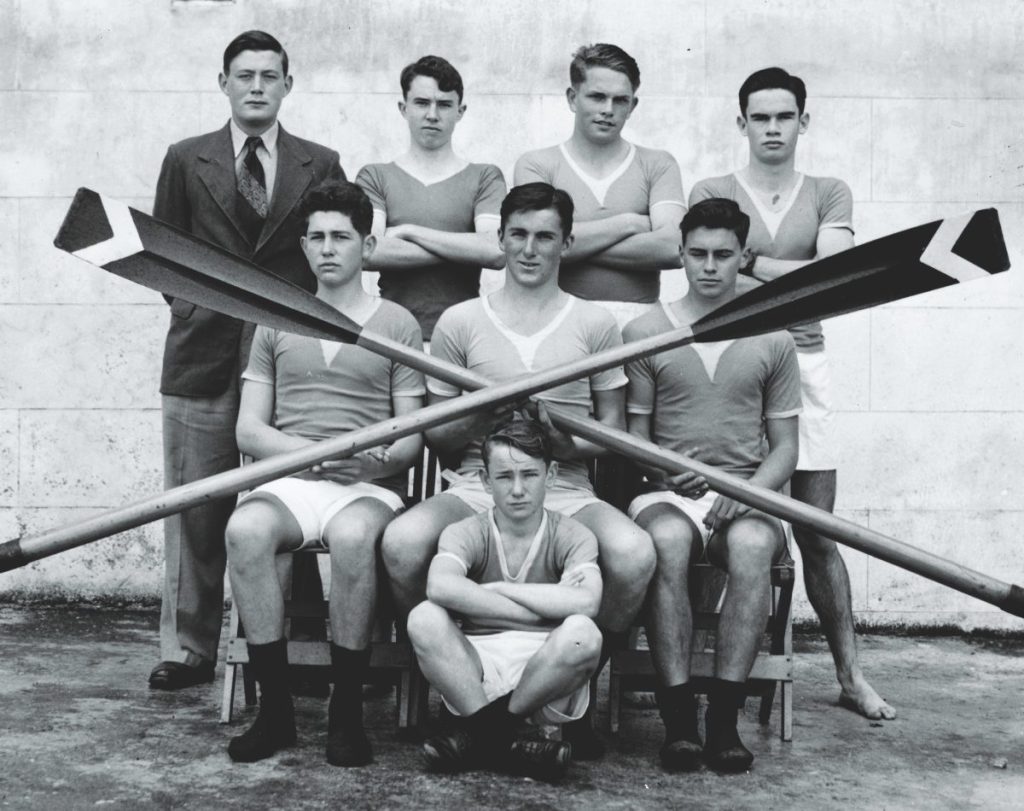
In the seventh form, John and I were chosen to represent Takapuna Grammar in the Inter-Secondary Schools’ Frostbite Championships held at Wakatere Boating Club, simply because we were seventh-formers. We did reasonably well in this unfamiliar type, which needed a crew who were accustomed to it. We weren’t, but Bob Salthouse, a lowly fifth-former, was a crack Frostbiter and we realised that he should have been chosen. We also rowed for the school in the coxed fours at the Maadi Cup Regatta.
In 1953 I sold Tuna. John was impressed by the competition in the Zeddies and inspired by Ralph Roberts’ wizardry with his Tawaki. We bought a Zeddy (I’ve forgotten its name) and raced it for a bit but were appalled at its propensity to ‘pigroot’ – bury its bow up to the splashboards – whenever the for’ard hand went up to set the kite. Of course, the Zeddy had been designed in 1921 as an amateur-built square bilge trainer, and a trainer should be a difficult beast, but you could see why Alf Harvey designed the deep-chested Idle Along for Wellington conditions in 1930.
At the end of 1953 we both left school. John worked for Worley & Downey, engineers, and studied for his engineering qualifications. I went to Auckland University, working towards a law degree.
John talked over with Jack Logan where he should go from there. Jack showed him the plans he had drawn for Keith McLean in 1952 for the Pennant class Glee, a superbly modern, fine-entry, planing round bilge clinker 12-footer, with a nod to Uffa Fox. The Auckland Sailing Dinghy Association set up the Pennant Class in 1949 as an outgrowth of Royal Akarana’s and Richmond’s winter midget sailing series. It was a development class with limits only on overall length of 12ft and a sail area of 100ft2.
Winter racing at Glendowie Boating Club was very popular with the class. Most of the yachts were home-brewed, but Keith Atkinson of Browns Bay brought along a couple of English National 12s he had built, which conformed but didn’t have long enough legs for the local Auckland boats. For a while there were several Moths and 10ft 6in Wanganui class boats designed by Harry Highet in the 1930s and built recently by RNZAF personnel at Hobsonville.
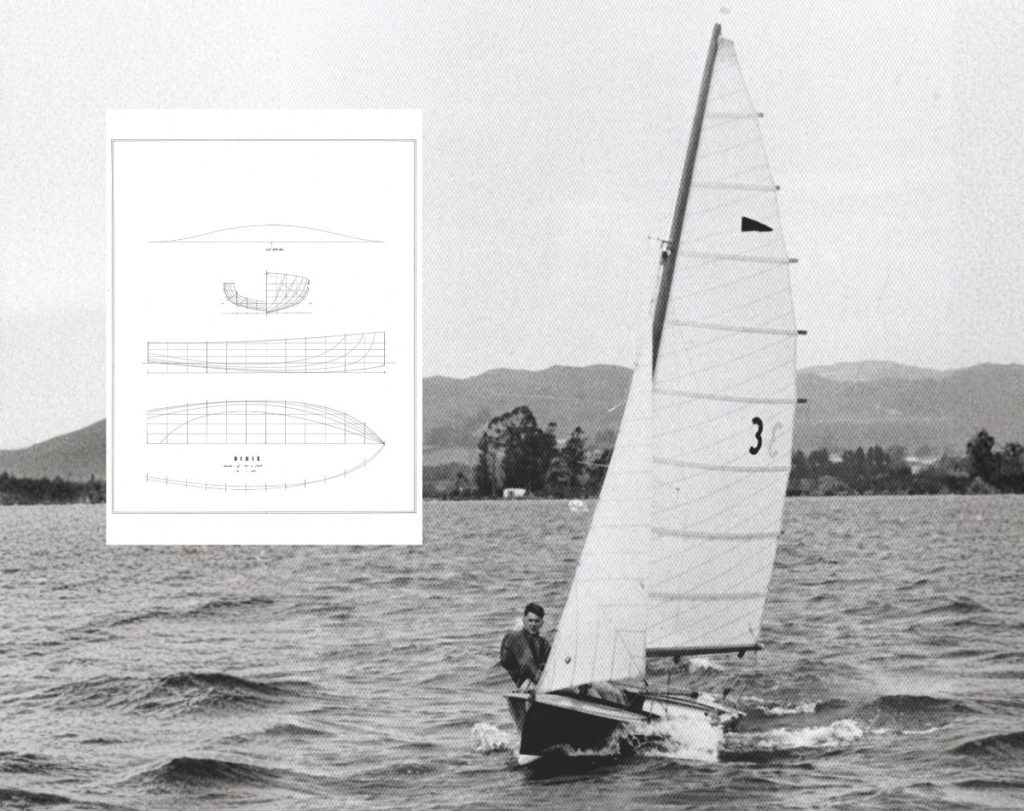
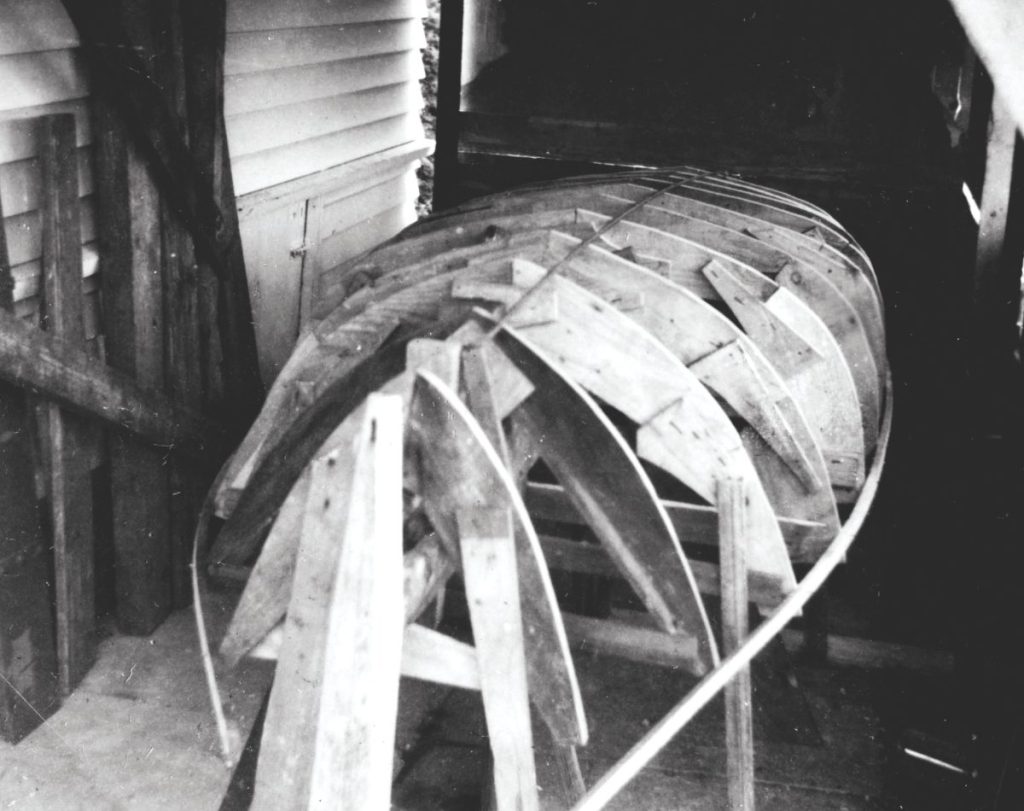
John took the Glee plans home to Hamana Street and drew them out with a much fuller entry. I helped John build the mould, and to cold-mould the hull. We had both helped our schoolmate Barry Brickell’s father, Maurice, build 8-foot dinghies with this relatively new technology using Aerolite glue. John called her Dixie (of course). We did a winter series at Glendowie, launching from Devonport Beach and sailing there and back, often in cold, tough westerlies. After John Spencer designed Cherub for the class in 1951, she became increasingly successful until she and her later derivatives were invincible and killed the class. Even Glee became outclassed, and Dixie had no chance. The Cherubs went on to set up their own class.
In the freedom of the Glendowie winter races some of the Pennants sported bigger sail areas as early as 1951-2, notably Dave Marks with Pathetic, Ken Rushbrook with Vanita, Peter Nelson with Futile, Ian McRobie with Echo and John Sharps with Ada. These boats formed the nucleus of the Q Class or ‘Flying Twelves’ as they were called, unrestricted except for overall length of 12 feet. It became the new big thing to convert your Pennant into a Q Class.

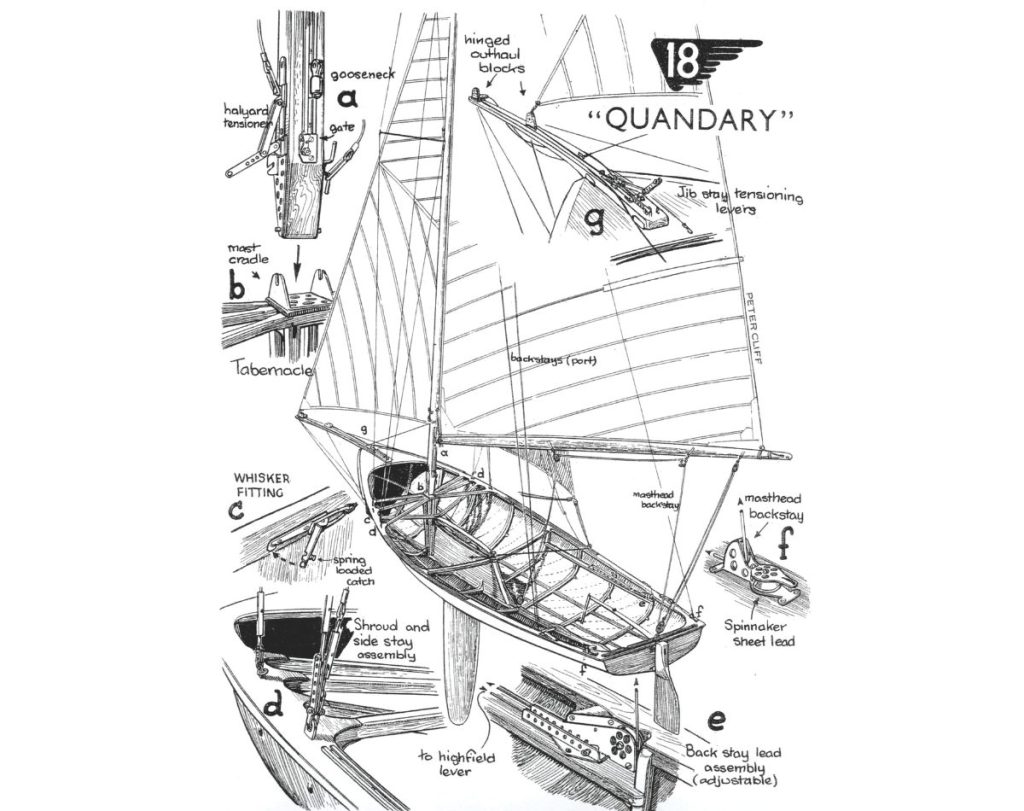
In the summer of 1954, we had an occasional picnic race with Jack Logan skippering Bob Stone’s 18-footer Tekana. In 1955 John did some work with Jack on the building of the identical 18-footers Quandary and Sluefoot. They were Jack’s first foray into cold-moulding and, essentially, were blown-up versions of Glee. My own input was tiny; I remember being part of the group holding the hull of Sluefoot by the gunwales while we swilled Metalex around the hull.
John and I sold Dixie to Peter Hinton of Rotorua in 1955 and bought Glee when her then owner, Lloyd Brookbanks, became involved in International 14s. Keith McLean had built her like a piece of ultra-light furniture. The stem had an inch wedge of brass let into the leading edge. It looked like you could shave with it. Her clinker hull was open and had canvas lee cloths to save the weight of a deck, not a blessing in a heavy chop. She had twin drop-down brass venturis, which were a hazard when we canned out. John designed a big rig for her. I renamed her Caprice so that I could keep the musical theme and have the obscure visual pun of a goat emblem on the sail. She was reasonably quick but not as fast as the cold-moulded flyers; a jewel, but not winning enough for John.
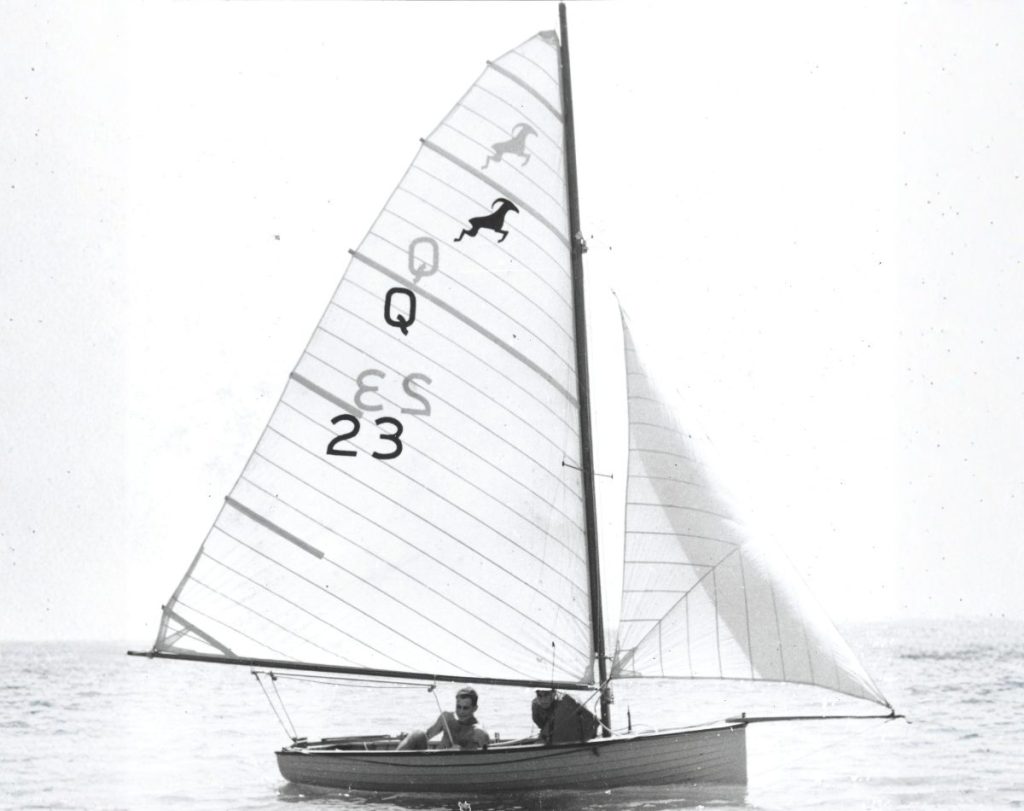
By 1957 the Chapples had moved to a wonderful old property in Channel View Road fronting onto Takapuna Beach. John bought a Cherub, Zephyr, which we raced mainly off Takapuna with the Pupuke club. But John was building his ultimate 12-footer Flamingo in the garage with minimal input from me as I was spending a lot of time doing compulsory military training and playing with ancient artillery with 9th Coast Regiment on Motutapu.
Flamingo and many hours on the water practicing took John up several gears, as the following years proved.
NEXT MONTH Flamingo and the Silasec Trophy.