


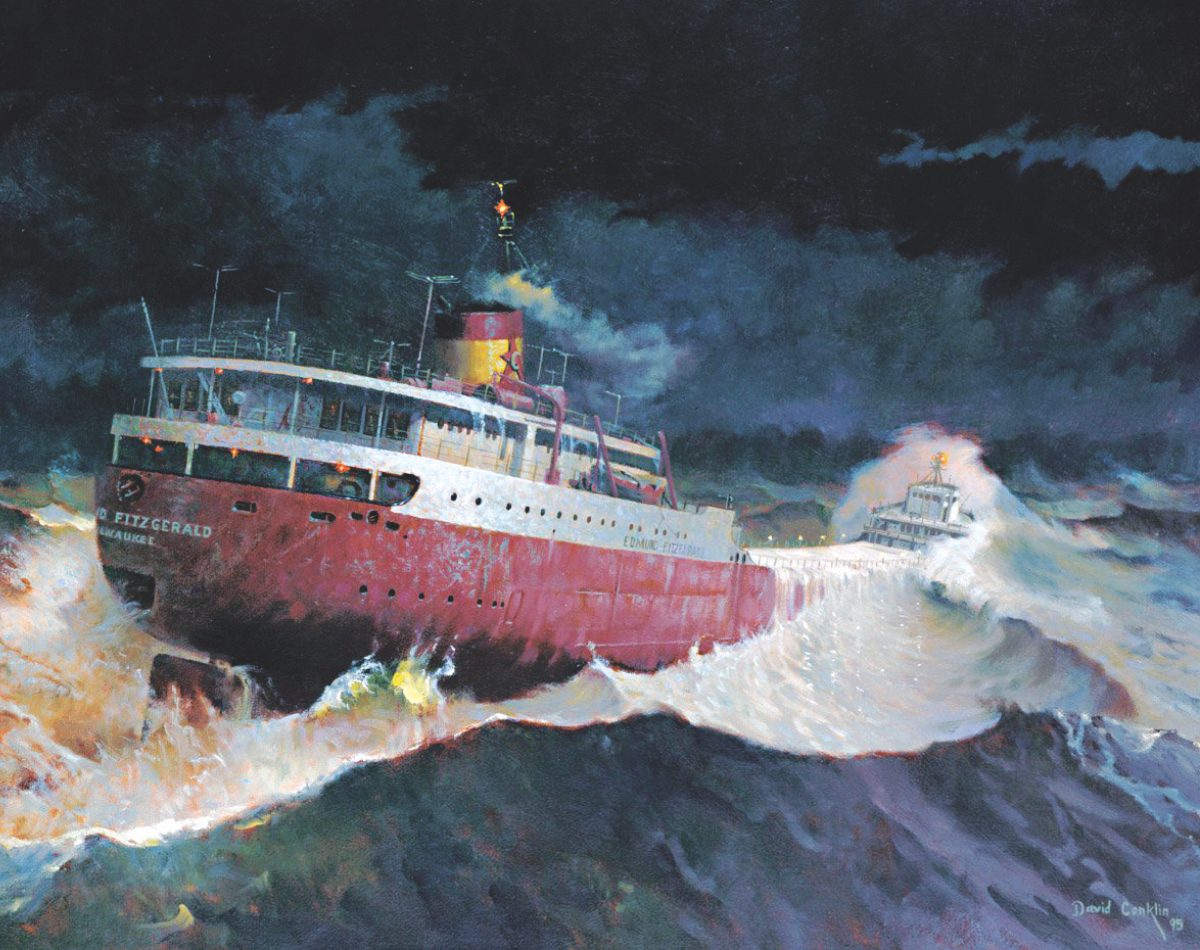
50 years have passed since the wreck of the SS Edmund Fitzgerald—still an unsolved mystery, yet a pivotal moment for safety on the North American Great Lakes. Bruno Cianci dives into a sinking that, fifty years later, remains as murky as the bottom of Lake Superior.
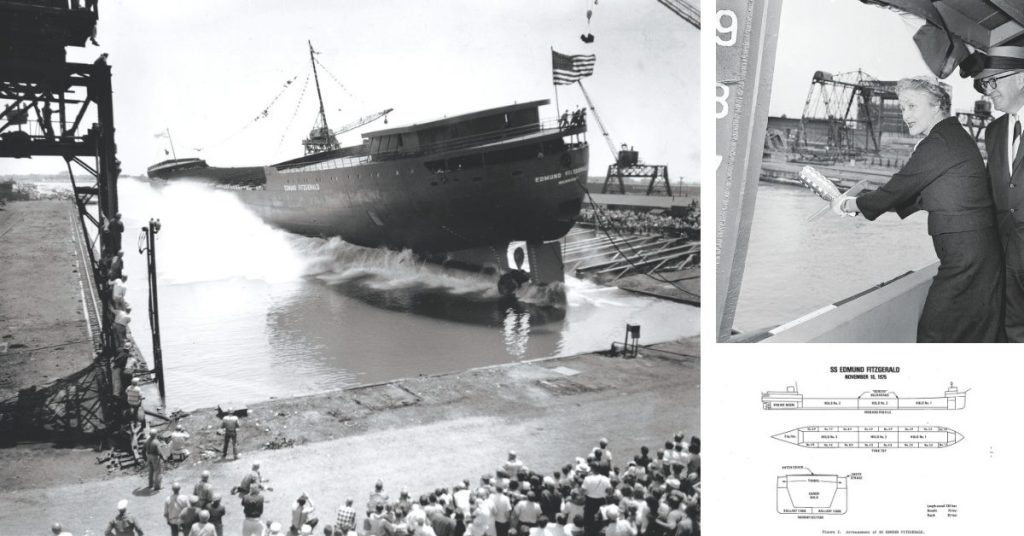
The maritime disaster that saw the SS Edmund Fitzgerald sink into the depths of Lake Superior on 10 November 1975 continues to arouse interest, and the reasons for that are manifold. The first lies in the size of the ship in question, which at the time of its launch (1958) was the largest of all those operating in the Great Lakes region, a distinction she would hold until 1971.
A second concerns the aura of mystery that still surrounds the circumstances of the sinking: in fact, despite locating and inspecting the wreck’s remains at a depth of 161m, it has proven impossible to reconstruct the ultimate causes of an accident that cost the lives of 29 men whose bodies were never returned.
The ship
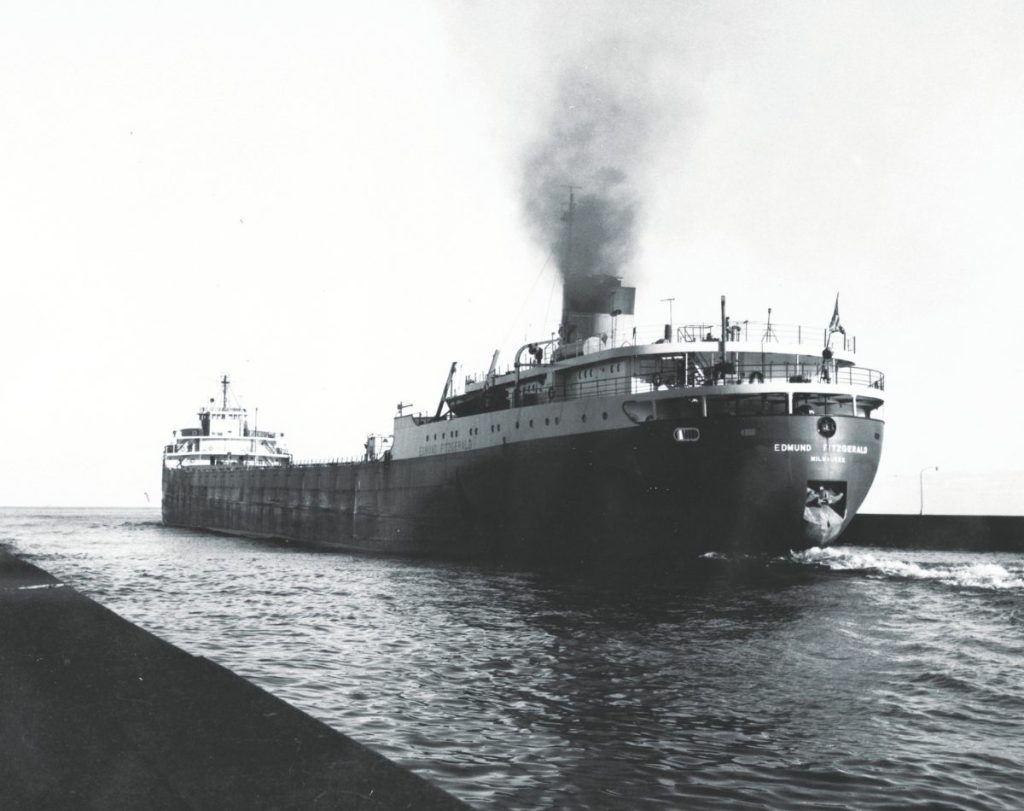
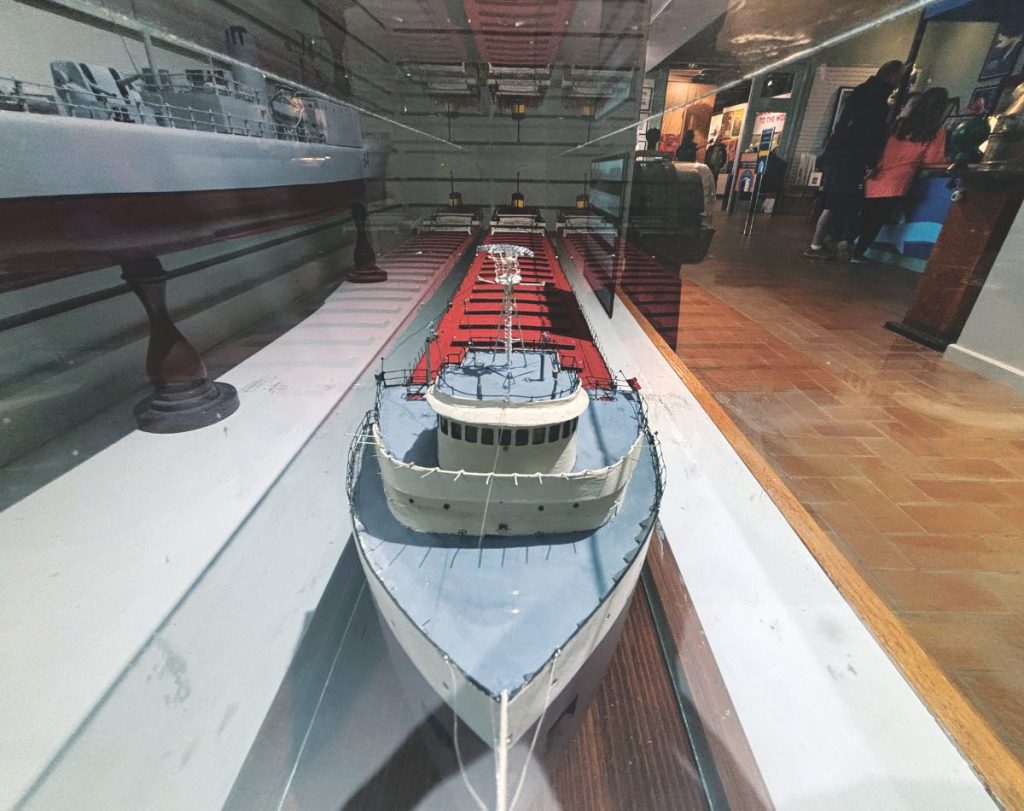
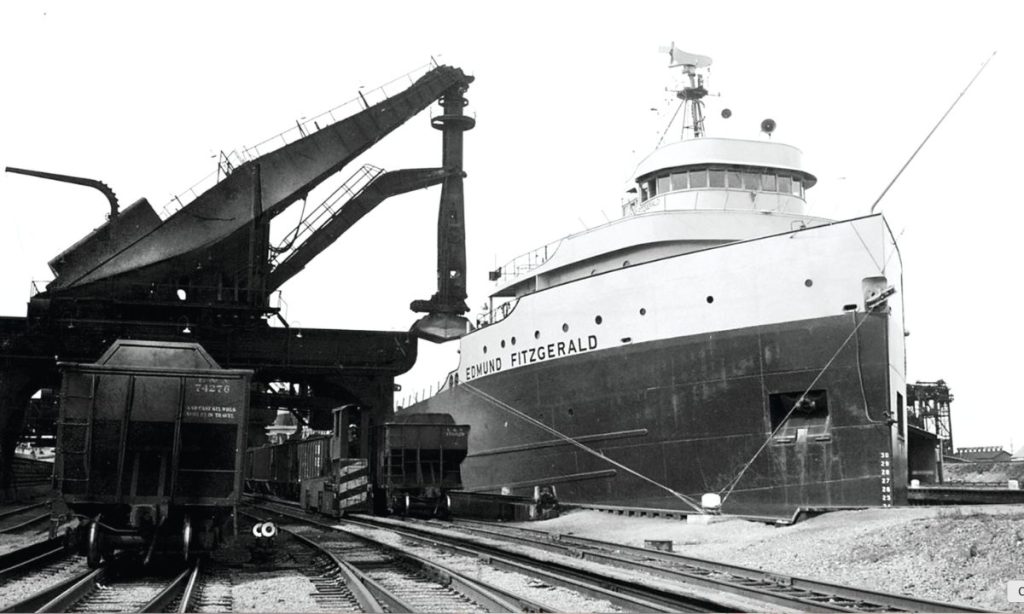
Built as hull #301 by Great Lakes Engineering Works of River Rouge, Michigan, the US-flagged SS Edmund Fitzgerald was a ‘straight-decker’ ore carrier, featuring a pilothouse at the far bow, an after deckhouse with engine room at the far stern, and a continuous cargo hold in between.
The ‘Fitz,’ as the ship was nicknamed, had a 24,380 cubic metre cargo hold divided by two non-watertight transverse screen bulkheads. Outboard and below the cargo hold were eight ballast tanks divided at the centreline into port and starboard tanks. Operated by the Oglebay Norton Company and owned by Northwestern Mutual Life Insurance Company (after whose chairman and president the ship was named), the SS Edmund Fitzgerald‘s gross registered tonnage was 13,632. Her welded steel hull measured 222 x 23m with a draft of 12m: an overall size that fell within the parameters of the Saint Lawrence Seaway. She was propelled by a steam turbine generating 7,500hp.
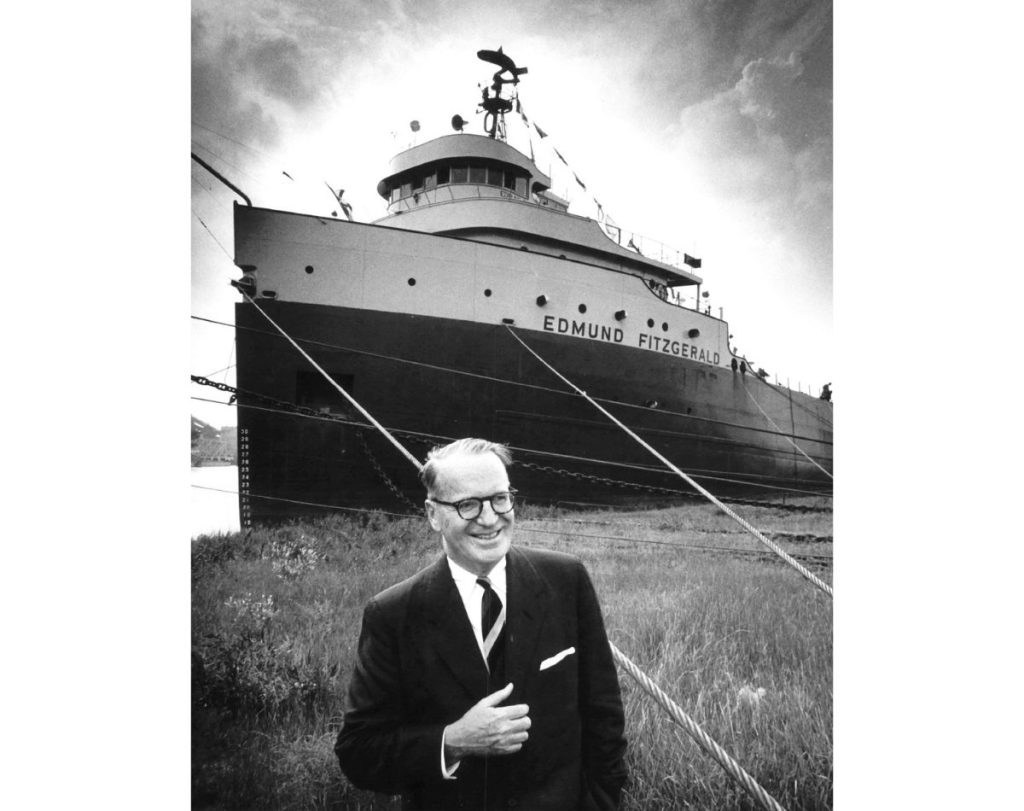
Although a bulk carrier, the SS Edmund Fitzgerald featured amenities that few other ships of the Great Lakes could provide, including passenger accommodations and a galley capable of churning out delicacies, not only for her distinguished guests but also for her crew. That said, life on board was hard, and navigation could bring about unimaginable dangers.
The perfect storm
On the morning of November 9, 1975, the SS Edmund Fitzgerald began loading 26,116 long tons of taconite pellets in Superior, Wisconsin. Loading was completed in the early afternoon, and drafts were taken after receiving some 190,000 litres of fuel. She then put to sea, bound for Sault Ste. Marie, Michigan on Lake Ontario, under the command of Ernest M. McSorley (1912-75), a highly-experienced captain.
Because of predicted deteriorating weather, the receipt of storm warnings at 2am on November 10, and radiotelephone communication, the Fitz and the SS Arthur M. Anderson (a similar freighter en route to Gary, Indiana) departed the recommended shipping lane along the southern shore of Lake Superior and instead proceeded northeastward to take advantage of the lee provided by the Canadian coastline.

Storms are far from uncommon on the Great Lakes, but the one about to unleash was the proverbial ‘perfect storm:’ a combination of at least two low-pressure systems named ‘Alberta Clipper’ and ‘Panhandle Hook.’ About 3:30pm, while steaming northeast of Caribou Island, a crewman of the Fitz called the Anderson—which was steaming 16 miles behind— and delivered the following message: “I have a fence rail down, have lost a couple of vents, and have a list.” How this damage had occurred is unknown. When asked specifically whether the bilge pumps were running, a reply was sent from the Edmund Fitzgerald: “Yes, both of them.” At 4:10 the Fitz advised the Anderson that both her radars were inoperative and asked to be provided navigational assistance.
The next few hours, with the lake waters swept by near-hurricane-force winds, snow, and 50-foot waves, saw the Edmund Fitzgerald experience the final moments. The last message was received at 7:10pm, when Captain Ernest McSorley was heard saying: “We are holding our own.” Within minutes and just 15 nautical miles from safety, the Fitz disappeared from the Anderson’s radar.
After the sinking
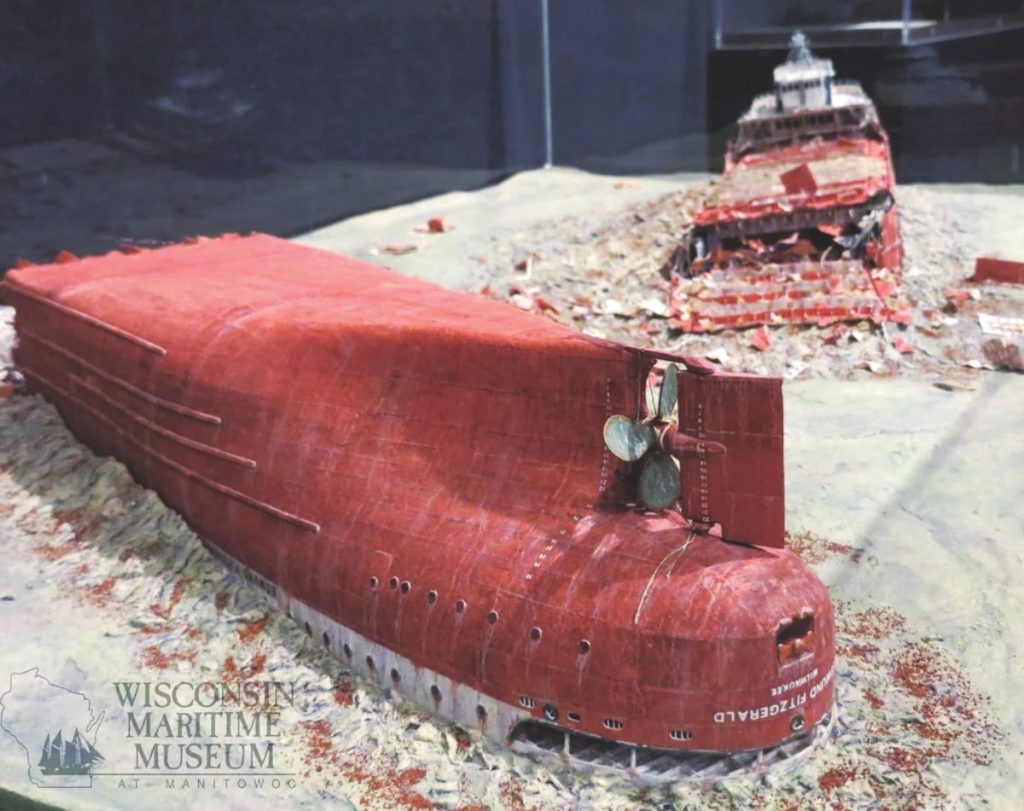
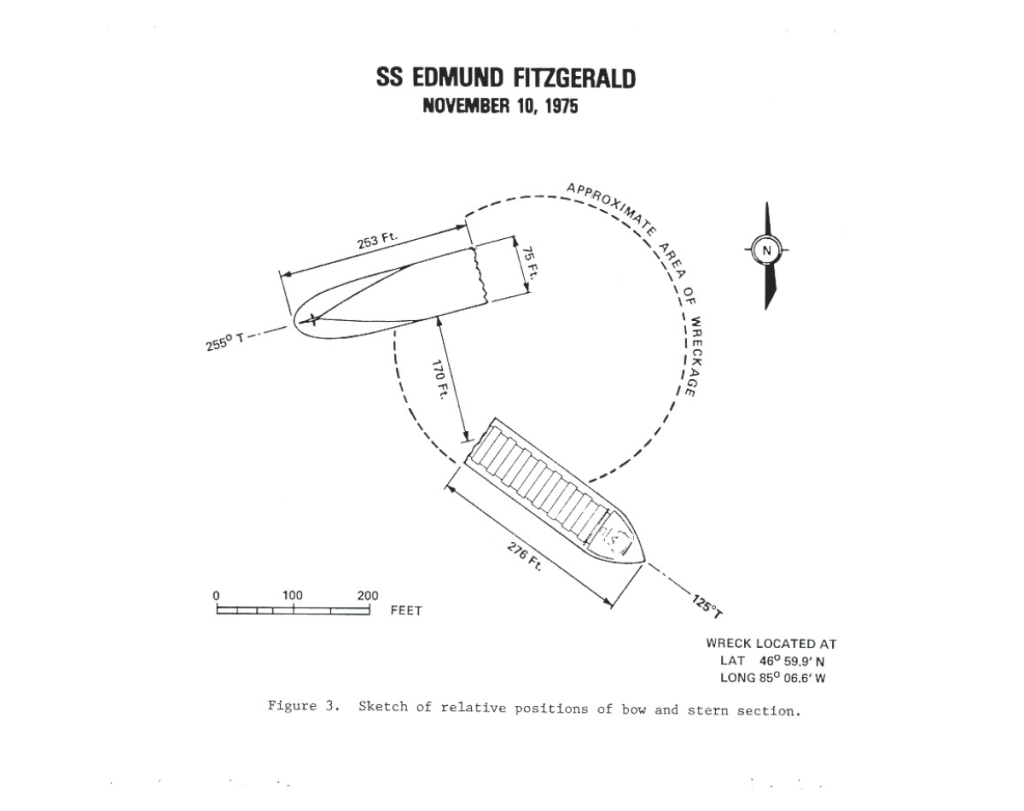
While it took just a few days to determine the ship’s exact position in Canadian waters, the first underwater exploration had to wait until late May 1976, when the U.S. Navy sent an unmanned submersible which found the Edmund Fitzgerald in two large pieces: an 84m upright bow section and a 77m capsized stern section. In between the two severed parts— which lay 52m apart—was a large mass of taconite pellets and the scattered wreckage of the disrupted 61m midship section.
Despite the official reports and survey, the ultimate cause of the sinking remains unknown. A comprehensive report dated 4 May 1978, issued by the U.S. National Transportation Safety Board, concluded that “the most probable cause of the sinking… was the loss of buoyancy and stability which resulted from massive flooding of the cargo hold.” According to the same report, other contributing factors were behind the loss. The winter load line assigned to the Edmund Fitzgerald under the Load Line Regulations in force allowed a lesser freeboard than had been allowed at the time of the launching; the system of cargo hatches “did not provide an effective means of preventing the penetration of water”; the cargo hold was neither fitted with a system of sounding tubes or flooding water detectors, nor with transverse watertight bulkheads; the topside damage mentioned via radiotelephone, or even an “undetected damage opening the hull plating,” could have been caused by the vessel striking a floating object. Even though the Marine Board was unable to reconstruct the exact course of the Fitz, the topside damage and list could have even been caused by “a light grounding or near grounding on the shoals north of Caribou Island”; alternatively, the list could have been caused by a localised hull structure failure.
The Board concluded that “the exact cause of the damage reported cannot be determined, but that the most likely cause was the striking of a floating object.” This could have occurred in the forward part of the vessel, resulting in pitching down and diving into a massive wave. Since there were neither witnesses nor survivors, the actual final sequence of events and sinking cannot be determined. Whatever the sequence, however, it is evident that the end was so rapid that there was no time to attempt not only the launching of rafts but even to make a distress call.
Among the other possible causes, according to the same report, the Fitz potentially sank as a result of a structural failure on the surface. However, this is considered less likely because “such a failure would have severed the vessel into two sections on the surface, and one or the other, if not both sections would have floated for a short while.” The survey of the wreckage showed that very limited drifting had taken place.
The legacy
Since the above report was compiled, nothing substantially new has emerged, and therefore the circumstances of the sinking remain a matter of speculation. What is certain is that the incident saved countless lives on the Great Lakes. The living memory of the accident, stricter regulations, weather forecasting advances, and common sense all played their part. In fact, it is striking to note that after that fateful November 10, 1975, no significant sinking has occurred in the Great Lakes region. Yet—as John U. Bacon (author of The Gales of November: The Untold Story of the Edmund Fitzgerald, 2025) points out— in the hundred years preceding the disaster, some 6,000 ships had sunk in the region.

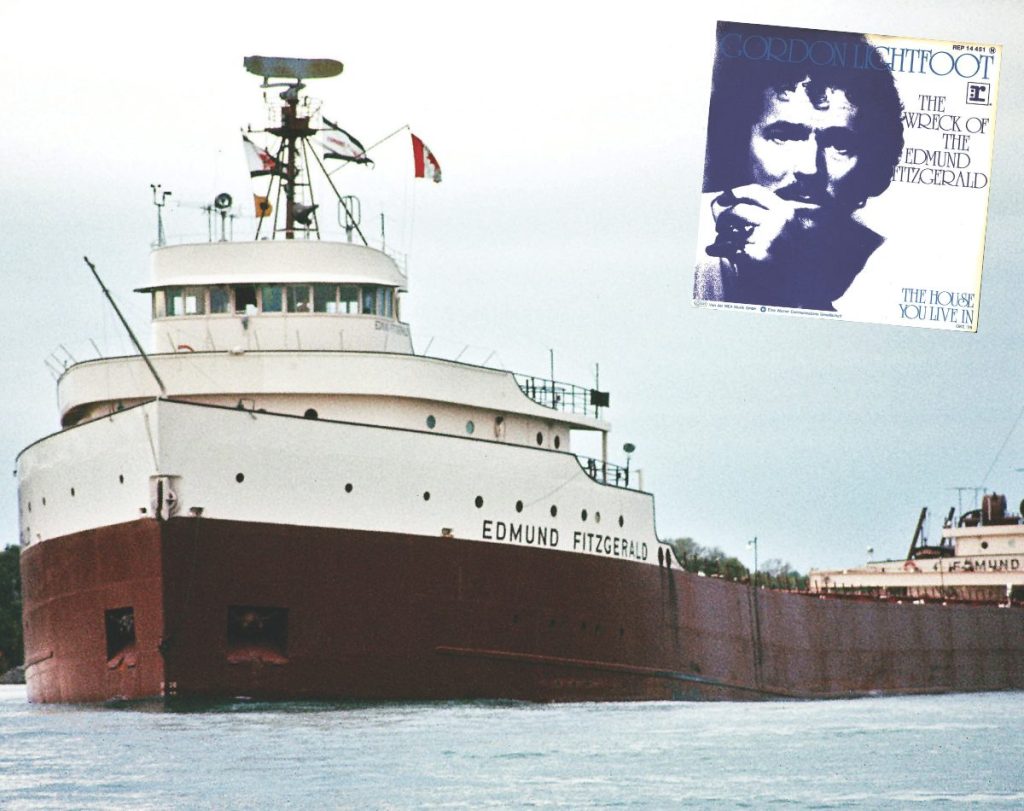
Another certainty is that people continue to talk about the Fitz, especially in North America. Among the factors that contribute to keeping her legend alive is the extensive literature produced, up to Bacon’s latest book. Curiously, there has been no Hollywood production based on the disaster, but the music world paid a golden tribute when, mere months after the sinking, Canadian folk singer Gordon Lightfoot (1938-2023) released what became a very popular ballad: The Wreck of the Edmund Fitzgerald (1976). Thanks also to its catchy melody and poignant lyrics—the fruit of Lightfoot’s meticulous research and inspiration—the legend of the Fitz lives on.

Always intrigued by the loss of “Fitz”. Good story well done.