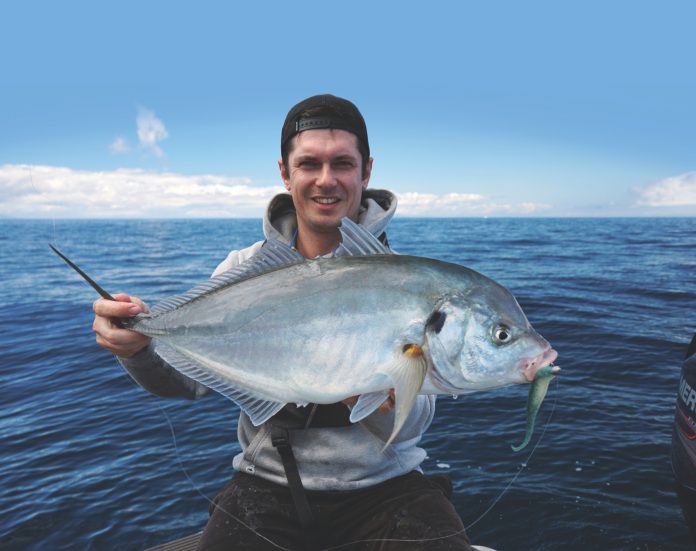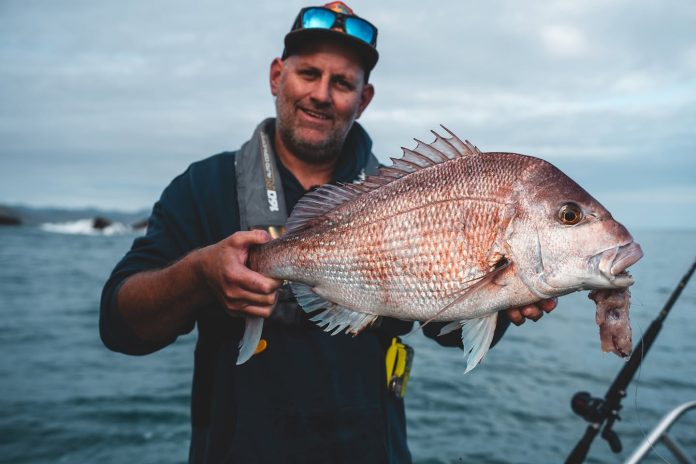
Sorry sagas of ‘the one that got away’ are all too common in fishing circles and a great many of these heartbreaking losses occur in the final few seconds of the encounter, when the fish is almost in the boat or on the bank. A disproportionate number of these tales of woe also seem to involve the use (or perhaps that should be the misuse) of fishing landing nets.
How to: fishing landing nets
Securing fish with landing net should be dead easy but it’s amazing how often it all goes wrong in those heated final moments. When a whopper fish eventually swims into view after an epic battle, it’s natural to experience a desire to simply heave the catch out of the water and into the boat as quickly as possible but this desire easily leads to disaster!
A fishing landing net is far and away the most common tool used to execute the endgame but many people make a mess of the netting process, and the next trophy fish to be freed from the hook by an overly enthusiastic net-wielder certainly won’t be the last.
To successfully use a landing net, remember that securing a fish safely in such a device has absolutely nothing in common with catching butterflies. Forget about swooshing, swooping, dipping and scooping at a flailing, flapping fish. Instead, follow these same three basic steps:


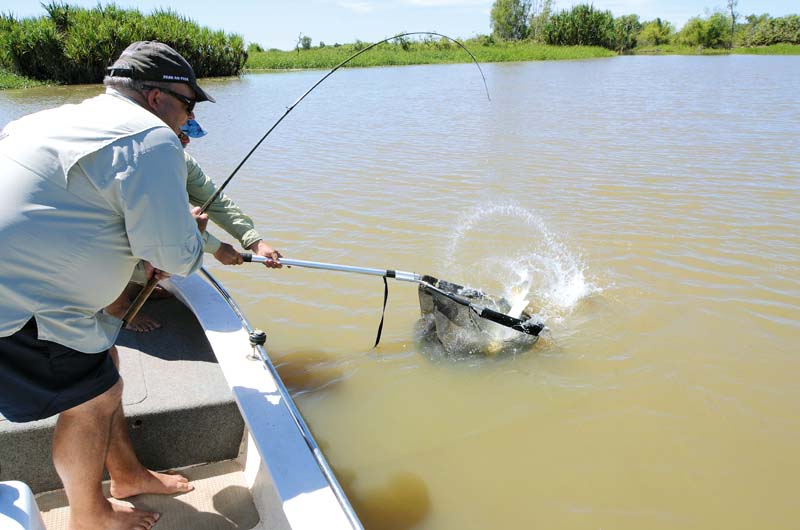
- Place the net in the water so that the front of the hoop is well submerged and the back of the hoop (where the handle connects) sits roughly flush with the surface;
- Using the rod and line, bring the hooked fish to the net and swim it into the net headfirst. If you’re fishing on your own, you’ll have to perform these actions yourself, holding the net handle in one hand and the rod in the other. If you need to reel in some more line during this process, tuck the net handle under your arm;
- As soon as the fish’s head and at least half its body mass are over the front of the net hoop and above the mesh, relax pressure on the line – do this before you begin to lift the net from the water. This relaxation usually induces the fish to dive deeper into the net and also relieves strain on the rod at a critical moment.
Netting fish is such an important part of the whole angling process that I’m going to run through those instructions one more time: submerge the net; bring the fish to the net and swim your catch into the net headfirst; reduce the pressure on the line and smoothly lift the net.
Never ever chase a swimming fish with a net or attempt to net the fish tail-first. Such efforts almost always result in failure because any fish can swim much faster than you can move a submerged net through the water, especially a modern fish-friendly knotless or mesh net such as the popular Environets and their clones. Fish almost always evade capture if they’re chased from behind with a net, often breaking the line or shedding the hook in the process.
Up to a point, a larger net with a wider hoop is easier to use and more efficient than a smaller net. However, even a big net stops being much use for fish over about 18-20kg. Most of us are rarely lucky enough to encounter fish that big but if you’re an eternal optimist (ie, an angler) you can always carry a gaff to deal with the real monsters – we’ll look at gaffing next time.
When buying a landing net, look for one that’s well made and has a sturdy handle. Err on the larger size, and consider the newer knotless varieties as they’re much kinder to fish (an important consideration for catch and release). Knotless nets are also less likely to tangle with loose hooks. A decent net is a significant investment but it’s money well spent and should serve you well for many years, if you use it properly.

Republished from https://www.tradeaboat.co.nz/landing-nets-how-to-not-lose-that-fish-of-a-lifetime/ (2016).