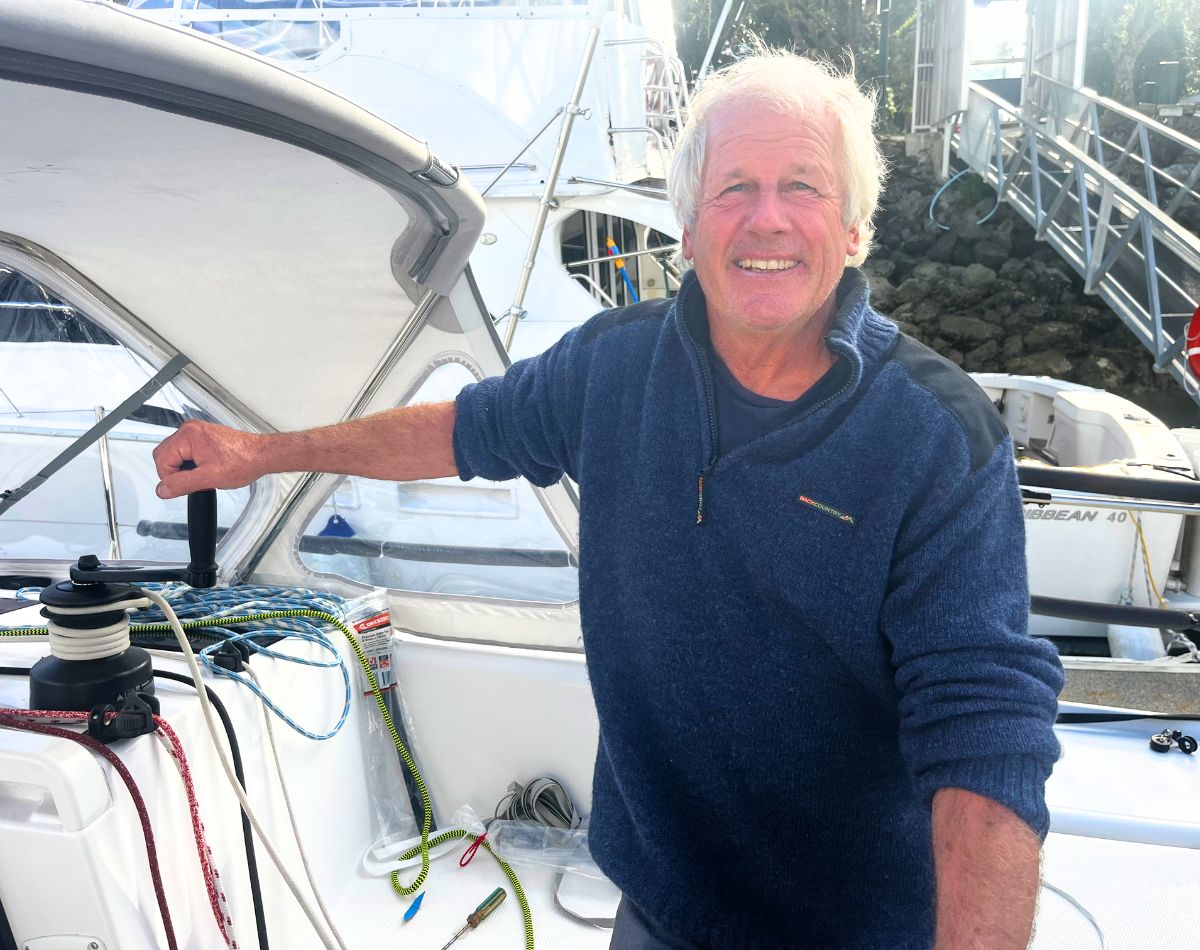
Terry Dunn planned well. He spent the better part of three months getting his boat, Marara—a Sparkman and Stephens 34—ready for the 2026 Solo Trans-Tasman Yacht Challenge. He pulled the mast, redid the rigging, and worked through the systems. Marara was all but ready.
I
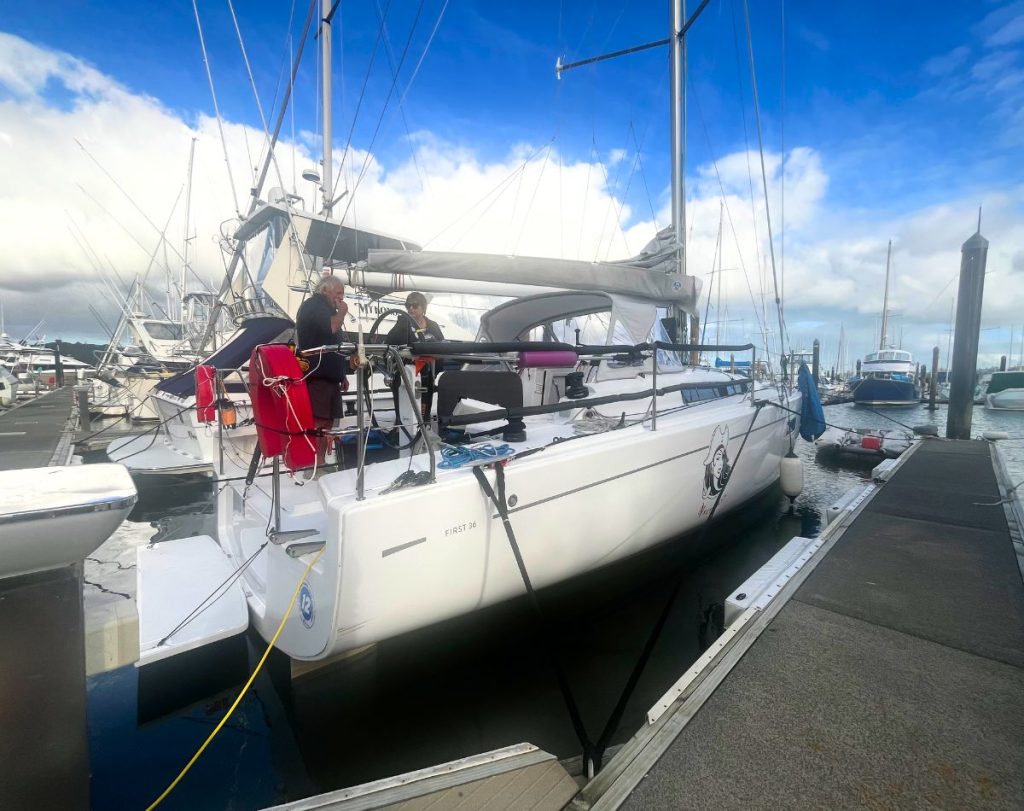
n the background, he’d had discussions with an Aussie racing friend. Their conversation eventually turned to racing the Hamilton Island and Airlie Beach regatta circuit together. And the boat to do it in? Not Marara, but instead his friend’s boat, Nautilass, a Beneteau First 36. The same boat he is now crossing the Tasman in. Solo. It made sense on paper.
In practice, it meant starting from scratch with very few days to go.
Nautilass threw up problems almost immediately. A mast crane inspection found wear serious enough to warrant pulling the rig. Then an engine service turned up water in the sail drive, which put the boat back on the hard.

Nautilass is a good platform for the crossing. When Boating New Zealand’s Sarah Elle independently reviewed the First 36 in November 2023’s edition, Elle found a boat with a genuine race-boat feel, particularly responsive through the twin rudders and with a cockpit explicitly designed for short-handed sailing, with all sheets able to be cross-sheeted to windward and the helm positioned to reach the main winch without leaving the wheel. The wide 3.8m beam, carried well aft, creates a roomy working space, and the quarter berths convert readily into sail stowage when racing.
The same beam that makes the cockpit generous has a cost upwind, and Dunn knows it well.
The flat underwater sections that give the First 36 its downwind speed are what cause the slamming in a chop, and the weather forecast predicted by PredictWind in yesterday’s Weather and Safety briefing provide a picture of the Tasman that over the next week or so will have plenty of that.
Dunn accepts the trade-off without complaint.

Despite the scramble to get Nautilass sorted, Dunn is not without recent miles in her. As part of his qualifying passage he took the boat down to East Cape and back, around 500 nautical miles solo. The trip was instructive in ways he hadn’t fully anticipated. Running downwind in fresh conditions, he slowed deliberately to wait out a forecast wind shift. By the time he was 12 miles offshore, the Starlink dropped out. He found himself 200 miles behind the Barrier with no forecast, no wind, and no way to call one up.
For this race, the motivation is straightforward. Dunn has spent a lifetime sailing, with around 40,000 nautical miles across offshore racing and cruising. This will be his first voyage of any real distance alone. He came into the event partly to support the numbers at the Opua Cruising Club, which took on the race organisation after Taranaki stepped back, and partly because the challenge appealed once he was already half committed.
“It’s not like I’ve got this underlying desire to sail by myself,” he says, “but I think it’s quite a cool challenge.”
He is quick to separate the competitive dimension from the personal one.
The boat Dunn originally intended to sail, Marara, has a story of its own. She competed in the Sydney to Hobart from 1974 to 1979, taking a Division C win along the way. Damaged near the Iron Pot on a return passage from Hobart, she was repaired and kept racing under long-time owner Bill through the 1980s and into the 1990s, racking up results that included first on IMS in Division D and third overall IMS in 1993, alongside a string of other podium finishes.
In 1996, under new ownership, Marara was raced to New Zealand double-handed. Near the finish, she was rolled in a cyclone, dismasted and badly damaged. She drifted for three weeks before going to tender. Dunn, who had long admired that style of boat, bought her, fitted a temporary rig, and sailed her home to Opua with his sister Maureen. He had wanted to sail her in the Trans-Tasman to close the loop on that story.
After this year’s Trans-Tasman finish, the plan is to work the Queensland regatta circuit in Nautilass and fly home in September in time for skiing. Marara, with its loop unclosed, will be waiting.