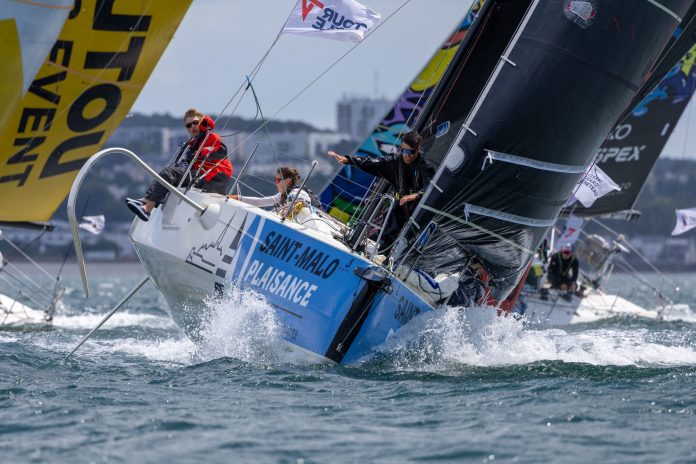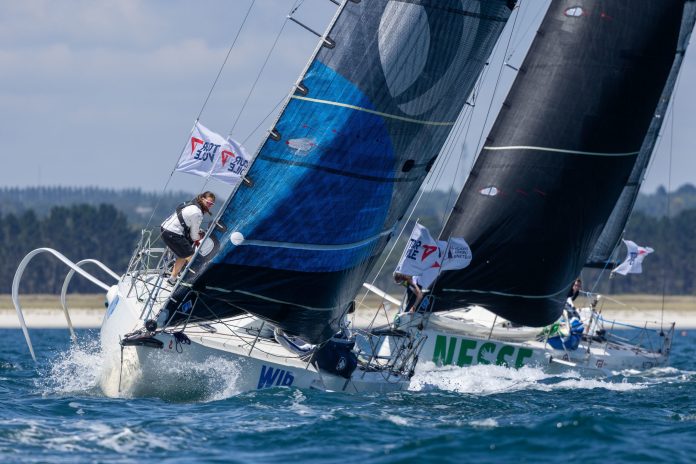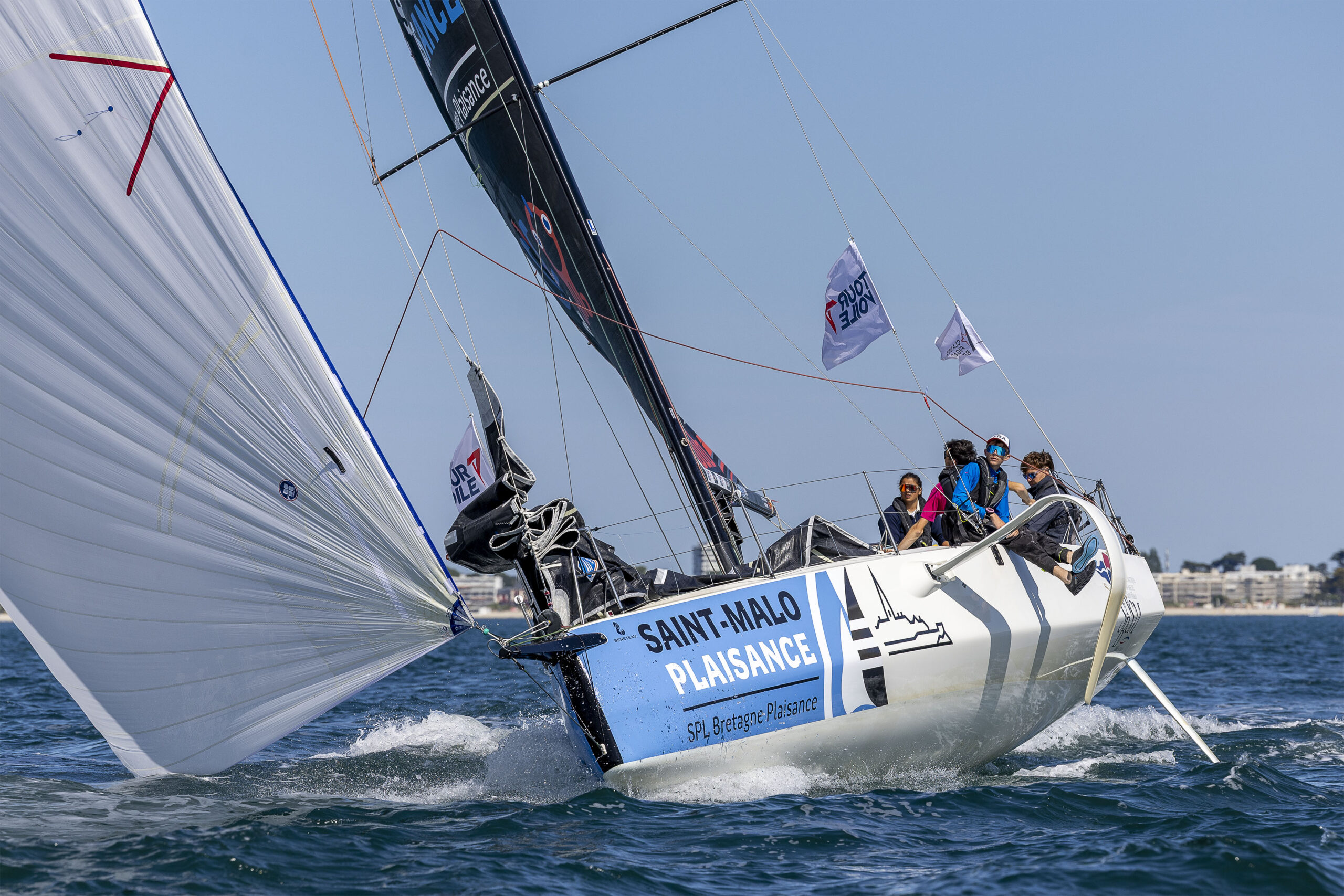
Marie-Adélaïde Le Gué and Alexandre Carlo are taking their LGC Sailing–Bretagne Plaisance team into the 2026 Tour Voile with ambitions that stretch well past the podium. The Saint-Malo-based skippers want to prove that high-level offshore racing and crew diversity aren’t separate goals—they’re complementary, and the Tour Voile is their stage to show it.
Le Gué won the European J80 championship in 2022 and took runner-up in the world youth rankings the year after. She started sailing at seven and studied sports management; she also mentors young sailors through regional committees. Carlo, 23, came through single-handed and two-person keelboat racing before moving to offshore competition. His background in marine engineering and composite materials gives the team a technical edge—one they’re banking on for their sustainability plans.
Mixed-Ability Racing
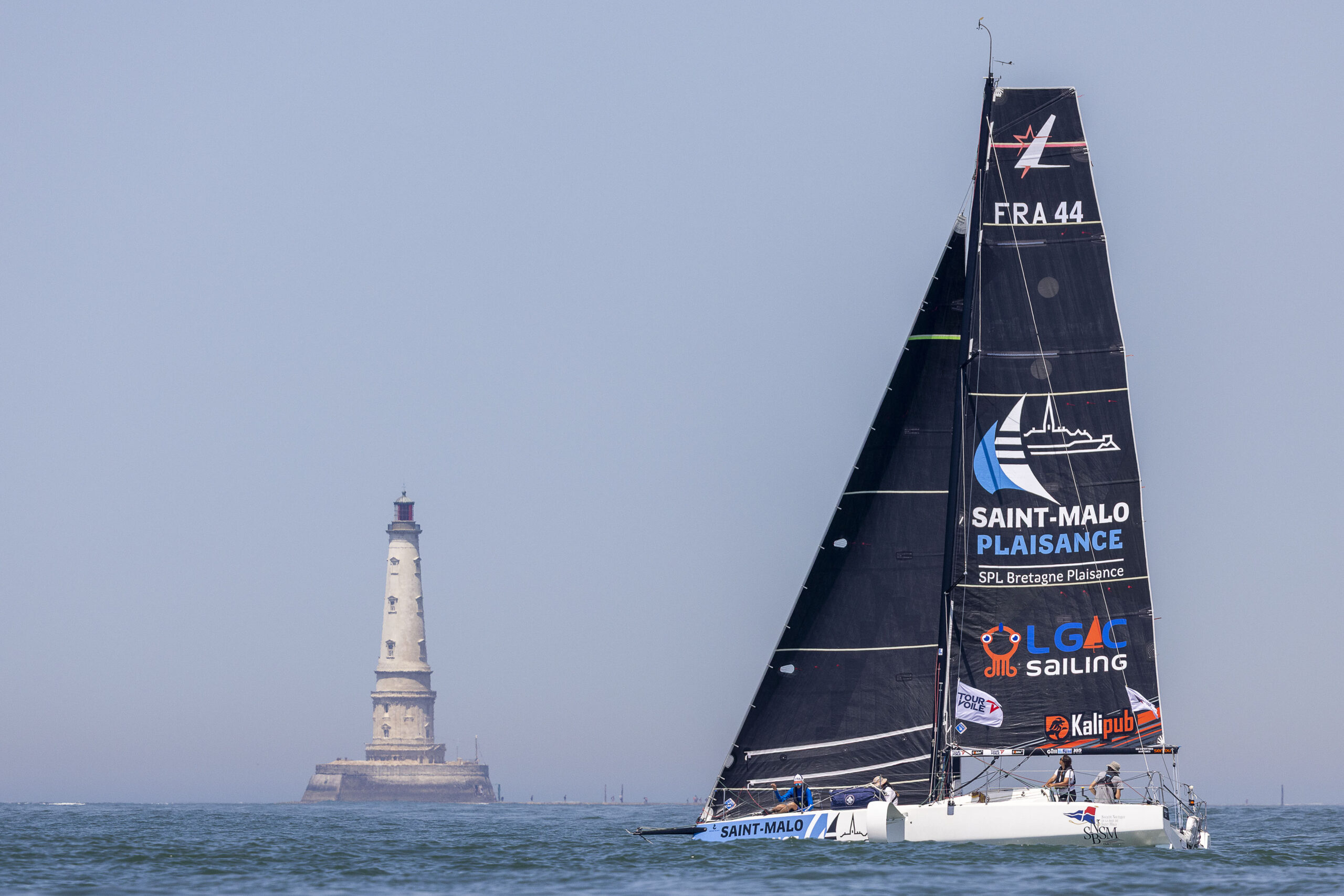
The crew turned heads at Spi Ouest-France in April when they won a Federation Prize for Exceptional Inclusion Commitment on their Figaro Bénéteau 3. The recognition centered on Noah Guichoux, one of the first sailors with significant physical disability to race a Figaro 3. Guichoux uses a wheelchair full-time after spinal ischaemia struck in 2021. He chose to sail without any boat modifications, crewing under the same conditions as everyone else on deck.
“For the past year we have sailed as a mixed-ability crew,” Le Gué and Carlo said. “Noah brings real strength. He has incredible character, always smiling even when he’s struggling.” The partnership began during last year’s Tour Voile, where the team finished fourth overall. That result was enough to bring Guichoux back for 2026.

Racing With Purpose
The LGC Sailing programme runs across three years and includes more than ten racing events. They’re also planning to launch the first dedicated Figaro 3 sailing association based in Saint-Malo Bay. But the racing calendar is only part of the story. The crew is committed to building mixed, multi-generational, and mixed-ability teams across all their training and competition work, partnering with regional sailing development committees and Brittany sailing authorities to make that happen.
Carlo’s engineering background is fueling a parallel push into sustainable technology. The team is exploring partnerships with industry to develop more environmentally conscious sail designs and marine systems, using racing visibility to highlight how climate change is reshaping ocean conditions.
The approach squares with what Tour Voile has always been about: developing sailors, transferring knowledge, and opening the sport. Le Gué and Carlo aren’t the first to talk about mixing competition with social responsibility, but they’re among the few actually doing it—not as an afterthought, but as the foundation of everything they build on the water.