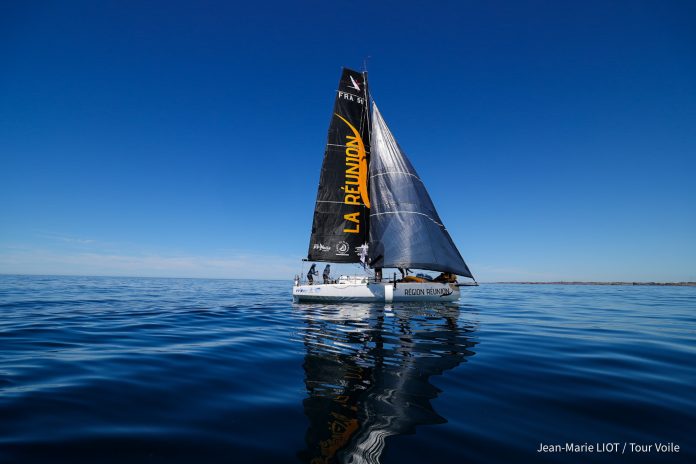
After grinding through three rallying stages that wrapped up just before 21:00 the previous evening, Tour Voile competitors rolled into Camaret-sur-Mer ready to collapse. Tuesday morning brought exactly what they needed—an unscheduled break courtesy of the Breton weather. The scheduled 13:30 start came and went. With virtually no breeze filling the Brest channel, race organizers held the fleet ashore, waiting for thermal winds to cooperate.
By mid-afternoon, conditions shifted. A light thermal breeze moved in, and the race committee grabbed the window. Only one Figaro Beneteau 3 offshore race ran that day in 6 to 8 knots of wind—and suddenly every point on the water mattered intensely. With so few opportunities to race, a single victory or strong placement could reshape the overall standings.
Patience, Precision, and the Perfect Start
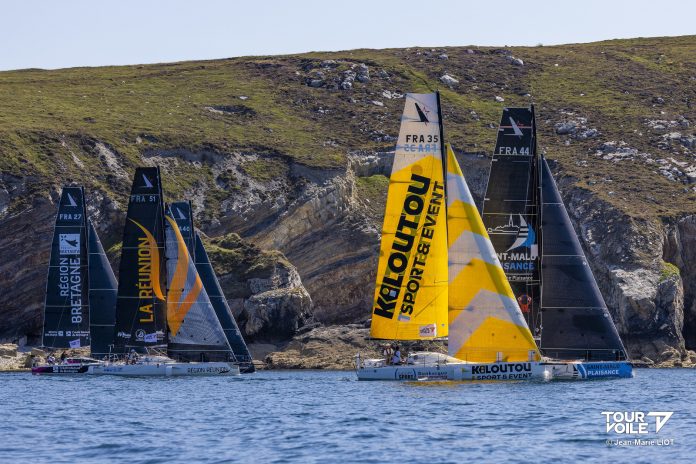
Arthur Meurisse’s Dunkerque – Kiloutou team showed the mental discipline the day required. After hours waiting onshore, the crew still had to arrive on the water sharp and focused. “It started with a delay ashore,” Meurisse explained. “You had to manage that, stay concentrated, and come to the water ready to perform well.”
When the starting signal came, his team didn’t hesitate. A clean launch placed them at the front immediately, and they controlled the entire race to the finish. “The wind was unpredictable, but it stayed fairly stable once we started,” Meurisse said. “We took a fantastic start, which put us right in the lead group, and after that the race plan was clear. We executed our strategy to the win.”

The victory rewards consistency throughout Tour Voile. Every point recovered on built courses chips away at the gap. “It’s always a few extra points on the general classification,” Meurisse noted. “It’s good for morale and already makes us want to come back fighting tomorrow.”
Redemption in a Single Race
Other teams seized the rare opportunity to shift their fortunes. CER – Ville de Genève scored a strong second place after two grueling days during the Saint-Brieuc Grand Prix and the third stage. Skipper Nils Palmieri highlighted his crew’s comfort in light wind: “It’s really good for us. We know there will always be tougher days on a Tour Voile. The important thing is to keep doing what we know how to do, no matter what happens.”
Yet sailing in Breton waters presented unfamiliar challenges. “At home, we race in light wind all the time, but much less with current,” Palmieri smiled. “Here you have to manage both together.”
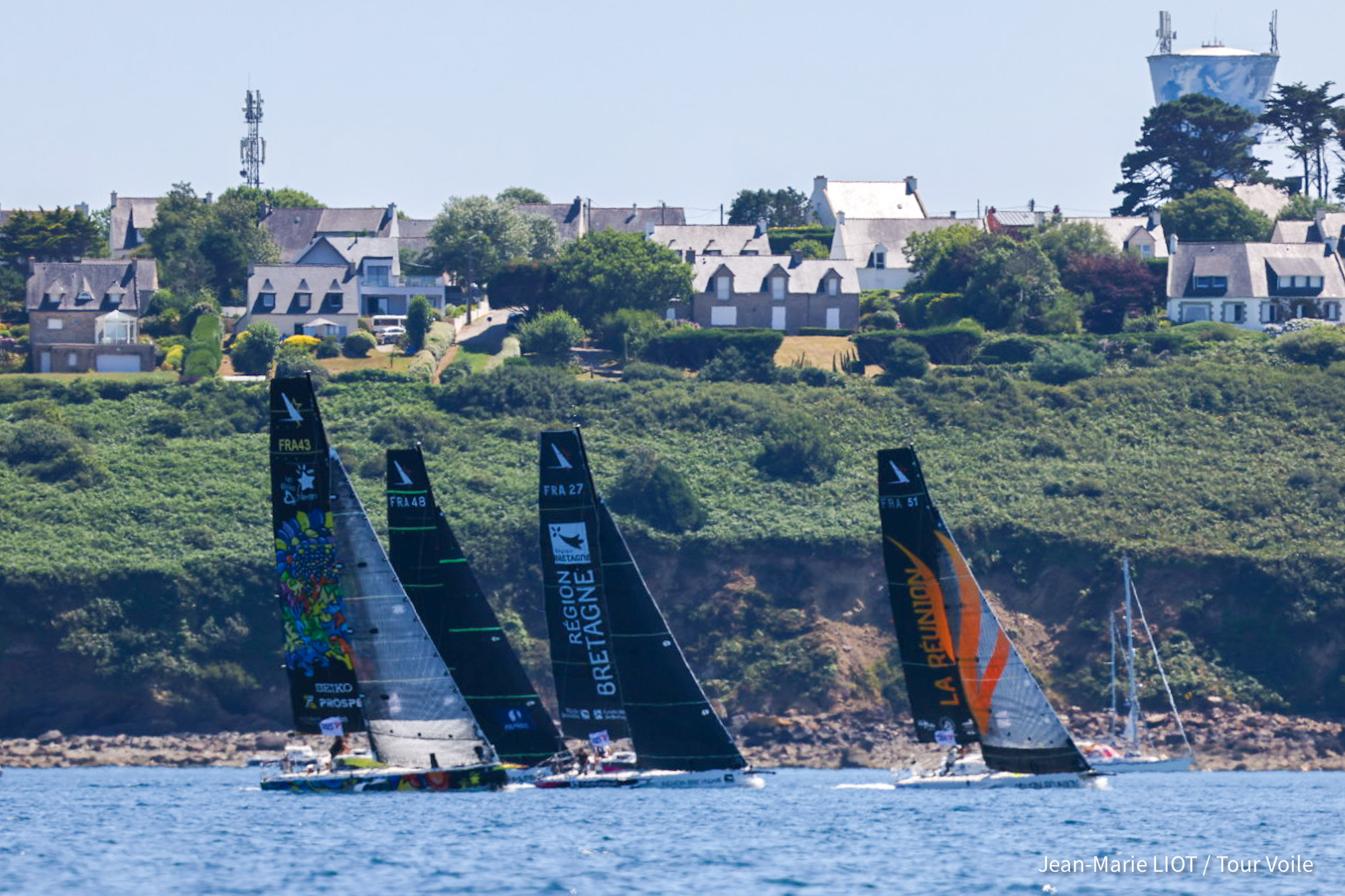
Paul Loiseau’s Région Bretagne – CMB Espoir staged a dramatic comeback. Called for an early start, Loiseau briefly led his team across the line before immediately falling back to last place. “I hadn’t sailed in four days—I was too eager to go,” he laughed. Regaining composure, he methodically clawed back to third. “We stayed concentrated. In these conditions, anything could happen. You just keep the boat moving, and sometimes it works out.” The recovery kept Loiseau’s crew in command of the provisional overall standings.

More Waiting Ahead
Race director Yann Chateau attempted two more starts immediately after the first race concluded, but the thermal wind had vanished as quickly as it arrived. Both attempts were abandoned before reaching the first mark, sending the fleet back to port with just one scored race for the day.
Wednesday’s forecast suggests a similar pattern: thermal winds delayed, a short racing window if conditions cooperate at all. The race committee hopes to fit two built courses and an 11-mile coastal race—but only patience and perfect timing will tell whether the wind shows up.