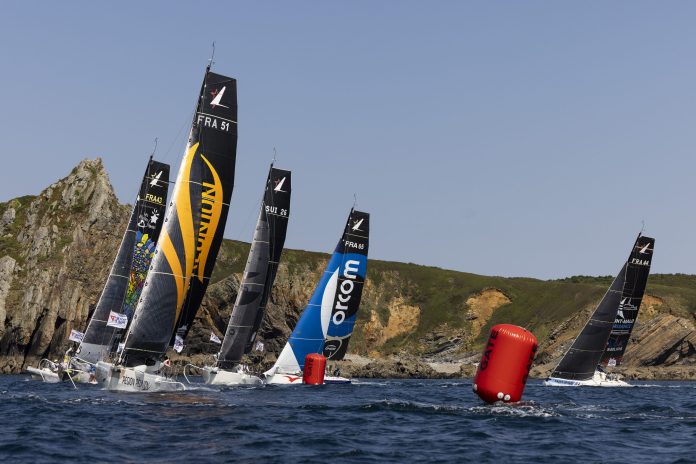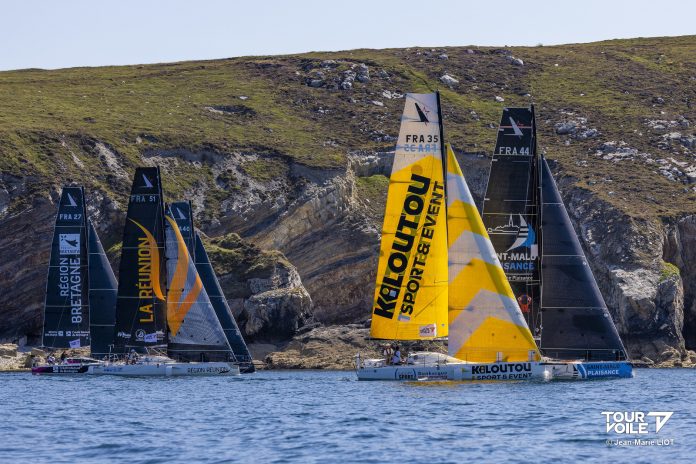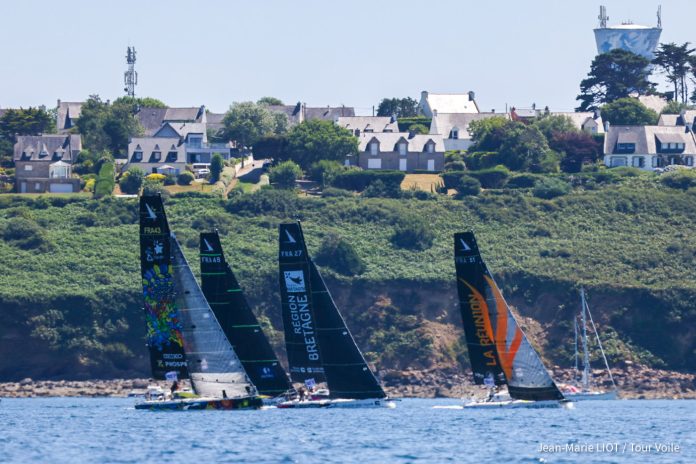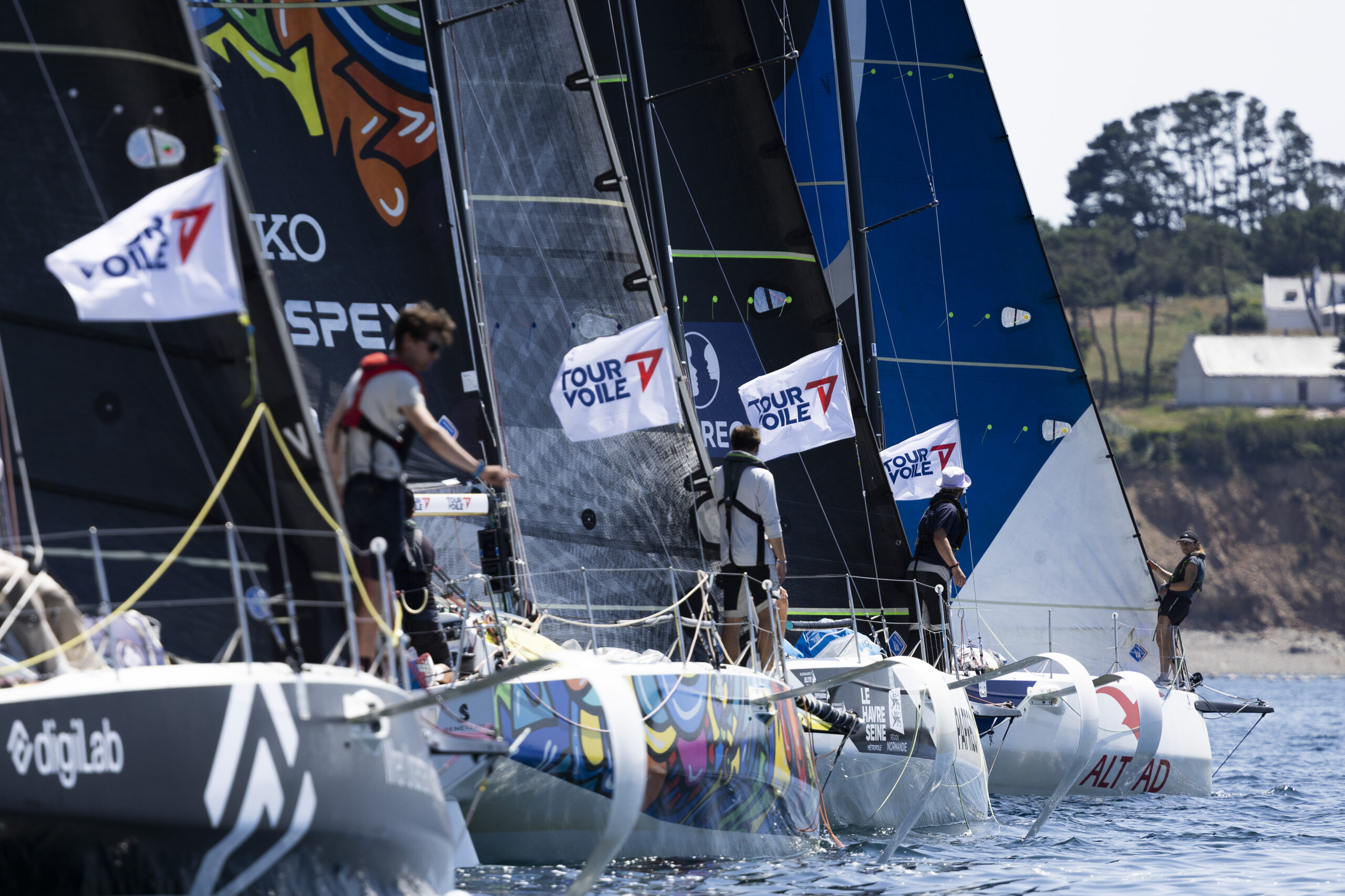
After two days of coastal racing in Camaret-sur-Mer, the Figaro Beneteau 3 fleet heads back to open water Thursday for the fourth and final offshore leg of Tour Voile 2026. The 168-nautical-mile passage to Larmor-Plage will be anything but straightforward. Race officials have weighted the stage at a coefficient of 3, meaning it carries outsized influence over the final championship standings.
The route takes competitors past La Plate, Belle-Île, the ODAS buoy east of the Quiberon peninsula, and Groix before the finish. According to race director Yann Chateau, the real test lies in reading and executing wind transitions. “There will be several transitions to navigate between synoptic and thermal wind patterns,” Chateau said. “The first real trap could well be Audierne Bay. It has a reputation—and it’s quite possible it will live up to it.”
When Wind Shifts Matter Most
The Figaro fleet is due to depart around 10:30 am, starting with weak easterly flow as boats leave Finistère. They will pass the Tas de Pois seamounts and the Raz de Sein before conditions grow unpredictable. A wind shift is forecast for the afternoon, accompanied by thermal strengthening that could create meaningful performance gaps depending on when individual crews encounter Audierne Bay. The first boats are expected to reach the ODAS buoy early the following morning.
What happens next remains genuinely uncertain. Chateau acknowledged that weather models diverge on the forecast. “The models don’t all tell the same story,” he said. “Some draw fairly direct trajectories; others require more maneuvers.” The final miles toward the Lorient anchorage near Groix add another layer of variability—a second thermal transition could hit the fleet depending on how quickly they advance.

Timing becomes everything. “The finish will depend heavily on arrival times,” Chateau said. “If crews arrive around noon, it won’t be the same race as if they arrive later.” In other words, pure boat speed matters far less than the ability to cross each meteorological threshold at precisely the right moment. That skill—the ability to position for a wind shift, read the forecast, and commit to a maneuver when uncertainty runs high—is what separates strong tactical thinking from simply following the breeze.
Boats left their moorings at 9:45 am Thursday, with the official start gun expected roughly 40 minutes later. This final offshore showdown will reward crews who read the forecast accurately, position themselves for transitions, and make the harder calls when conditions remain in flux. For competitors still fighting for the championship, each wind door opened or closed at the right moment could prove decisive.