It is a reflection on the shape of our society that it was as late as 1966 that Bev Coles was New Zealand’s first female international yachting representative, nearly a century after men first raced New Zealand-built yachts overseas. There are two elements to consider here: international and female.
Dealing with the term ‘international’ first, in the latter years of the 19th century New Zealand was at the other end of the world from the brand new sport of yachting centred in Europe (mainly Great Britain) and the United States (mainly the New England, Yankee states) with echoes in the British Colonies, Canada, Australia, South Africa and New Zealand. The sport reached this country mainly through overseas publications like the Badminton Library and the magazines Field from England and Rudder from the USA.
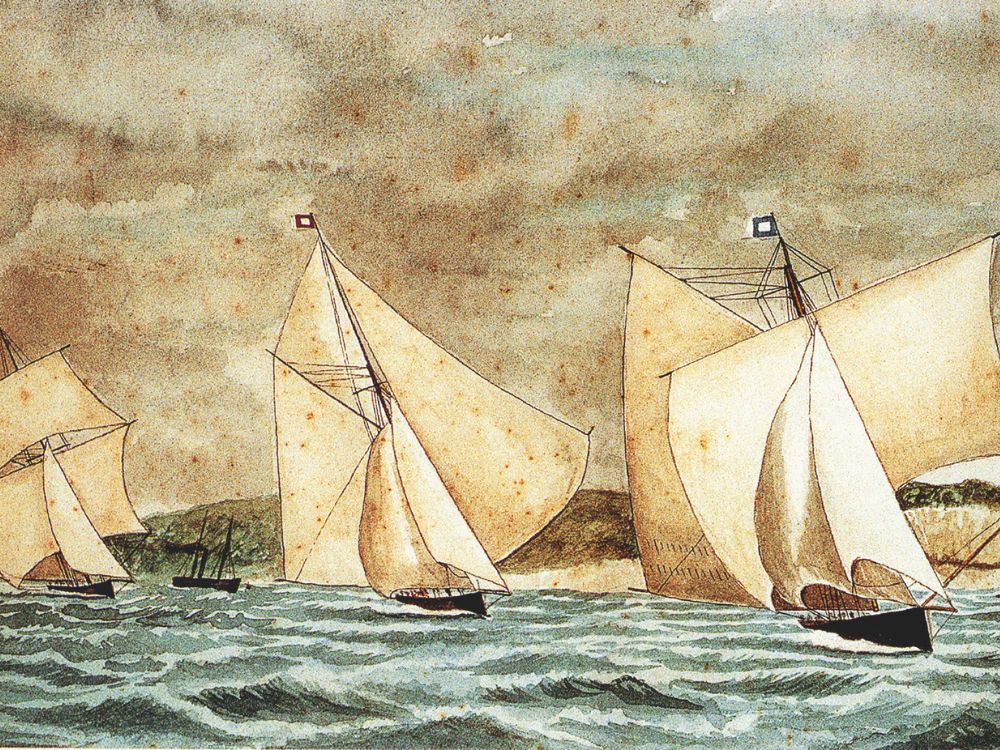
Our first ‘international’ yachting competitions were forays to Australia with keel yachts sailed or shipped to Australia to race and to sell. Tom and Henry Niccol of Auckland sailed the three large cutters, Waitangi, Taniwha and Secret to Sydney and Melbourne in 1878-1880. Ship owner Capt. A.J.S. Gibbs took his 33ft fin-keel yacht Zephyr from Dunedin to race in Hobart in 1881 as deck cargo. Robert Logan built Akarana in October 1888 to compete in the Centennial International Regatta in Melbourne and sold her in Sydney.
The attraction was the large prizemoney offered in the bigger regattas in those days. The parallels with horse-racing were very strong, including much of the terminology – ‘handicap’ and ‘scratch,’ for example. In those rude colonial times, men would bet on anything for a diversion; the catch-phrase was “two flies crawling up a wall”. Then, of course Australia was seen early as an export market for our manufactured goods in the form of up-to-date, well-designed and well- built vessels of durable kauri timber construction.

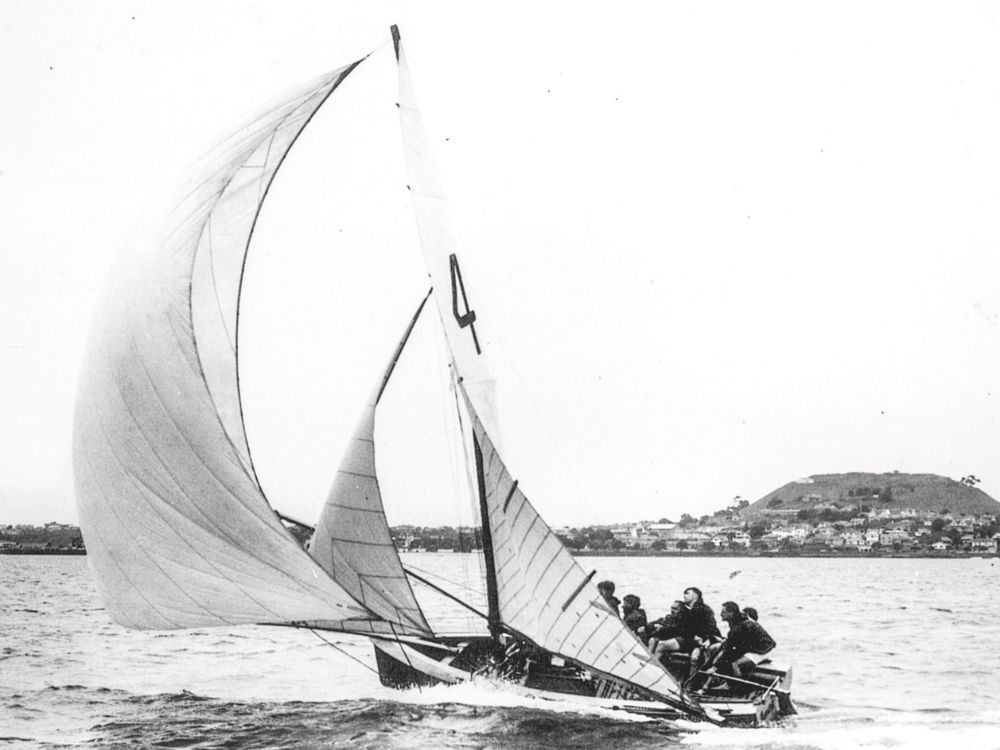
Logan’s trip with Akarana especially sparked Australian interest in Auckland boatbuilders which gave rise, in the 1890s, to the large export trade to Australia in finished yachts by the Logans and Baileys. That trade was amplified by the Auckland Native Regatta in 1898 at which the “Intercolonial One Rater Championship” was held, with entrants from Sydney and Adelaide, small yachts that were easily shipped. Remember that Australia was then a group of British colonies like New Zealand.
After Australia’s federation in January 1901, the flow of Auckland-built yachts was halted as the new nation imposed stiff tariffs on imported yachts to protect local boatbuilding industries. By then, Sydney’s keel yacht racing had become totally dominated by the products of Auckland’s Logan and Bailey families which had been built to the current international rating rules.
From the early 1930s the Trans-Tasman races renewed international competition but the emphasis was on the particular yacht and not on its entrant country. A few New Zealand entrants like Ngataki and Seaward also took part in races from Melbourne to Hobart and in the Sydney-Hobart race, but again not as officially representing this country, nor of course were there any women in the crews.

It was centre-boarders which broke the drought. In the mid-1930s, after the leanest times of the Great Depression were over in this part of the world, thoughts spread to international competition, at least with Australia. Australian and New Zealand centre-boarders had developed originally along parallel lines but achieved a different flavour by the 1890s. The Auckland ballasted mullet boat types now had a set of restrictions to preserve the origins of the craft as a net-fishing smack and were flourishing on the Waitematā. The Melbourne line-fishing ‘couta boat was similar in origins but not as
regulated or numerous.
New Zealand harbours had nothing like Sydney’s classes of amazing ‘skiffs’ which had a common origin with Auckland’s ‘open sailing boat’ classes which arose in the 1870s. Randomly, Auckland had gone in a different direction with the 18ft 6in patiki planing centre-boarder introduced by Logan Bros, inspired by a 14ft clinker round-bilge cat-rigged dinghy left behind by the American barque Sea King in April 1897 and which later raced as a ‘half-rater’.
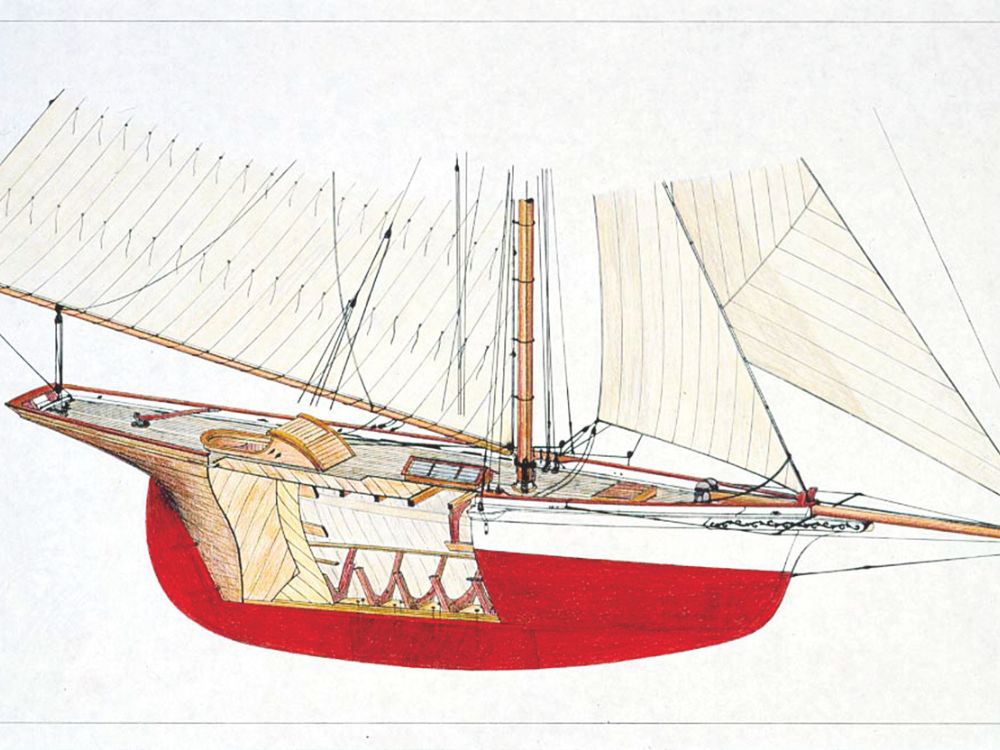
By the 1930s the Sea King clinker type had morphed into two restricted clinker types, the restricted 18ft M-Class patiki and 14ft Jellicoe/X-Class which had an off-shoot in the unrestricted round-bilge T-Class. In another New Zealand development, a group of square-bilge centre-board classes had arisen which owed their inspirations to designs in the American Rudder magazine, including the 7ft P-Class, the 12ft 6in Z-Class, the 12ft 8in Idle Along Class, the 14ft Y-Class and many of the largely unrestricted 18ft V-Class.
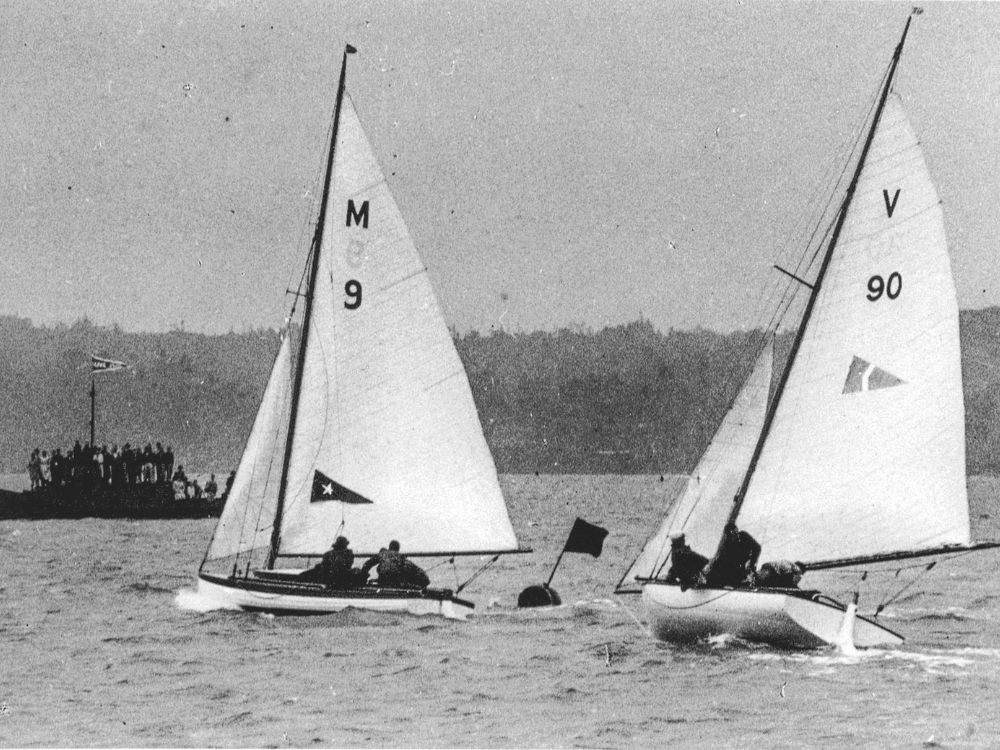
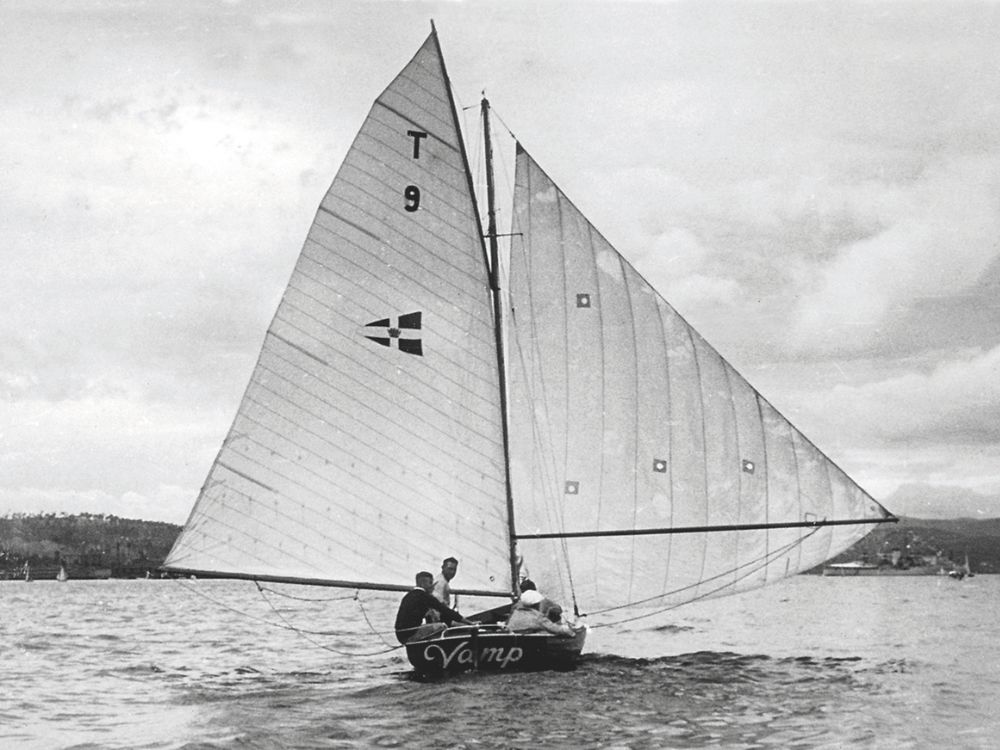
In May 1937 the NSW 18 Footers Sailing League put out feelers through Arch Logan for a proposed visit by Auckland M-Class 18-foot patikis for the 150th Anniversary Regatta in Sydney. This developed into a team of 18-footers – one M-Class, Manene (with an enlarged rig), and three V-Class, Irina, Riptide and Va’alele – while the event turned into the ‘World’s 18-Footer Championship’, truly International! The Auckland boats acquitted themselves well, considering the different sailing environment on Sydney Harbour. At the same time, Billy Rogers took his round-bilge 14ft T-Class Vamp to Hobart in February 1938 and won the Australian 14ft Championship.
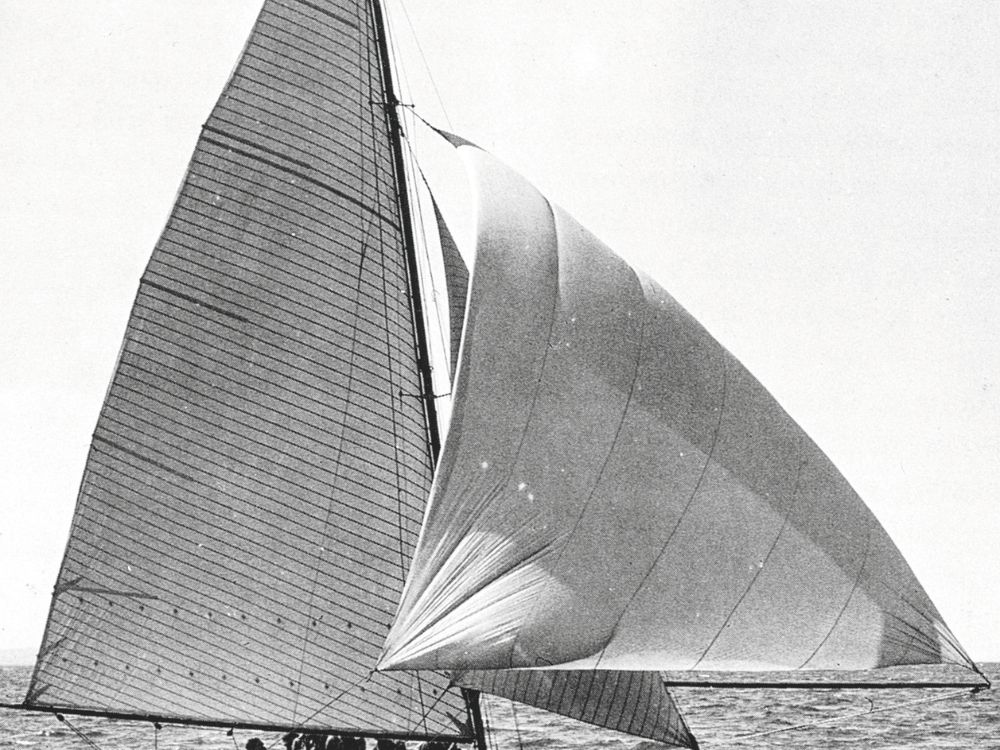
In February 1939 the Australian 18-footers came to Auckland for a rematch for the Championship. The M-Class Manu (M9) won the series after a protest in the final race which disqualified the points winner Taree of Sydney. The Sydneysiders were unimpressed and refused to hand over the Giltinan Trophy. Tempers cooled during WW2, however, and the Aussie 18-footers came back in February 1948, returning to Sydney with the Trophy.
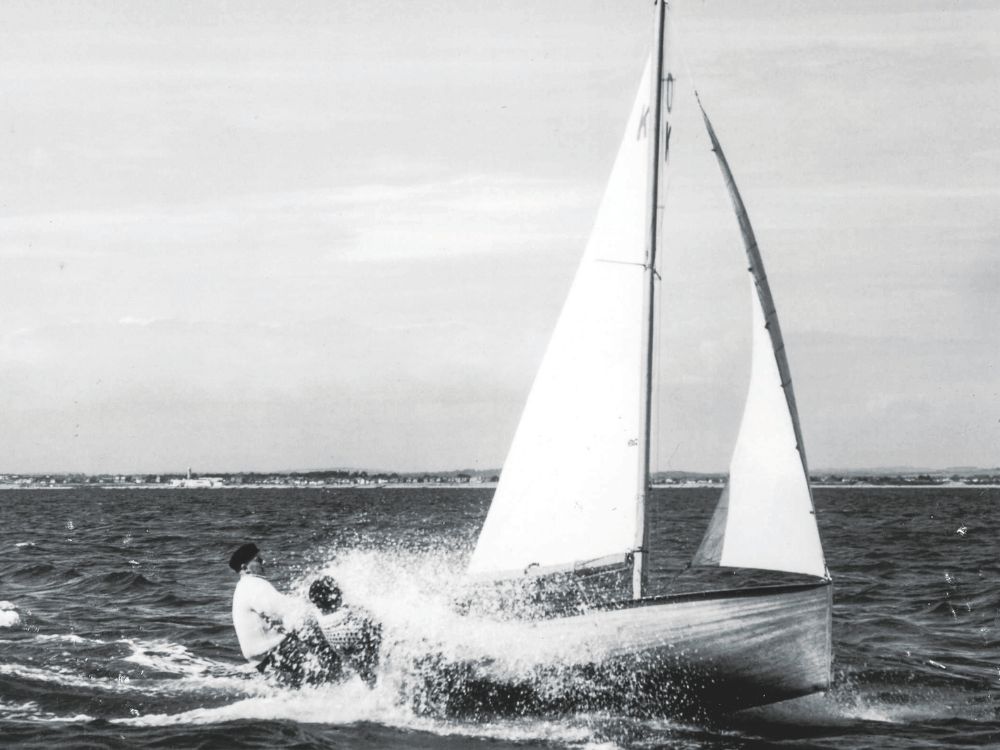
Apart from the glamour 18-footers there were no more international yachting events until Peter Mander and Jack Cropp sailed their Sharpie to win gold at the 1956 Melbourne Olympics, closely followed by Geoff Smale and Ralph Roberts winning the Prince of Wales Cup at Cowes in the International 14 Atua-Hau. Bev Coles’ part in this process arose in 1966 with her Q-Class 12-footer Quahlee in the Silasec Trophy races in Sydney, largely inspired by her uncle Jim Smale, who took her sailing at the age of 10 in his International 14, Zephyranthes.
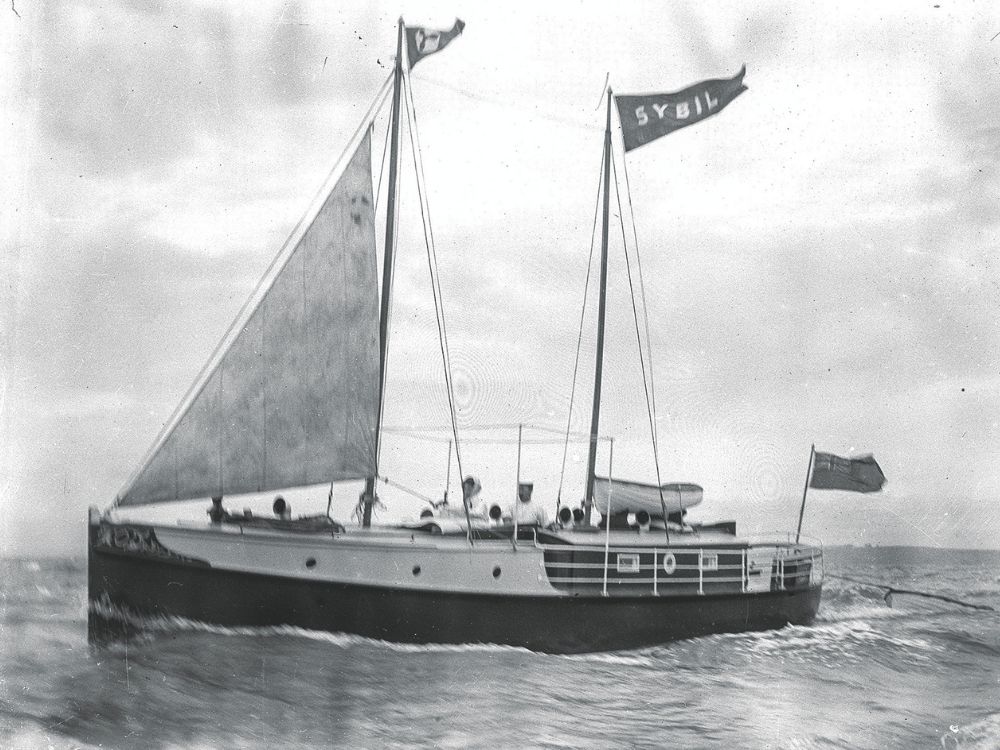
From that time on New Zealand has become a major player in international yachting in terms of design, construction and crew, a far cry from the isolation we once had at this “other end of the world.”
To turn to the term ‘female’ raises a host of cultural issues which have been in constant change since New Zealand’s Pakeha colonial society of the 19th century when women had
no vote, no separate property as married women, no status without wealth. A large topic, but I’ll restrict it to the way society affected women and boating.

Because New Zealand is a long, skinny country with a coastline longer than that of the USA, the North Island originally with an effectively impassable interior, communications and trade were mainly by sea for both Māori and Pakeha. Our ports had a lot of sailormen, hard-fisted and hard-minded, whose attitude was that ladies and the sea did not mix, except as paying passengers.
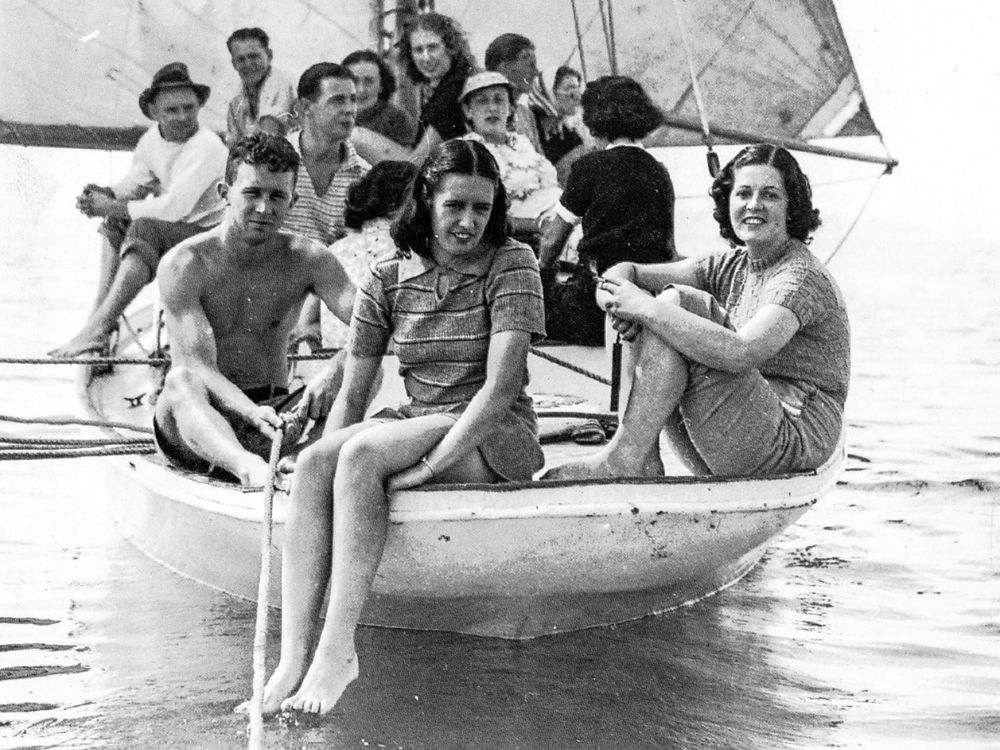
The same attitude was prevalent amongst yachtsmen who shared the sailors’ opinion that women were bad luck on a boat. In my experience, as late as the 1950s, many keel yacht owners were averse to ladies aboard. The yacht clubs provided Ladies’ Days where ladies took the helm in races and Picnic or Cake Days when the whole family would repair in their yacht to picnic spots in the many bays of the harbours for tugs-of-war, beach cricket and such larks. But serious racing was the exclusive preserve of menfolk.
This could cause a problem during the long Christmas holidays. The wealthier would pack their wives and children into coastal steamers and put them up in hotels, the Duke of Edinburgh in Russell being a favourite.
On top of the prevailing attitudes of the times, a couple of additional underlying reasons for the exclusion of women from recreational boating were the universal habit for nude bathing amongst yachtsmen and the “bucket and chuck it” sanitary arrangements.
When ‘oil launches’ came on the scene, the bigger ones with two cabins, one for the ladies, not only were yachtsmen outraged at the noise and the exhaust (“stinkboats” they called
them), but the lady passengers inhibited their aquatic nude frolics. One furious yachtsman demanded in the press that such launches, when entering an anchorage with yachts present, should fly the International Code Letter Q so that yachtsmen could get their trousers on.
The intervening years saw the growth of family-oriented yacht clubs like Wakatere Boating Club at Narrow Neck with Frostbites and the Herne Bay Junior Yacht Club with Silver Ferns. In both those clubs, girls were encouraged to participate in all events, a sound template for the future of yacht clubs. The Wakatere Boating Club did a huge amount by running annual Inter-Secondary School races and got good entries from girls’ schools. Bev Coles sailed for Diocesan in 1958.
A small sample of these girls and young women to do well in the centre-board classes in earlier times were Betty Webster, Margaret Paterson, Muriel Rogers and Patricia Hutchinson in Silver Ferns, Marie Lidgard in 18-footers, Vigette Worters in Idle Alongs, Helen Rogers in an X-Class at Bucklands Beach, later forward hand in Dave Marks’ Q-Class Pathetic and mainsheet hand on the 18-footer Quartet. Outside Auckland there was Margaret Riddler in the X-Class Gallina at Timaru in the 1940s and then we have the keel yacht rock stars Penny Whiting, Barbara Bakewell, Heather Lidgard ……
My own early experiences with keel yachts were enlightened in comparison to prevailing norms. In the mid-1950s I sailed in the 22-footer Memory (E44) with Lincoln Wood who welcomed ladies aboard and sailed with him on Marangi (A21) then owned by Ivy ‘Ma’ Sutherland. My prejudice in favour of women on yachts was reinforced by Janet Watkin who was a wise tactician and a vigorous mainsheet hand on the mullet boat Snatcher (L54)… and a calming influence during crises. And then, I was always a great fan of Nancy and Peggy Blackett in Arthur Ransome’s Swallows and Amazons series………Happy days! BNZ
NEXT MONTH I finish the story of Bev Davidson née Coles and her trailblazing path to
being the first young women to represent New Zealand at yachting internationally.
BOATINGNZ.CO.NZ