Often it is a combination of several factors working together that force a skipper to call on Coastguard for help.
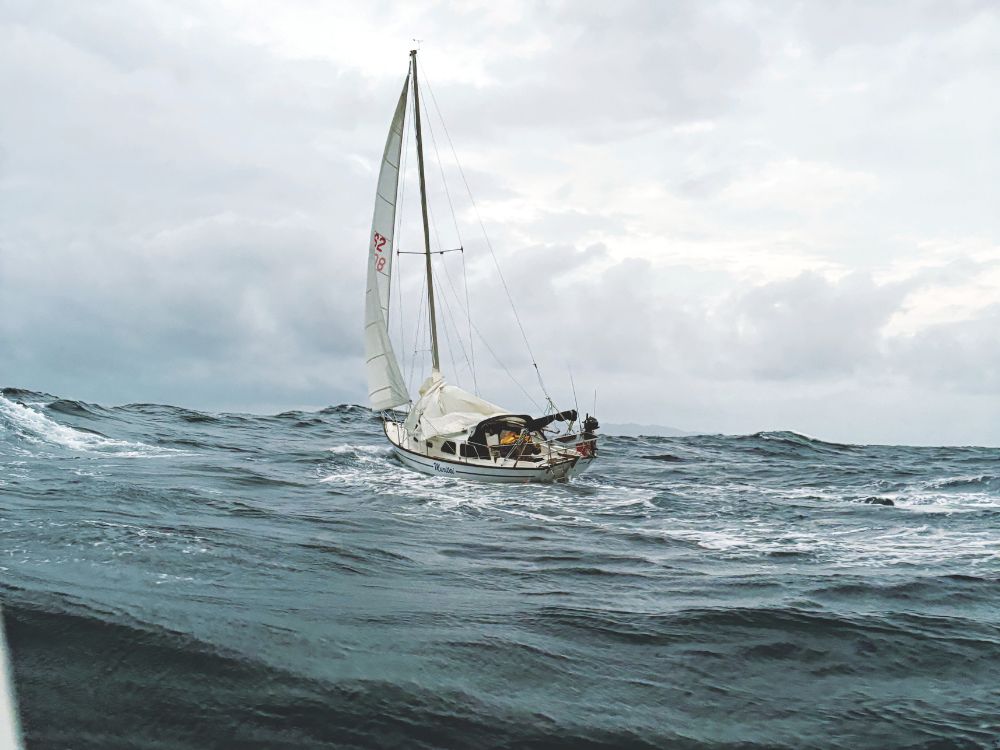
This was the case for young Bay of Islands skipper Angela* when sailing her newly-purchased H28 yacht Muritai down to Auckland with the help of Warkworth crewman Simon*.
Having purchased Muritai on Tuesday, the pair checked the vessel out thoroughly before making the most of some good weather to cruise down to Urquharts Bay, Whangarei Harbour, anchoring overnight Friday before a planned early departure on the final leg to Auckland via Kawau Island.
“I had been keeping a close eye on the weather. Saturday’s forecast was for 15 knots easterly pushing a 1.5m swell later in the day, nothing the yacht or us couldn’t handle. Everything pointed towards a brisk sail at an average of seven knots, anchoring at Kawau by 8.30pm,” Angela said.

Apart from a slightly later departure time, the first half of the leg to Kawau went smoothly. Heading towards Cape Rodney, Angela noted an increasing swell and wind, but continued to put her faith in her boat. Herreshoff 28s are noted for their seakeeping abilities and have made thousands of bluewater passages globally.
|
“Have confidence in your crew and act on gut instincts.” |
Angela says they are not the fastest yachts out there, but are easy to sail and very sea kindly. She and Simon were about to put that sea keeping ability to the test.

With the seas and wind strength building – the first factor – Angela started to look at options, including going back to Urquarts Bay or the shelter of the Hen and Chicken Islands.
With the seas now 3m plus, and having stuffed the bow several times, Angela knew it was time to reef some sail. Wearing a lifejacket and attaching a Personal Locator Beacon, she went forward to make the sail changes and drop the main. That’s when it all started to go wrong. She partially dropped the main, but it got stuck, damaging the boom at the gooseneck. The mainsail then backfilled, damaging the rigging and lines further – the second factor.
“The lines were swept overboard; we were concerned they might foul the propeller.”
With the yacht finally turned around to run with the seas, Angela came back from the foredeck to see the terrified look on Scott’s face.
“It was then that I realised ‘this was bad.’ Waves were breaking over us, so I put a Pan Pan call out over the VHF’s Channel 16, looking for advice.”
Another complicating factor – the third – was the unreliable motor which kept overheating and cutting out. The standard engine in an H28 is rated at 10hp – okay for manoeuvring around marinas and making short trips, but not up for a coastal passage. It was leaking fuel, possibly through the vent, turning the deck into a skating rink.
Meanwhile the Coastguard machine fired into action. The rescue vessels of Kawau, Whangarei and Mangawhai were called out. Mangawhai, a newly-minted trial unit, was first on the scene and accepted the task of shepherding Muritai back to Mardsen Cove, where a visitor’s berth had been organised for both vessels.
“A further concern for us [factor four] was the heading we were on,” said Angela. “We would have struck land in another 30 minutes or so. With Kokako alongside offering encouragement and support, we were confident in the call to go back.

“We weren’t able to jury-rig the foresail until after Kokako got there. I jumped on the VHF before they arrived and asked for advice to see if I should try and was told to wait for Coastguard. I only went on deck in those conditions because they were ready to scoop me out of the water if I got it wrong. I can’t say what I would’ve done if they hadn’t been there. Adding on to that, the topping lift was broken too and it wasn’t until we eventually got going with the conditions we were able to tie it down the side of the boat. Until then the boom kept swinging violently across the dodger.”
Simon, who had been boating – but not sailing – for many years, said nothing could have prepared him for the situation they found themselves in.
“Each time a big wave threatened to broach the boat I would hold my breath thinking ‘is this the one (wave) that will get us? The scariest thing was not having any control – we were being rag-dolled by the conditions.
“I was in contact with my family via cell phone and made a call to my mum telling her I loved her. You can only imagine the relief when Coastguard pulled up alongside.
“We had loosened all the jerry cans in anticipation of ending up in the water. We both had two lifejackets on, and Angela wore the EPIRB around her neck – that was how serious it got for us.”
Kokako’s master Roy Pearson said the decision not to tow Muritai, just shepherd them back to Whangarei Harbour, was made in the interests of safety.
“They were making slow but steady progress towards shelter, so we were there as a guardian, prepared to take a tow if necessary,” Roy says.
Speaking of his crew, he said they did everything right, the many hours of training kicking in. “We used every tool we had at our disposal; the teamwork was great.”
The rescuers had their challenges, not least negotiating the Mangawhai bar on the way out in 3-4 metre swells. All aboard were impressed by Kokako’s seakeeping abilities. “The crew would have given in before the boat did,” Roy quipped.
The unanimous decision not to return to Mangawhai that night was made in the interests of safety. The size of the swell, wind direction, and a low tide made the bar unworkable in the dark.
Angela and Simon joined the Mangawhai unit the following Wednesday at its training to thank everyone for their great work, delivering some refreshments in appreciation.
Asked what they might have done differently, Angela says, when getting a new boat, check it and the equipment is all 100 percent before leaving.
“Have confidence in your crew and act on gut instincts. If you think you should turn around and go back, then do so. I had that moment off the Hen and Chicks, but chose not to take my own advice!
“In hindsight, I think once we had the foresail jury-rigged, we could have made it to Kawau.”
Simon and Angela say it was a huge relief to see Kokako pull alongside.
“We can’t thank you guys enough for what you did for us and are doing in the community.”
This tasking was the seventh for Mangawhai Coastguard, a trial unit, and by far the most difficult and challenging to date due to the conditions. The 33 volunteers that make up the wet, shore-based, and management crews enjoy exceptional support from the Mangawhai community, for which they are most grateful.
(*Names changed for privacy reasons).