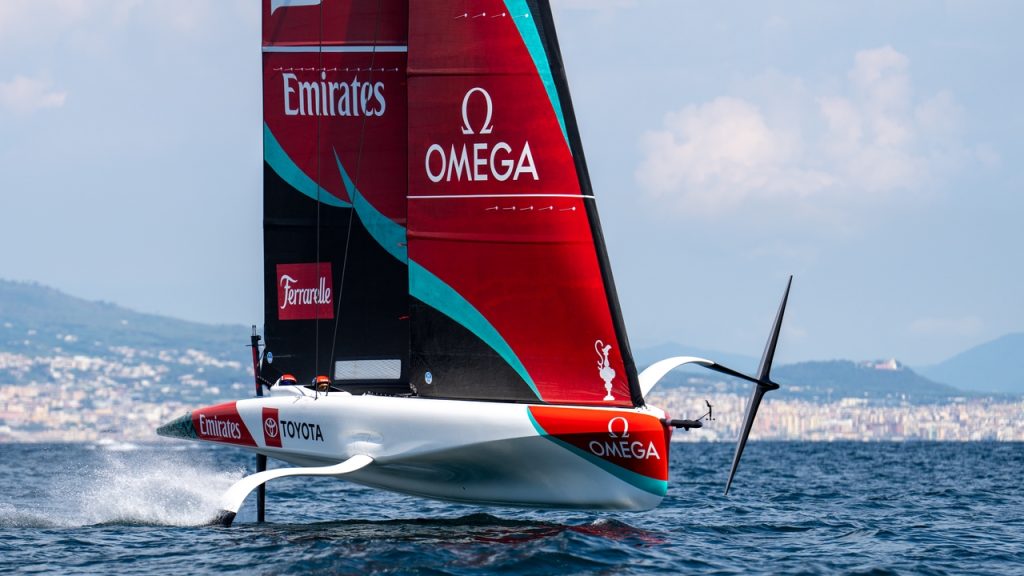
It has been a week where the Louis Vuitton 38th America’s Cup stopped being paperwork and started being visible progress. Sailing instructions landed for the Naples Preliminary Regatta, ground was broken on Emirates Team New Zealand‘s new base, and three AC75s were back on the water on three different continents.
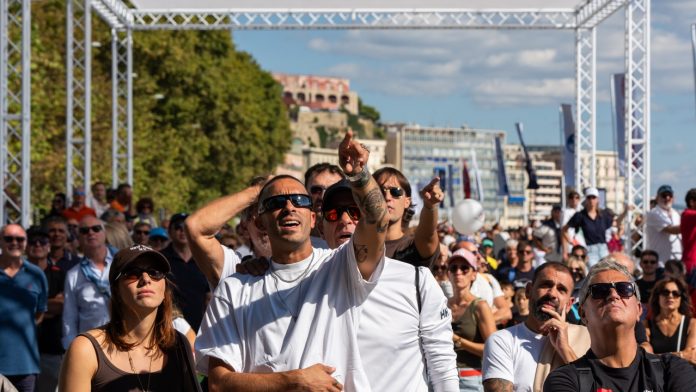
Starting with the rule book. The America’s Cup‘s second Preliminary Regatta, known as PR2, runs in Naples from 24 to 27 September and is the second of the lead-up regattas before the 2027 Match, giving crews their first competitive look at the Bay of Naples in AC40s. The headline change from Sardinia is the removal of the delay card system for fleet racing. Teams could previously call a single five minute delay if they hit technical trouble on the startline, a card played more than once in Sardinia by GB1, Luna Rossa and Athena Pathway. For Naples, that option is gone except ahead of the final match between the top two boats. Chief Umpire Richard Slater put it plainly: “Removing the delay card system for the fleet racing means that we can align with the broadcast window and spectator expectations more fully. With nine boats on the starting line for the Naples Regatta the onus and expectation is on the teams to be ready to race their AC40s in each scheduled race.” Races will run to a 25 minute time limit, with a 7.5 to 21 knot wind window and a high scoring format, 10 points down to 2 across the nine boat fleet.
Off the water, the Cup’s judicial side got a face this week too. The Arbitration Panel for the 38th America’s Cup, effectively the event’s Supreme Court for disputes over class rules, eligibility and Protocol interpretation, comprises three members and a Secretary. New Zealand’s own Graham McKenzie, a Barrister and Solicitor with three previous America’s Cup Jury and Arbitration Panel appointments behind him, sits alongside Switzerland and France’s Henry Peter and Australia’s David Tillett AM.

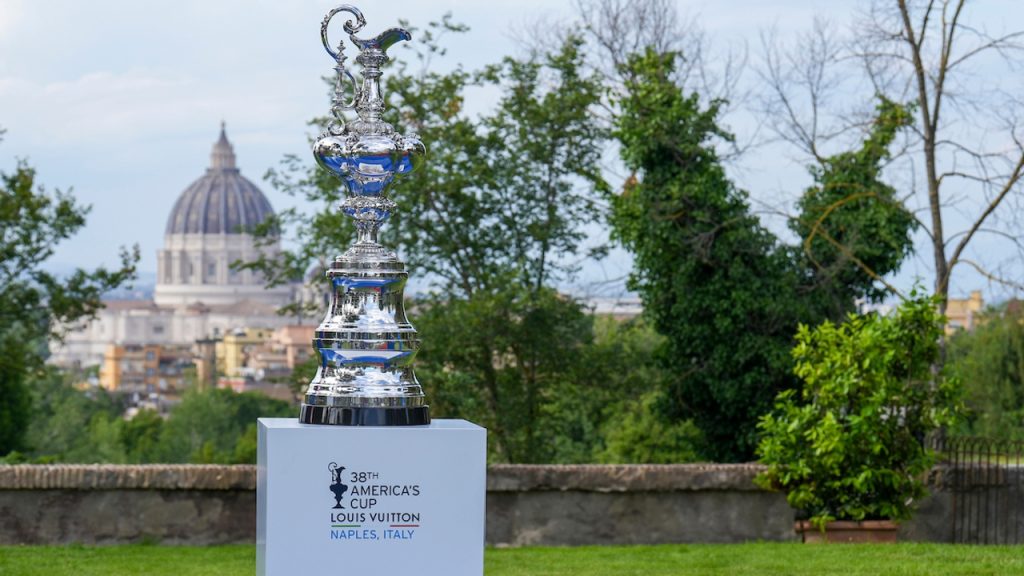
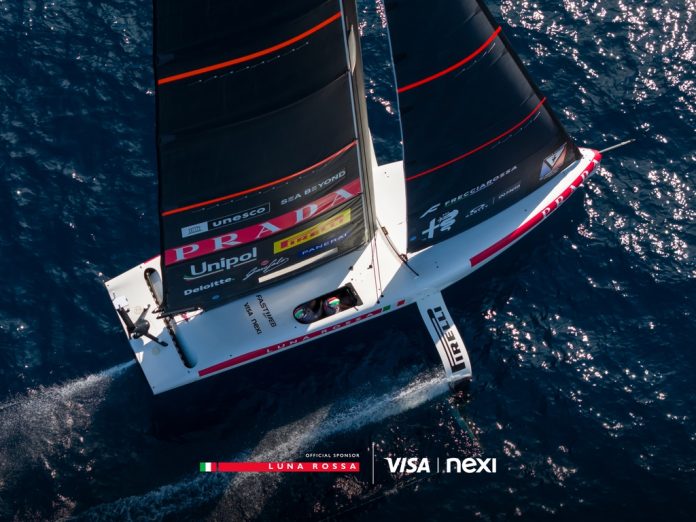
Sponsorship news came from Pirelli, which is extending its branding beyond Luna Rossa‘s mainsail onto the foils and rudder of both the AC40 and AC75, alongside a materials contribution to the AC75’s appendages. The new livery debuts on the AC40 in September and the AC75 in November.
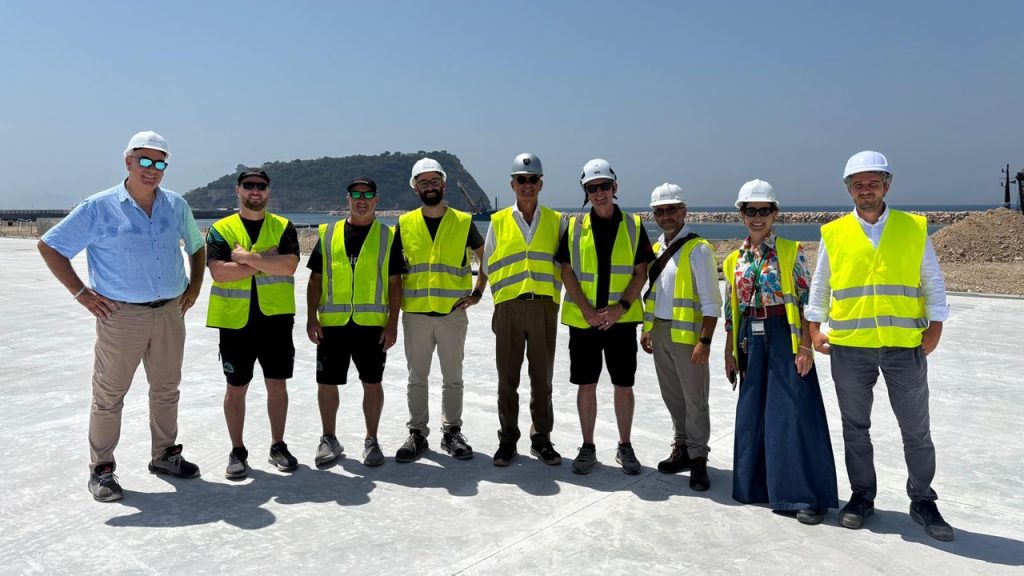
The bigger New Zealand story is happening on land in Bagnoli, just under 10km from central Naples, where Emirates Team New Zealand has begun constructing its team base for the 2027 defence. The 1750 square metre Mar-Key boatshed, the same design that housed Taihoro in Barcelona, is going up at 15 metres high and 35 by 50 metres, with a 593 square metre mezzanine sail loft and rig bay. Base manager Andy Nottage, a veteran of nine America’s Cup campaigns, called it a milestone that came “without a huge amount of planning, legislation and logistical hurdles to overcome.” The shed is due for completion in around three months, with the team’s offices and admin building following from September through to December, ready for the squad’s arrival in early 2027.




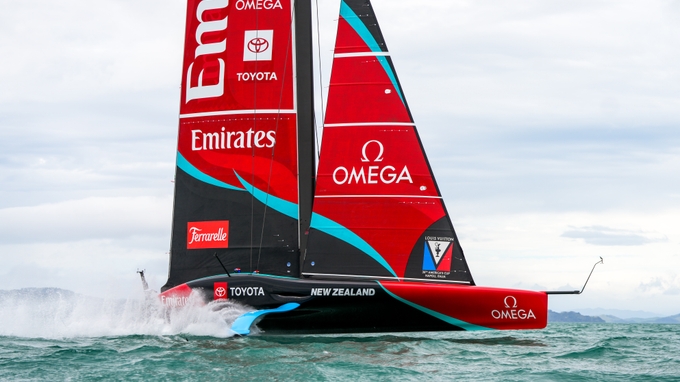
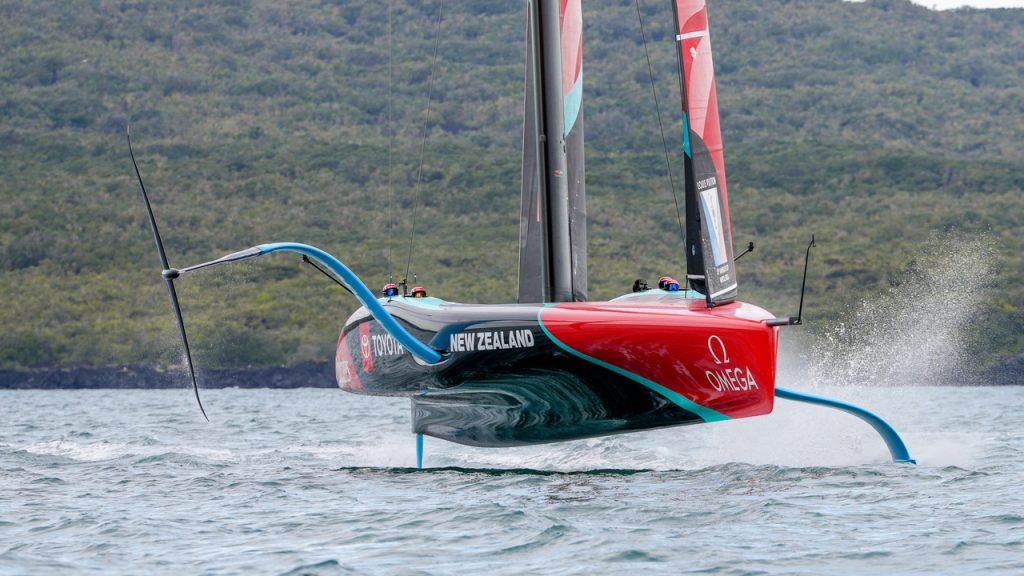
Out on the water, three AC75s were flying this week, in Auckland, Cagliari and Lorient. Taihoro has been the standout. Recalled from Naples AC40 training to Auckland for AC75 work-up with a new, smaller, more fore-and-aft raked rudder, and clocking speeds in excess of 50 knots under the smaller M3 mainsail and J5 jib on the Hauraki Gulf’s Back Paddock. Skipper Nathan Outteridge summed up the gains simply: “The boat’s going faster and it’s getting easier for us to sail, which is really cool.” In Cagliari, Luna Rossa logged four days of sharpened manoeuvre work under skipper Peter Burling, the former Emirates Team New Zealand driver now leading the Italian challenge, before a ten day break ahead of Naples. And in Lorient, the French La Roche-Posay Racing Team returned to the water under skipper Quentin Delapierre after a battery related capsize scare, introducing a new mainsail double skin that Delapierre said gave the crew more control out of manoeuvres.
Fittingly for a week that has leaned heavily on where the Cup has been as much as where it’s headed, Boating New Zealand also ran a feature on the event’s great characters, from John Cox Stevens’s original 1851 challenge through to modern figures like Grant Dalton. It’s a reminder that this current cycle, with a Kiwi (Burling) driving for Italy and another (Phil Robertson) helming for Switzerland’s Alinghi, is very much part of that long thread of sailors crossing flags in pursuit of the oldest trophy in international sport.