The formative years: 1928–2004
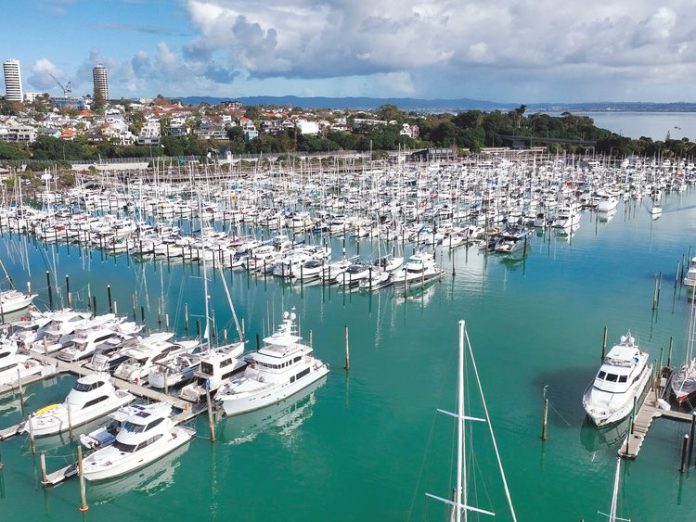
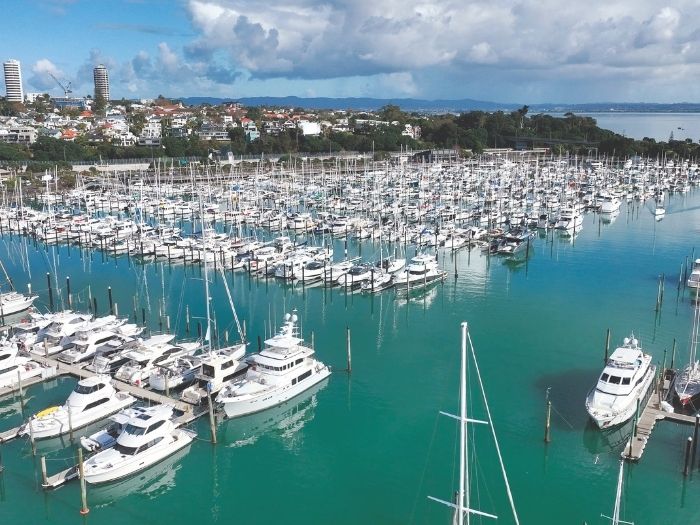
This month signifies a major shift at Westhaven Marina, as the long-term licences for Piers AB to T expire, with all rights reverting to the owner, Auckland Council. Nearly 500 affected berth holders will either have to pay the standard monthly rental or vacate. With this change, it seemed an appropriate time to tell the story of Westhaven Marina.
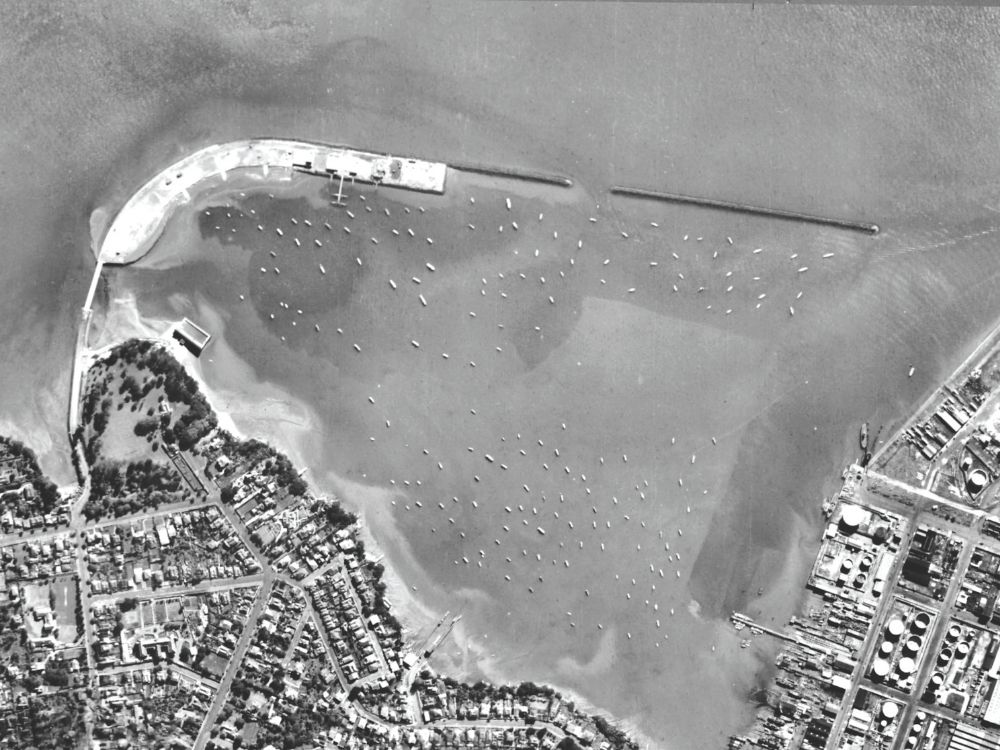
The origins of what would eventually become Westhaven Marina date back to 1913, when the Auckland Harbour Board (AHB) selected St Mary’s Bay as a designated mooring area for yachts and launches. A severe storm in 1916 caused significant damage to the vessels there, so between 1926 and 1928, a breakwater was constructed from the northwest corner of St Mary’s Bay at Point Erin, extending towards Wynyard Point, which was later known as the tank farm. A gap was left at Point Erin with a bridge crossing it to allow the tide to flow through and help prevent silting in St Mary’s Bay.
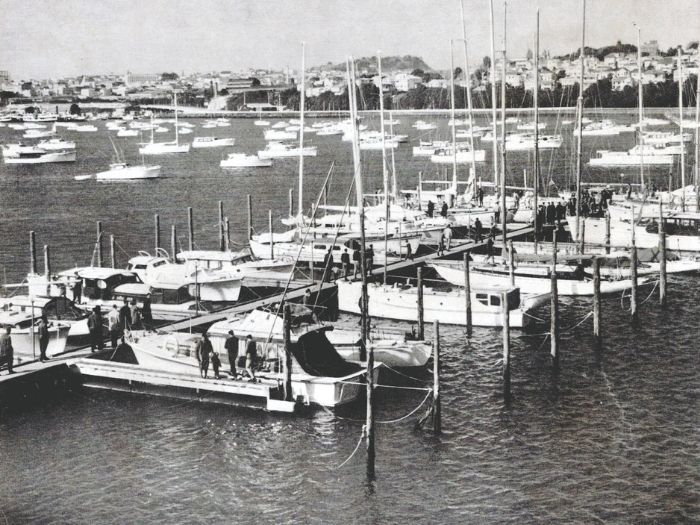
The sheltered area thus created became known as the St Mary’s Bay Boat Harbour. In addition to swing moorings for keelers and launches, the breakwater provided a wonderfully sheltered spot for sailing dinghies and rowers and quickly proved extremely popular.
As St Mary’s Bay Boat Harbour grew in popularity during the late 1930s, it became the base for several yacht clubs. The Ponsonby Cruising Club (PYC) had already built a clubhouse there, the first on Auckland Harbour. The Victoria Cruising Club (VCC) and the Richmond Yacht Club (RYC) later established clubhouses on the reclaimed land. The Auckland Motor Yacht Club (AMYC) added their clubrooms to the Auckland Harbour Board shed on the breakwater. A fifth building was constructed on the breakwater by American forces during WW2, intended as a recreational hall for servicemen recovering from wounds. After the war, it became a shared function room for all the yacht clubs, later the Trillos Function Centre, and finally the home of the Royal New Zealand Yacht Squadron (RNZYS). Incidentally, part of this building was used for many years as a dinghy and mast storage room, which is why the RNZYS later named it the Dinghy Locker Bar. In 1960, the PYC built its new premises by adding a floor above the Harbour Board Shed.

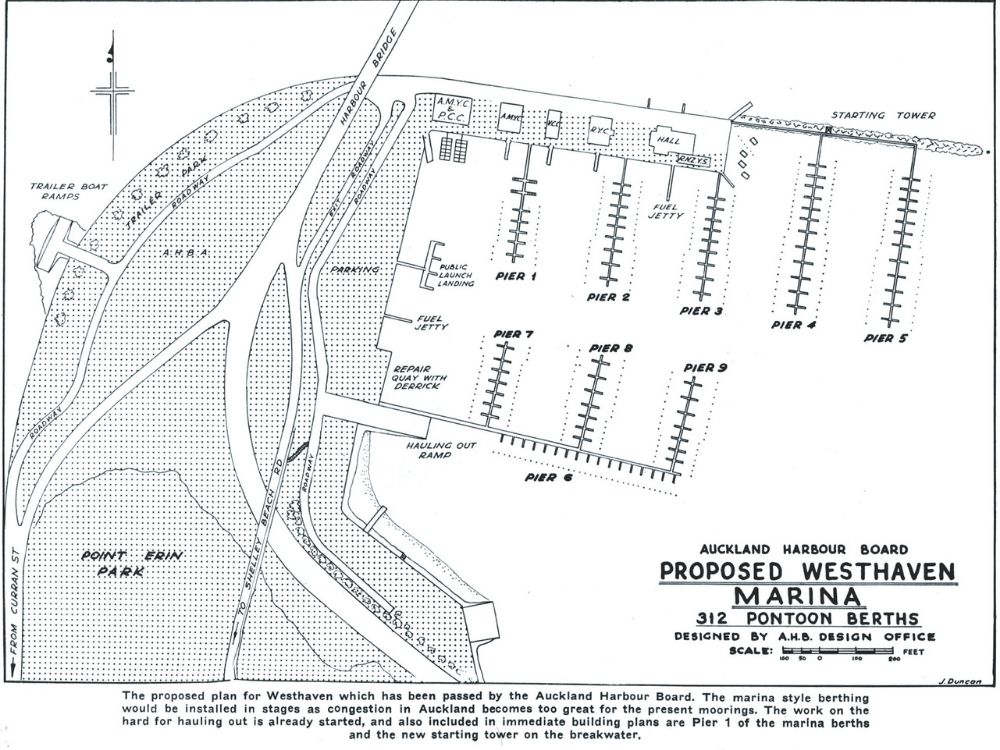
On the western side of the boat harbour, a haul-out area and slipway were developed, allowing boats to be hauled and serviced. Further along, in the southwest corner, was the West End Rowing Club (WERC). Established in 1884, the WERC built a clubhouse in St Mary’s Bay that same year, well before the breakwater was constructed. On the east side, accessed via Beaumont St, the Percy Vos shed, with its slipway and haul-out area, provided another option for moored boats to be hauled and serviced. The entire area became a hub for boaties, regardless of their income.
In 1951, after more than 25 years of debates, two harbour-crossing groups, a public petition, and two Royal Commissions, the National Government, led by Prime Minister Sidney Holland, yielded to pressure and agreed to construct a bridge over Auckland Harbour between Stokes Point and Point Erin.
The bridge required extensive land reclamation in the St Mary’s Bay area. These earthworks were crucial for the motorway feeders and approach roads connecting the city to the bridge. The bridge opened in 1959, leading to rapid growth on the North Shore. In a relatively short time, Holland’s austerity measures, which limited the bridge to four lanes, soon left it struggling with traffic. This will be relevant later in our story.
During construction of the bridge, there was a significant impact on the St Mary’s Bay area. Considerable reclamation was carried out on the western side of the bridge entrance, which was used as a staging area during construction. Once the bridge was opened, this space was repurposed for other uses, including a boat launching ramp.

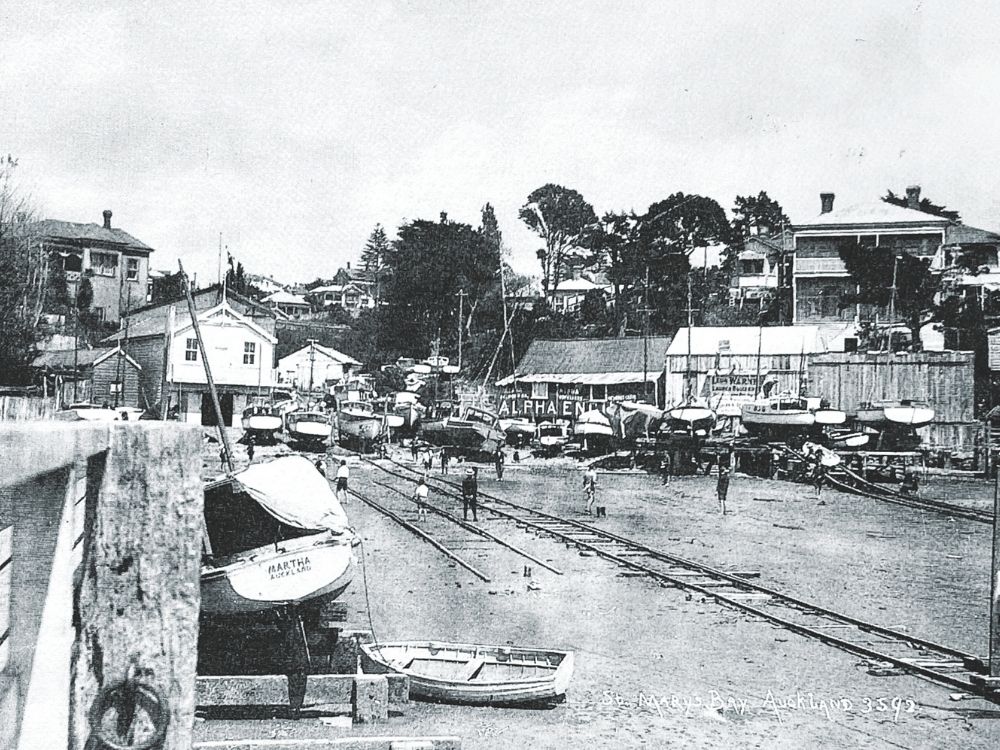
The St Mary’s Bay Boat Harbour area returned to normal after the bridge construction upheaval. Boating demand increased, and a few informal piers were built off the breakwater. The AHB was pressured to supply more berths, and in 1963, it designed a 312-berth marina. The AHB constructed the piers and berths and rented them out under an annual licence arrangement.
Fast-forward a decade to the mid-1970s, and an explosion of new boats being launched. The four yacht clubs are booming, and keelboat racing has become hugely popular. The original 312 berths are now oversubscribed with a long waiting list. People are pulling strings to jump the queue or buying boats just to get a berth. Consequently, the AHB is under pressure to provide more.
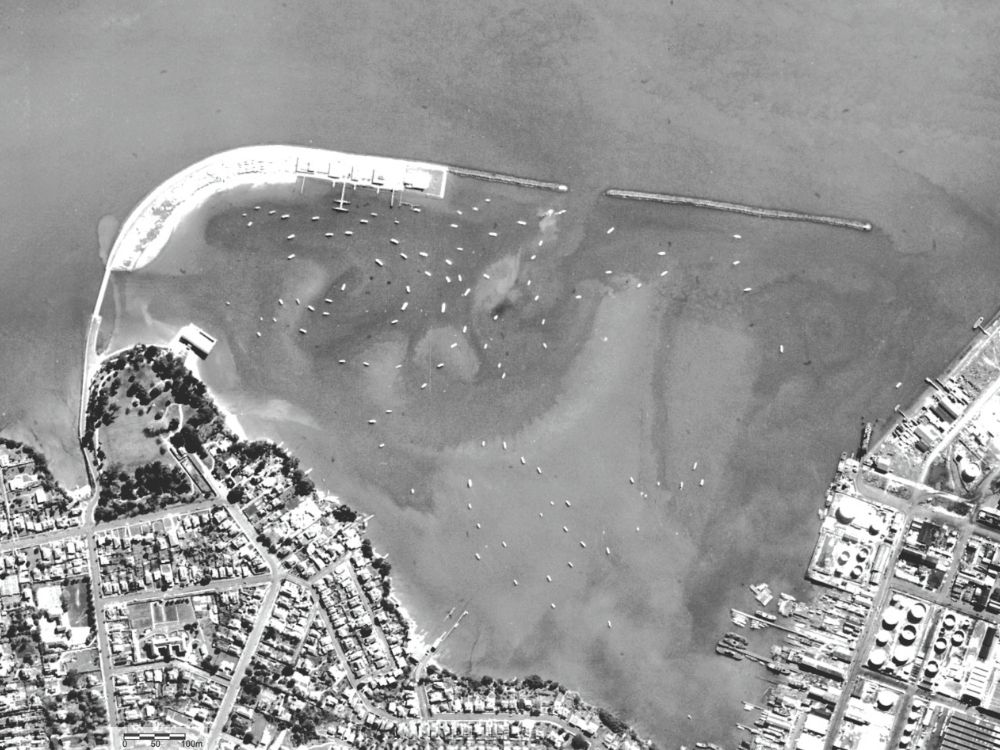
Initially, AHB proposed reclaiming the shallows of St Mary’s Bay alongside Westhaven Drive and concreting it over to create another hardstand area.
Local residents had other ideas. Several of them, including a number of successful, intelligent and visionary professionals had previously established the St Mary’s Bay Association Inc (SMBA). Concerned by the AHB’s concreting plans, the SMBA formed a committee and drafted a proposal to construct a considerably bigger marina by dredging the shallows alongside Westhaven Drive and significantly expanding the marina.
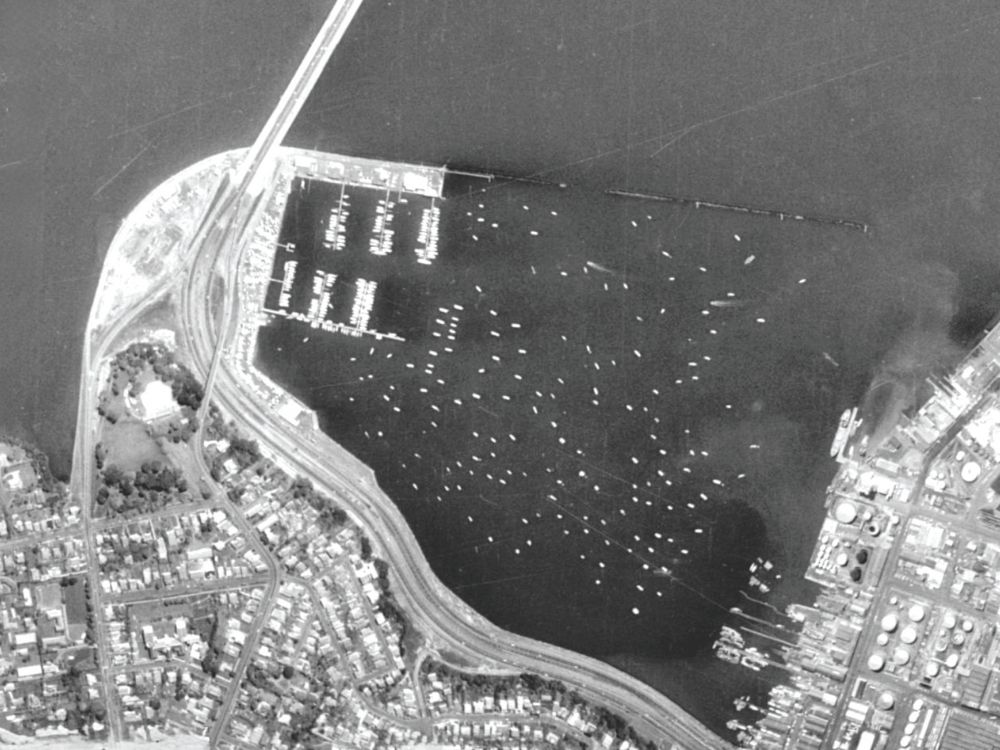
The AHB enthusiastically approved the proposal, and planning began with input from the SMBA and potential marina berth holders. Around the same time, in 1979, the AHB established the Auckland Harbour Board (Westhaven) Vesting and Empowering Act. This Act granted the AHB the boundaries, management, and powers over the Westhaven Precinct (the marina boundaries), the over-seabed berths, and the common land areas.
The AHB managed the design and construction of the marina by removing and reconfiguring the original 312 berths, so that the north side of the marina accommodated Piers A to J, while the south side had Piers K to the west of Pier T. Finished around 1982, it provided Westhaven Marina with more than 1,100 berths.
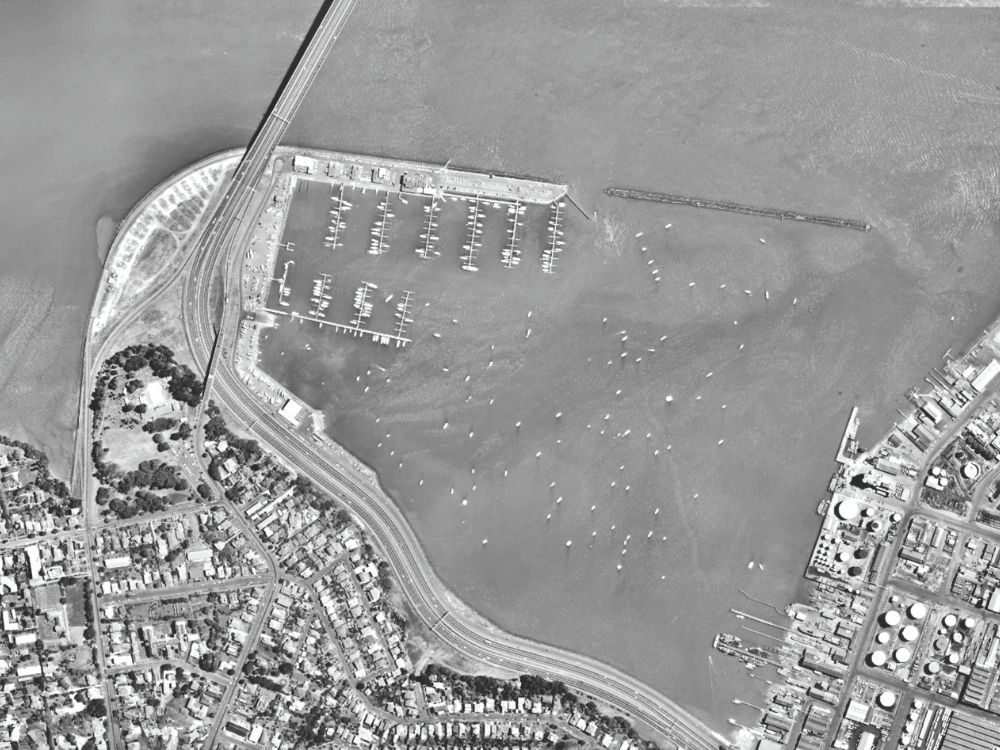
This second stage of the marina was funded by the AHB issuing debentures (a type of long-term loan often used for infrastructure projects) and by potential marina holders purchasing long-term licences called Berth Entitlement Units (BEUs) to occupy their berths. These licences were granted through the Westhaven (Existing Marina) Trust.
The same approach was used for Stage Three, which was completed in 1987, when the marina was extended from the eastern side of Pier T to Pier Y. Because this occurred out of step with Stage Two, the long-term licenses for the Stage Three berths were issued by a second trust, the Westhaven (Extension Marina) Trust. This third stage increased berth numbers to over 1,500.

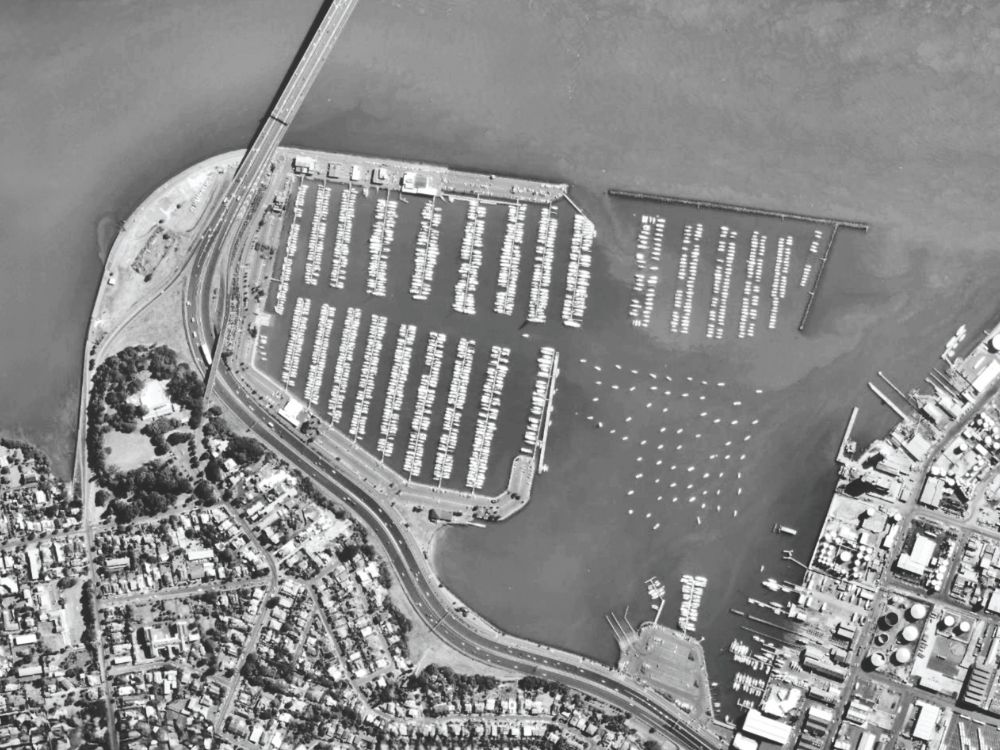
From 1989, Ports of Auckland Limited (POAL) managed both the Westhaven (Existing Marina) Trust and the Westhaven (Extension Marina) Trust through a trustee company, Westhaven Marina Limited (WML). The trustees were five members from POAL, one from the berth-holders association, one from the public, the RNZYS Commodore, and one representative from the three other Westhaven yacht clubs in rotation.
The popularity of Westhaven Marina and its influence on keelboat racing grew throughout the 1980s. Sailors, designers, and boat builders refined their skills racing from Westhaven, with many achieving success on the international stage. For many, Westhaven was considered the centre of New Zealand keelboat racing.
During the late 1980s, the Fourth Labour Government, led by Prime Minister David Lange, implemented numerous major structural changes to state assets, including the privatisation and disbanding of the elected Harbour Boards.
In 1989, AHB was corporatised to become Ports of Auckland Limited (POAL), which purchased all of AHB’s assets for around $250 million. POAL’s shares were listed on the New Zealand Stock Exchange, with 80% held by the Auckland Regional Council (ARC) and 20% by the Waikato Regional Council (WRC).
Port-related assets, such as wharves, cranes, and storage sheds, were included in the sale to POAL, while non-port-related assets were given to the local councils.
Initially, the plan was to transfer Westhaven Marina’s ownership to the Auckland City Council (ACC), but POAL objected, arguing that Westhaven Marina was a port-related asset essential for future port expansion. POAL ultimately took the matter to the Privy Council, successfully securing full control of Westhaven Marina. At the time, it was reported that POAL had paid $11.4 million for Westhaven Marina. In 1993, the WRC sold its 20% stake in POAL on the open market. At one point, the ARC considered selling its POAL shares, but the proposal was defeated by concerned stakeholders working behind the scenes.
Early in their ownership, POAL secretly tried to develop three-storey, ‘mixed-use’ buildings on Westhaven Marina land, a term that would have allowed high-rise apartments. Thanks to concerned stakeholders, this deception was uncovered, and POAL abandoned those plans.
POAL continued exploring development options, including that of the breakwater land beneath the yacht clubs. As mentioned, four yacht clubs had premises there, all on month-to-month leases. Aside from the lack of security over their tenure, this prevented the clubs from borrowing against their buildings for repairs or upgrades.
The RNZYS secured an 80-year lease for their clubrooms; however, the other three clubs were only offered a 20-year lease, which was unfair to them. It was only after legal representation that the PCC managed to secure an 80-year lease. It’s believed the other two clubs later succeeded in obtaining similar leases.
There is evidence that, around 1990, POAL planned to merge the three smaller yacht clubs into a single building. This would have allowed them to develop the three now-unused sites into more profitable ground rentals. The idea was put on hold, but not abandoned, when the scheme was uncovered by concerned stakeholders.
In 1995, POAL issued a prospectus to sell marina berths under a new 32-year lease expiring in 2026. It’s believed that this was a one-off capital-raising effort by POAL.
Fast-forward to early 2004, and POAL has re-licensed several hundred berths until 2026 and 2029. With the long-term license proceeds pocketed, POAL decides that Westhaven Marina is no longer required and announced plans to put it out to international tender.
That caused an uproar, worsened by rumours of a potential offshore buyer. POAL pushed back against the outcry, arguing that, as a listed company, it was not required to conduct public consultation for the sale of its assets.
Stakeholders responded promptly. Some stakeholders called for a moratorium on the tender process. Another group, which included representatives from the RNZYS and the Westhaven Marina Users Association (WMUA), with support from other yacht clubs, established the Westhaven Charitable Trust and submitted a tender. They put considerable effort into their submission, including arranging a valuation and securing funding.
Another group of concerned and passionate stakeholders, led by Ron Copeland and including Fred Collie, Jake Ryan, and the late John Beck, strongly advocated for transferring Westhaven Marina to the ACC. This group convinced Mayor John Banks of the ACC and Prime Minister the Hon Helen Clark of the public’s outrage at the idea of offshore ownership.
To cut a long story short, this group, along with Clark, Treasury, and Banks, facilitated the sale of Westhaven Marina from POAL to the ACC; see sidebar. This was celebrated at the time as the most significant change in Westhaven Marina’s history. Copeland and the group that initiated it deserve every accolade.
The final act in the port’s financial shenanigans took place in 2005, when Auckland Regional Holdings (ARH), on behalf of the ACC, repurchased the POAL shares, effectively restoring the port company to public ownership.
|
SALE AND PURCHASE AGREEMENT
A summary of the S&P agreement dated May 20, 2004 states that POAL sells both Westhaven Marina and Hobson West Marina to the Auckland City Council (ACC) for $46 million, with the Crown topping up the sale price to $54 million. The $8 million shortfall in the Crown’s coffers was written off, which we will examine more closely next month.
As a condition of the deal, the ACC agreed:
The agreement granted the ACC the right to sell or license marina berths, sell non-core assets (excluding land), enter into management contracts, and charge reasonable fees for access to the public launching ramp(s).
Additionally, all parties agreed that the crucial coastal permit governing rights to the seabed beneath both marinas will transfer from POAL to ACC once necessary government rule changes are implemented.
|
Sources
The writer sincerely thanks all the stakeholders who provided detailed knowledge and high-quality research for these articles. Some have been tirelessly defending Westhaven Marina for decades. Most preferred anonymity, which we have respected.
Numerous requests were made to both Westhaven Marina and Auckland Council for face-to-face interviews, but all were declined. While Auckland Council provided considerable material, access to other information was denied.
Further information about Westhaven Marina can be found here: