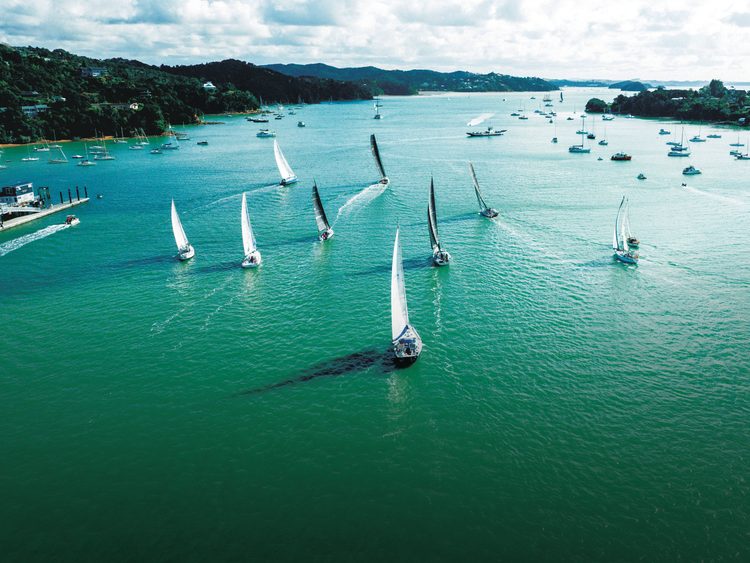
The 2026 Solo Trans-Tasman Yacht Challenge was always going to be a test for sailors. But despite the event’s reputation for toughness, a large fleet left Opua in the Bay of Islands in late May, racing to Southport, in Queensland, Australia. Not all of them would reach the finish line.
It’s a challenge incomparable – setting out to do the Solo Trans-Tasman race. Something most of us sailors would hardly think about.
So what were the innermost thoughts of the sailors during this year’s crossing?
‘The most dangerous thing for ocean or coastal cruising sailors, is a set deadline date for departure.” An oft-repeated maxim, that finds its proof out at sea. For the weather cares naught about your itinerary, or your intentions.

But races have a schedule, a fixed start date. The byline on the race’s social media pages: “The Solo Trans-Tasman Yacht Challenge is a 1200nm single-handed ocean race across the Tasman. In 2026 the 15 competitors will start at midday on Saturday 30th May from Opua Cruising Club, NZ and will finish at Southport Yacht Club, Australia.” Sounds neutral enough. But then, there’s that truism… and Autumn’s weather in the Tasman Sea.
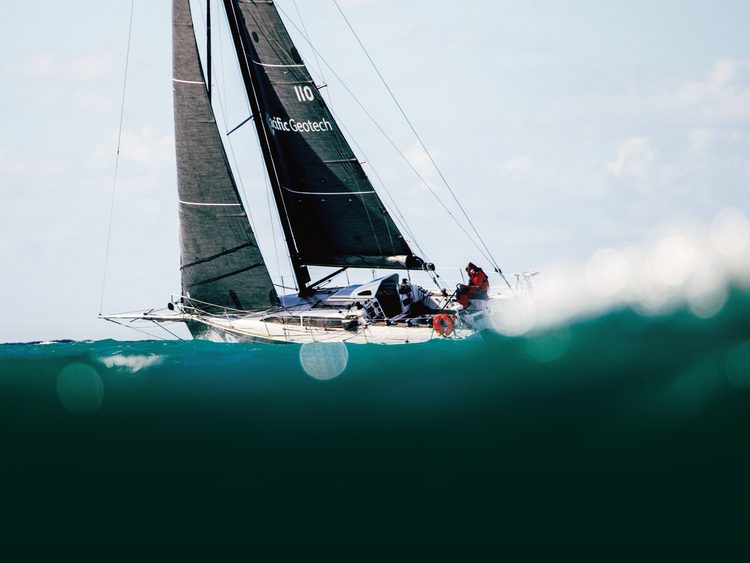
And so it happened this year for the Solo TransTasman Challenge. Saturday 30 May, the date for departure, had the fleet heading out into some ugly weather. The kind of weather a cruising sailor with no pressure on, would have decidedly avoided. The kind of weather solo race participants must head out into.
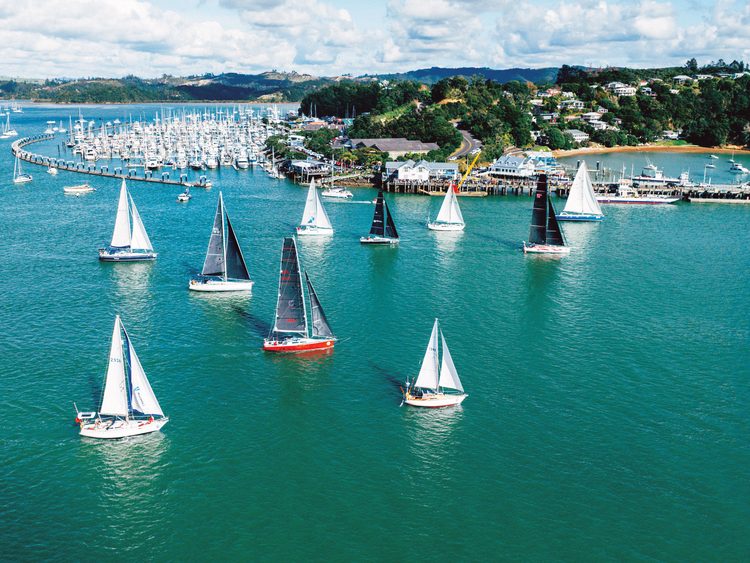
Forty knots NE in the notoriously confused seas around the northernmost part of New Zealand – North Cape, Cape Reinga, the Three Kings Islands. Which hit the fleet on the first night, after a picture-book start in the sheltered inlet at Opua. But after leaving the Bay of Isands, the Tasman gets serious for the solo fleet. And quickly. And adds new versions to the many pithy epithets that have been flung at if from the sailors’ perspective over time.

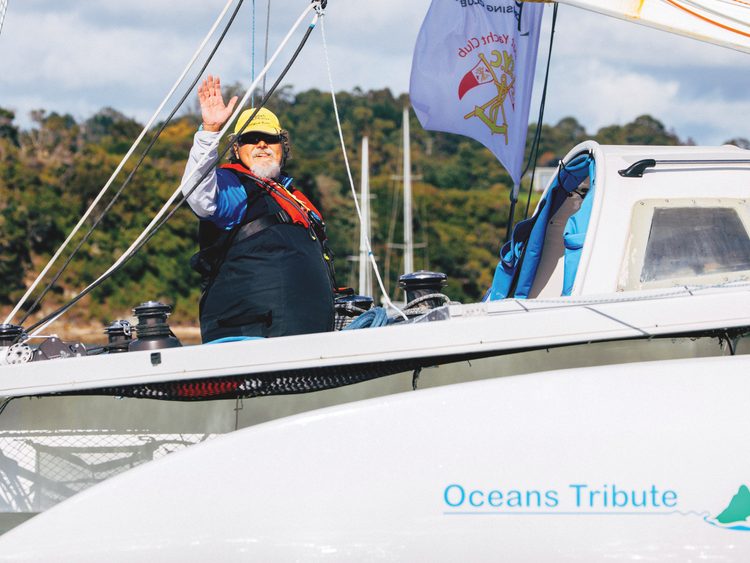
“Brutal,” that’s the laconic assessment of Guy Chester, at the helm of the race leader, the well-found, seaworthy trimaran Oceans Tribute, a 13.85m Lock Crowther design. Putting that in context, he adds: “The 36 hours from North Cape until well past the front were the most brutal Oceans Tribute, and I, have had in over 40,000nm and our circumnavigation.”
Previously he had been more jaunty, almost poetic: “Cockpit is a unique salty jet spa… after all the sail changes rope spaghetti… so sorted that out, then Soup!”
“Then wall of wind gusting well over 50… I saw 55 but that wasn’t the biggest. Struggled to get main down having run off. The wind settled to a mere 40. I dropped staysail tied in its reef and hoisted. All with bows punching into/through the swells doing over 20 knots.”
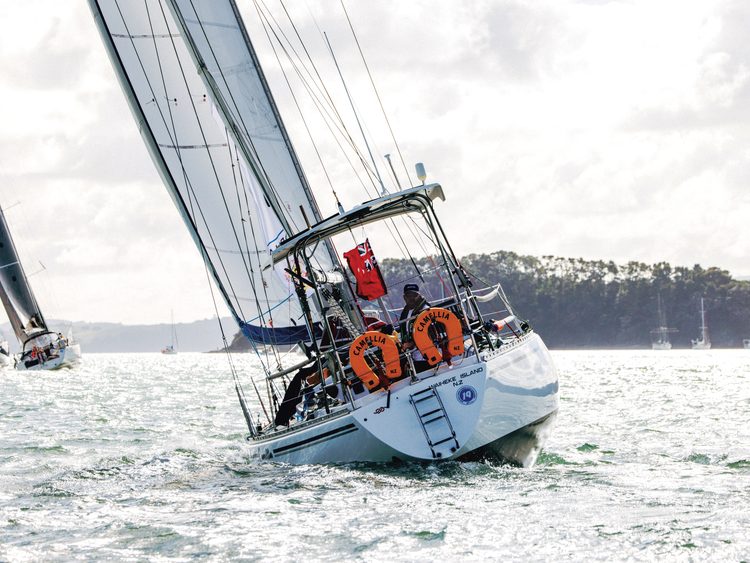
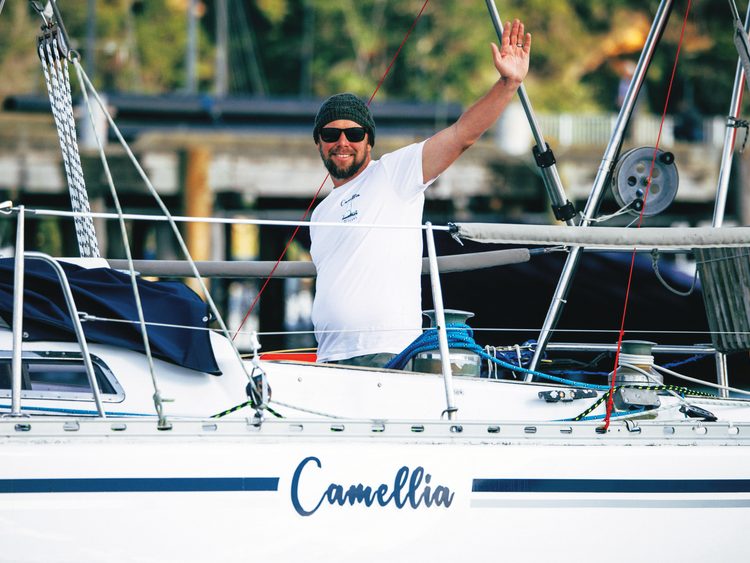
And I’m thinking of early morning bus-ride conversations with my neighbour, Ben Ball, who in his day job drives the Travel lift at Orams Marina at Westhaven in Auckland. He’s entered the race this year as a joint 50th celebration. His 50th birthday – and that of his family’s boat, a Cavalier 36 named Camellia. Those conversations now seem innocuous, almost academic, certainly avoiding the real character of the Tasman – when it gets ugly – like a monster, a wild thing lurking in our own blue backyard.
And you can allow for imprecise grammar and punctuation in the sailors’ text messages.
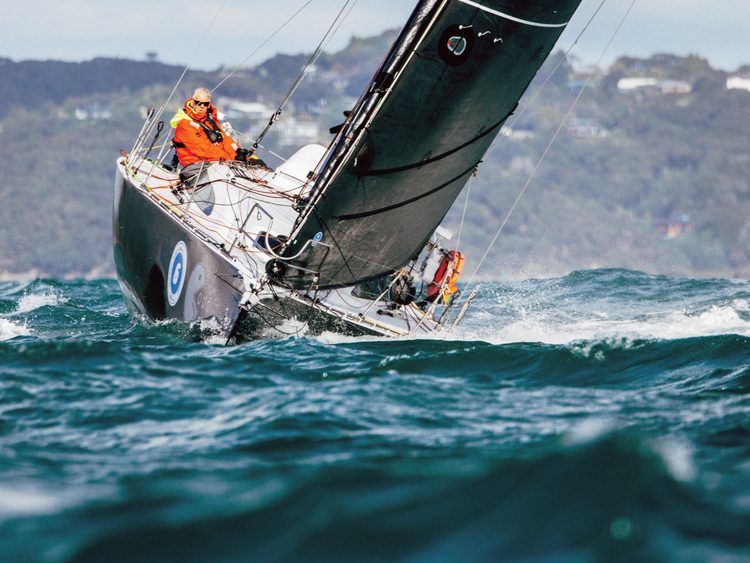
That’s when you remember that Tasman Sea, in the words of a legendary circumnavigating sailor, “has square waves.”
The area just above of New Zealand’s northernmost capes exemplifies this, this tortured sea state building on the Māori belief that this is the realm of souls who have departed the land from their casting-off point on the cliffs near Cape Reinga. Square waves. An unsettled world. Gales. The sailors in the Solo Trans-Tasman experience that exactly, but they must keep going. Guy Chester in Ocean’s Tribute, for a while under bare poles, and still in the lead. (This contributed to his early course well south of the rhumb-line, and him eventually sailing the longest distance to get there.)
They keep going. But some cannot.

Early issues
Water ingress. Sounds bland enough. But in the punching waves, in the 40 knots, in a keelboat responding to gravity – it’s suddenly deadly serious.
Early on, Graeme Francis, the skipper of Robbery, a Wilson 36 monohull from the first host of the Race, the New Plymouth Yacht Club, finds himself confronting this very scary scenario.
| “Then wall of wind gusting well over 50… I saw 55 but that wasn’t the biggest.” |
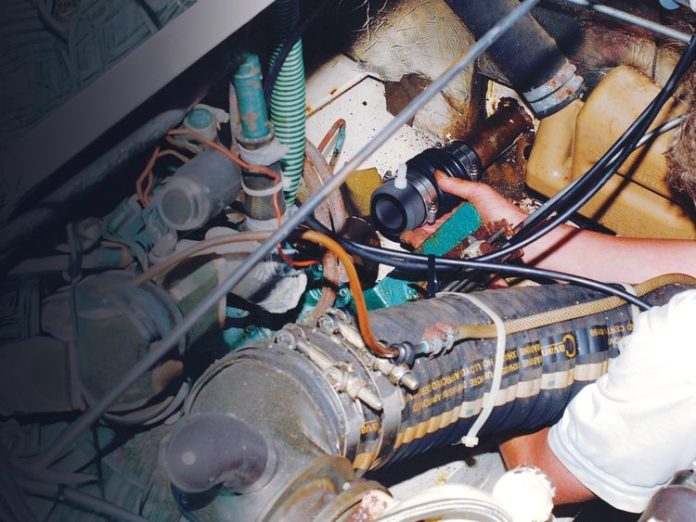
He’s a full day’s sail from nearest land, 30nm north of the Three Kings Islands, and many hours from help, even if it could come in the darkness and 50-knot wind gusts. His boat is flooding, on the way to sinking, and he can’t figure out why. All hatches secured, all seacocks closed tight. His engine looks to be failing and communications are fading.
Francis is exhausted after hours of manual pumping. He can’t find where the water is coming from. He’s thinking, “I may have to abandon ship.”
He recalls later: “At one stage I thought, ‘this is getting a little bit real now.’”
“I got the liferaft ready to deploy if I had to. My God, they’re not light. I also had all my emergency supplies and grab-bag ready, and I was thinking about how I’d have to get the liferaft over the side and get into it if it came to that. It wasn’t going to be a pleasant job.”
He’s done more than 19,000 offshore miles and has a 40-year association with the race. He makes the awful decision to activate his (EPIRB) and tells race control “I’m turning back.”
The weather is too bad for an aircraft to come. A commercial tanker is standing by to help. Another race competitor, Doug Esterman on the Cavalier 39 Fair Seasons (ironic name!), diverts to see what he can do.

“I’ve done a few miles at sea, and when you’ve done a bit of sailing, you’re mentally prepared for what could happen,” Francis said later in an interview. “In the seven months of preparation for this race, I’d played out thousands of scenarios of things that could go wrong and how I would respond, but taking on that much water wasn’t one of them.
It turns out the anchor has been jolted in its foredeck locker and punched a hole in a bulkhead. That’s where the water is coming from – a hidden source.
Interestingly, he recounts his main emotion is not fear – it’s curiosity. Where the hell is this water coming from? I must find out.

“I was just working through things systematically in my mind.”
One he’s safely moored back in Mangonui Harbour, assisted by the Coastguard vessel Houhora he has time for more reflection:
“I’ve done the race twice now and got away with it this time.”
And – “I think my single-handed offshore sailing days are over. But then again, I’ve said that before.”
Getting on with it
Soon after Sunday’s pounding, the everyday (if you can call it that) work of the race continues. As demonstrated by Sharon Ferris-Choat’s Facebook post from aboard her Verdier 40 Vixen Racing:
| Update 10 | Monday 1st 1607hrs Beginning of Night 3 Takeaway points
|
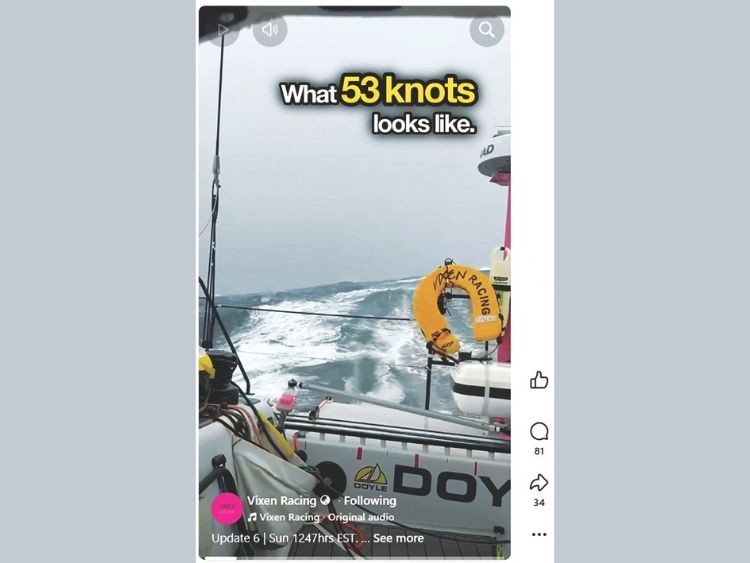
She’s showing herself extraordinarily adept at social media comms even while otherwise engaged in extreme sailing! Mostly, the male skippers in the race are more circumspect.
Sudden calm. Short-lived
After the pounding, the conditions change dramatically.
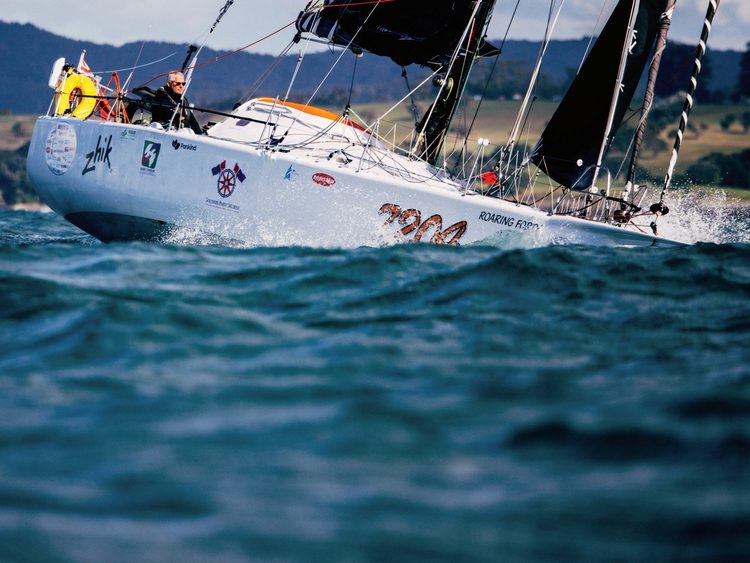
Kevin Le Poideven on his Lutra BOC Open 40 Roaring Forty paints the purgatory of the sudden deficit of wind: “Three knots of unstable breeze and I can coax about 1.5 knots boat speed in the right direction. It’s painfully noisy with creaks, groans and bangs from the rigging and sails. All you want to hear is the boat go quiet when the breeze is strong enough to fill your heavy sails, and then you wait in anticipation. Is this just a puff, or is this the breeze that will get the water lapping the hull as you finally break free of the wind hole? At least the air show was entertaining.”
Then the wind returns – over 30 knots.
Kevin Le Poideven keeps busy on Roaring Forty. He’s trouble-shooting a pump problem in the (again) rising seas. He’s also demonstrating that unique brand of singlehanded-sailors’ humour.
“Constant 37-knot gusts, 40 in the puffs, short-period two-metre swell.
“My happy angle is at 7 knots.
“Any faster and launch velocity increases slamming on landing.”
Guy Chester is more measured, reporting from Oceans Tribute: “To finish first, first you must finish. Just getting through the next 18 hours is the aim. No speed records – just keep the boat in one piece and moving.”
He executes a ‘grandpa gybe’ to avoid Balls Pyramid, the world’s tallest volcanic sea stack, just southeast of Lord Howe Island, in the dark. Curry for dinner, a mandarin, some chocolate reward for doing a good reefing of the sails.
Oceans Tribute is now 366nm from the finish; perhaps set to arrive at Southport the next morning.
Calm, collected
Ben Ball on his Cavalier 36 Camellia has a positive view, just before his halfway mark: “Awesome sailing today. Blasting along at 7 knots. Catnip and Nautilass are just behind me. Both much faster boats so that’s pretty cool after four days of racing. The ocean is staying outside the boat today.”

Autopilot – best friend
As autopilots have become more reliable, more intelligent, they have morphed (in emotional terms) from being the single-handed sailors’ enduring frustration, to best friend. They often are given names.
This post from Sharon Ferris-Choat aboard the fastest monohull Vixen Racing, exemplifies this relationship. Wed 3 June, 0330hrs: “So, we’re running away from this lighting thunderstorm down here. As fast as we can possibly go. Tui [her autopilot] is doing an incredible job, and I think the fastest way out of this one is actually to keep going so it just goes behind us. It’s been a really rough night. I hope everyone’s okay, because they’re gonna be in this stuff for longer. And uh yeah, it’s pretty, uh, intense out there. This is on a par with any Sydney-Hobart I’ve done…”
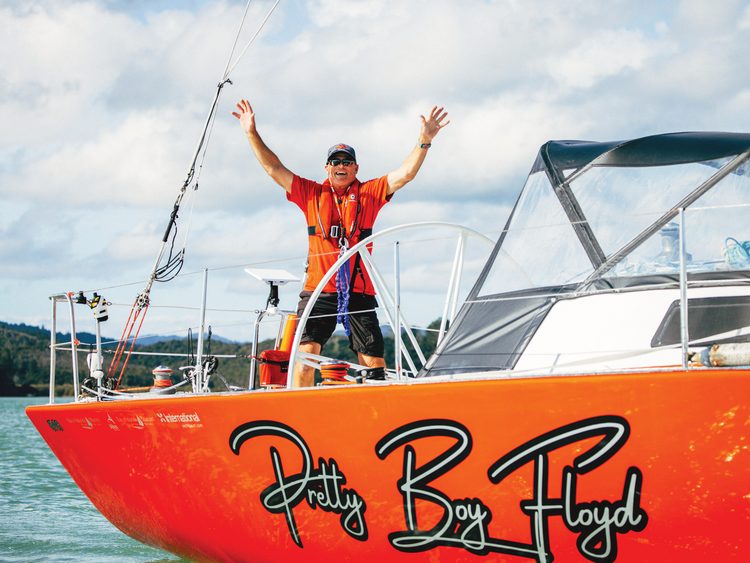
I ask Bill Kidman, who was forced to retire when his boat Pretty Boy Floyd broached and he was thrown mercilessly across the cabin, injuring his neck (which had just recovered from some serious surgery). What’s your self-steering’s name? “Kevin.” What did you say to him after the broach? “Can’t repeat it. Unprintable.”
Bill decides – given the fragile nature of his neck, and the nerve damage he’s sustained – that “discretion is the better part of valour.”
“The boat was going well,’ Bill says, “But I have to preserve myself. Still, I’m absolutely gutted.”
Kevin does help get Bill home safe and sound. Their relationship appears back to good humour. Overnight June 3 Sharon Ferris-Choat has an epic night. Vixen Racing is moving comfortably in 12 knots of breeze with a single reef and the J2 when a squall hits without warning. “The next thing I know we’ve got 47 knots and torrential rain and the only thing I could do was bear away.”
She bears away, furls the J2, gets the main under control, hoists the J3, sorted it all out – and wind dies. “It’s rough out here, it’s tough, the squalls are coming from everywhere and it’s on the wind.”
In the dawn she regroups, eats something, tries to get dry. “It’s bloody freezing too.”
“Still in the fight,” she says. Too right.
Shear
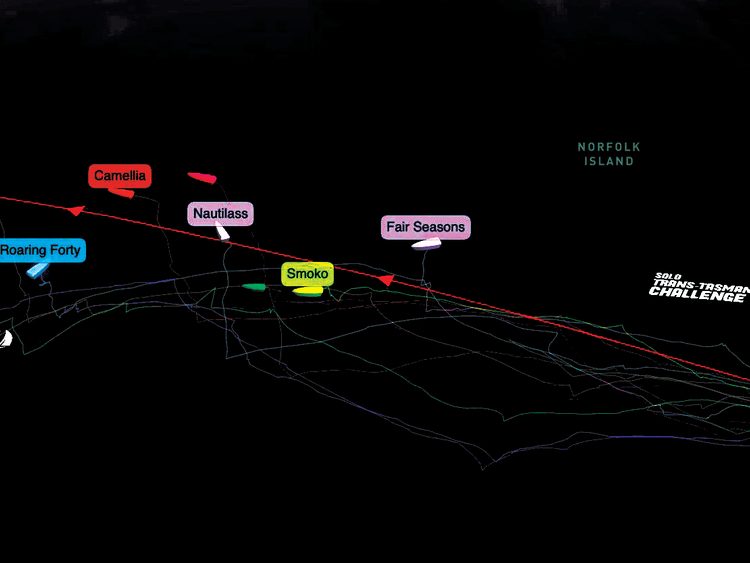
Land ahead! But not the land in the plan. Kevin Le Poidevin has to detour to Lord Howe Island after a rigging shackle suddenly shears aboard Roaring Forty, instantly endangering the rig of his experienced racing yacht.
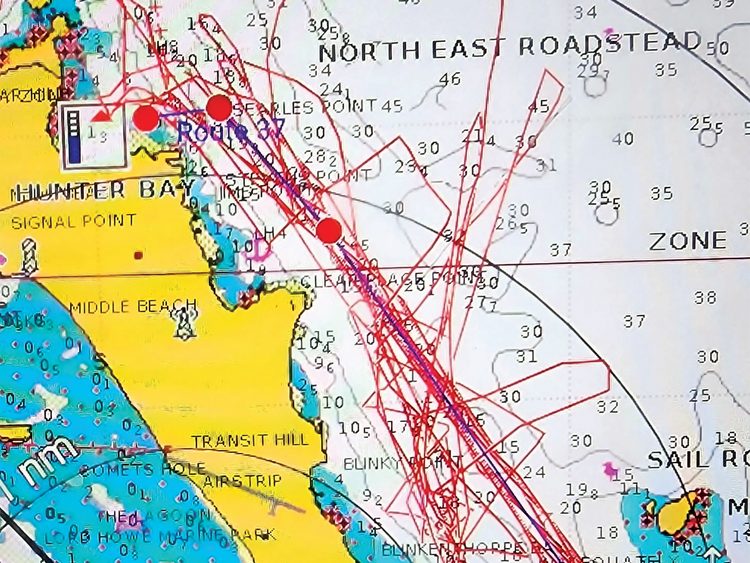
Once he arrives there, he adopts a ‘Drift – sleep – motor’ routine to hold station near the island, before he can attempt the tricky passage to safe anchorage within the reef. Within this, he still endures 36 sleepless hours keeping away from the hard bits.
His terse Facebook post reveals the strain: “Focus and serious commitment to see this plan through and not fall asleep. Day one was up and back all day no sleep in horrendus condiotions. [Sic] Day 2 conditions moderated and shows my NE drift tracks where I slept then motored back to the start point (0.1 ) and repeated. Quitting lasts forever.”
On land
Let’s spare a thought also for those on land, those with responsibility for the race. I asked Race Director Julie Kidman how she feels about the race.
“Pulling this race together has been a Herculean effort, but I’m immensely proud of how our club, the Opua Cruising Club, stepped up and brought the whole community along for the journey. The crowds that attended the Open Day and lined the wharf for the start were spectacular. Public interest has been phenomenal. We’ve even had non-sailing retirees walking the local coffee shops asking for help to get the race tracker working on their phones so they can follow the fleet. “It’s gutting when a skipper who has invested so much time, effort and commitment is unable to complete the race. I know how difficult those decisions would have been. Every retirement has had its own unique circumstances, but the high standard of preparation by the competitors, combined with the race’s safety requirements and procedures, has so far ensured that every skipper and every boat has remained safe.”
Landfall. Relief. Exultation.
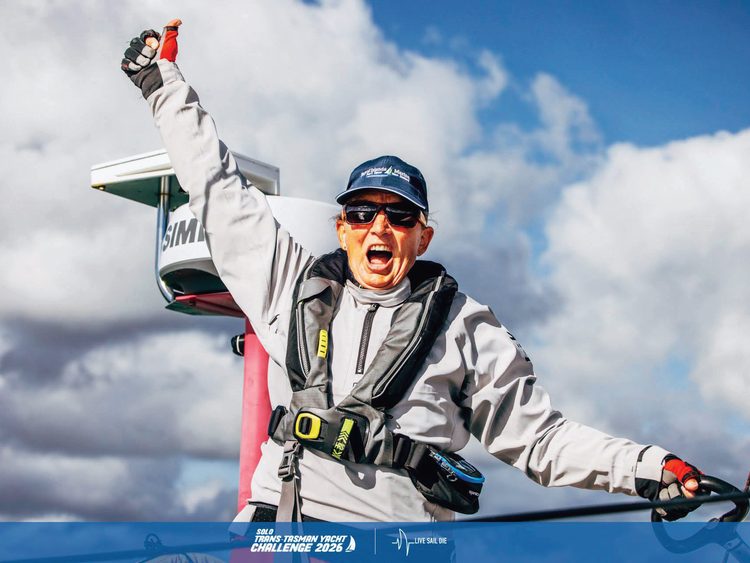
Approaching the Queensland coastline, while surfing 5m waves, Ben Ball nonchalantly bakes a banana bread loaf aboard Camellia. Is this a displacement activity, a bit of simple domestic comfort, after the rigours of the passage? His boat is different to those already finished, which are all much more modern, and mostly (apart from Electron and Sarau) dedicated racers. He’s showing his cruising credentials.
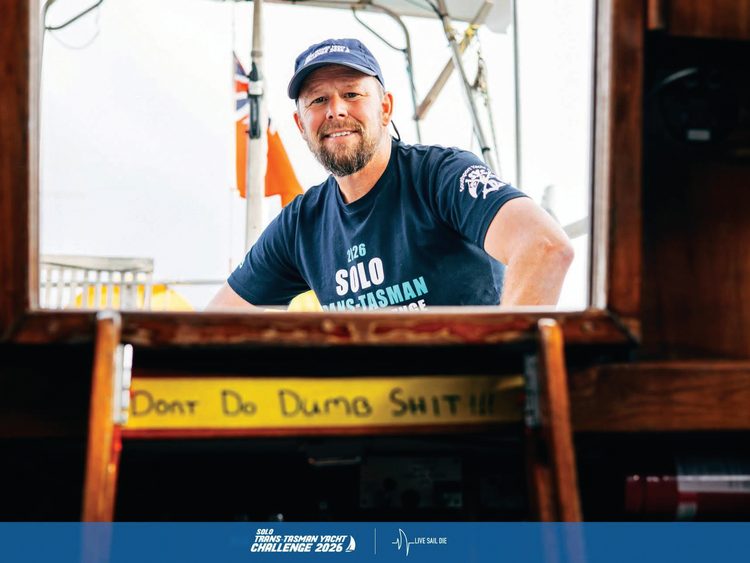
Beyond being a man of the sea, Ben Ball is also quite down to earth, with an equally earthy turn of phrase. When he finds himself, mid-race, bailing half a ton of seawater out of the bilges and saloon floor of Camellia, he notes “I f****d up.’”
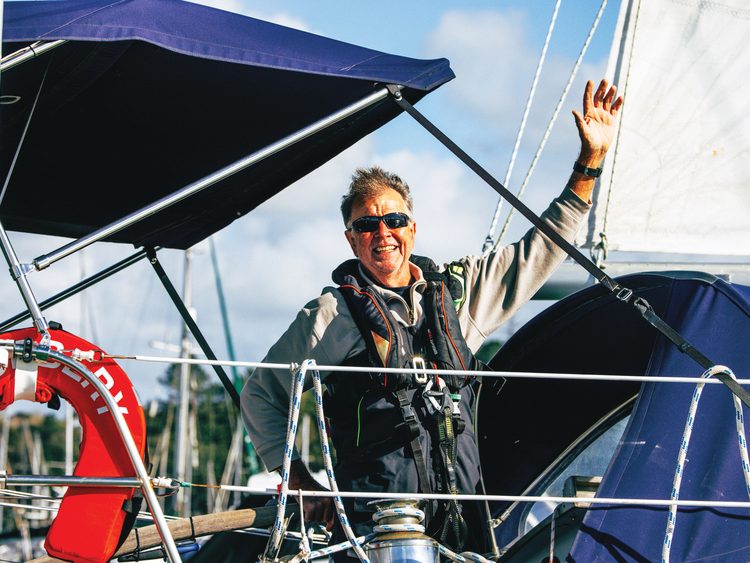
Following with the observation that, once finished, the sea is again back where it’s supposed to be “outside the boat.”
All the while, a handwritten Sharpie notice on gaffer tape, posted on the top companionway step of Camellia before the race started, is admonishing him ‘DON’T DO DUMB SHIT’. One might say setting out to cross the Tasman alone amounts to that.
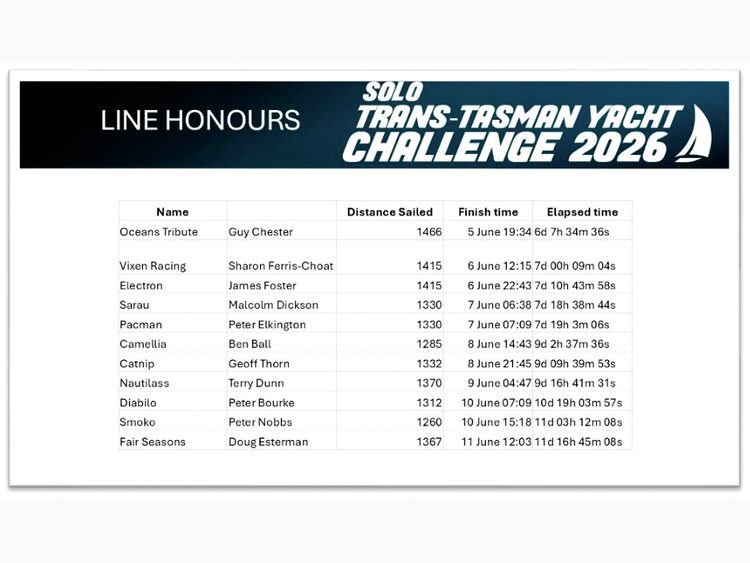
Ben finishes in the impressive time of nine days and two hours. Still some banana loaf left.
Sharon is gracious in her text message about him: “It is a fantastic achievement for Ben 50 and Camellia who has been in the family for 50 years to finish so well, it’s a credit to Ben and his family for a very well prepared and sailed race!”
As for herself, I ask Sharon if she was ever just plain scared. Her response: “It was funny I never felt alone, I was always connected with Tui (autopilot) and with Vixen Racing – we pushed it when it was time to push and backed off when it was time to caution.”
I reckon that answer shows her driven nature, her focus (no space for fear), and her seapersonship.
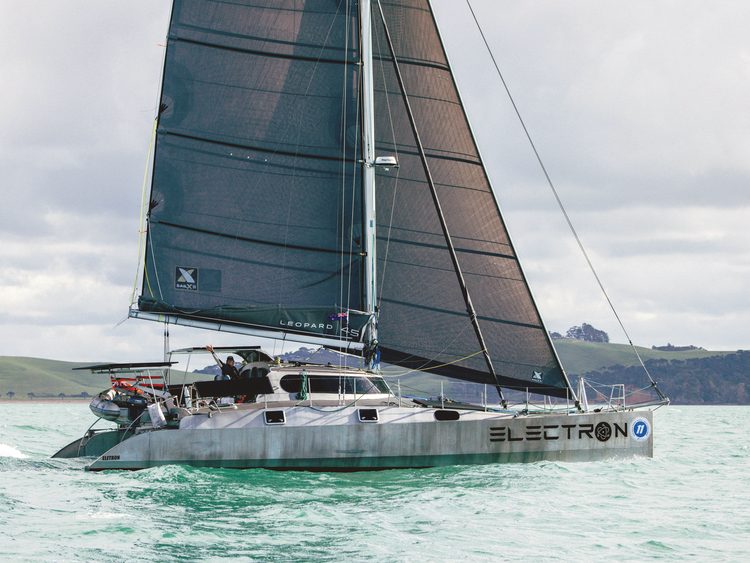
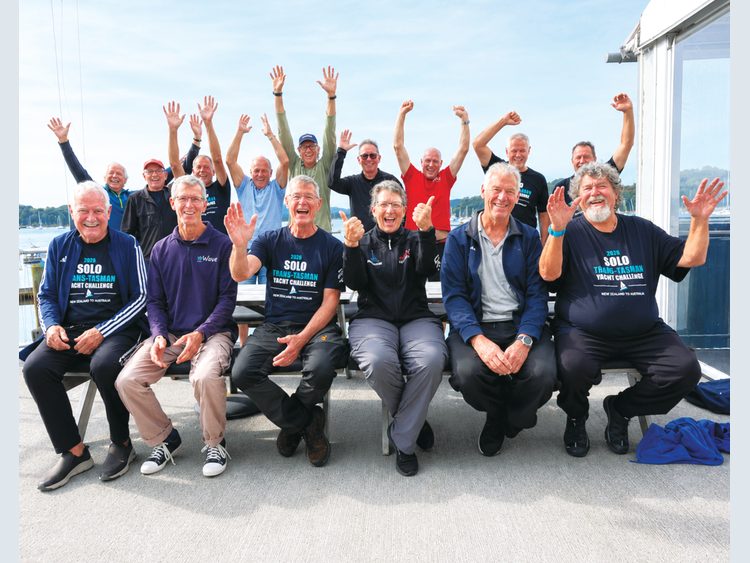
James Foster on Electron is bemused that at 49, he’s the youngest skipper in the race. I suppose this is a function of the kind of event this is – the years of preparation, the wherewithal required, means most competitors will be mature.
Electron is a large family cruising catamaran, with four double cabins. The yacht is notable for being reliant only on electric motors, with battery banks fed by a solar array.
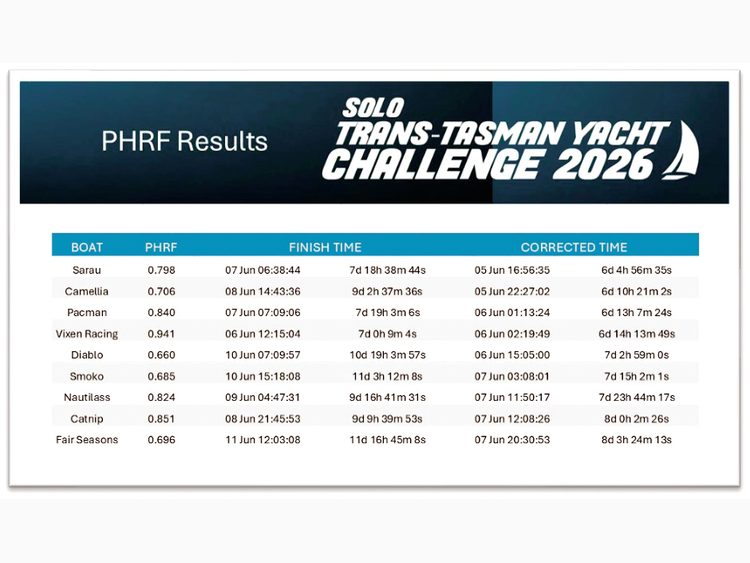
The race comes to a close as the monohulls finish. After Camellia, there’s Catnip seventh across the line (Beneteau 45, skipper Geoff Thorn); Nautilass (Beneteau First 36, Terry Dunn); Diablo (a classic Sparkman & Stephens 29ft design, Peter Bourkes); Smoko (B&G 36, Peter Nobbs); and Fair Seasons (Cavalier 39) , later receiving a PHRF time correction for when skipper Doug Esterman turned back to assist Robbery.
A laid-back postscript is provided me by a text from Ben Ball: “All is going well here. We’ve [meaning, family] have been up to Brisbane, Moreton Island. Now at Stradbroke, heading back down the creeks to the Gold Coast.” He and Camellia leave for the return voyage to New Zealand at the end of June, with his teenage son as shipmate. No pressure this time.
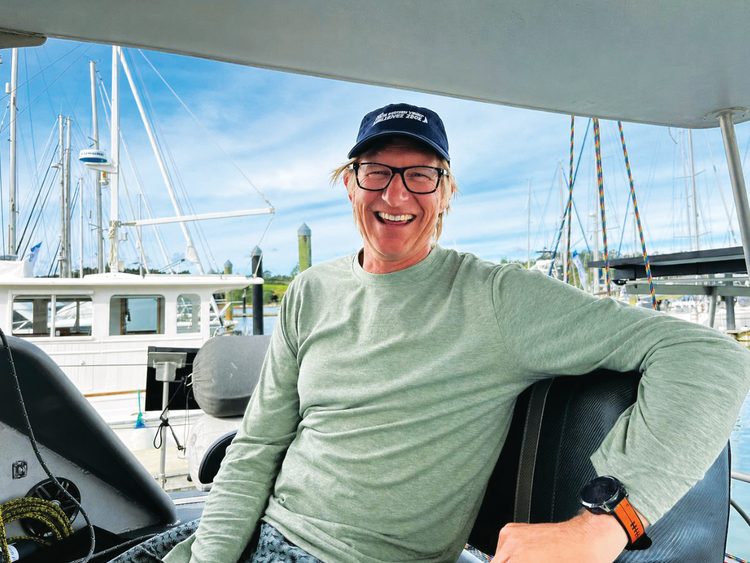
In the arduous race-passage, Electron and Oceans Tribute do much to further prove the seaworthiness of modern, well-found multihulls. The Tasman forced four monohulls to retire from the race. The multihulls all finished.
But the Solo Trans-Tasman Challenge is way more than these personal notes. It’s a quest for adventure – and its companion, adversity – in the epic, old-fashioned way. And it offers the time-proven exaltation of success, when all is overcome.
And that’s why, I suppose, they do it. Good on them.