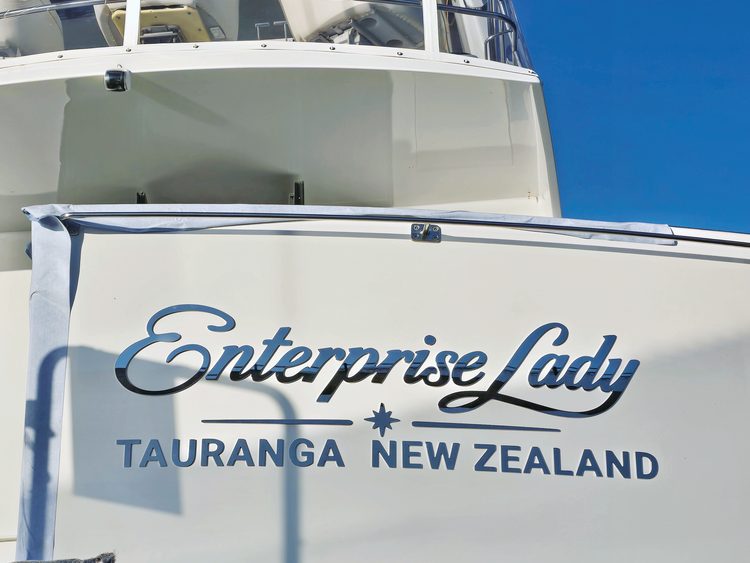
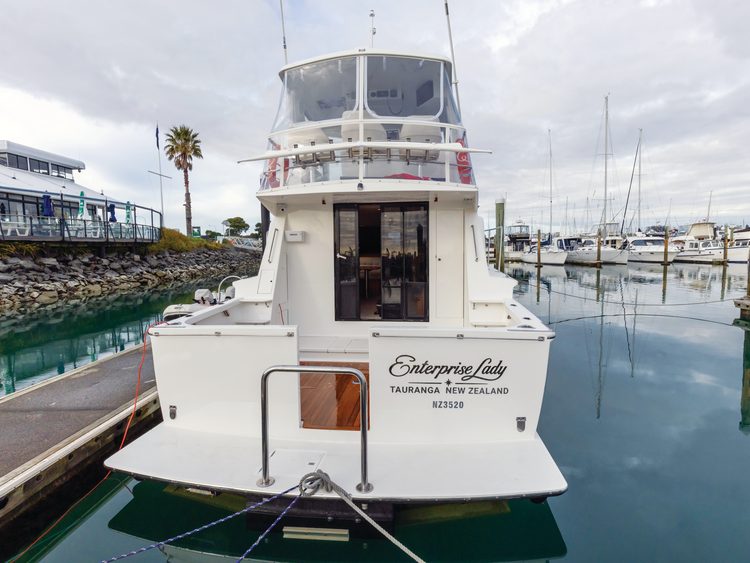
Built by Brin Wilson Boatbuilders in 1986, Enterprise Lady is a Salthouse Sovereign 54 (17.7m LOA). Tauranga’s Chris Hall is her fourth owner – acquiring her some eight years ago. She was jaded and looking a little sorry for herself, he says, but he fell in love and was instantly committed to her rejuvenation.
It would be, his mates warned, a daunting project. That it was. Long but gradual and steady – and inevitably, more costly than initially envisaged. Such things always are.
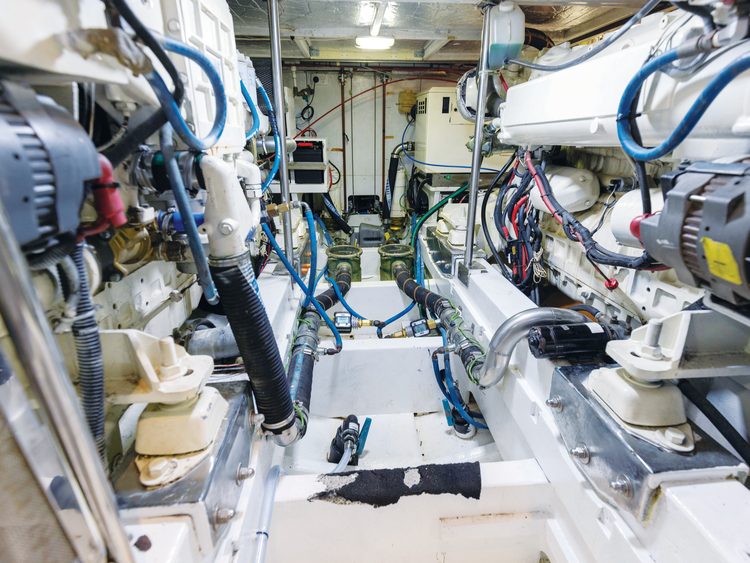
That journey was completed a few months ago and Chris celebrated the milestone with a ‘shake-down’ six-day cruise to Fiji. It’s a voyage the vessel’s tackled before (with a previous owner), the design’s legendary seakeeping characteristics more than up to the task. It was also an adventure the twin 600hp MAN diesels relished, driving Enterprise Lady to the tropics at a comfortable cruise speed of around 9 knots.
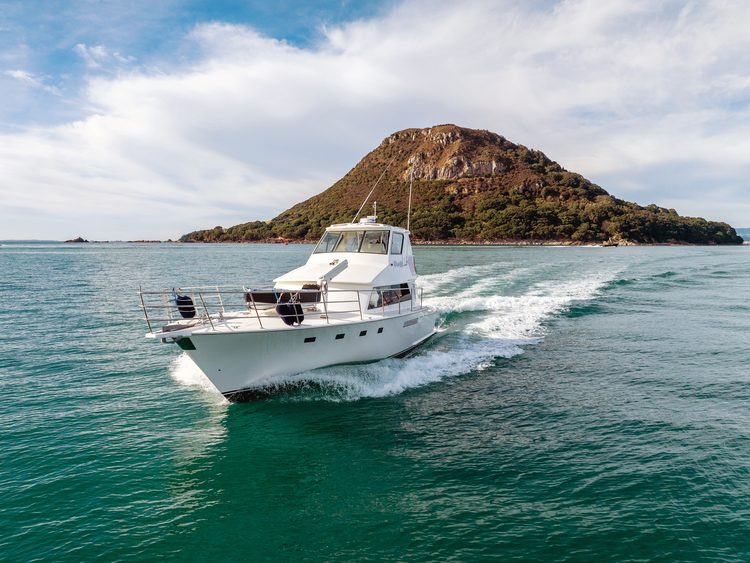
This latest refurbishment is an extension of various upgrade projects that have occurred over the Lady’s life. She received the MAN repower in 1998, with the flybridge (kauri ply) added as part of that revamp. The saloon helm station was shifted to the flybridge, the internal area repurposed as a bar with fridge. A saloon staircase was installed for flybridge access.

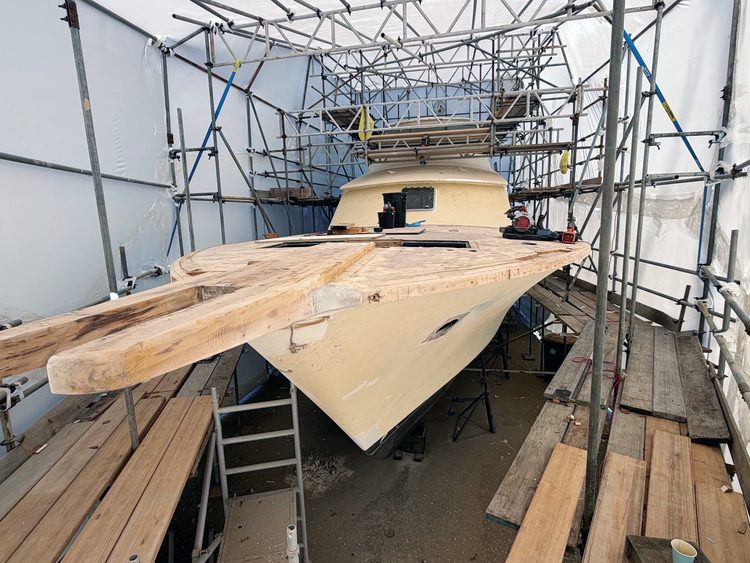
With this recent makeover, though, a subtle redesign of the flybridge’s internal footprint transformed much of the existing bench seating into a large sunbed – a very cool spot for surveying the passing scenery. In addition, aluminium bi-fold doors were fitted to the saloon’s aft bulkhead – creating an easier flow to/from the cockpit.
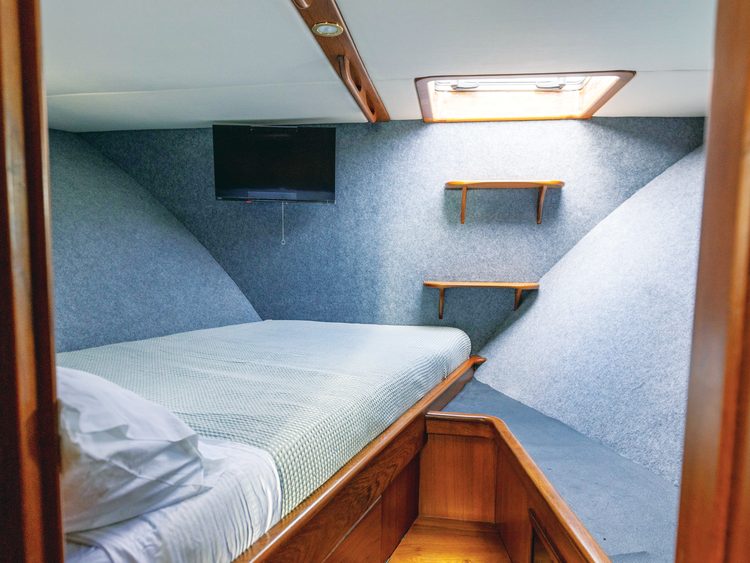
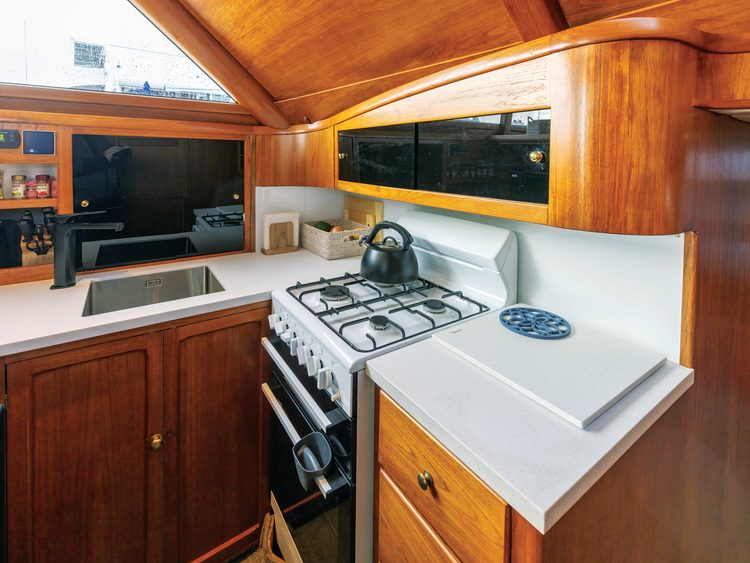
Other than these changes the Lady’s fundamental layout remains the same: accommodation for six in three cabins (two heads), a generous saloon, large cockpit, and a snug galley tailored to bluewater passages.
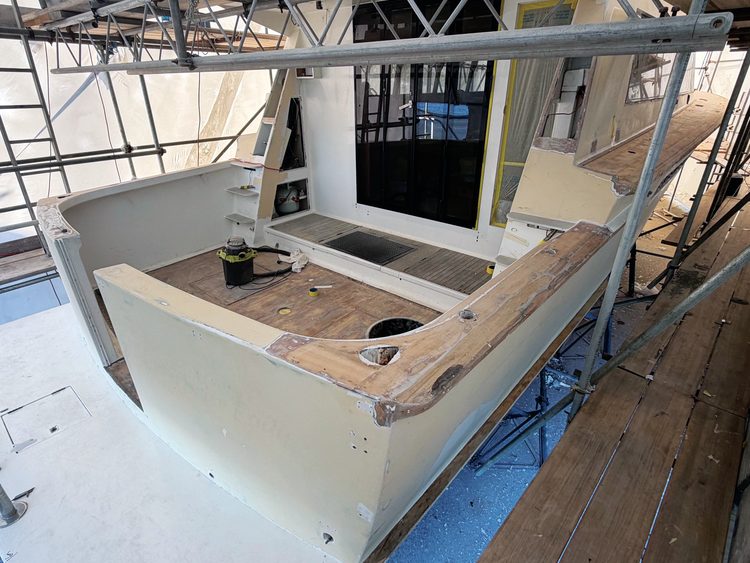
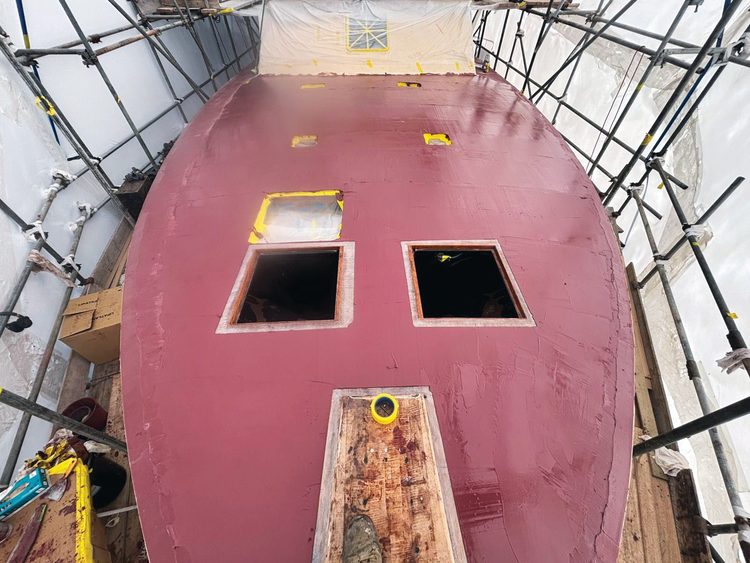
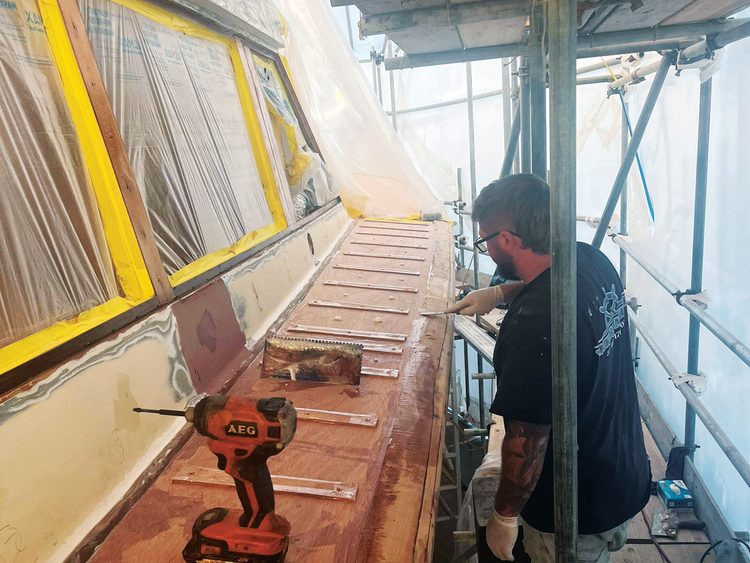
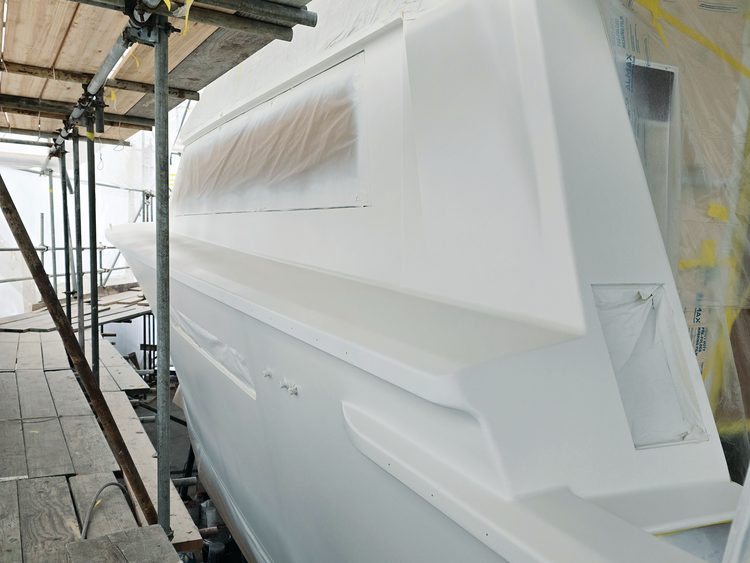
In preparation for the Fiji voyage, the refurbishment project crew (Tauranga’s Vickers Marine) stripped the hull’s outer layers of paint and fibreglass, revealing the bare, triple-skin kauri hull for the first time since she was built. Despite the years, the only rot was a small section around the bowsprit – easily repaired. The hull was then reglassed and painted.
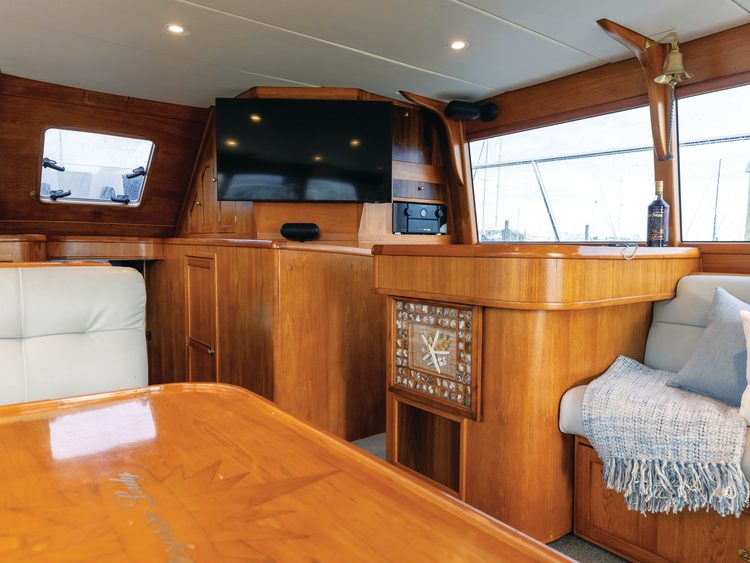
Particularly noteworthy is her teak interior. Resanded and polished, the timber looks as good as the day she was launched – very classic. I like the compass rose and name marquetry set into the saloon table. The teak’s warm tones offset the new vinyl ceilings, carpeting and upholstery – traditional styling that’s complemented by the cockpit’s new teak decking.

Much of the brightwork (cleats, bow rail, windlass) has been rechromed/repolished. The bow rail’s also been extended – it used to terminate at the end of the foredeck, continuing aft as stanchions and stainless-steel wire. It now runs all the way back to the end of the side decks, and the joint between old and new is seamless. Very neat. This change is much safer and offers more security for anyone venturing forward in a boisterous seaway.
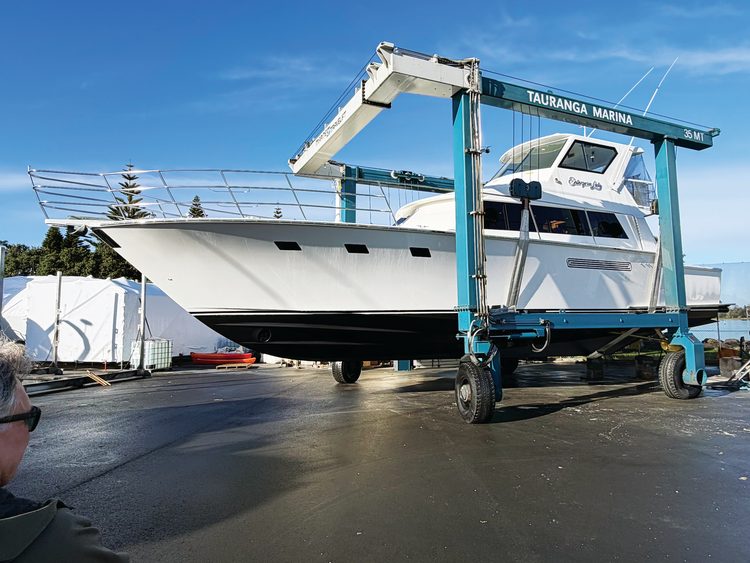
All in all, for a 40-year-old boat she looks pretty damn good.
Electronics
Chris plans to cruise the islands repeatedly and extensively – requiring multiple return trips between New Zealand and the tropics. Part of realising that goal was investing in good technology. While Enterprise Lady has previously been in survey, her electronic equipment was very dated. An injection of Simrad smarts has brought her into the modern era and, fortunately, the existing flybridge console was big enough to accommodate the new kit.
The old chartplotter (a single, 12” model) was swapped for twin 19” Simrad MFDs, supported by a Simrad autopilot, a VHF radio and a joystick for the new bowthruster. Taking full advantage of the new gear’s capabilities, Chris has added cameras to the engine room. The rest of the helm console mainly features analogue MAN instruments but also includes new gauges for the fuel/water tanks. These were previously monitored via ‘sight glasses’, entailing a laborious descent into the bilges…
An ICOM SSB radio came with the boat, but Chris has enhanced the comms with Starlink internet connectivity and a Garmin inReach satellite phone. The Starlink equipment has proved invaluable for weather forecasts and routing. Chris subscribes to three weather modelling services – “and when they all align it brings more certainty and confidence when finding a weather window for a voyage to the islands.”
Keeping food supplies fresh during lengthy bluewater passages also required a radical change to Enterprise Lady’s refrigeration. She boasts two freezers in the cockpit, a fridge/freezer in the galley and the aforementioned fridge in the saloon bar.
The old mechanical compressor wasn’t up to the task of keeping this infrastructure chilled, and it was replaced with eutectic technology. The vessel also received a watermaker (65 litres/hour, servicing the 1,000-litre tank). There is a single shower in the forward bathroom. The old 3kW inverter was upgraded to a 5kW model, and all lighting switched to LED fittings.
Of course, delivering sufficient battery power to keep all this technology happy (a 24-volt system) demanded a more modern approach. Central to the change was dumping the old AGM house batteries for a 600 amp-hour lithium-ion bank (much smaller and lighter). In addition to the engine alternators, the batteries are charged by a 1,200-watt array of solar panels on the flybridge roof. In an emergency, the 8 kVA Westerbeke provides a back-up.
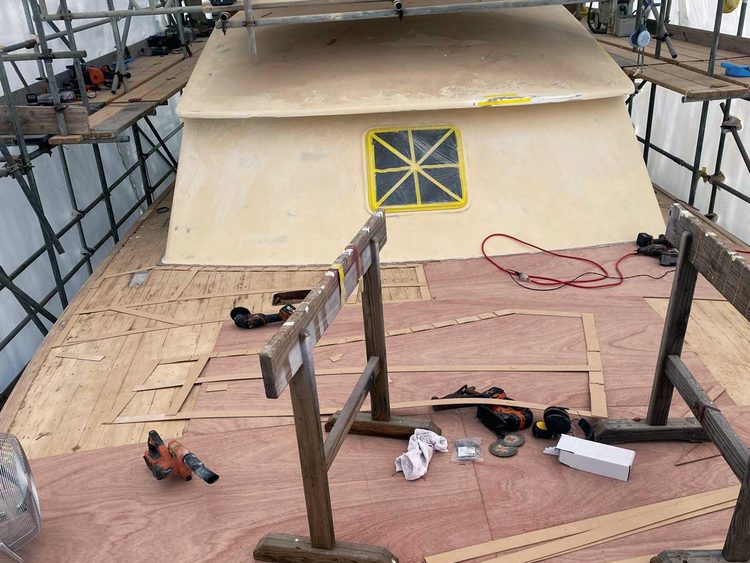
Expansive windows provide plenty of light and great views from anywhere in the saloon, but in preparation for her bluewater programme Chris elected to beef up the windows. The old panes were swapped for 10mm toughened glass, secured in much deeper rebates.
In effect, the ‘modernity’ changes are very subtle. They comfortably equip the vessel for the demands of bluewater cruising, but they’ve not been introduced at the expense of changing the vessel’s overall feel and presentation.
For me, there are two ‘heritage’ items that anchor Enterprise Lady’s place in New Zealand’s boatbuilding legacy. That Chris has retained them speaks volumes about his affinity for classics, and I guess it’s what drew him to the Salthouse in the first place. One is a traditional brass bell – useful for rousing slumbering crew for their watch. The other is a chart table drawer – wide and shallow – for paper charts. Of course, few boaties use these anymore. But together, these items offer some context for the Salthouse’s place in history.
One further item of note: Chris is something of an audiophile and has installed a powerful Marantz amp supporting quad speakers in saloon (about 1000 watts…). I guess the advantage of mid-ocean cruising is that you can crank up the music as loud as you like. Hopefully the dolphins will enjoy frolicking in Enterprise Lady’s bow wave with Abba’s Dancing Queen as the soundtrack.
How much fuel to get to Fiji? The launch carries 2,700 litres – and while the MAN diesels are frugal (together they drink 30 litres/hour at 1,000 rpm, pushing her at a steady 9–9.5 knots), she needed a bit more for the voyage. Three bladder tanks (3,300 litres collectively) stowed on the foredeck and in the cockpit easily met the shortfall.
Perhaps the most intriguing dimension to the Chris/Enterprise Lady marriage is that she is his first boat… He has extensive boating experience but has never owned one – of any size or type.
“I suppose I have a slightly unconventional approach to boat ownership. Most people do things gradually. They upgrade from say, a 10m vessel to a 12m or 15m vessel and then maybe bigger again. I thought I’d cut out the preliminary and intermediate stages – begin with a large old classic and do it up over time. I love old New Zealand boats and am particularly fond of the Salthouse pedigree. It hasn’t all been plain sailing, but I’m delighted with how it’s worked out.”
As are we, Chris. Well done.