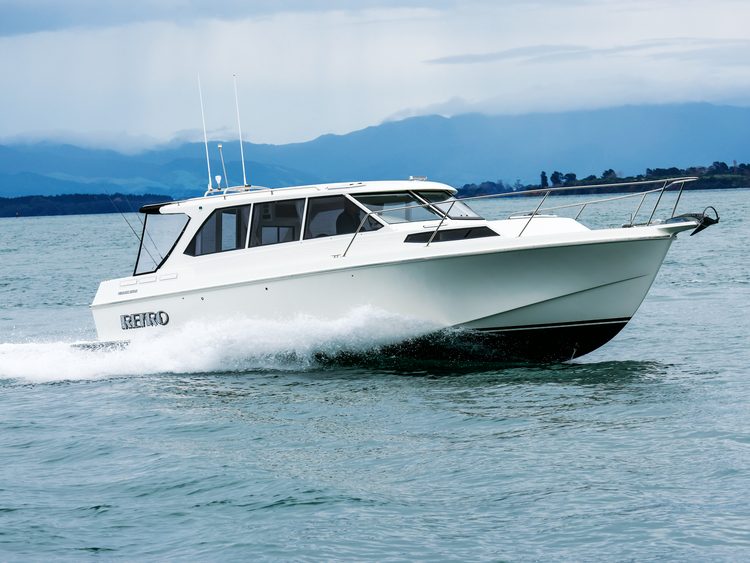
Creativity is a gift and those who are born this way take it for granted. Alan Young’s natural ability was dedicated to boats, especially in particular, yachts of revolutionary design.
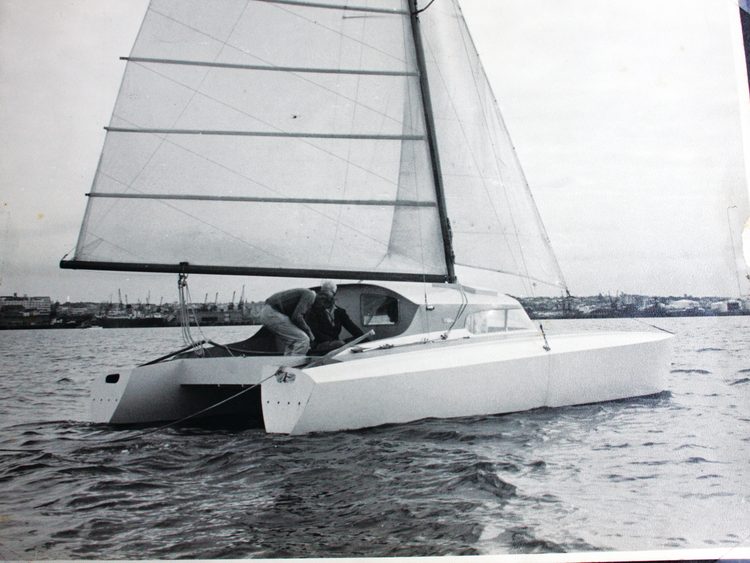
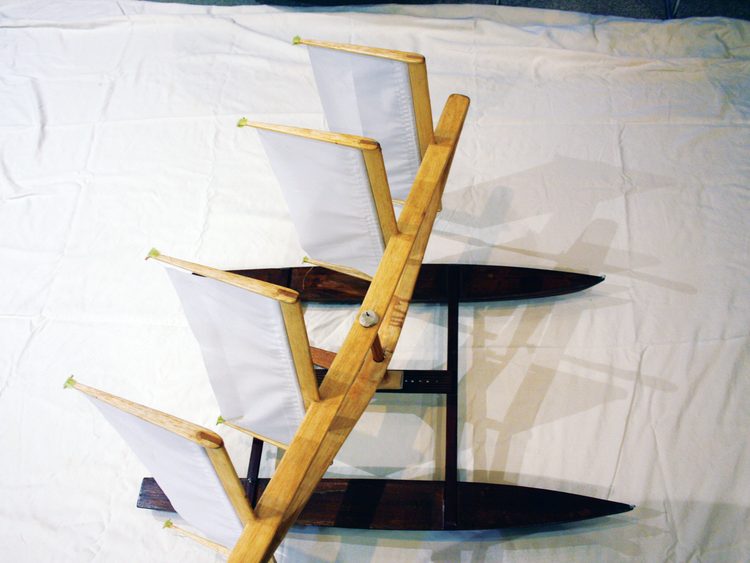
At just 13 years young, Alan dreamed up the ‘swing rig’ catamaran pictured somewhere here. The entire rig of four oblong sails angled to the apparent wind at around 20° for very fast reaching, plus close-hauled performance with the rig centred. He built this model to prove his theory. But when it was launched it took off like a scalded cat faster than the shutter speed of his dad’s camera. Seemingly, Alan’s ambition even then was to design yachts that flew. Scalded Cat would have been an appropriate name for this revolutionary concept, but the design was never built to full size. However, it did stimulate Alan’s leaning towards fast catamarans. In 1953 there were no big sailing cats to be seen on the Waitematā Harbour. So Alan put his creativity to work.
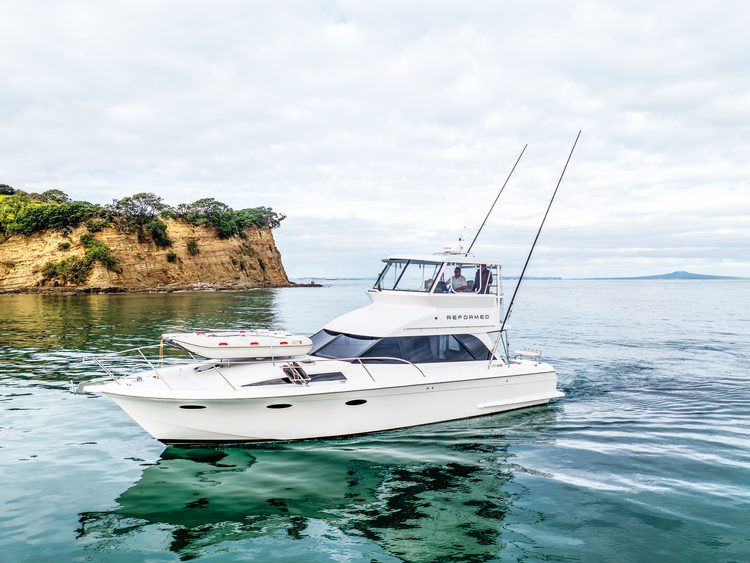
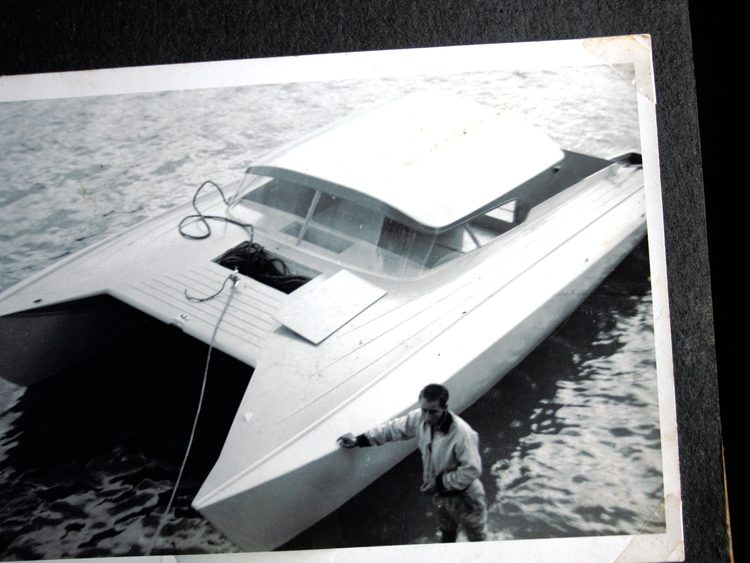
Enter on stage Vitesse – the very first sailing catamaran to appear (or disappear, owing to its performance) in Auckland waters. Alan conceived this design at 18 years old, built her himself, and launched her when he was only 20. This alone was a remarkable achievement for one so young.
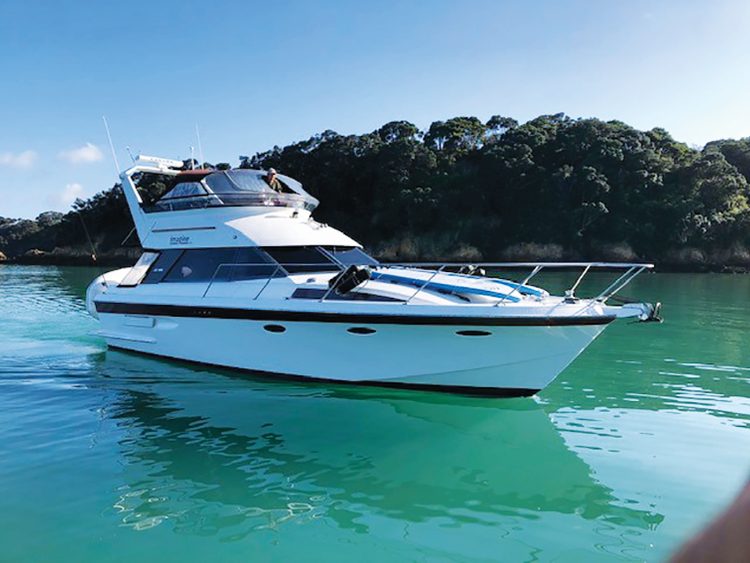
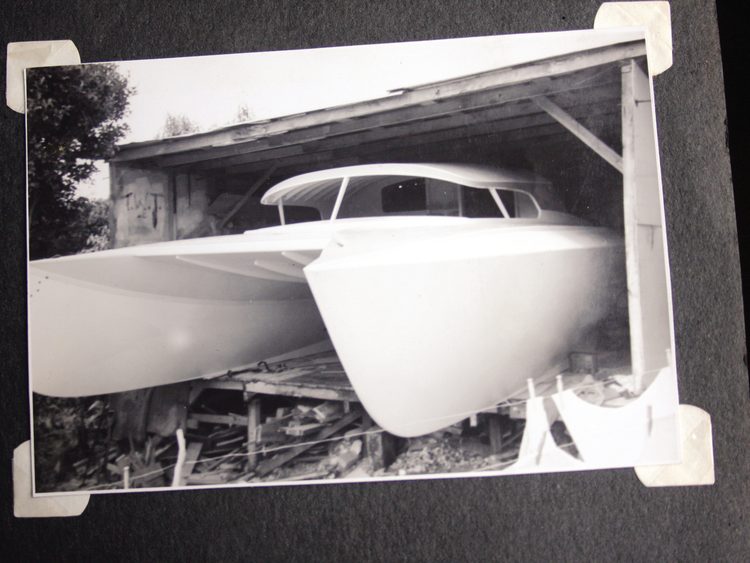
Vitesse was the first Kiwi yacht to use a fully-battened mainsail. With such a generous roach, the sail maintained a powerful driving force even in light airs. This cat was also light, being constructed of sheet ply on kauri frames. Her three-sail rig totalled 770ft2 and she could sleep five, who could share the ‘mod cons’ prevalent in boats today. The initial trial run proved a triumph. Vitesse scudded downwind at 24-25 knots and disappeared under the harbour bridge, possibly reaching 30 knots. Observing this new design in the shed, she looked like a jet fighter.

Over 60 years later Vitesse is still tearing around the Gulf from her home in Whangarei.
Five years into creating and sometimes building new designs, a still-young Young fell for playmate, helpmate, soulmate and best friend Anne, his future wife. They were married in 1968 and in due course produced four children while Alan designed boats, plus two houses he also built himself. The kids naturally grew up on the water because Dad had designed and built a centreboard ketch called Sarah Jane for family cruising. The family crew perfected their sailing skills while visiting the Gulf’s idyllic destinations, at times beaching the ketch for picnics.
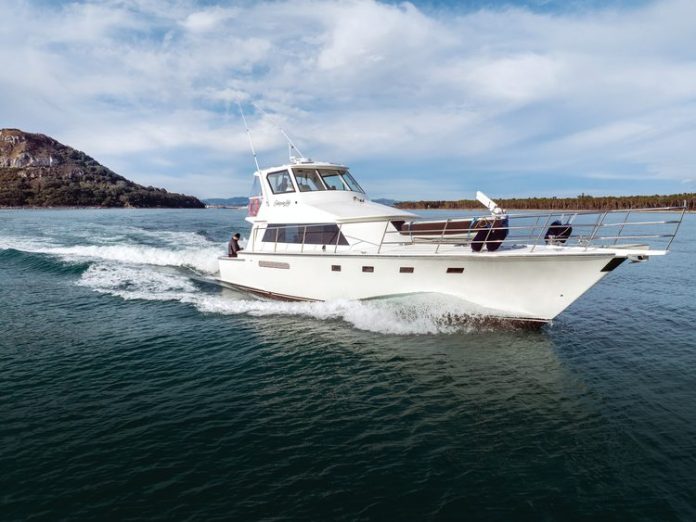
Alan earned a reliable income working alongside older brother Jim, who had founded Jim Young Yachts. The firm was thriving, flush with orders for the ubiquitous Young 88, plus quite a few Young 11s. Alan initially worked for Jim but became a partner when developing the Young 37, with the ambition to export superbly finished products to America. In those days the Yanks had hardly heard of New Zealand. They’d never heard of kauri, either. They were producing their boats in solid GRP, well before New Zealand marine industry, including Jim Young Yachts, converted to that material. But several Young 37s were built in kauri, still sailing today in the Hauraki Gulf. The brothers also co-operated in the development of one of the first fast launches, the popular Vindex series.
Alan saw a future in big cruising launches, believing they could be produced in reasonable numbers in their own factory. However, Jim was convinced that starting a new boat building factory would be a “mug’s game” and didn’t want to know.

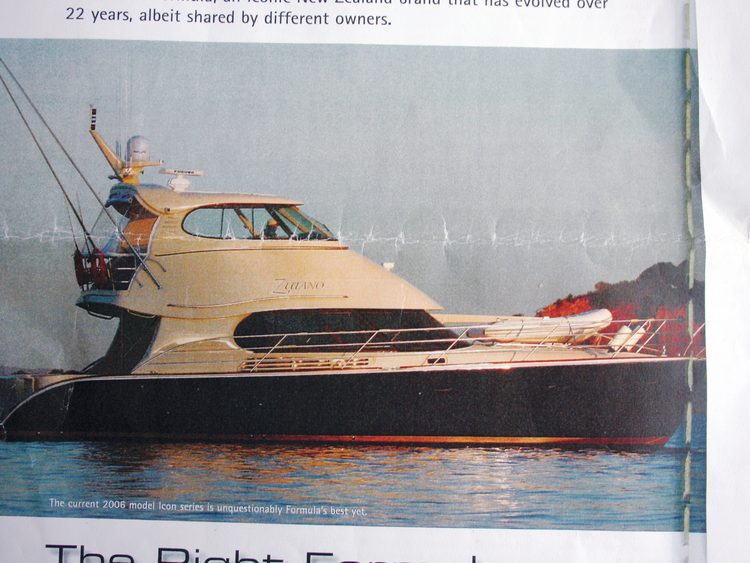
So, Alan broke away and did it anyway, forming Alan Young Boats and building his own factory to produce the Formula 4000, thus creating a new brand, plus other new designs. And that venture succeeded, despite the many challenges he faced. Alan survived the stock market crash (with a little help from his fans), plus Rob Muldoon’s crippling boat tax which all but killed the entire New Zealand marine industry through cancelled orders and export contracts, along with a raft of supplier closures.
In addition to keeping Formula Boats afloat, he managed to design and market ‘Schooners’. Not the kind that float. These Schooners were highly popular wood burning iron stoves. This indefatigable visionary had found another new need and filled it.
Alan Young had a reputation for being irascible at times, but also for being a critical perfectionist whose work ethic never faltered. Believing that only he could attain the standards he desired, he took over 10 years to build his own 52-foot centreboard ketch single-handed (with a little help from Anne). To my mind that represents “an infinite capacity for taking pains.”