By seven o’clock on Friday evening, much of the PIC Coastal Classic fleet was barely moving. Boats on the tracker were logging 0.0 and 0.1, and three crews had already given up on Russell: Evan Davies’ Another Duchess, Damon Jolliffe’s Motorboat III and Peter Bourke, sailing Diablo alone.
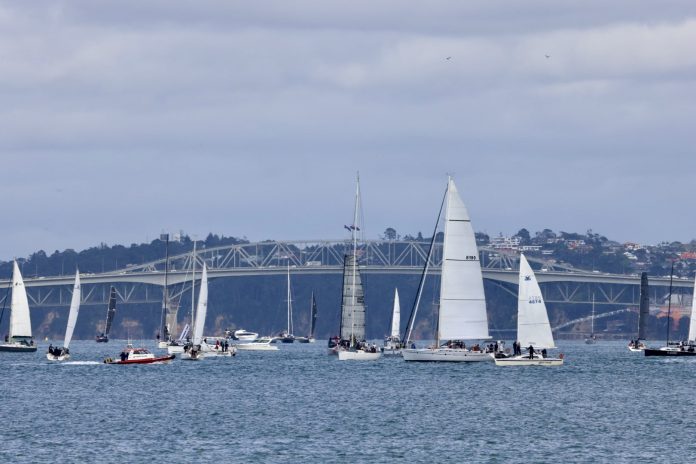
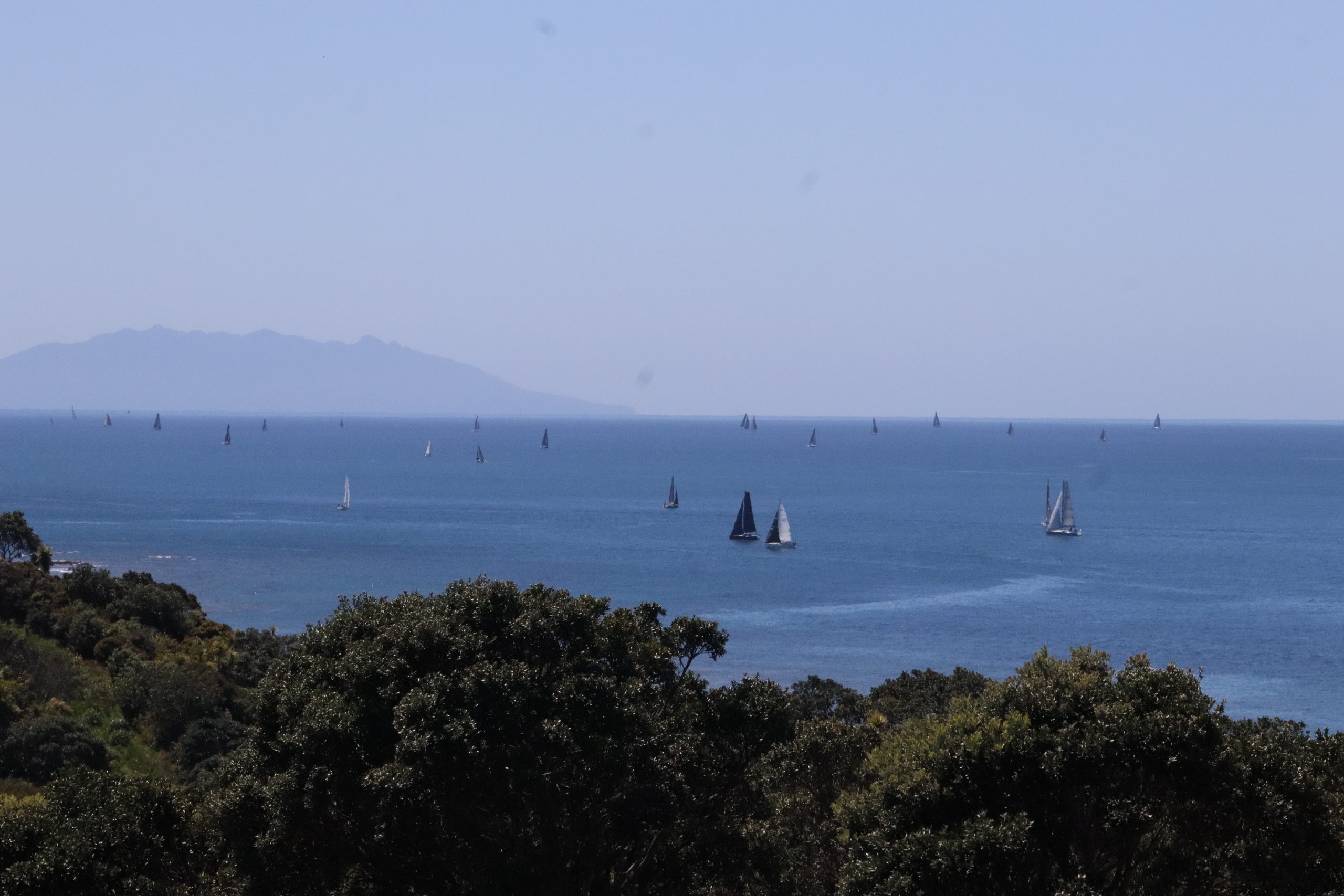
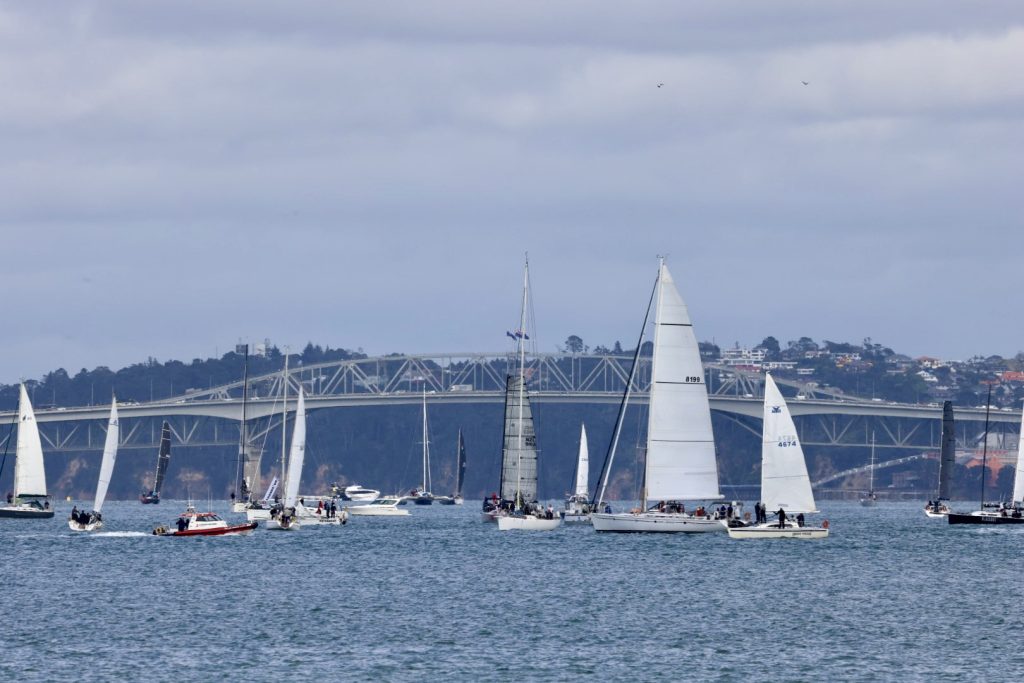
The morning had promised a little more. Just under 100 boats got away from Devonport in a southwesterly of six to eight knots, the race organisers reported. The small boats and the solo sailors started at 9.30am, Divisions 2 and 3 at 9.45 and the bigger boats at 10. Under a grey sky, with the tide under them, they ran square towards the Tiri Channel.
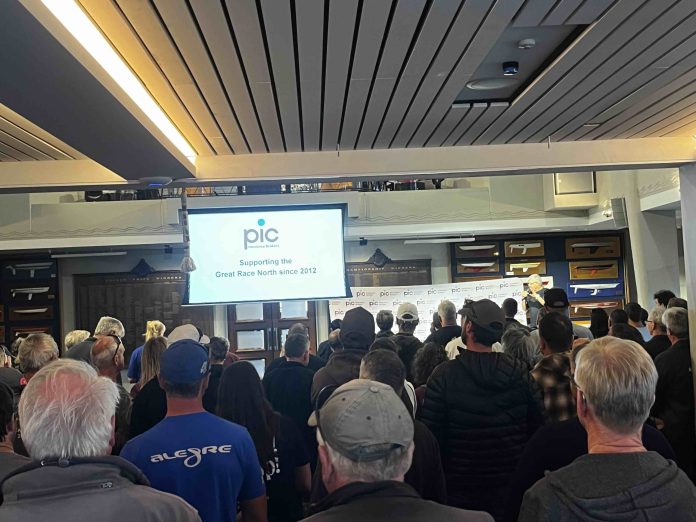
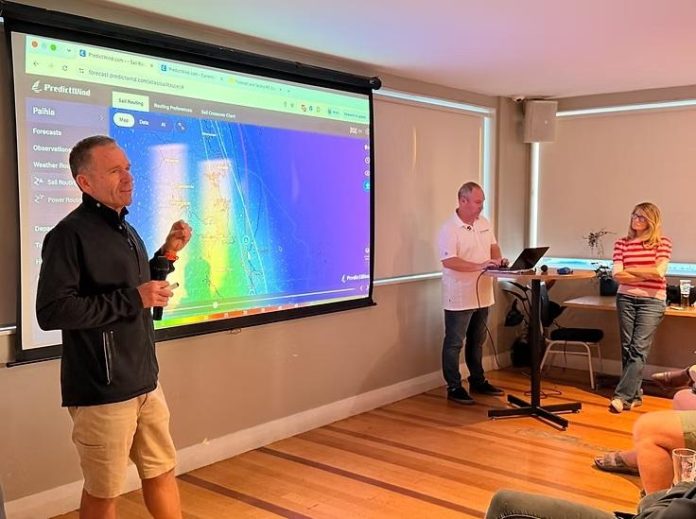
Nobody had been promised a quick race. At Thursday night’s briefing, PredictWind’s Nick Olson warned skippers to expect around seven knots, a gradient fading through the day and a soft patch past Cape Rodney. “It’s going to be long,” he said.
Another Duchess leads, then retires
At noon, Another Duchess led the racing divisions through the gap between the Whangaparāoa Peninsula and Tiritiri Matangi, with the TP52 Wired about five minutes astern. Last year the Davidson 59 beat Wired into Russell by 59 seconds on elapsed time. This year she got as far as Kawau, where she picked up a mooring early in the evening.

“We pulled the pin,” said Moulet, one of her crew. While Another Duchess went on home to Auckland, he and the boat’s Australian guests went ashore at Kawau.
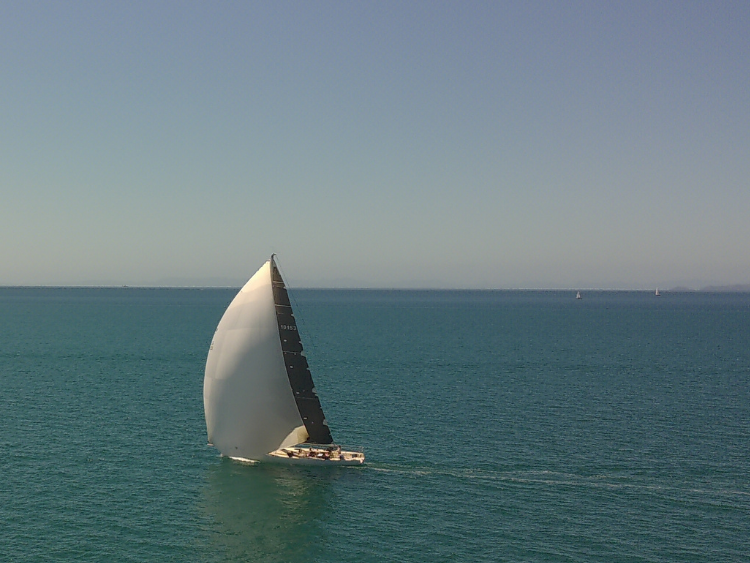
They’d worked out what the night held before they made the call. The crew expected the breeze to go into the north, which meant sailing almost straight at Cape Brett, the headland they had to round. Even at hull speed, they reckoned on making only about four knots towards it. After about 10pm, Moulet expected the wind to back into the northwest and then the southwest, with almost nothing in it.
“At the very best, you would be doing overnight four knots to the Brett,” Moulet said. “And you just won’t make the finish at two o’clock.”
Motorboat III, Jolliffe’s Thompson 1150, came to the same answer. “There is no wind,” said her crewman Josh Tucker. She turned for Auckland rather than motor north.
Diablo stops where Bourke said she would
Peter Bourke picked his bail-out point before the start. The 74-year-old is one of three skippers racing alone this year, sailing the 29-foot Sparkman & Stephens Half Tonner Diablo, which Keith Eade built in heart kauri in 1970. He spent five years restoring her, then raced her single-handed across the Tasman in June.
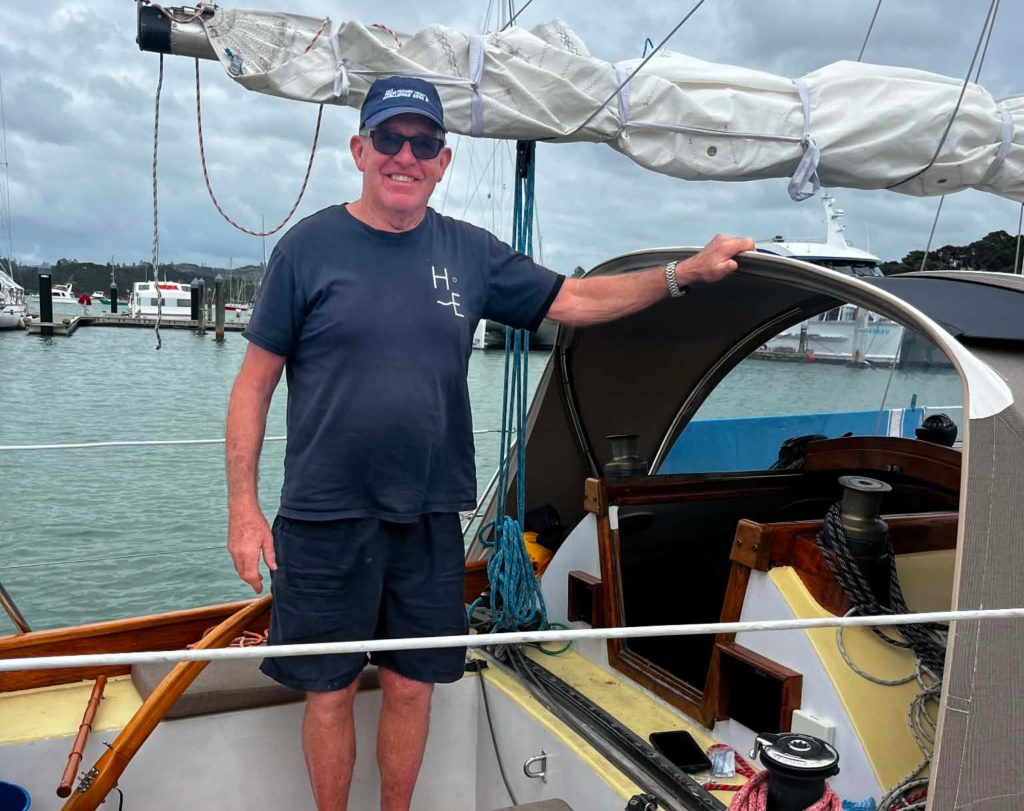
On Thursday he told us his first checkpoint was Kawau Island. He had to reach it within six hours of his 9.30am start, about 3.30pm. Home at Sandspit is just inside Kawau, and if he didn’t make it, “I’d probably go home, mow the lawns or something.”
Diablo was still short of Kawau at 6pm. “I wasn’t going to make the cut-off time for the end of the race, so I’m pulling out at Kawau,” Bourke said this evening. By then his own end of the fleet had largely gone. “I lost my competition at the back fleet when they all pulled out.”
The anchors go down
Those three retirements are confirmed. On the tracker, more boats have turned back or anchored, and until their crews tell us otherwise these are only what the tracker shows.
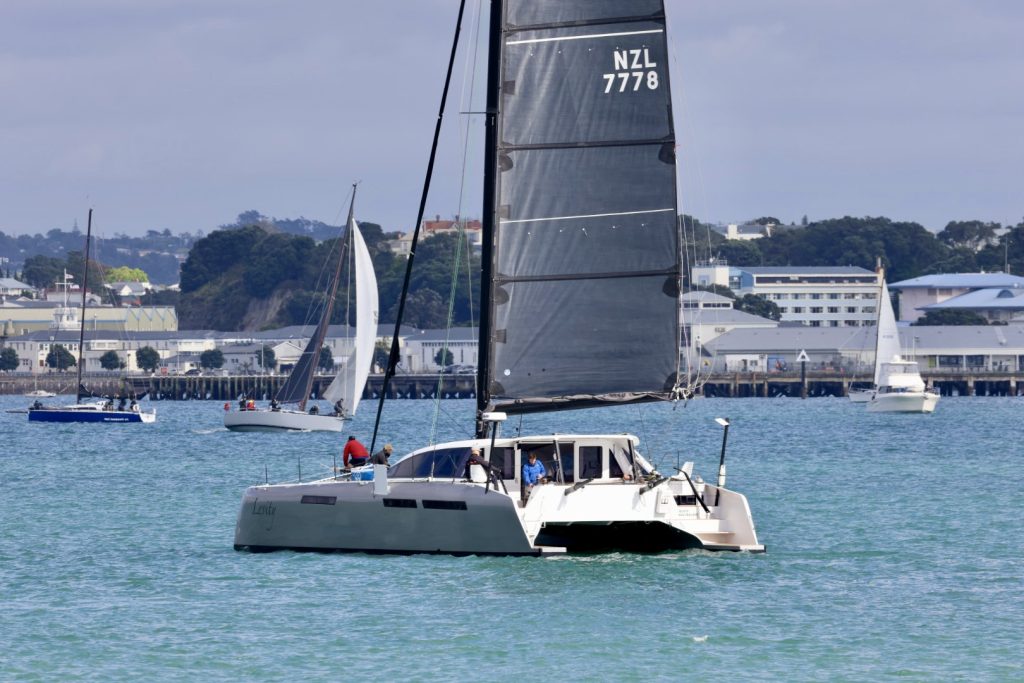
Mike Mackey’s catamaran Levity is heading back down the course. Barry Martin’s Senior 11.4 Bizzarre and Coen Ursem’s 8.5 Freedom are now further from Russell than the length of the course. John Hughes’ Knaggs multihull Excalibur appears to be at anchor, Hamish Brown’s Pinta looks to have stopped near Snells Beach, and Warren Henderson’s Memphis is sitting off the southern end of Kawau. Tim Johnston’s Elliott 1050 Second Nature also seems to have stopped.
Ben Ball looks to have done the same. In June he took his 1976 Cavalier 36 Camellia to second on handicap in the Solo Trans-Tasman, in gale-force winds for much of the crossing. Today he had next to no wind at all, and the tracker has him tucked in for the night.

We’ve heard nothing yet from the third solo sailor, Mike Phear in the Bull 12000 Bullistic, or from Malcolm Dickson. Dickson, 79, won the Solo Trans-Tasman on handicap in June, 48 years after his first win in the race. This weekend he’s sailing his 55-footer Sarau two-handed with his granddaughter Lily, who is 16. Before the start he admitted that Sarau, heavy and with a small rig, goes well in a blow and sticks in the light, and that the cut-off could beat them.
What the boats still racing need
At about 7.40pm there were 18 hours and 20 minutes until racing stops. The distance each boat had left to sail, spread over that time, gives the average speed it needs.

The five boats closest to Russell are all in the cruising rally, which allows motoring and isn’t part of the race. Lady Nada and My Fix, about 48 miles out, need about 2.6 knots. Dream Weaver, Skyesong and Tintin, about 62 miles out, need 3.4.
Among the racing boats, Rob Bassett and Brett Russell’s Wired leads on the water with 73.4 miles to go and needs to average four knots. The main pack is 76 to 82 miles out, with Apache, Blue Dude, Alegre, General Lee and Revs among them, and needs 4.2 to 4.5 knots. The boats around Chico Too and C McGuire, 85 to 93 miles away, need 4.6 to 5.1. Beyond 97 miles, where the tracker has Mike Sanderson’s Rehab, it’s better than 5.3.
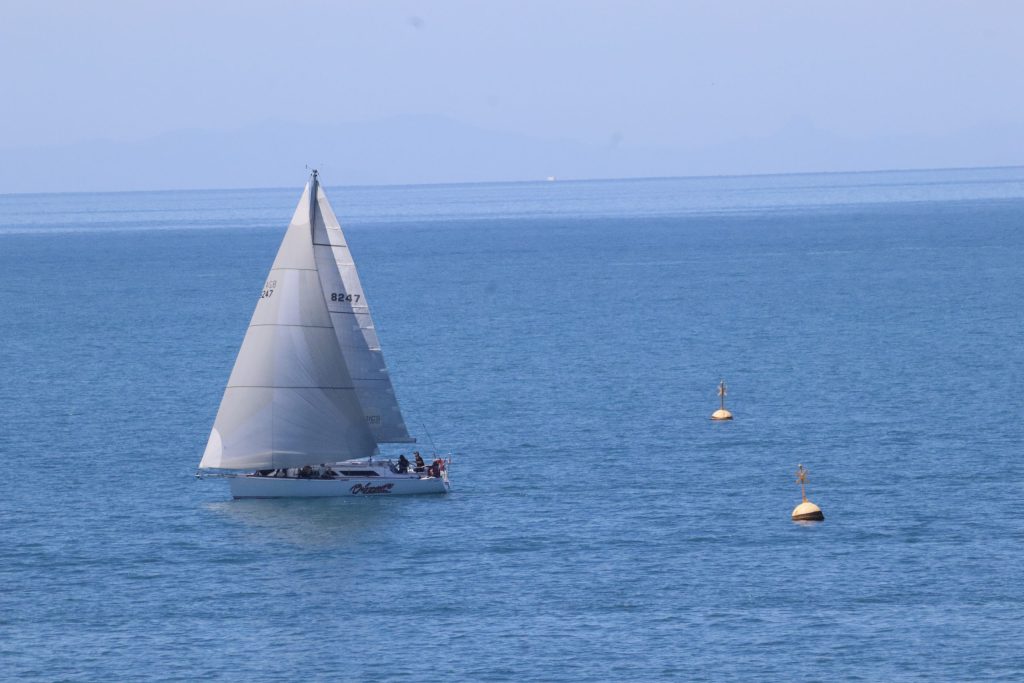
Those boats have averaged about four knots since the start, covering roughly 40 miles towards Russell, so they now need to sail faster through the night than they did all day. Some were losing ground this evening. Over two tracker checks, Alegre slipped from 77.3 miles to go to 77.6, Blue Dude from 76.2 to 76.6, Buoy Racer from 80.9 to 81.3 and Boogie Flash from 79.6 to 80.0.
A hole in the night
By 8.30pm the fleet was moving again. Over the previous 50 minutes Wired, Alegre, Apache and Blue Dude had each made good four to five knots towards Russell, and Wired was down to 69.8 miles to go.
Overnight is another matter. For the coast between Tutukākā and Cape Brett, PredictWind’s PWE and GFS models both show a hole from about 2am to 9am, with only two to four knots of wind, and they part ways on how quickly the morning breeze arrives.
| Saturday, about | PWE | GFS |
|---|---|---|
| 1am | 3–5 knots | 3–5 knots |
| 4am to 7am | 2–4 knots | 2–4 knots |
| 9am | 4–5 knots | 4–6 knots offshore |
| 11am | 5–6 knots | 7–10 knots offshore |
| 12.45pm | 6–8 knots | 10–12 knots |
| 2.15pm | 6–9 knots | 10–14 knots |
GFS brings the breeze in about two hours earlier than PWE, and harder. On either model, the useful wind only arrives in the last two or three hours before racing stops, and the forecast has it reaching Cape Brett from the northwest.
Late finishers will be fighting the tide as well. LINZ predicts low water at Opua, the nearest standard port, at 1.41pm on Saturday, so the final hours before the cut-off fall on the ebb running out of the Bay of Islands, against boats working in from Cape Brett towards the line off Russell.
Run those numbers forward and a good keelboat might sail around 15 miles before 1am, another 10 to 15 through the hole and 15 to 20 once the afternoon breeze fills. That’s 45 to 50 miles, or perhaps 60 to 65 for the best light-air boats such as Wired and the Soto 40 Alegre. The leading race boats are 70 to 75 miles out, which would leave them 10 to 25 miles short at 2pm.
On that reckoning, two or three racing boats at most will reach Russell in time. Dougall Love’s Rapido 60 trimaran Romanza, 74.1 miles out at 8.30pm, has the best chance. In six to 12 knots a big trimaran will sail well clear of any keelboat, and the GFS breeze from late morning would suit her. Wired, the leading monohull, needs the GFS scenario and a clean night, so she’s an even-money chance at best. Erle Williams’ multihull Apache, 73.2 miles out, has an outside chance. The rest of the main pack, General Lee, Blue Dude, Alegre, Revs, Drinks Trolley, Mustang Sally and the others, would need better than 4.2 knots through a night of two to four knots of wind.
An early breeze would change that. If the GFS offshore breeze fills by 9am rather than 11am, Wired becomes a good bet and a few of the Division 1B boats come back into it.
If nobody makes it
The sailing instructions set the deadline at 1400 on Saturday 24 October. A boat that hasn’t finished by then can text a photo of its GPS position to the race organisers. Boats that do that aren’t eligible for handicap prizes, but they can win the separate prizes.
What happens to the trophies if nobody finishes, the instructions don’t say. Moulet’s view is that the holders hang on to them. “If you won last year, you still hold the title,” he said.
That would mean another year for Matt and Kim Krogstad’s 41-year-old Farr 1020 Starmaker. Last year Matt and co-skipper Rhys Cole sailed her to wins in Division 4 and the two-handed category, and to first monohull overall on PHRF. Moulet put that down as an unlikely result for a production cruiser-racer: “the TAB would be paying big odds for them to win. Not because of them, but that style of boat.”
This year Kim was to skipper Starmaker two-handed with Matt, and before the start she told the race organisers’ news site they were hoping to make the cut-off. Moulet had heard the couple took one look at this morning’s forecast and decided not to go, though he couldn’t confirm it. If nobody finishes, he said, “last year’s results still stand. So they are still the champion for another year.”
Through the night
The boats still racing will report in on VHF channel 17 at Flat Rock, Sail Rock and Cape Brett. Those reports and the PredictWind race tracker should make it clear by breakfast who is still in with a shot. On our numbers, if Wired has less than about 45 miles to go at 6am, she’s in with a chance.
Prizegiving is at the Nauti Penguin in Russell at 7pm on Saturday, and Olson’s forecast for Sunday’s trip home was a good one.