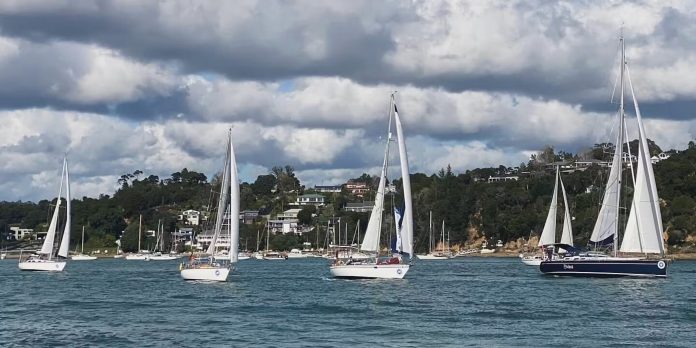
At 29 feet Diablo the smallest boat in the fleet by 2 metres. And one of the most interesting stories to tell.
L
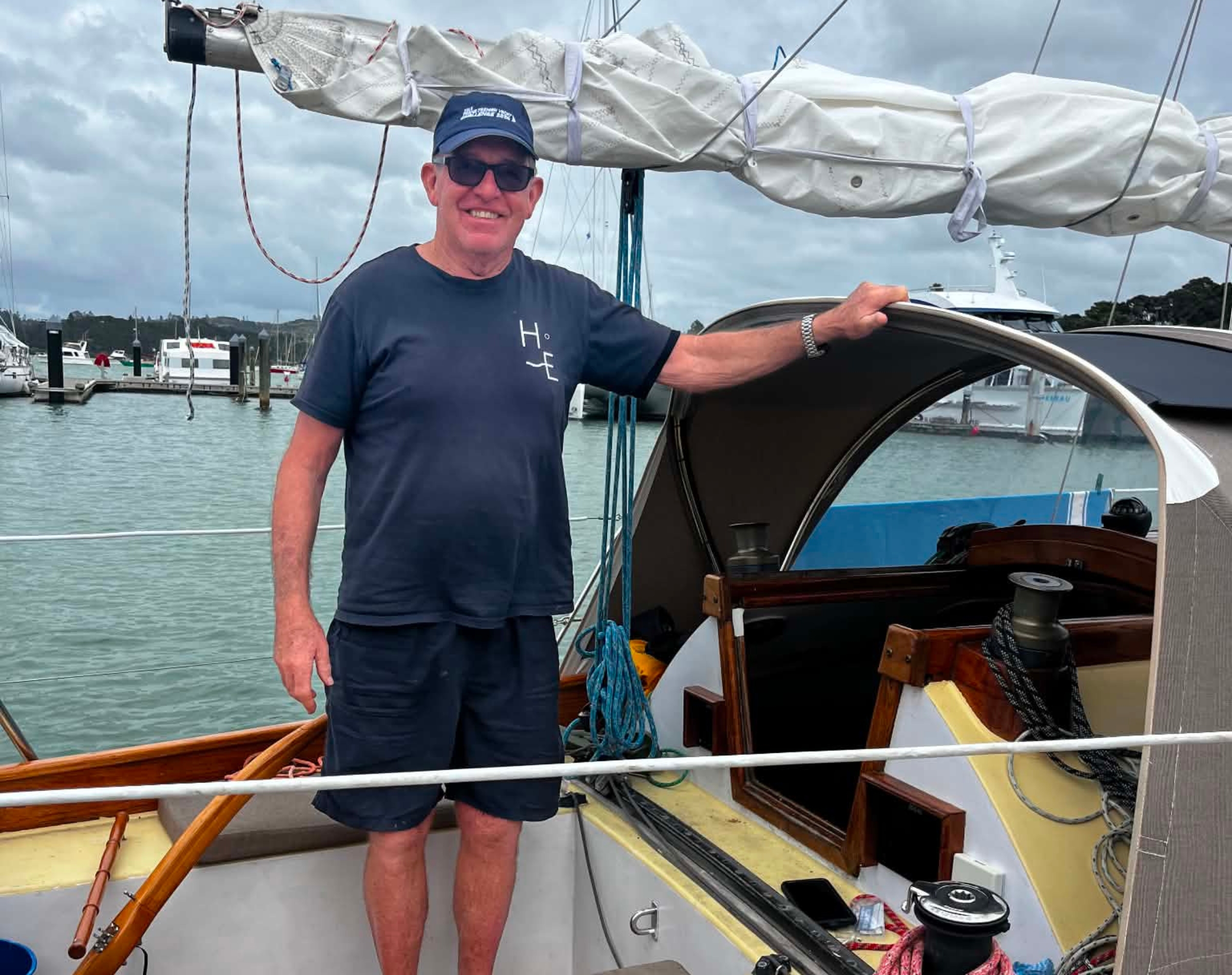
ifelong sailor, 73 year old, Peter Bourke, is about to cross the Tasman Ocean alone on the 56-year-old kauri Half Tonner that he spent five years pulling back from the brink. If that sounds like the setup for a film, it probably should be.

A life on the water
Bourke grew up in Auckland, the city of sails in every sense, and got into yachting at an early age. He worked his way through centreboard classes before graduating to International Offshore Racing (IOR) offshore keelboat racing in the 70s and 80s. His family had a Cavalier 32 (designed by Bob Salthouse and Laurie Davidson), and they campaigned it hard, running races to the islands and further afield. His specialty was navigation, and he learned it the proper way, before GPS existed.
“I’ve got a background in celestial navigation,” he says, with a quiet confidence that suggests it’s not something he’s had to reach for in a while, but knows he still could.
After his kids grew up and he stepped back from racing, Bourke sold his business and moved north, closer to Sandspit. He found himself with time, and a yen for a project. The project turned out to be a wooden boat. The wooden boat turned out to be Diablo. And you can’t tell Peter’s Solo Trans-Tasman story without telling the story of Diablo.

The boat
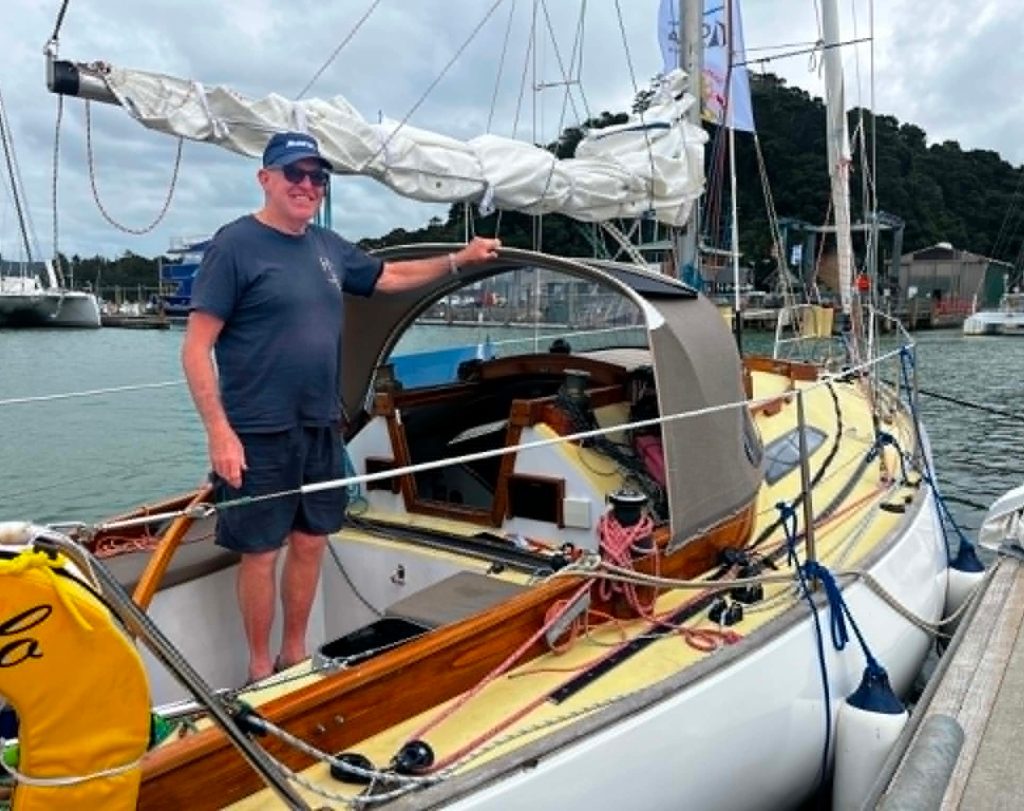
Diablo is a 29-foot Sparkman and Stephens Half Tonner, built in heart kauri by Keith Eade in 1970. She was commissioned by Russell Hume, then Commodore of Royal Akarana Yacht Club, and was one of just three Sparkman & Stephens (S&S) Half Tonners known to have been built in New Zealand. The others were William Tell and Contender, Diablo’s sistership.
S&S, the New York-based naval architecture firm founded in the late 1920s by Olin and Rod Stephens and Drake Sparkman, were widely regarded as the finest yacht designers in the world through the postwar decades. Their portfolio included some of the most celebrated offshore racing yachts ever built, and their designs dominated the 6-, 8- and 12-metre fleets, as well as the America’s Cup, right through to the 1980s. In New Zealand and Australia, S&S yachts including Rainbow II, Stormy Petrel and Young Nick were prominent One Ton Cup campaigners.
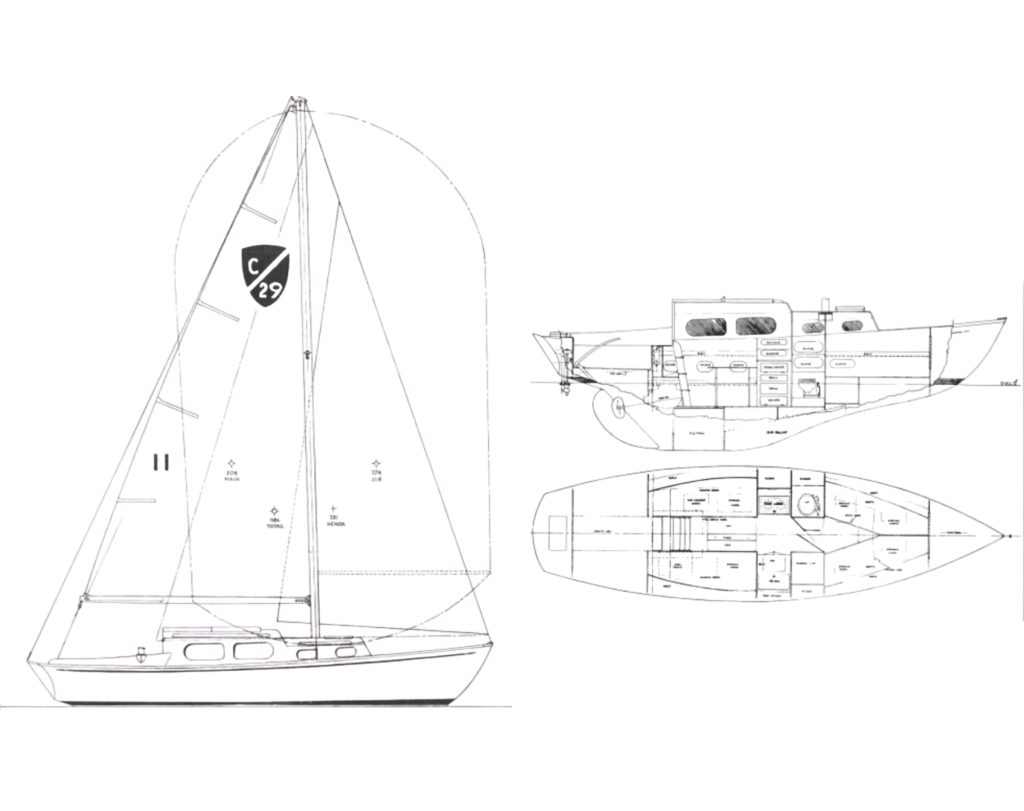
Diablo was designed to contest the Half Ton Cup, which was to be held in Australia around 1970 or 1971. She didn’t make the team. And then, in 1972, Bruce Farr arrived.
Farr’s Titus Canby revolutionised IOR keelboat racing. Short-ended, light displacement designs swept aside the classic, full-bellied ocean racers almost overnight. Diablo was obsolete within a year of launching.
Her first owner sold her to a buyer in Wellington. On the way south, caught in a storm off the Wairarapa coast, Diablo went upside down. She survived. Her racing life continued in Wellington for roughly the first decade, then further south in Lyttelton, before she eventually drifted north again and ended up on a mooring at Opua, Bay of Islands, sitting quietly and looking very tired.
That is where Peter Bourke found her, in 2020.
The restoration
“Bits were falling off her, sails in tatters and the motor was big on noise, small on speed,” Bourke wrote in a 2021 article for the Classic Yacht Association journal, Breeze.
His mantra for the project was straightforward: if S&S didn’t design it, or Keith Eade wouldn’t build it, it has no place on Diablo.

Over the years that followed, the hull and decks were given a thorough going-over by Lees Boatbuilders. The old Shabaura engine was replaced with a Volvo 20hp saildrive, installed by Matakana Marine. The spars and rigging were completely overhauled by Gulf Harbour Rigging. New Harken deck hardware was fitted throughout, along with new upholstery.
The finish is beautiful. The classic in this classic yacht shines through; the finish almost sparkles in places with the high gloss on the traditional Kiwi hardwood.
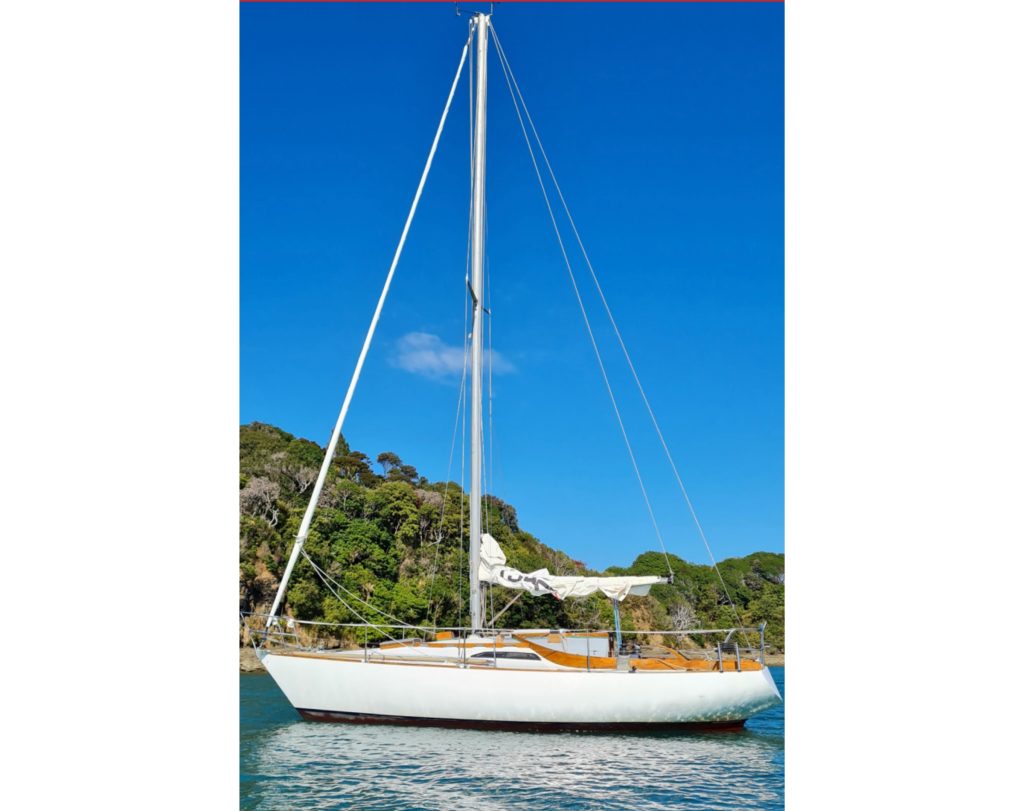
For the Trans-Tasman campaign, the refit went further. A complete new set of North Sails replaced the original Hood wardrobe, including a generous number one genoa that Bourke rates highly in light air. A Neptune wind vane self-steering system was added. Solar panels were fitted on deck to keep a pair of new house batteries topped up. Starlink, the compact mini version, went on for offshore communications and weather routing. B&G electronics provide chart plotting and radar. The whole package has been brought up to Category 1 standard for offshore racing.
Bourke is quietly pleased with how it has all come together. The boat, he says, sails well, particularly to windward. He is realistic about her limits against lighter, modern designs, but he believes her handicap could work in his favour, especially in light air with the big genoa set.
“I think I’d probably be doing faster than my handicap would suggest,” he says. “That could be an advantage.”
The race
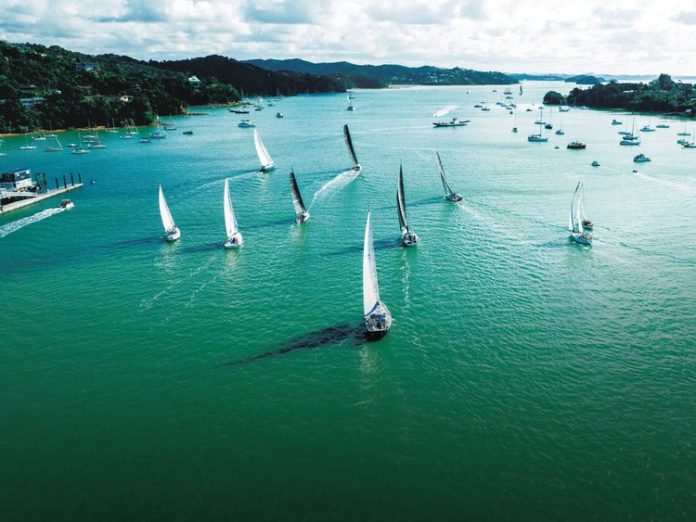
The start date for the 2026 Solo Trans-Tasman Yacht Challenge is 30 May, bound for the Gold Coast. Bourke has plugged the date into Predict Wind’s weather routing, which is showing some headwind around North Cape early in the passage, a relatively quiet middle section, and some breeze on the Australian side. The routing is projecting 12 days for the crossing. Bourke is hoping for 10, perhaps less.
His sleep strategy is built around 30-minute naps, alarm set, a look around on deck, and back down if all is clear. He may reduce that to 15 minutes in busy shipping lanes. Race regulations require competitors to sign a declaration committing to a maximum sleep interval of 30 minutes. Bourke finds this mildly amusing but takes it seriously.
The Neptune wind vane will handle most of the steering in reaching conditions. In lighter or more complex situations, the autopilot takes over. Bourke plans to steer the boat himself very little.
Once the race finishes on the Gold Coast, he is turning straight around and heading home. An earlier plan to leave Diablo in Australia for winter and return to cruise the Tasmanian coast single-handed before racing back has been shelved. He has put a lot of time into this project, he acknowledges, and the solo Tasmanian cruise would stretch things too far. He is not troubled by the change of plan.
The qualification
Bourke qualified for the race by completing a solo circumnavigation of New Zealand in 2025, a figure-eight course covering around 2,800 nautical miles over 58 days. The route took him deep into the Southern Ocean, to within about 10 miles of 50 degrees south, near the bottom of Stewart Island.
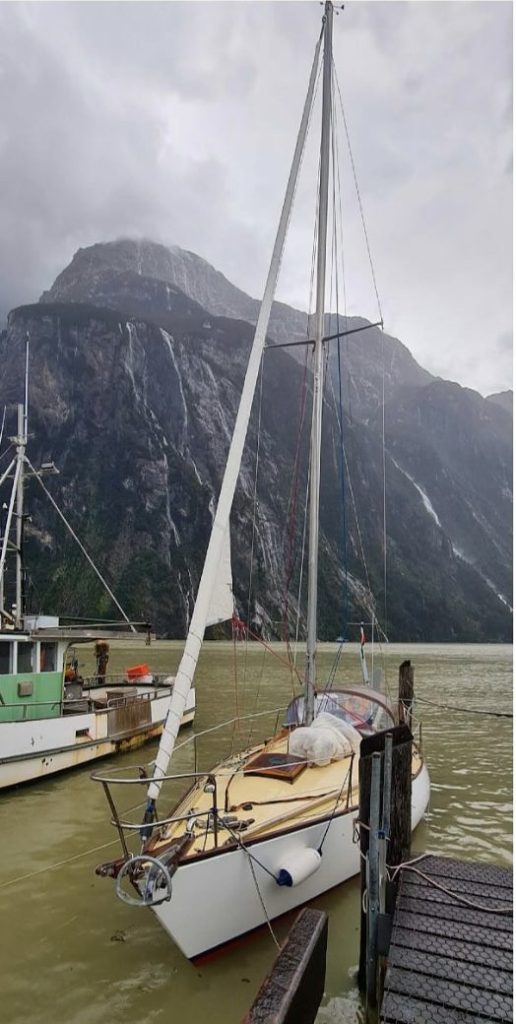
It also provided the kind of test that builds real confidence, or breaks it. Rounding Puysegur Point on the southwest corner of the South Island in the middle of the night, Diablo crash-jibed while Bourke was in his bunk. He came on deck to find the boom flying around in rough seas. He sorted it out.
Before the New Zealand circumnavigation, his offshore CV was already substantial. The Auckland Suva Race, the Whangarei Noumea Race, the Tauranga Port Vila Race, and the Fastnet Race all feature on his record.
The why
He has followed single-handed ocean sailing for most of his life. The books, the races, the names: Bill Belcher, Tony Armit, Andrew Fagan.
He is 73 years old, sailing the smallest boat in the fleet, on a 55-year-old kauri Half Tonner he spent half a decade restoring by hand. He is not doing this in spite of any of that. He is doing it because of all of it.
Peter Bourke sails Diablo for Sandspit Yacht Club. Follow his progress in the 2026 Solo Trans-Tasman Yacht Challenge from 30 May.
Race Start — Saturday 30 May (12:00pm)
Join the crowd and give the fleet a send-off they will never forget! The best vantage points are Opua Wharf or the Opua Cruising Club.