


It was a typical early spring day on the Waitematā: sun and cloud battling for dominance, making it unclear whether we were in for a glimpse of summer or another grey day that never quite gets going. As it turned out, we got a bit of both.
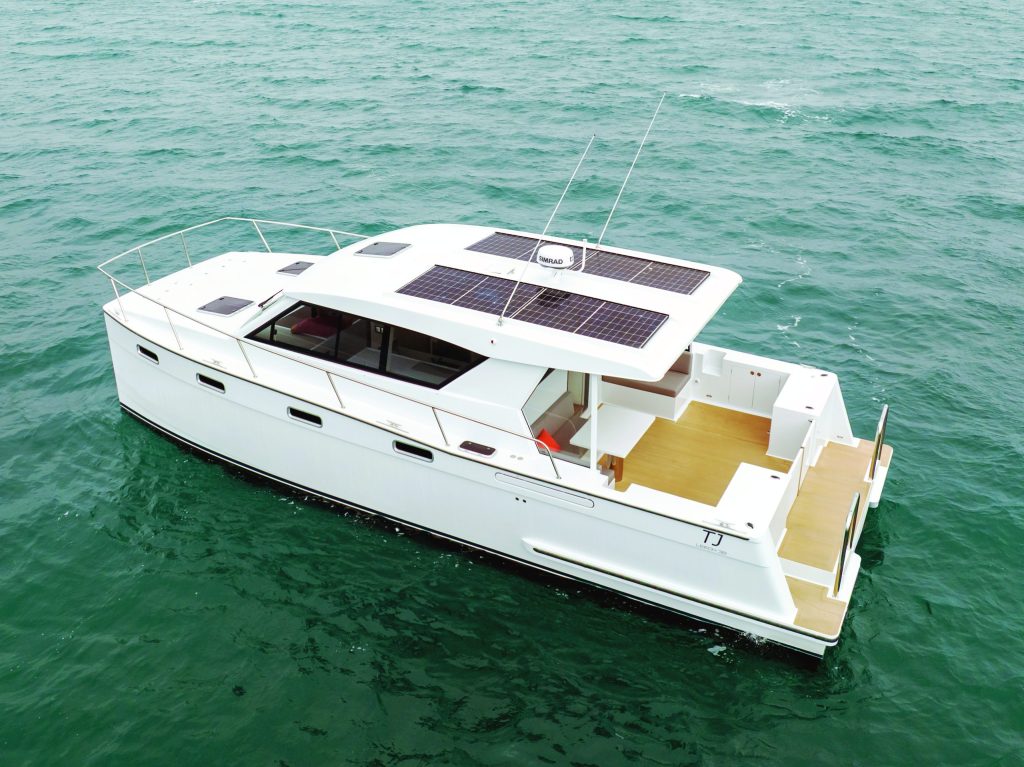
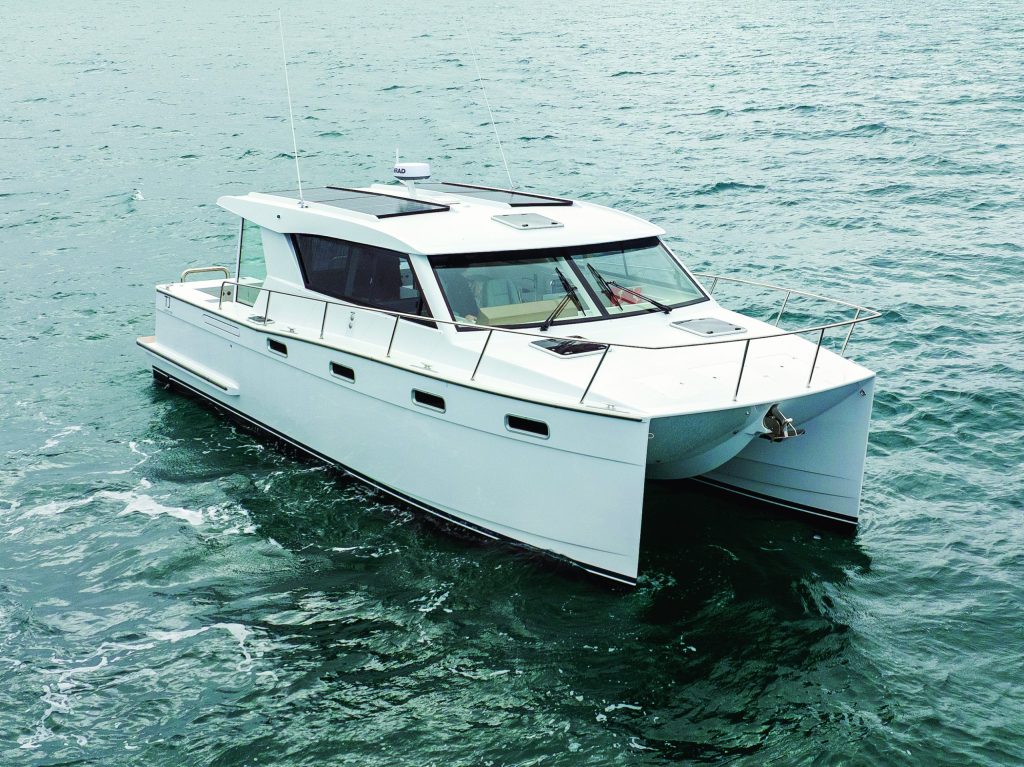
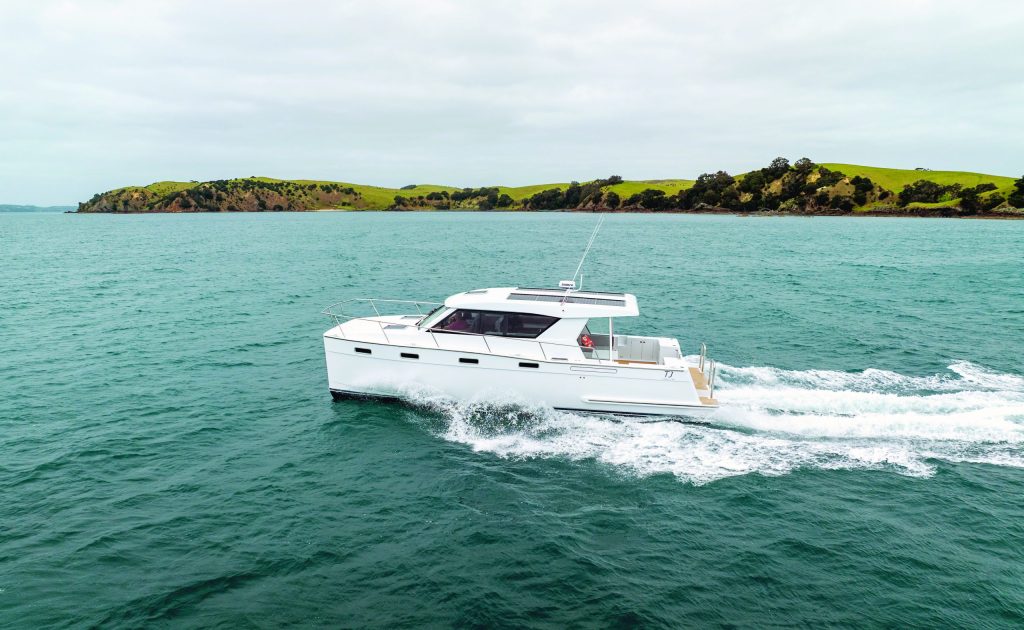
At a civilised 10am, with southwesterly winds gusting to 23 knots, a slight to moderate sea state (around 0.5m chop) and a forecast high of 17°C, we departed Cracker Bay Marina in downtown Auckland for the northern end of Motutapu. The plan was to anchor in picturesque Waikalabubu Bay for lunch, sheltered from the wind and with plenty of opportunity to inspect this striking, contemporary, custom-built, foil-assisted semi-displacement Leech 38 power catamaran.
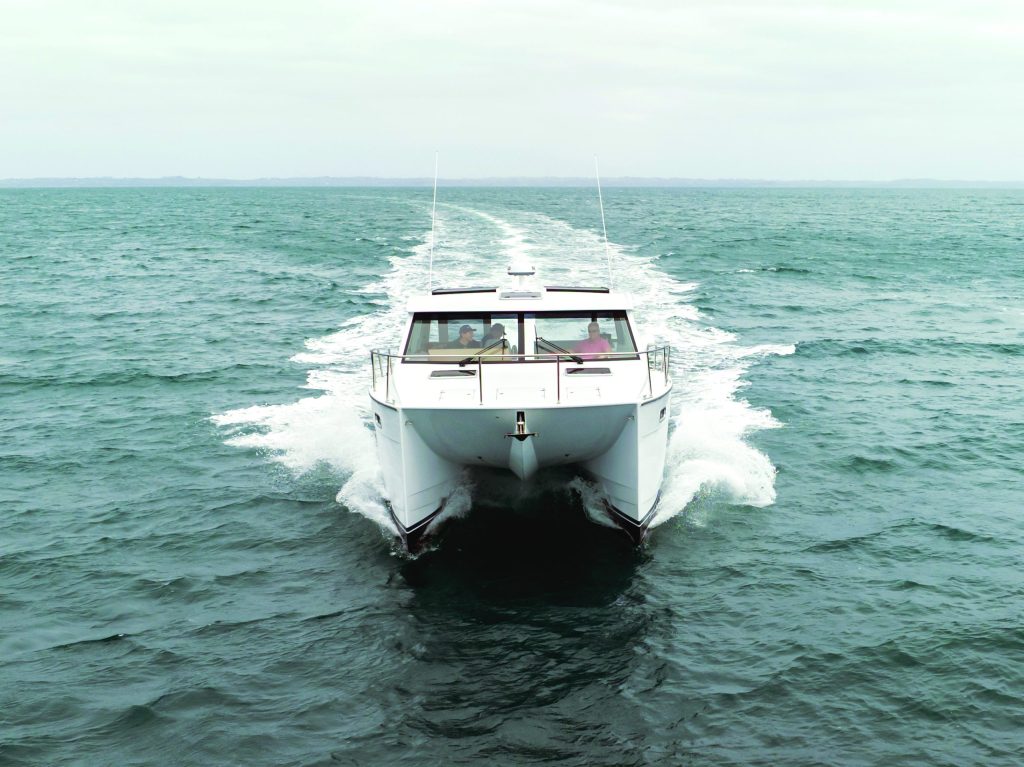
One of the great advantages of a custom build is getting exactly the boat you want. Add experienced owners who know what works, what does not, and can clearly communicate their priorities, and you end up with a boat like TJ: a practical, comfortable and thoughtfully designed motor yacht tailored perfectly to its intended role.
Although the owners live in Nelson, TJ’s future home port, that did not limit their choice of build team.
As with any custom project, the first key decision is the designer. Christchurch naval architect Dan Leech, a Westlawn Institute of Marine Technology graduate with two decades of experience, was selected for the task. The owner hosting us on the test day is a highly experienced boater, and it is easy to see how he and Leech developed a productive partnership.
“It has been an absolute pleasure to work with the two owners of TJ”, Leech told me, and TJ certainly is a testament to that relationship.
The two owners have shared boats for years, including a previous three-person partnership. While TJ is their first power catamaran, they had a clear vision from the outset. The brief called for a lightweight, comfortable, family-friendly coastal cruiser capable of accommodating up to six adults. The greatest challenge was achieving a 20-knot cruise while burning just 2.5 litres of fuel per nautical mile. Weight reduction was therefore critical, making foil assistance an obvious solution.
When asked whether foil assistance would become standard on catamaran motor yachts, Leech’s answer was emphatic: “Yes.”
At a 20-knot cruise, TJ’s foil generates just over 1,000kg of lift, reducing wetted surface area and therefore drag. As Leech explains, less hull in the water means less horsepower is needed to maintain speed, contributing significantly to the boat’s exceptional efficiency.
He also notes that foil design comes down to three key factors: shape, placement and angle of attack. The foil’s position relative to the vessel’s centre of gravity is critical. In TJ’s case, the placement proved correct from the outset, resulting in a well-balanced boat that requires no trim tabs.
Beyond fuel savings, the main benefits are:
• Smoother ride, with reduced pitching and greater comfort.
• Higher average speeds in rough conditions without excessive pounding.
Foils do come with trade-offs. The first is additional cost. They also introduce another underwater structure that could encounter submerged objects. TJ’s foil is carbon fibre with a stainless-steel centre spar, creating a robust arrangement. Watertight boxes around the attachment points add extra security.
Leech is understandably proud of the result. “The layout works incredibly well, and the ride is very soft and comfortable. There is also the option of an outboard version.”
TJ’s build began in late 2023. The hull is an epoxy/E-glass composite structure incorporating Corecell and PVC foam cores, with carbon fibre reinforcement. The carbon-fibre hardtop was developed specifically to reduce weight aloft and lower the centre of gravity. The foam-core composite construction also helps make TJ remarkably quiet underway.
The hull and decks were completed in July 2025 before moving to Pine Harbour, where Mark Skinner and his team at Pine Harbour Boat Builders carried out the interior fit-out. Nine months later, the fit-out, painting, engine installation and electronics were complete, and TJ was launched shortly before Easter.
Power comes from twin 280hp turbocharged Austrian-built Steyr SE 268 E40 diesel engines supplied by Marine Power in Thames. Their aluminium construction keeps weight to just 340kg each, delivering an excellent power-to-weight ratio while helping meet the efficiency targets. Their compact dimensions also make them ideal for catamaran hulls.
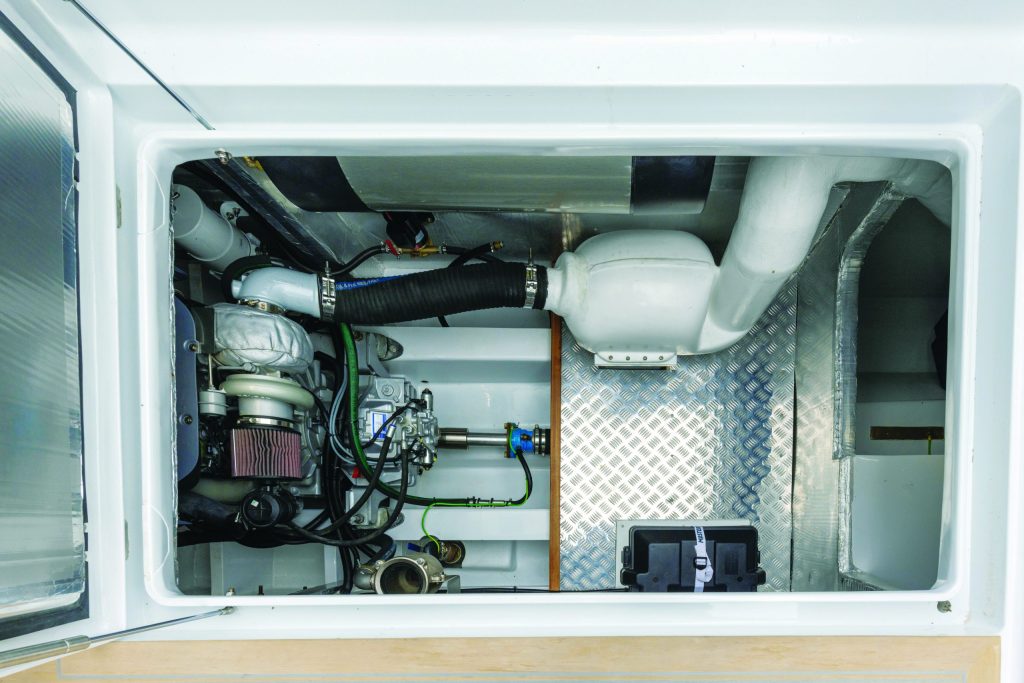
The installation is neat and well executed, with each engine driving a TK four-blade Nibral bronze propeller through two-inch shafts.
TJ’s owners also received a bonus. Commercially rated 260hp engines had originally been ordered, but Steyr offered an upgrade to 280hp models at no additional cost when another customer urgently required the lower-rated units. Unsurprisingly, they accepted.
By early 2026, TJ was ready for final fairing and paint. Warwick Heaney and Nathan Way of Pine Harbour Boat Painters completed the work, and the result is impressive, with excellent fairness and minimal distortion visible in the reflections.
One of my favourite indicators of build quality is the finish in areas most owners rarely inspect, such as lockers and engine spaces. TJ scores highly here, with the same attention to detail evident throughout. To me, that is the hallmark of quality boatbuilding.
The electrical installation was carried out by Augus Small Marine Electrical. Interestingly, there is no generator. Instead, TJ relies on four alternators, two per engine. Primary alternators charge the start batteries, while auxiliary Balmar alternators supply the house bank.
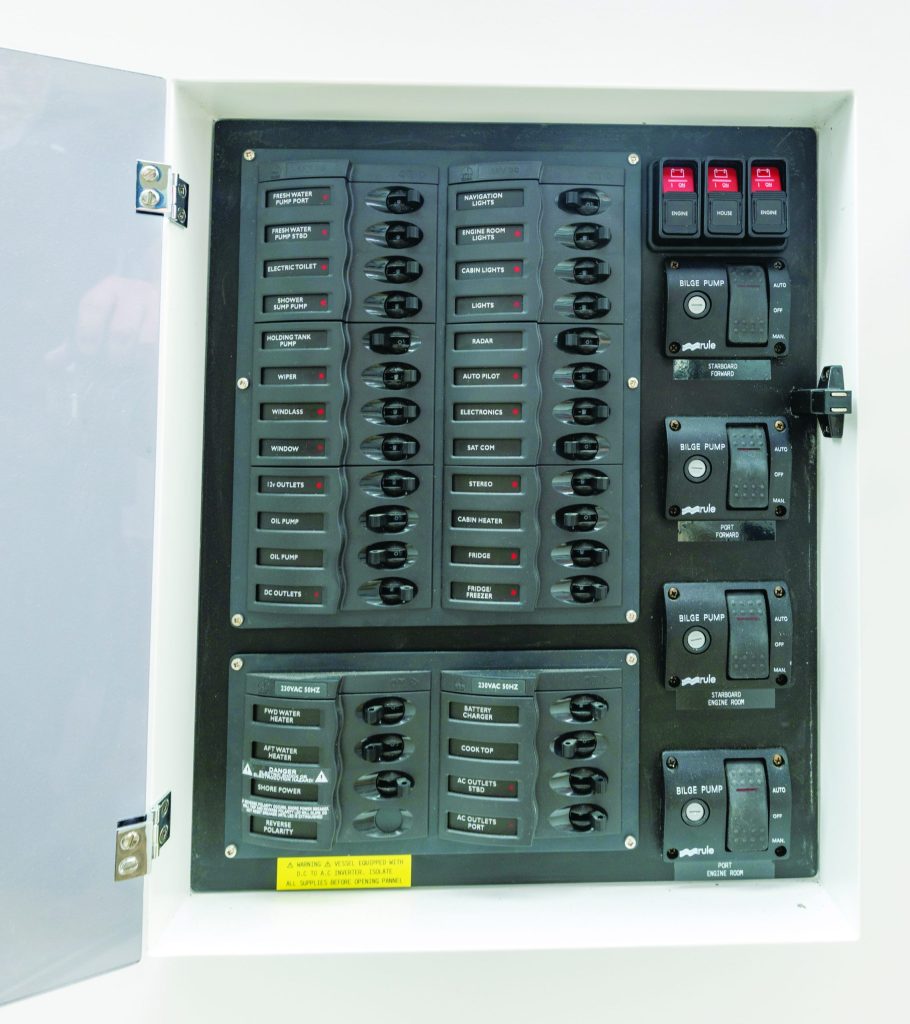
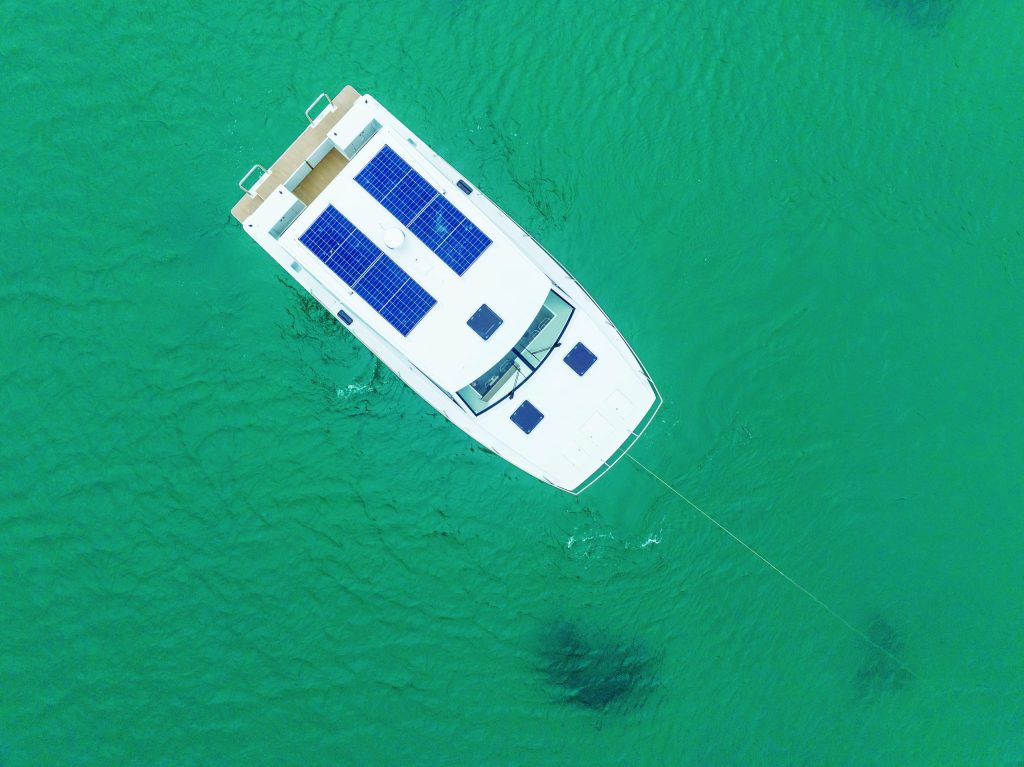
The owners deliberately prioritised simplicity. A roof-mounted array of four 440W solar panels feeds two 460Ah Mastervolt lithium batteries, while the twin 170-amp auxiliary alternators can rapidly replenish power reserves when underway. So far, the solar system has exceeded expectations.
Mastervolt equipment is used throughout the vessel, providing an integrated and well-supported electrical platform.
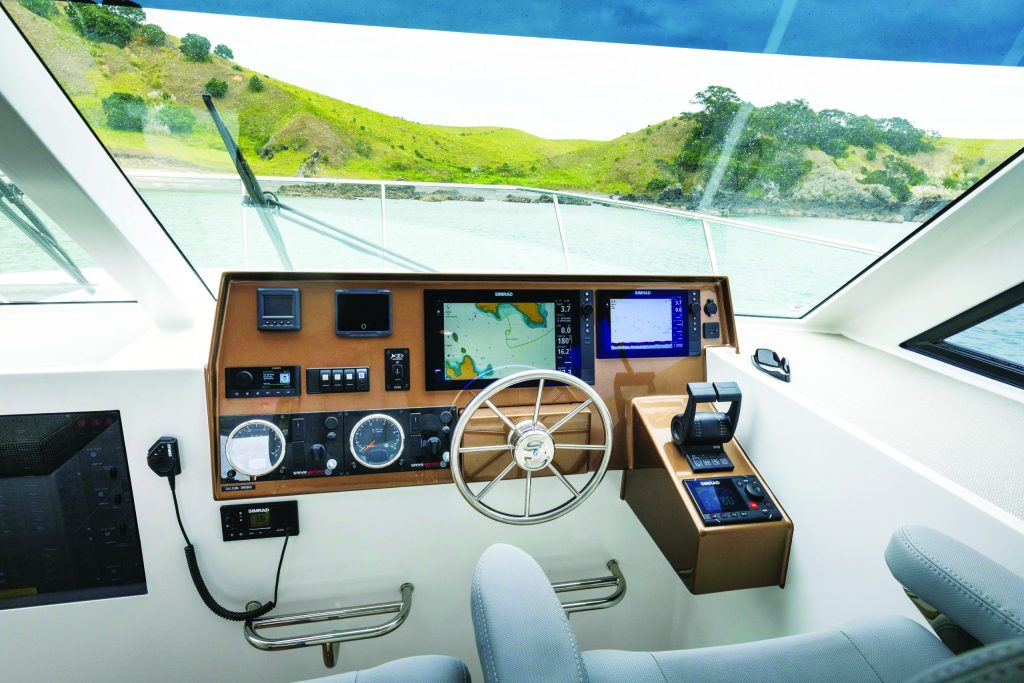
The layout is practical and user-friendly. The helm is to starboard, with twin Llebroc Billfish seats, while a double companion bench to port reflects the owners’ belief that guests prefer sitting alongside the skipper underway.
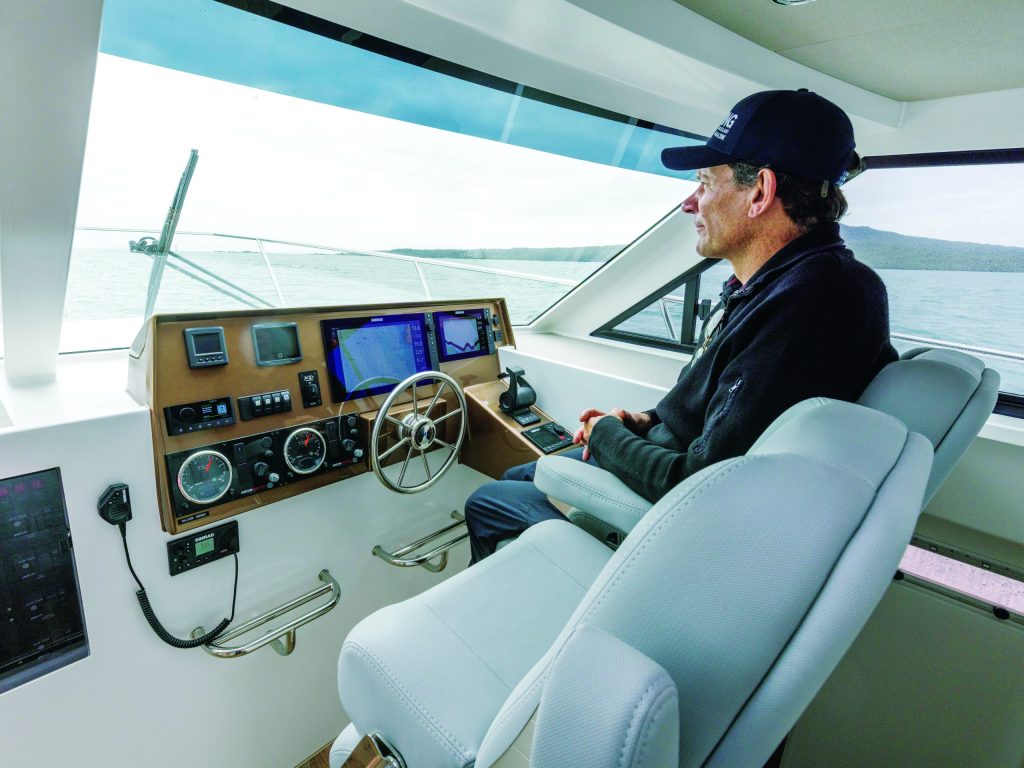
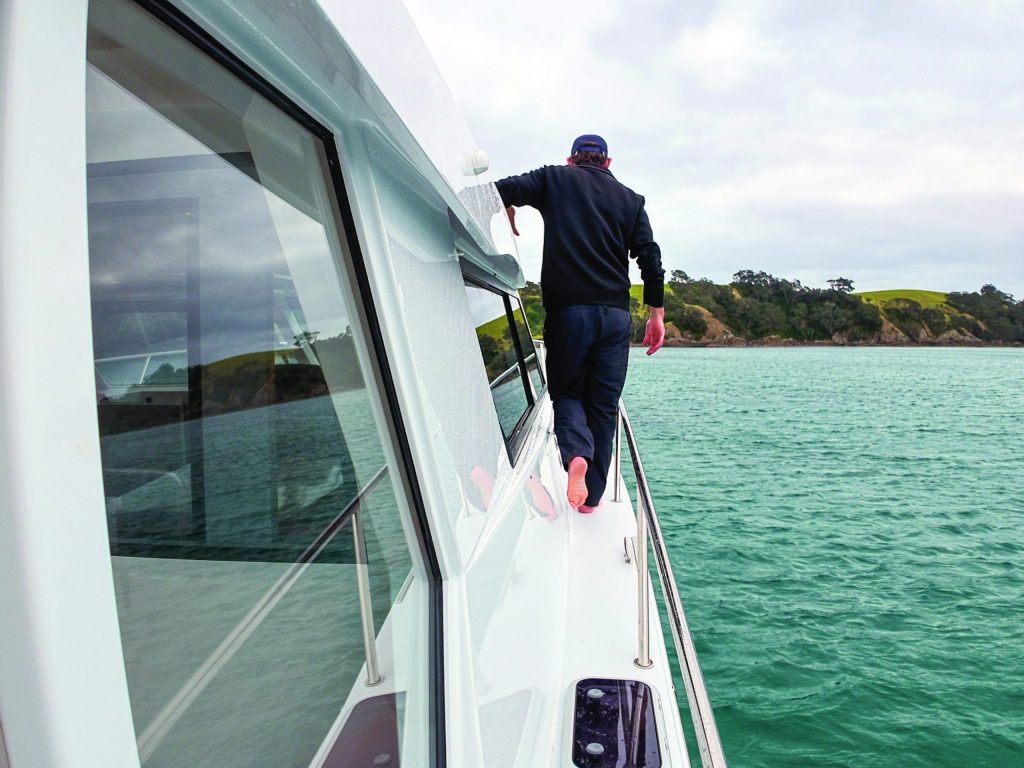
The elevated foredeck provides standing headroom in the forward cabins, resulting in raised seating positions and excellent visibility. A stainless-steel step doubles as both boarding aid and footrest.
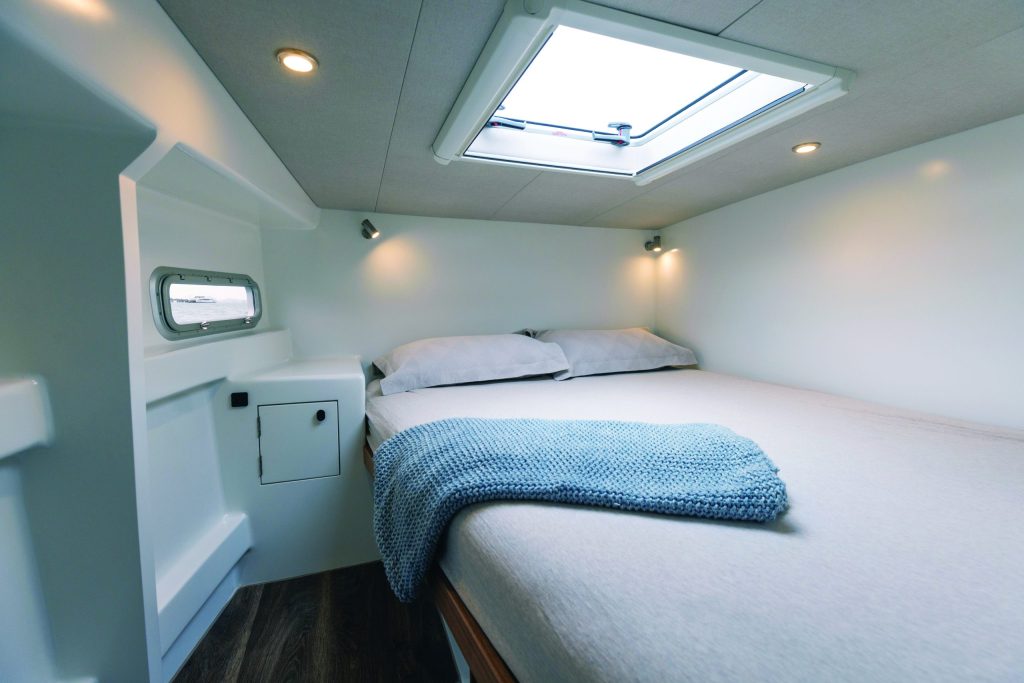
With two owners, there is no dedicated owner’s cabin. Instead, identical double cabins occupy each bow, accessed from the main saloon. Both feature generous berths, good storage, ample ventilation and plenty of natural light.
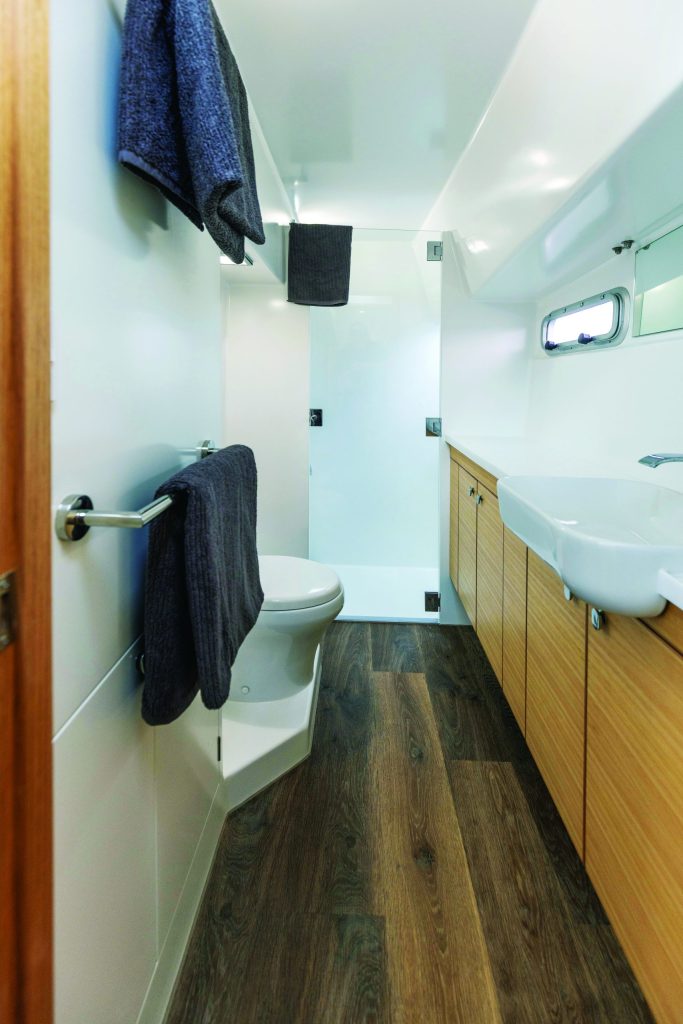
The port hull also contains a spacious, full-height bathroom with shower, while the starboard hull incorporates a cosy double pilot berth suitable for two teenagers.
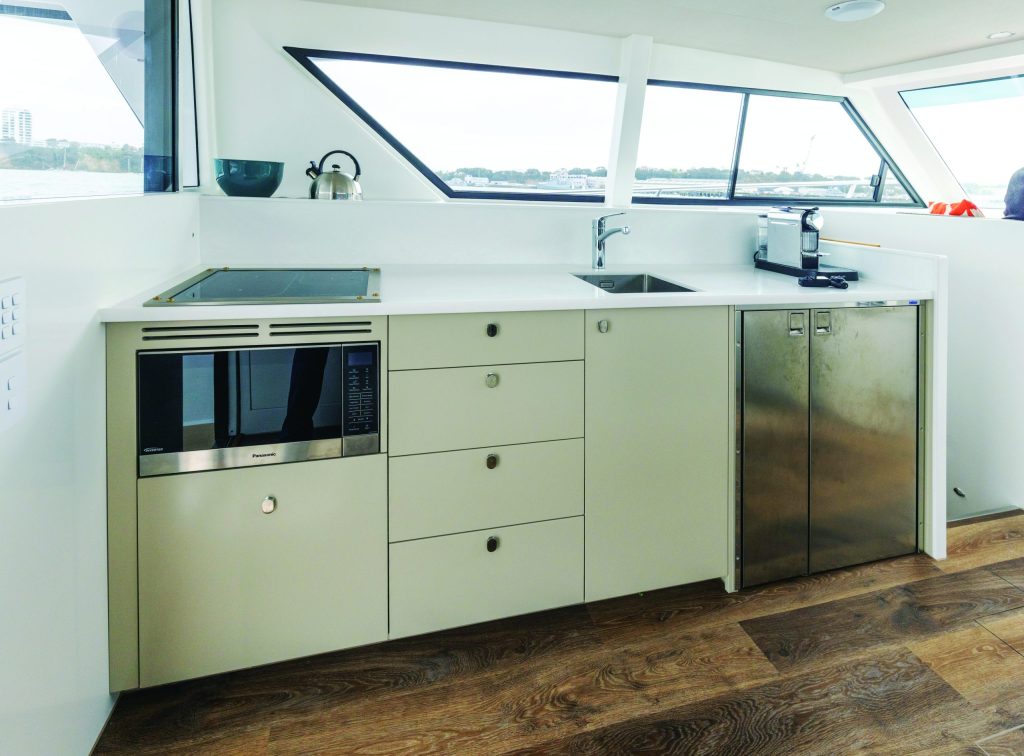
The saloon is modern and comfortable. The galley occupies the port side and includes under-counter refrigeration, supplemented by a drawer fridge beneath the dinette seating. Combined capacity should comfortably support a week aboard.
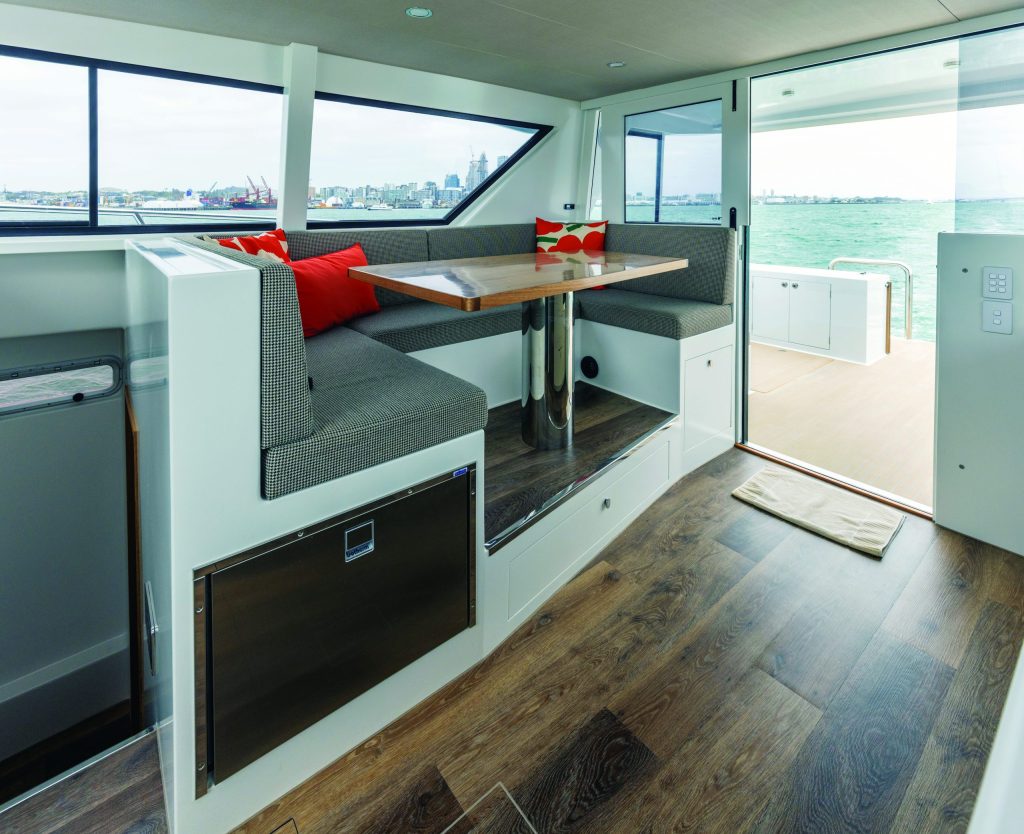
The dedicated dining area centres around a fixed table, supporting the brief of sleeping a maximum of six without compromising onboard comfort. Cooking facilities include an induction hob, microwave and removable gas barbecue mounted in the cockpit when required.
Fresh water is supplied by twin 400-litre self-levelling tanks, while Karndean Mid Limed Oak flooring runs throughout.
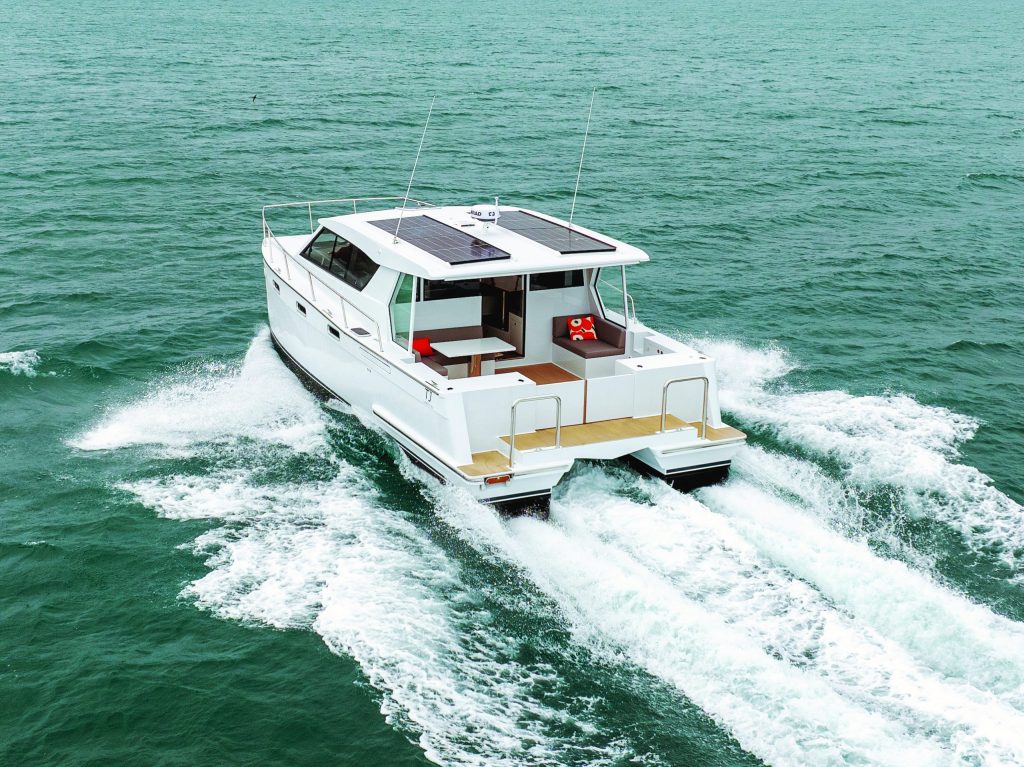
The cockpit is spacious and includes another dining area. With three removable director’s chairs, six adults can dine comfortably while still leaving room for a fishing line over the side. Flexiteek decking ensures easy maintenance.
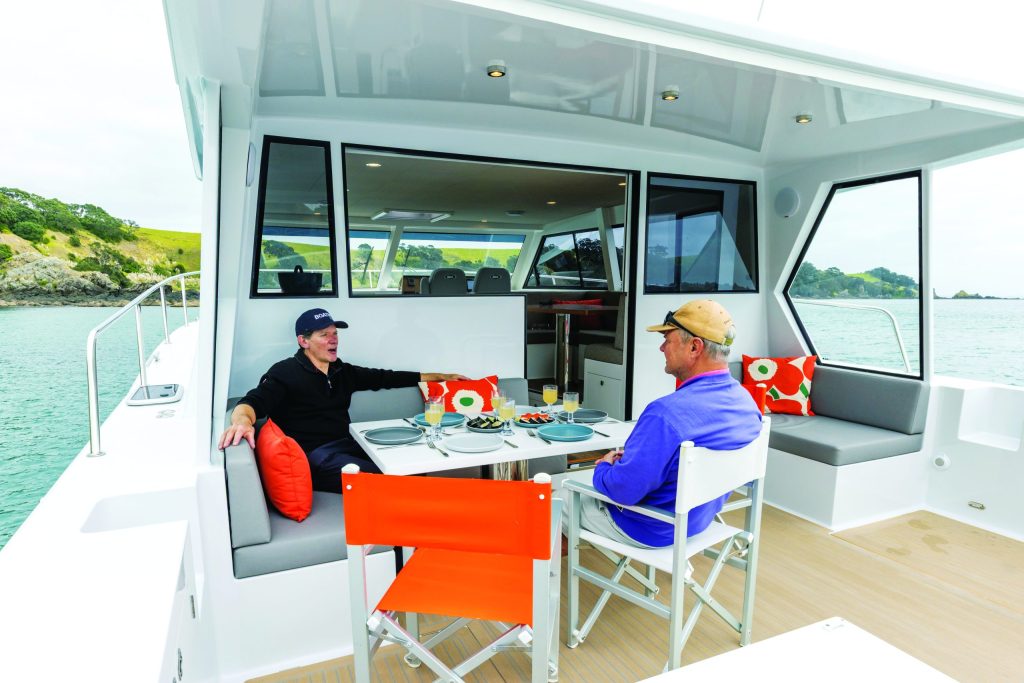
A Truekit Discovery inflatable tender with electric outboard is stored in the port lazarette. Underway, the tender fits neatly between the open transom gates and has remained secure even above 20 knots.
The swim platform provides another example of custom-building flexibility. Originally designed as a single level, it was modified during construction to improve dock access. The resulting stepped design also created the perfect location for the swim ladder and additional utility space.
My overall impression of TJ is overwhelmingly positive. She is carefully designed, beautifully built and remarkably spacious for a 38-footer. Dan Leech has packed an impressive amount of functionality into the hull without sacrificing comfort or aesthetics.
For exploring Nelson’s coastline and beyond, TJ is perfectly suited to her role as a coastal cruiser. With destinations such as Abel Tasman National Park, D’Urville Island and the Marlborough Sounds close at hand, there is little need to venture far offshore.
The owners are looking forward to a summer of cruising, with trips planned to the Bay of Islands and Great Barrier Island before TJ eventually relocates to her home port of Nelson.
TJ takes her name from the owners’ previous monohull, Tasman Jewel, often shortened to TJ. As with that boat, they are considering a three-person ownership partnership. For anyone interested in enjoying the benefits of a modern, efficient custom motor yacht at a fraction of the cost of sole ownership, that opportunity may soon be available.
Any readers interested in such an arrangement can contact the editors at Boating New Zealand, and they’ll connect you.
