


Don’t fix what isn’t broken is exactly the right approach for the revamped Caribbean 40F, writes our Australian-based boat reviewer Kevin Green.
The Caribbean 40F launched at the 2026 Sanctuary Cove International Boat Show, along with smaller sibling, the 27F, after Maritimo bought Caribbean Boats and began a revamp of the model range. The original Caribbean 40 Flybridge Cruiser was one of the brand’s most popular models and after an afternoon aboard, I can see why. I remember taking an earlier model on a bumpy offshore trip about 15 years ago and being impressed with the solidity of the hull as I steered it across the swells off Sydney.
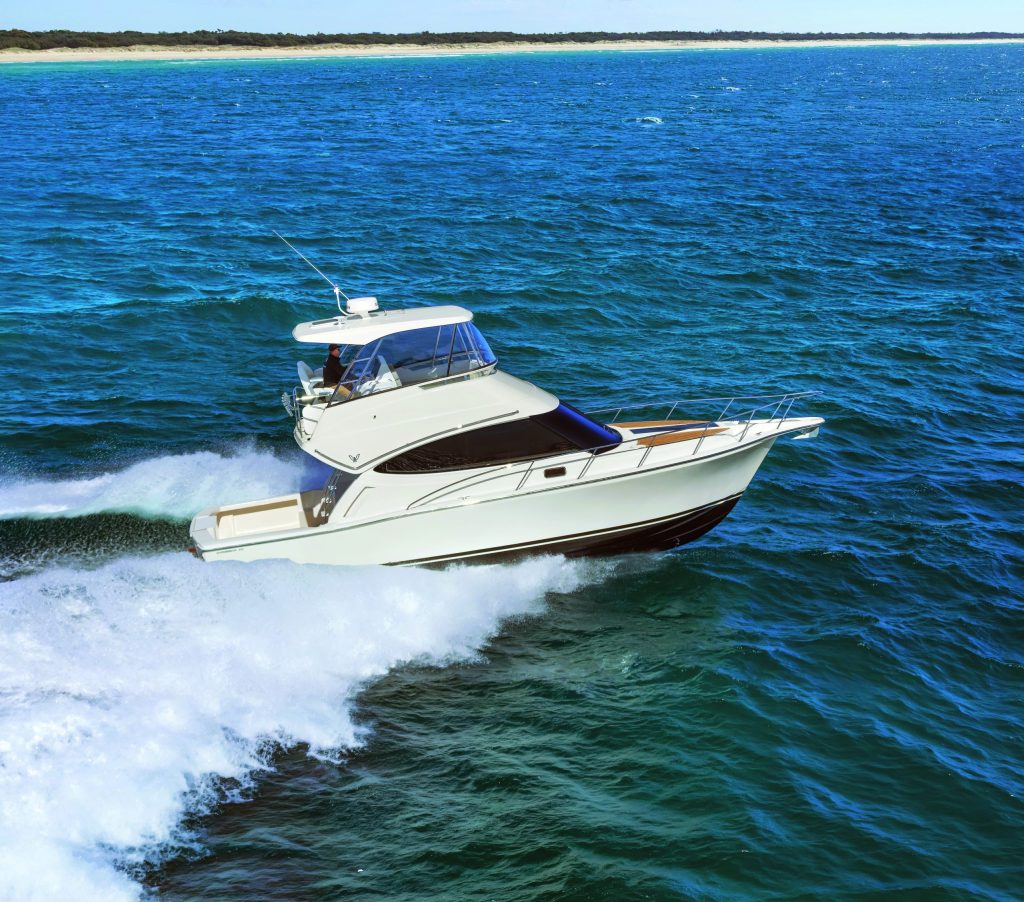
That boat was in full fish hunting layout, as many are. It is this pedigree that attracted Maritimo boss Bill Barry-Cotter. The apprentice boatbuilder, who became a pioneering entrepreneur with first Riviera and then Maritimo, knew good pedigree and design when he saw it: “It has been an interesting journey. Caribbean is a cherished name in Australian boating, with a rich history of building some of the country’s most enduring and capable vessels. Watching the 40F evolve from concept to reality has been incredibly rewarding. Every curve, structure, and engineering choice has been crafted to honour Caribbean’s heritage while delivering the performance and innovation today’s owners expect,” said Barry-Cotter.
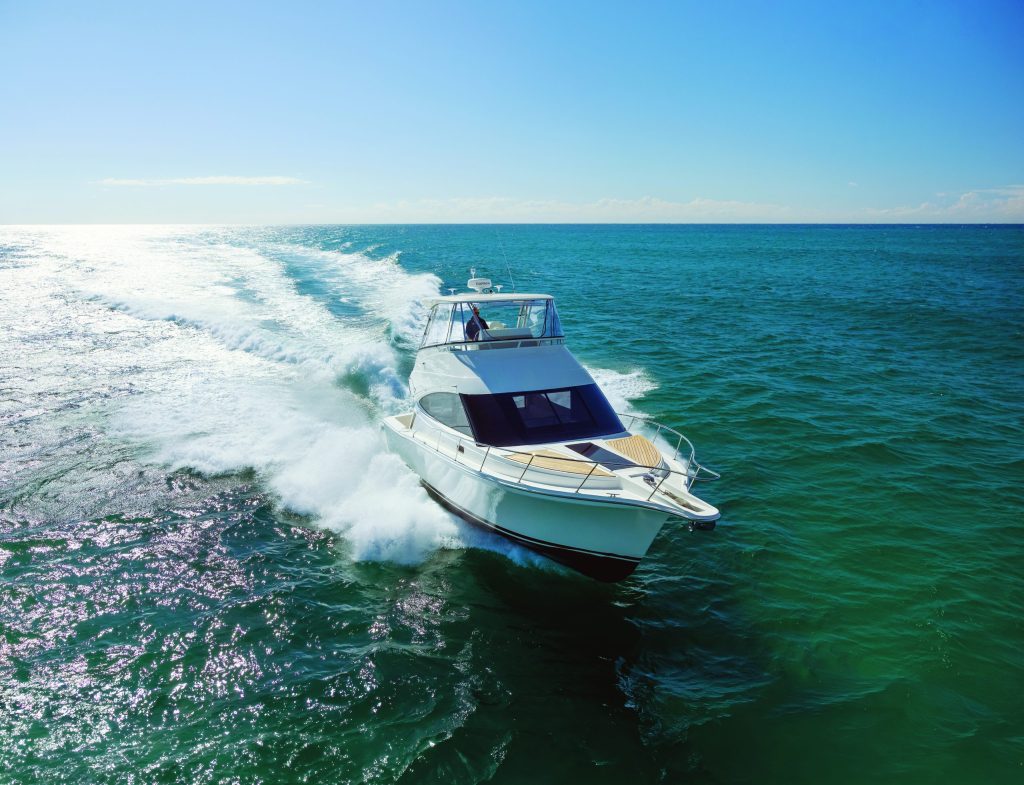
Founded in Melbourne in 1958, Caribbean has long been celebrated for its robust, blue water capable vessels, with deep V-hulls for good offshore performance and stability. With more than 50,000 boats built across various brand names, these Melbourne-made vessels are known for their structural integrity and longevity. The 40F had its first outing on the Gold Coast when I took this sportsfisher-cruiser for a drive around the Broadwater. The key features of the Caribbean 40 Flybridge Cruiser are its spacious cockpit – ideal for a fighting chair or social time – and the large flybridge. All housed inside and atop a solid, monolithic GRP hull. A sharp and raked profile describes the topsides with an undulating sheer aft, which not only looks good but reduces windage at high speed, or indeed at anchor.
Decked out
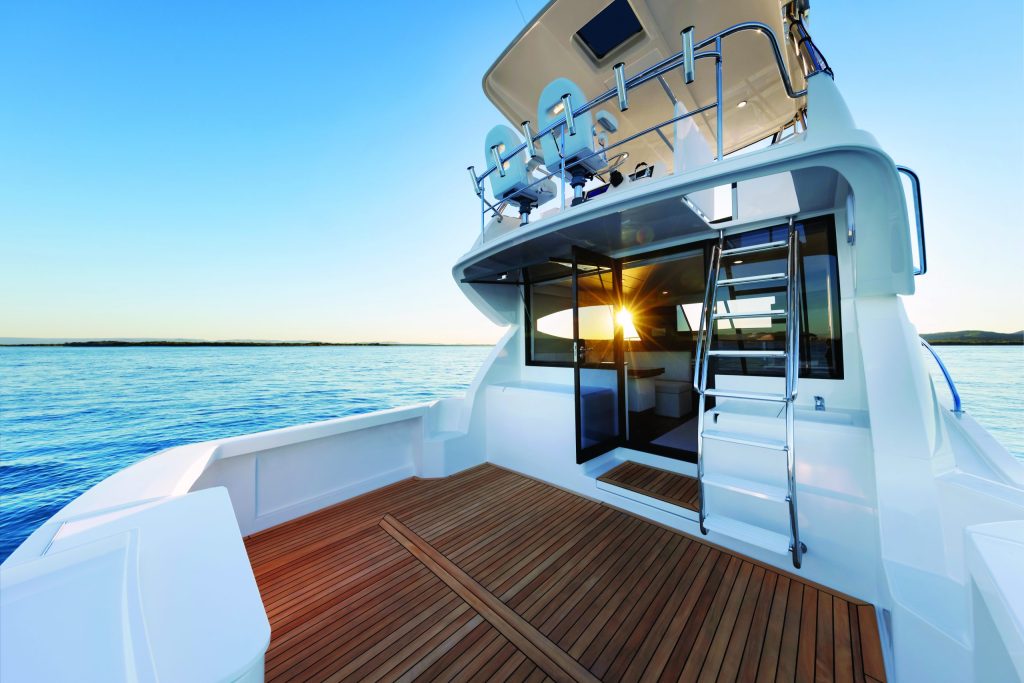
Stepping aboard I find easy, via the swim platform and transom door leading into the cockpit. The transom houses a bait locker, along with storage on each side, so plenty of room for tackle or small water toys. An adjoining floor hatch has access to the transom hull, including both quadrants (with emergency steering keys). This space could also house a bait tank or general storage. The thick, teak felt good on my bare feet and drainage is via the transom door.
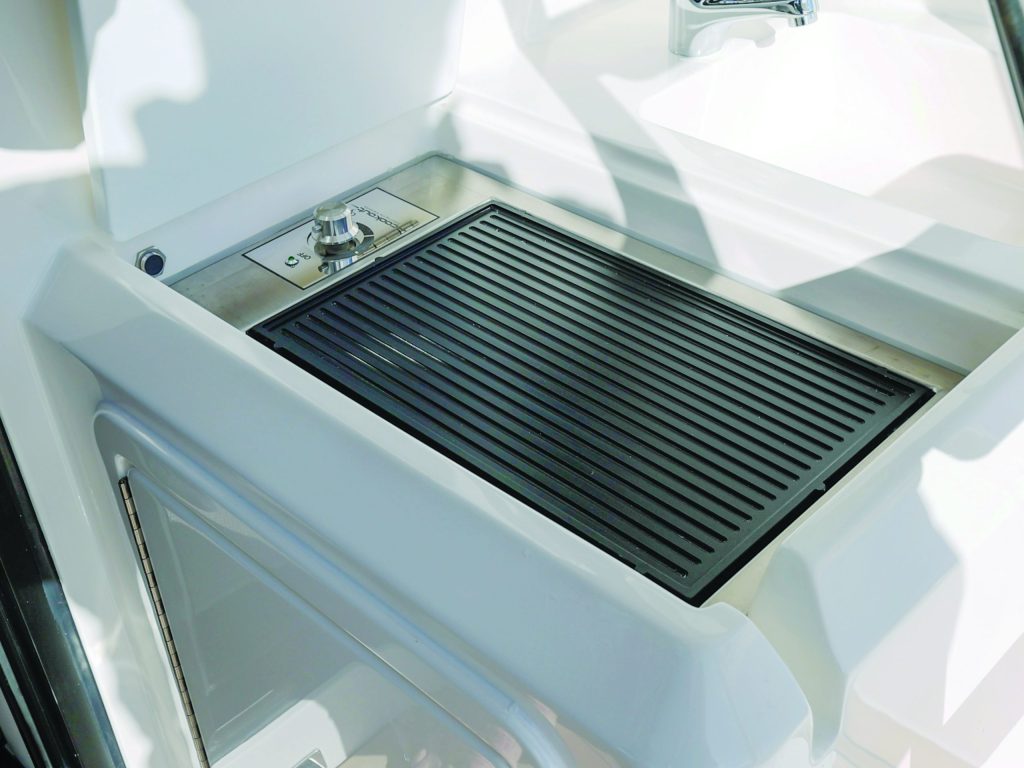
The transom can also house an electric barbecue plate (which can also be located in the saloon). Lockers adjoining the saloon bulkhead house a hotplate-wet bar on this first hull, the starboard-side locker beside the ladder leading to the flybridge. Moving forward to the bow is not for the faint-hearted though, because the side decks are only about a foot wide but handrails on the saloon and guardrails ensure I make it. Here, the elongated foredeck – thanks to the raked bow – is clad in thick teak. I particularly like the anchor layout with GRP bowsprit protecting the rode, but the Maxwell vertical windlass is perhaps a wee bit undersized.
Saloon and flybridge
The saloon layout appeals to the purist in me, being unadorned yet both stylish and functional. The aft dinette is L-shaped to port with a longitudinal bench opposite and galley ahead of it. There’s a moveable and elevating saloon table in the dinette. The saloon has ample volume with tall, vertical bulkheads on each side, allowing natural light and good ventilation via opening side windows and a large barn-style window hinging out to the cockpit. For fishos, there’s a ceiling rod locker with electric opening door and a television on the for’ard bulkhead.
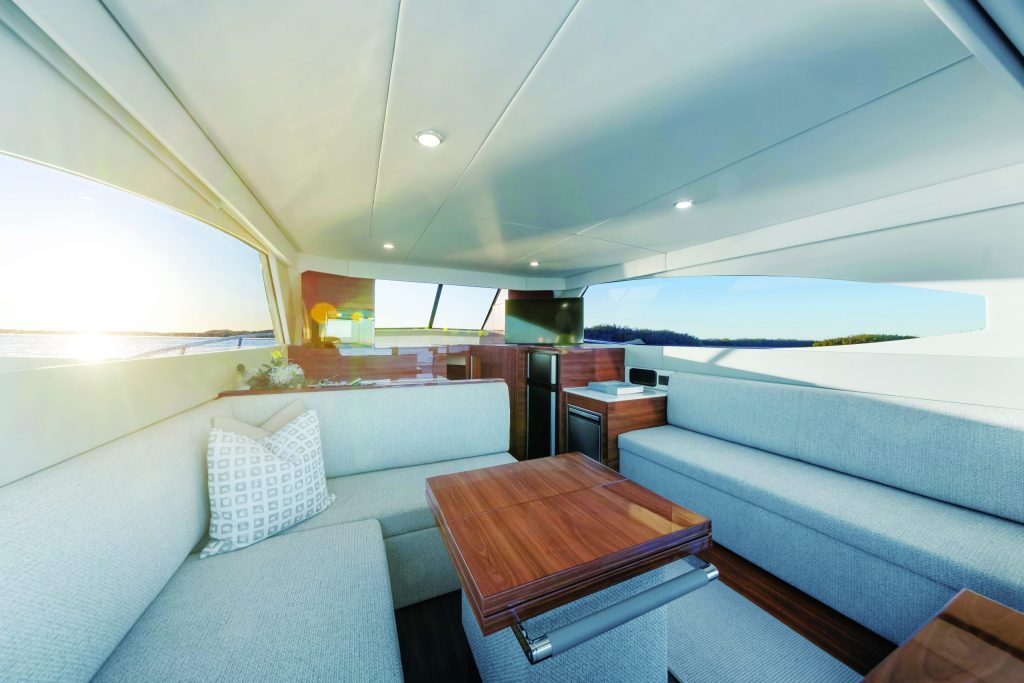
The finish is dark walnut throughout with hardwearing Sunbrella fabric on the settees. In the galley, twin fridge-freezers ensure the catch or the bubbly is well chilled and there’s a small hot plate for cooking and a microwave (run off the generator), plus a deep sink; but no oven.
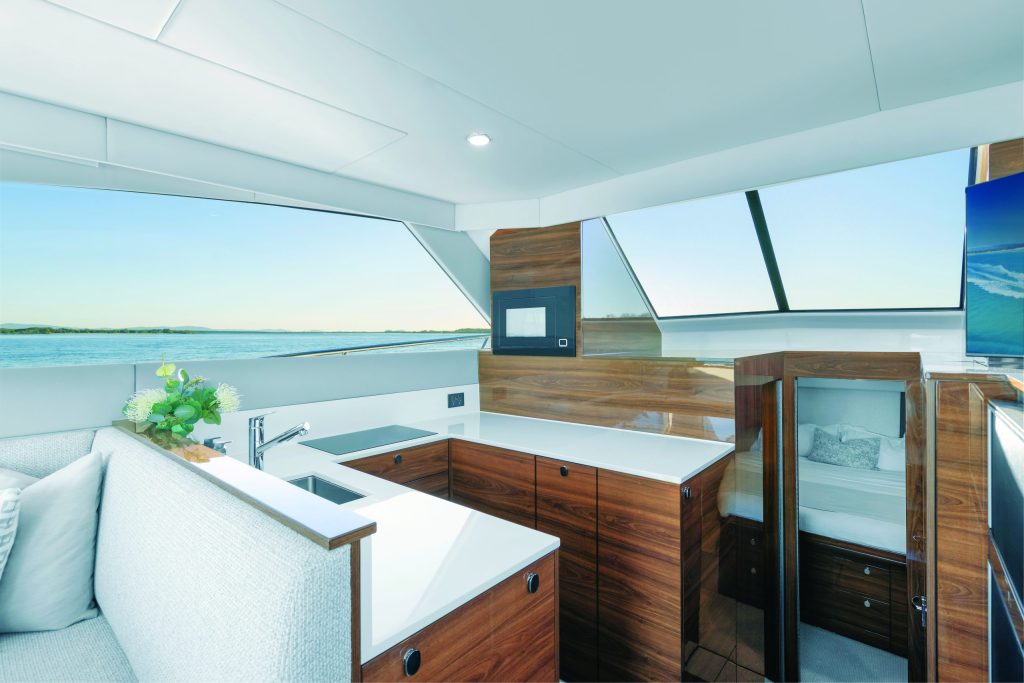
It’s a setup that’s unfussy yet functional and all the fittings and fixtures are to Maritimo’s usual high quality. Navigation is conducted from the tall flybridge, a steep ladder-climb from the cockpit, but the effort is worth it and the shading good under the GRP bimini. Interestingly, it along with the console bulkhead, folds down for transit – a clever Maritimo innovation.
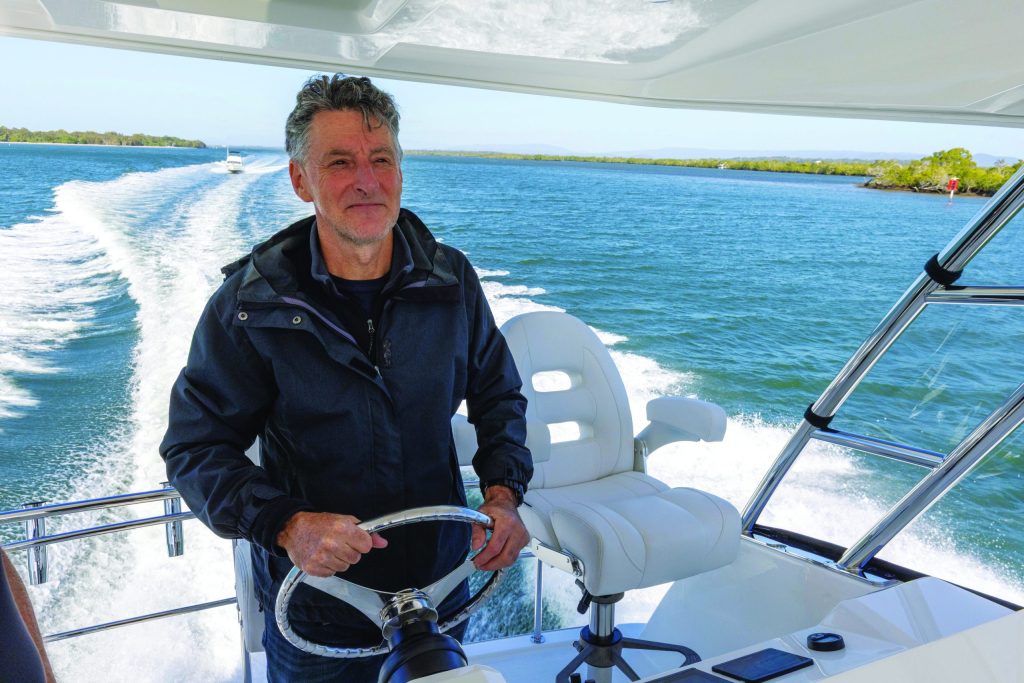
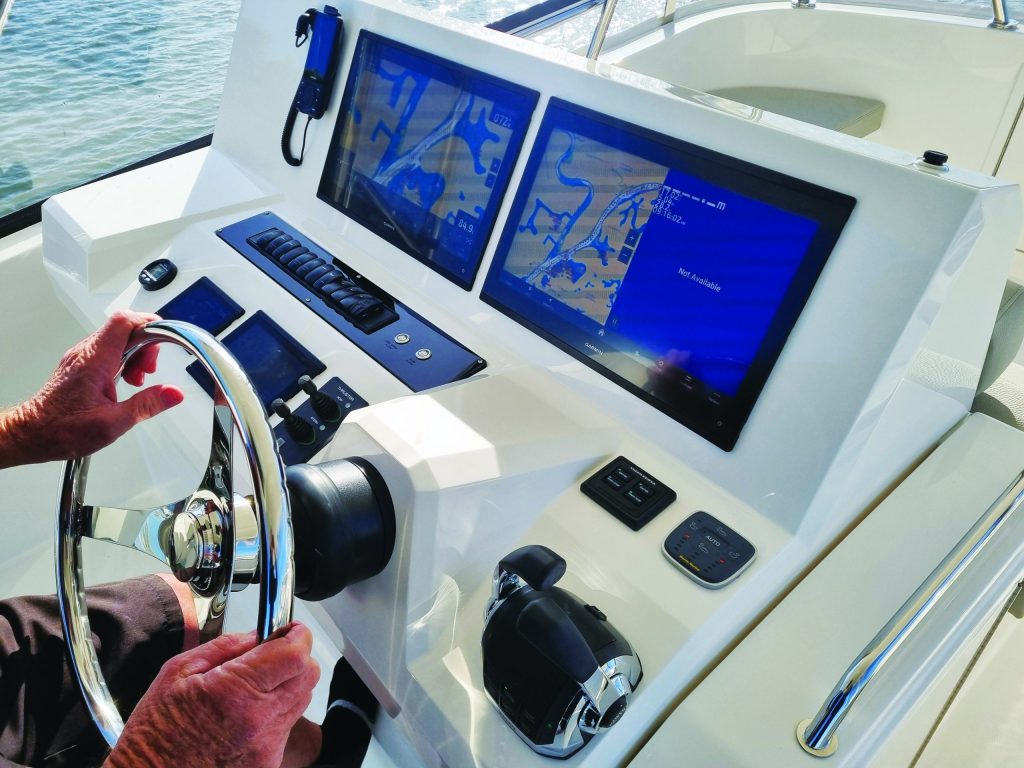
The helm is located well aft, which reduces buffeting when seated at the helm, and offset to port. In front is the lounge area, where a table is optional. At the console, the design is again functional rather than fancy, with throttles inboard and twin thruster joysticks on the other side of the wheel. Two large Garmin multifunction screens seem like overkill but allow, for example, charting and radar simultaneously. A smaller screen below gives Volvo engine data and another, the autopilot. Twin bucket seats finish off this area well and proved ideal during my sea time.
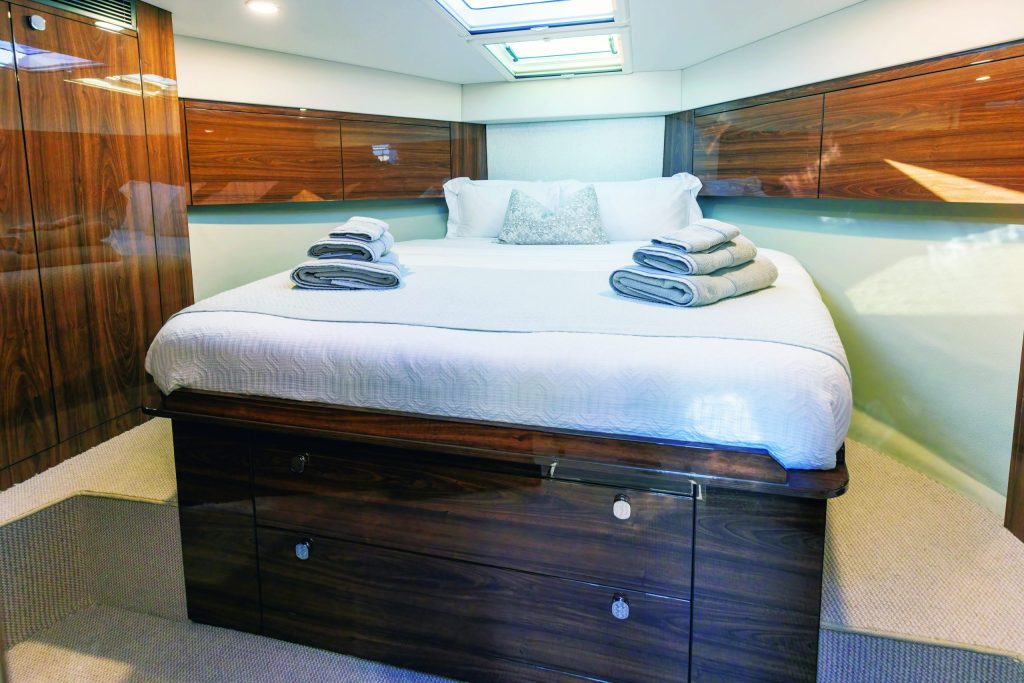
The two-cabin layout has the owner forward and guests in two bunks behind. The owner’s ensuite is roomy with semi-island queen bed surrounded by twin wardrobes that are tall and spacious; along with under-bed storage. Overhead, triple skylights give natural light and ventilation when required.
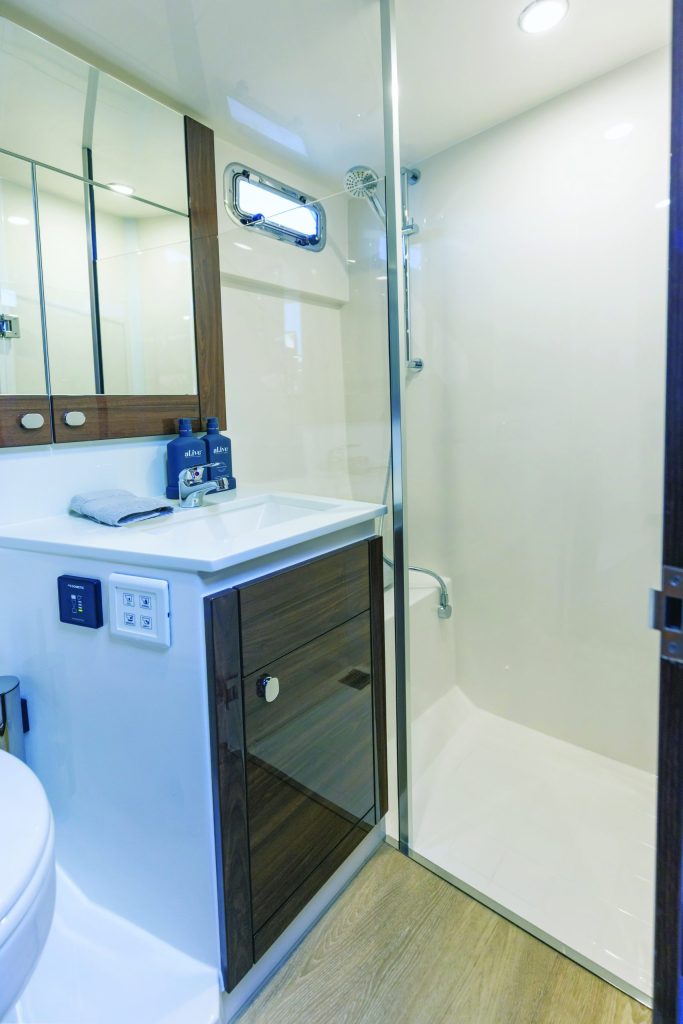
 The bathroom is spacious with a separate moulded shower cubicle, so easily cleaned and the head is electric, using fresh water. It’s dual access space, given it’s the only one on the 40F. Over the wide corridor, as a guest I’d opt for the top bunk because it has a small porthole. Also small is the storage here, so pack sparingly.
Hull and systems
Purist would argue it’s the hull that embodies the 40F, something new owners and Maritimo understood clearly. It has a deep vee and a generous deadrise and is constructed in solid GRP. Topside height is modest, but Maritimo did raise the topsides slightly, though overall weight remains the same as in the older model. Shaft drives locate the engines well forward, which compromises living space, but greatly benefits the vessel’s natural trim (the heavy use of trim tabs is largely unnecessary). Tankage is also distributed evenly, with a single moulded fuel tank behind the engines and fresh water carried in the bow.
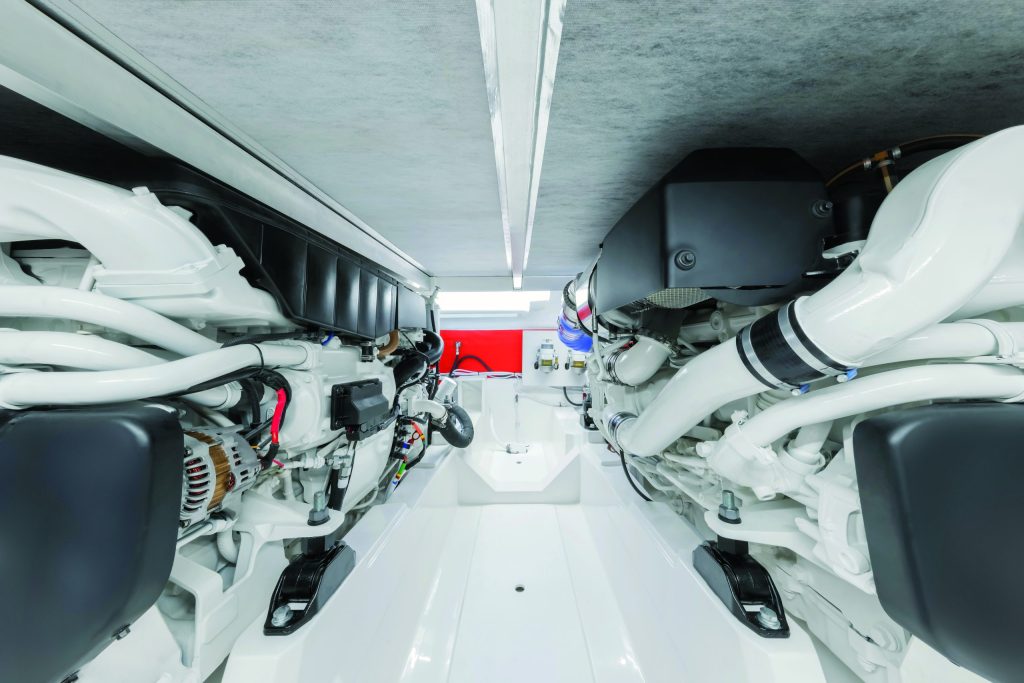
Engine access is via a cockpit hatch, with another smaller hatch in the saloon. The engine room has ample working space around the twin Volvo D11 620hp shaft-drive motors and good access to the ZF gearboxes. I was able to crawl around to check the service points. Wiring is basic copper, so no fancy digital buses to reprogram. Hull number one had an Onan generator at the transom, so perhaps not ideally placed weight-wise, and there’s just enough room aft for a small gyro stabiliser near it.
Below decks the main changes by Maritimo were to put more structure into the hull by extending the grid forward and constructing the engine bay mounts from fibreglass (rather than wood previously) as part of this grid structure. The bilges are a wee bit shallow for my liking.
At sea
Departing Sanctuary Cove marina in the experienced hands of skipper Rosco, the low growl of the Volvo engines turns to a whine as the turbochargers kick-in and we are swiftly on our way to the Broadwater. Back in the day, Rosco was involved with the Caribbean brand, so knows what the market needs. “Really, it’s about keeping the original DNA but in a slightly more modern package,” he tells me.
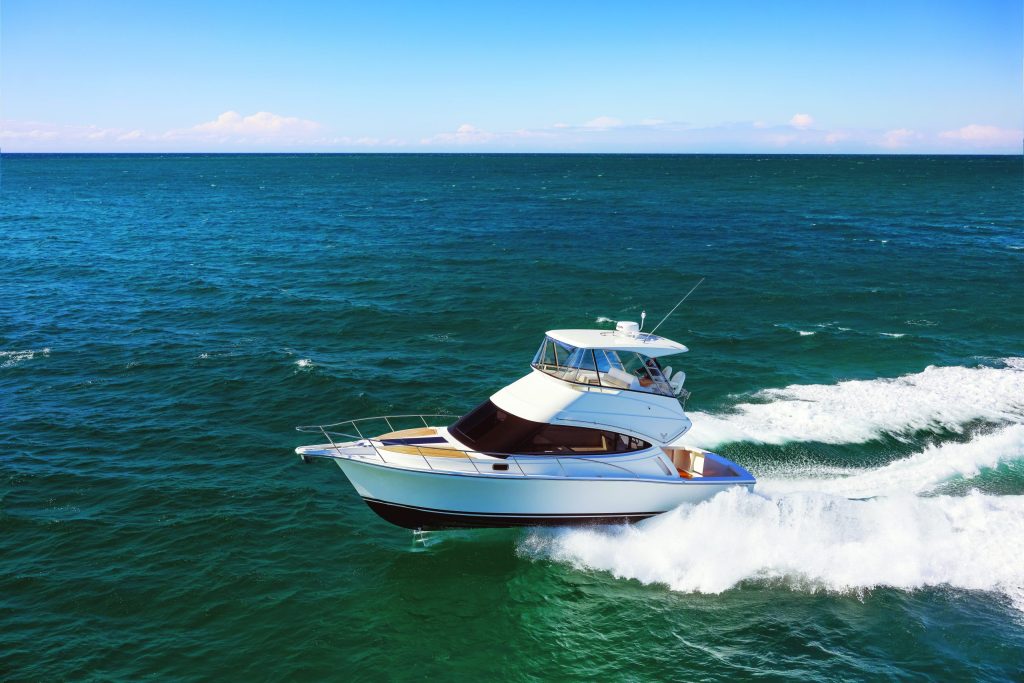
At the estuary of the Coomera River, I sit myself comfortably in the bucket seat and take the helm. Steering feels precise and the views are superb and all-round, since the bulk of the struts holding the bimini has been minimised. Another surprise I find is acceleration, the 40F planing quickly and needing just a few clicks of the tabs to even out the ride attitude. The Garmin shows the numbers rising in the flat conditions, reaching a comfy cruise speed of 26 knots before I do a series of turns, then figure-of-eights, noting some heel. But also the pleasing linear and precise way the hull cuts through the water. No groans or bangs from the hull either as I cross my wake, just a feeling of solidity. With South Stradbroke Island alongside, I go flat chat, almost reaching an impressive 35 knots, so plenty of speed for those fishing runs out wide and back.
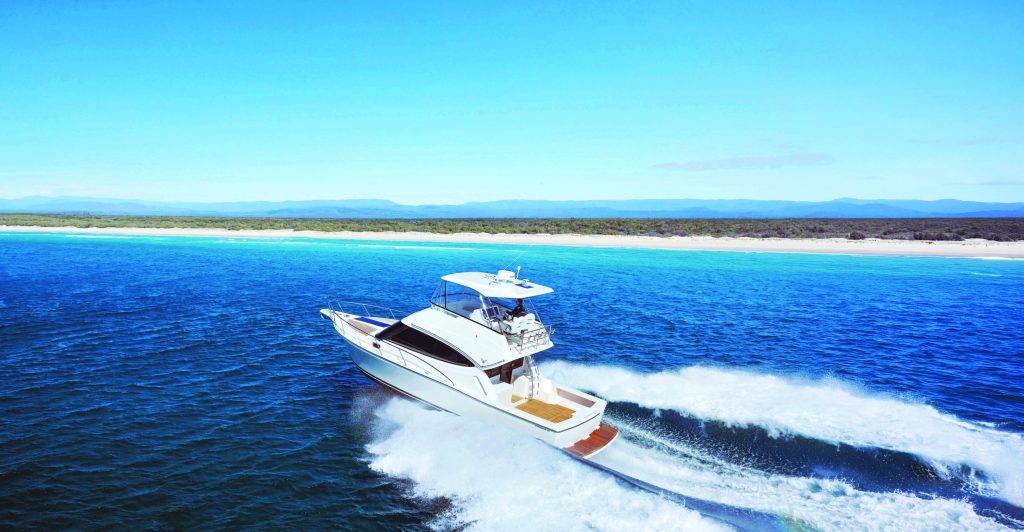
Deciding to head for my favourite anchorage, Tipplers, I practice some slow handling, noting the smoothness of engaging and disengaging the ZF gearbox, before using the thrusters to emulate berthing. To do this, I centred the wheel, then used the throttles to back us up, in conjunction with the thrusters to align the 40F. This was accomplished fairly easily, despite the stiff side wind. Suddenly, I could imagine myself backing up on a fish well offshore, just like my hero Ernest Hemingway. But don’t just take my word for it, try the new Caribbean 40F yourself, because it’s definitely worth it.
| …don’t just take my word for it, try the new Caribbean 40F yourself, because it’s definitely worth it. |
