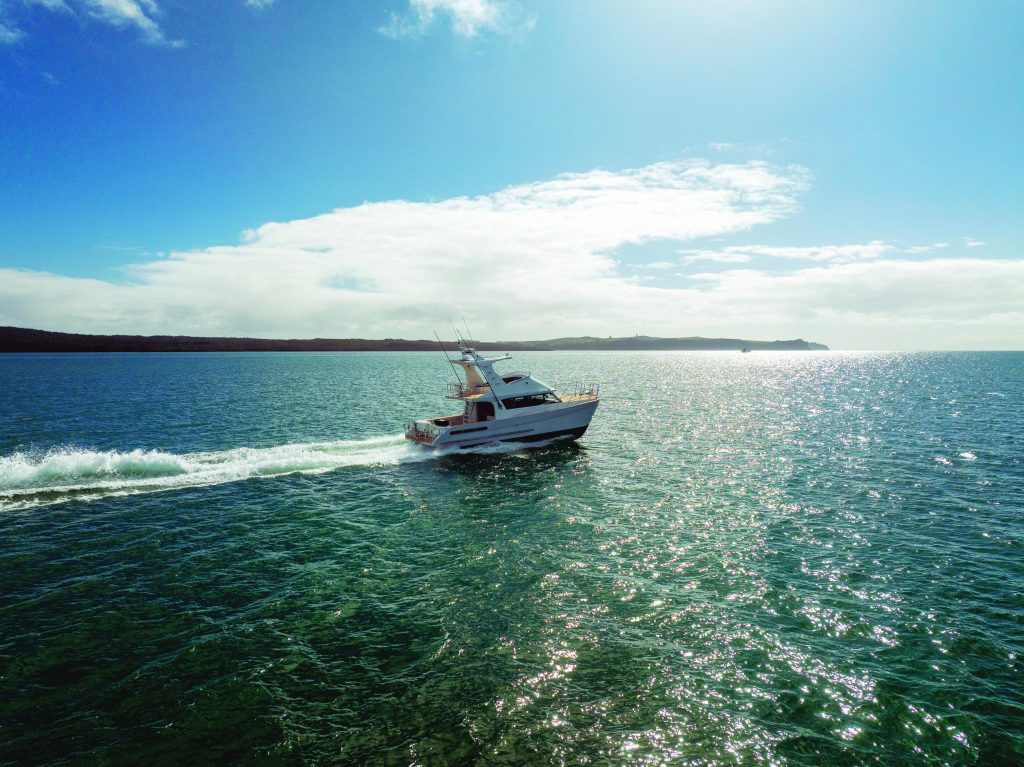
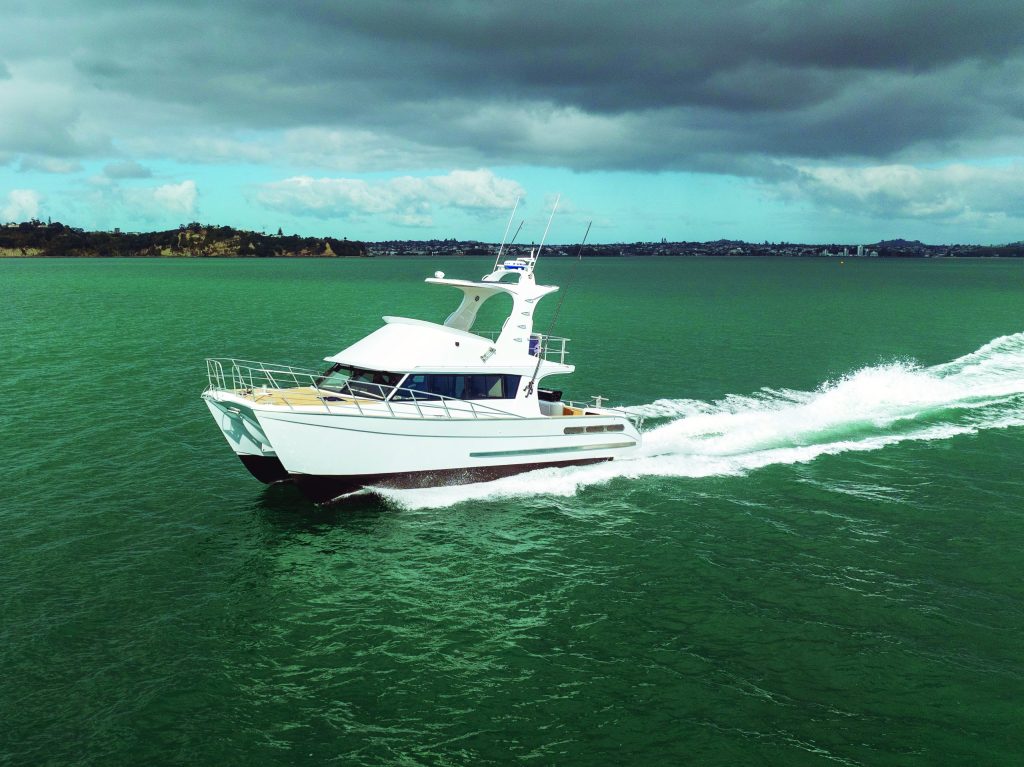
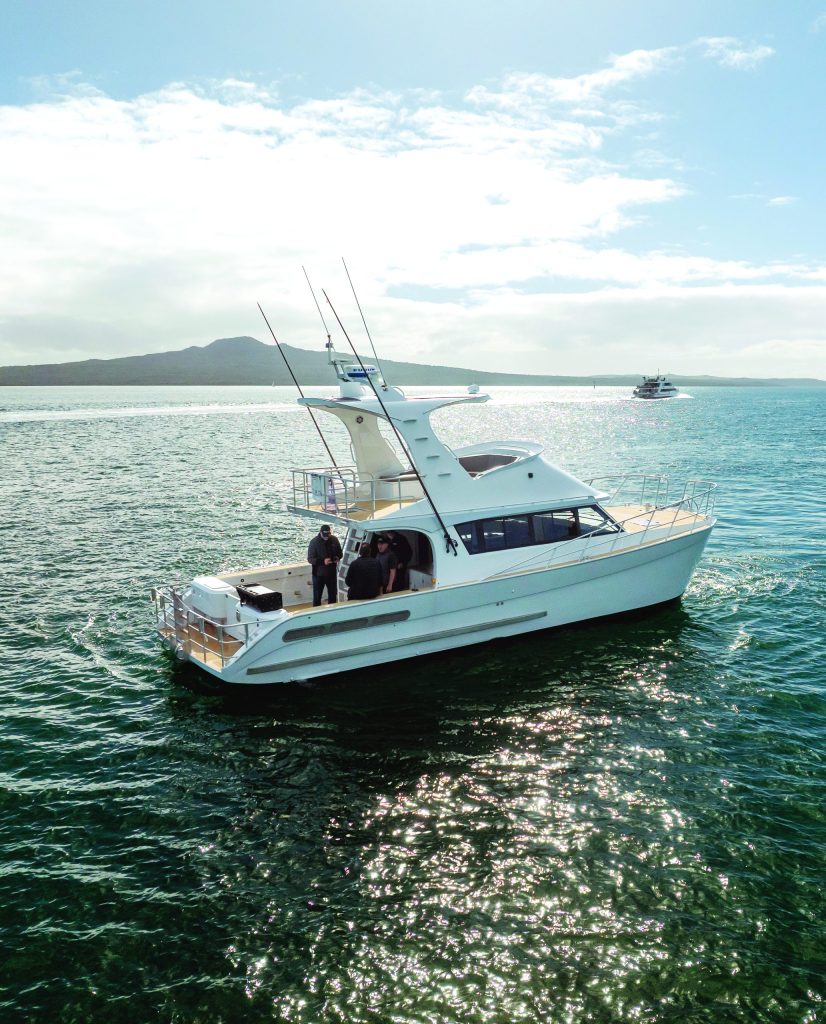
Bladerunner Boats is well known for its foil-assisted power catamarans. The latest example is an expedition-style 12.5m vessel designed for serious fishing and diving trips around the South Island, but in considerable comfort.
Bladerunner has been producing foil-assisted aluminium catamarans in New Zealand for nearly 40 years and has weathered the ups and downs of the economy by sticking to what it does best – producing custom designs tailored to suit each buyer’s specific operational requirements. So, when Greg Shine, owner and designer of Bladerunner Boats, asked if we wanted to have a play with a recently completed 12.5m boat built to meet a customer’s ‘full expedition boat’ requirements, we naturally jumped at the chance.
Maccus was originally intended to be a hardcore blokes’ fishing boat, left unpainted and designed for serious game-fishing and diving trips. Intended for use in the Marlborough Sounds and as far south as Stewart Island, the key requirements were space, fuel efficiency and range. This called for long-range diesel engines with plenty of fuel on board, a watermaker to eliminate reliance on freshwater supplies, and a single source of fuel – diesel – for all appliances on board. In the initial design, luxury was considered an unnecessary complication.
However, as often happens with a custom build, once the family became involved, the luxury specifications changed. In addition to the engines, space needed to be found for the watermaker, a large-capacity alternator paired with a bank of solar panels, inverters and three lithium iron phosphate batteries, a scuba-tank compressor, air conditioning, a Starlink satellite connection with onboard Wi-Fi and a drop-down TV, a diesel cooker, refrigerator and freezer. The benchtops were upgraded to engineered stone, and Flexiteek synthetic decking was fitted throughout the boat. Oak panelling in the cabin, combined with stylish fabric upholstery – not to mention the latest high-tech twin skipper’s seats – completed the upgrades.
This presented some challenges for the designer, as weight distribution on a foil-assisted hull is more critical than on a conventional hull. However, Greg Shine has managed to accommodate all these changes and produce a vessel that is not only a go-anywhere expedition boat but is also capable of doing so in style and comfort.
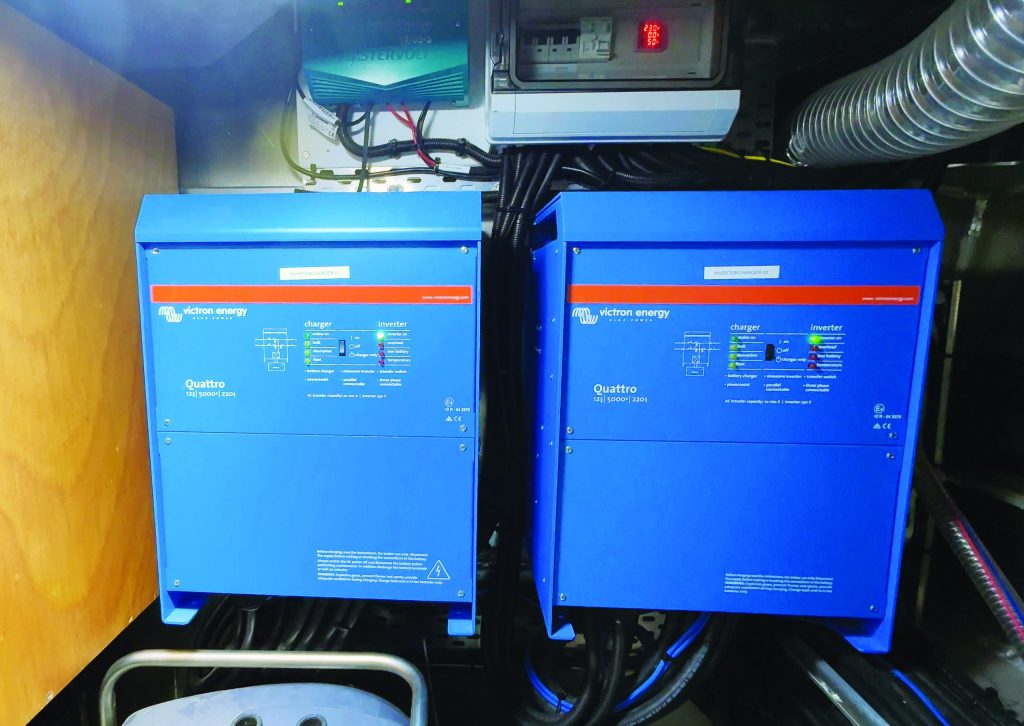
Beacon Marine & Electrical completed all AC, DC, comms and electronics integration, from design to commissioning. They also fitted a custom-designed electrical system for the battery-powered Bauer Oceanus dive compressor, the batteries (each one fused and monitored via a BMS system), the inverter/charger system, air conditioning (7000BTU) and the fully monitored DC electric system with CZone digital switching.
Forward are two twin cabins, accessed by stepping down into each hull. The foremost section of each bow is also accessible but is protected by a watertight collision bulkhead, providing an additional measure of safety. Aft of the steps leading into each hull are two service areas that could have been used for additional accommodation but instead house equipment. The port side accommodates the water services, scuba compressor and cylinder-refilling station, allowing cylinders to be filled and dive gear to be stowed. The starboard side houses the electrical components, along with the watermaker, batteries and inverter.
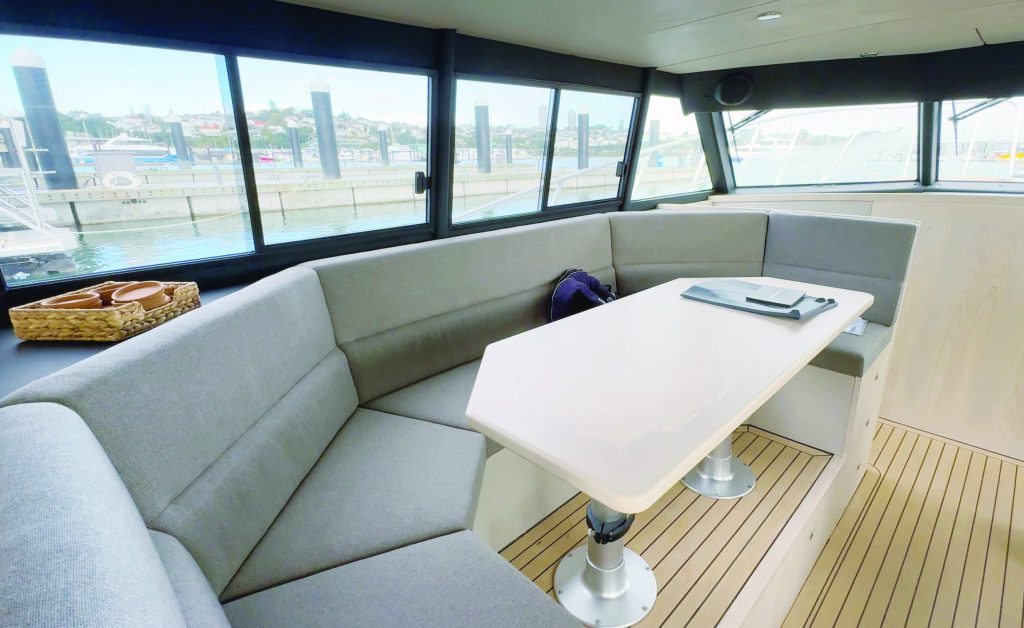
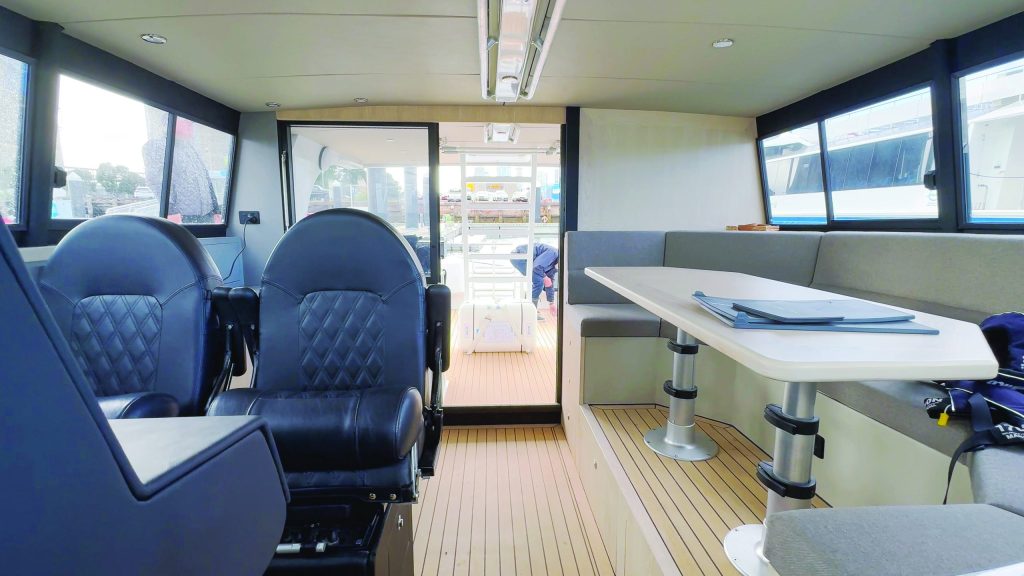
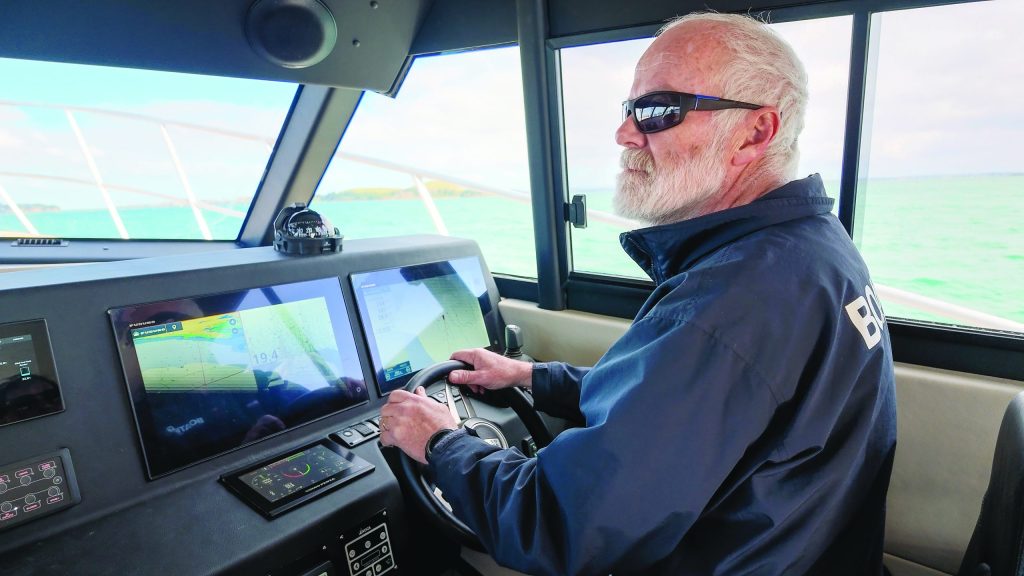
In the main cabin, a generously sized lounge seat and table convert into two additional berths when required. The helm station features a pair of luxurious leather-finished skipper’s seats, which are adjustable in virtually every direction. The helm itself is, of course, beautifully equipped, with two large Furuno multifunction displays, controls for the twin Volvo engines and a range of ancillary controls. Rather than going fully digital, the owner has selected a mixture of traditional rocker switches as well as an integrated Czone digital solution. This keeps essential functions (wipers, anchor, bilge pumps) simple and easy to access, while also retaining the benefits of digital switching for overall system managements.
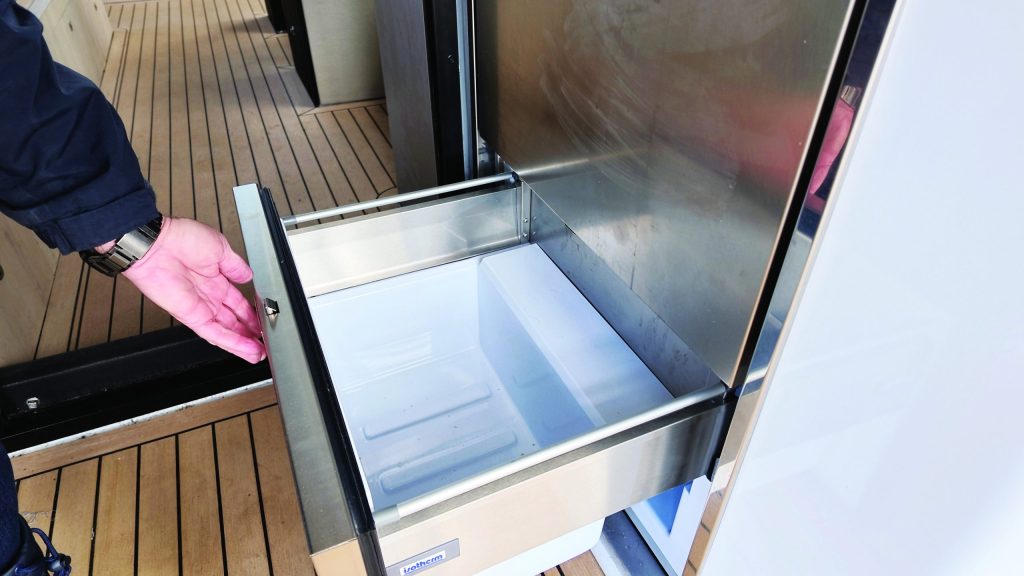
The entertaining area behind the helm contains the refrigerator and freezer, Wallas diesel stove, food-preparation area and storage – this boat has simply masses of storage. The rear cabin door slides into a recess behind the combined shower and toilet compartment, while a window above the food-preparation area swings upwards and clips to the ceiling, completely opening the rear of the cabin.
The external shower and toilet compartment is one aspect of the original ‘blokes’ boat’ design that could not easily be changed to suit the more luxurious layout into which the vessel evolved, but it still works well. Full hot and cold running water, together with a holding tank, makes it suitable for extended trips.
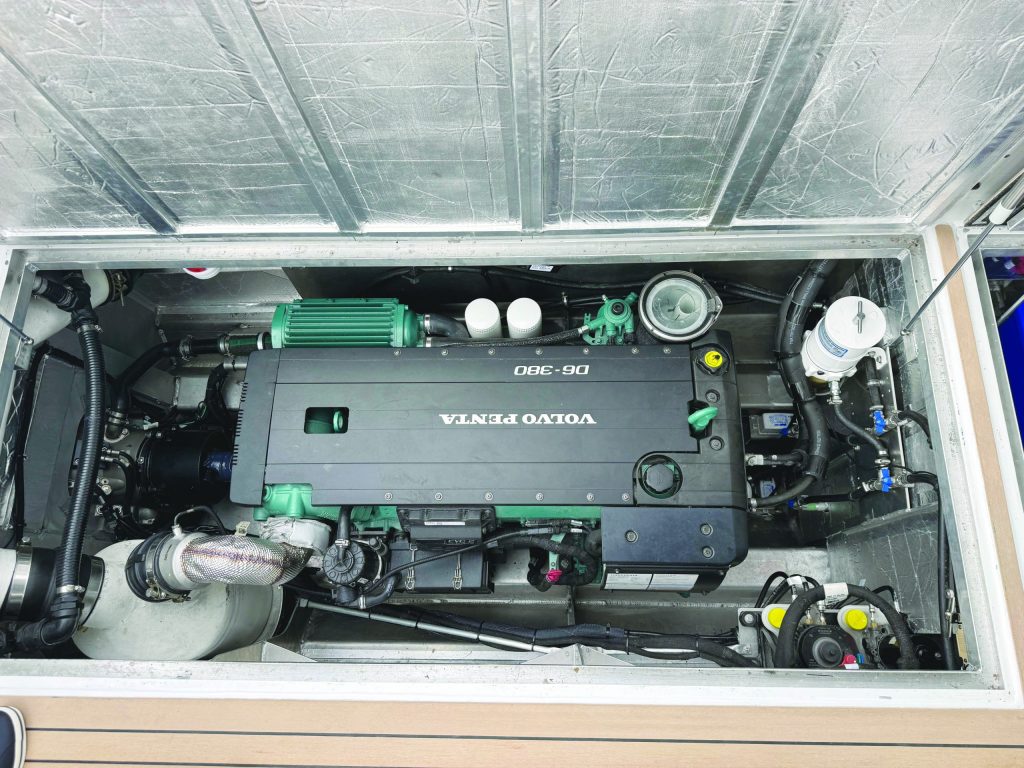
Power is provided by a pair of Volvo Penta D6-380 inboard diesels with DPI sterndrives, which are easily accessed through two huge watertight hatches in the cockpit. The installation features several additional accessories, including a jackshaft kit that enables the engines to be mounted farther forward, positioning the centre of gravity over the foil, and exhaust risers that allow the exhaust gases to be efficiently vented. An auxiliary alternator kit with a 350-amp house alternator complements the solar panels, while the full suite of Volvo drive-by-wire electronic controls is installed. The cockpit hasa secondary helm control for joystick docking and driving, while the installed options include Volvo’s Dynamic Positioning System, an integrated autopilot, Bluetooth connectivity and touchscreen engine displays.
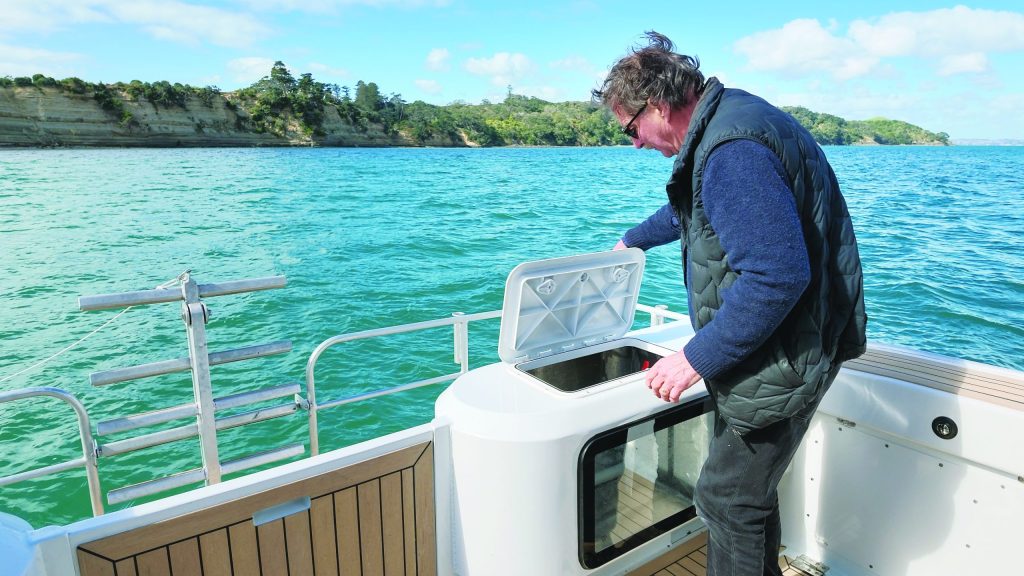
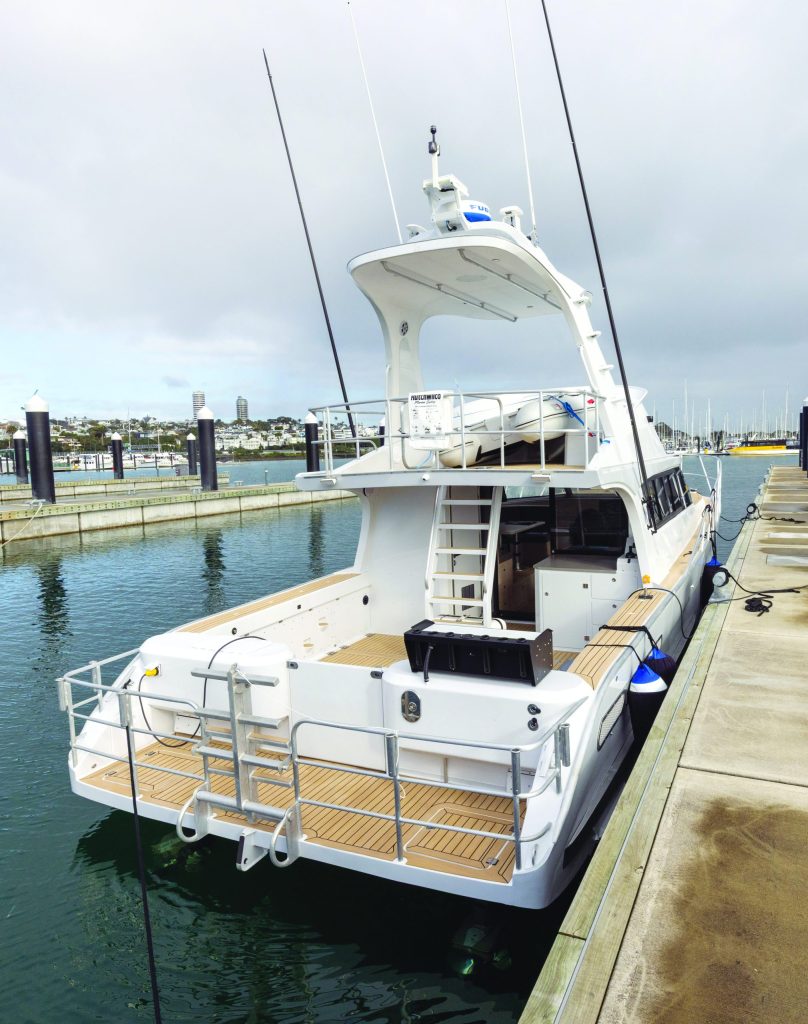
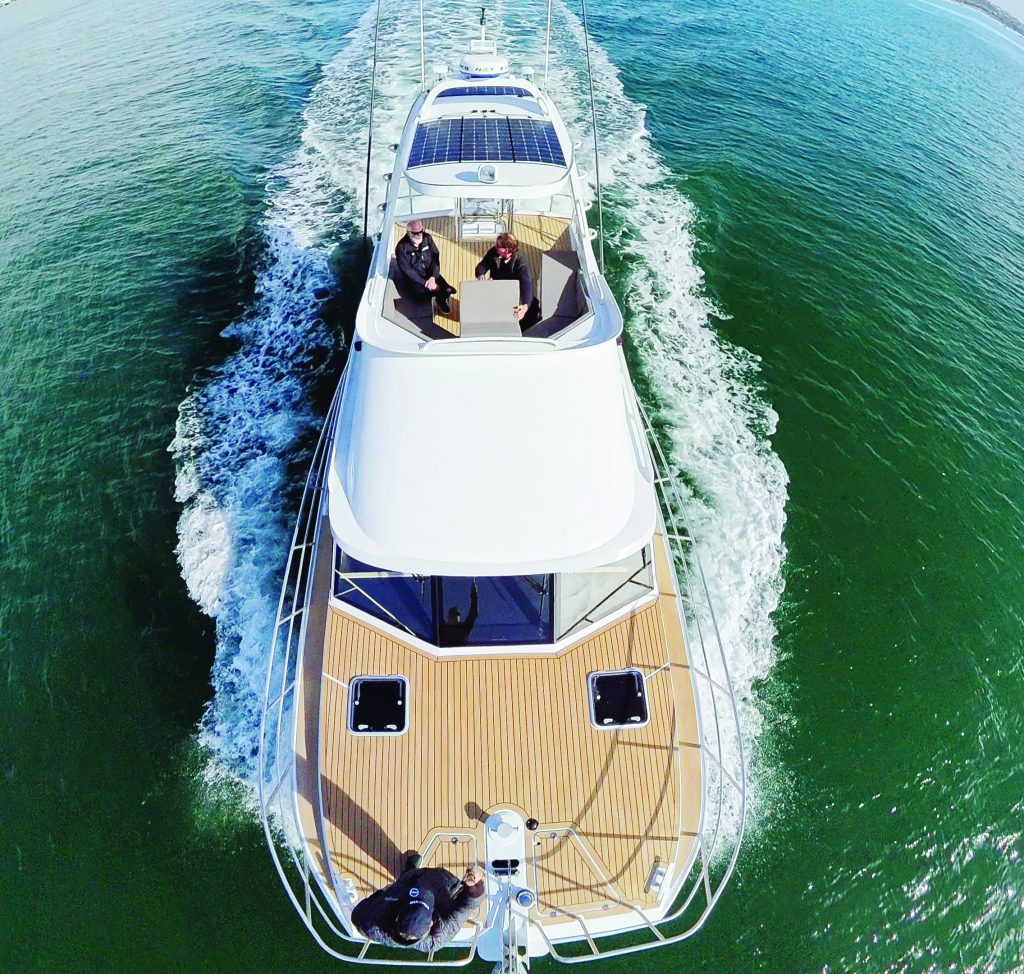
As would be expected of a boat with this DNA, the cockpit and boarding platform are perfectly set up for serious fishing and diving. High gunwales make the cockpit a safe place, even in big seas, while a wide doorway through the centre of the transom provides access to the spacious boarding platform. One useful feature is the hatches set into each side of the platform, which provide access to the sterndrives when they are tilted upwards. This makes it easy to deal with problems such as rope or fishing line wrapped around the propellers, and it also gave us an interesting perspective of the hull and foils while travelling at speed. On the port side of the transom is a built-in livebait tank, while the starboard side has a huge bait board with integrated fishing-tackle storage.
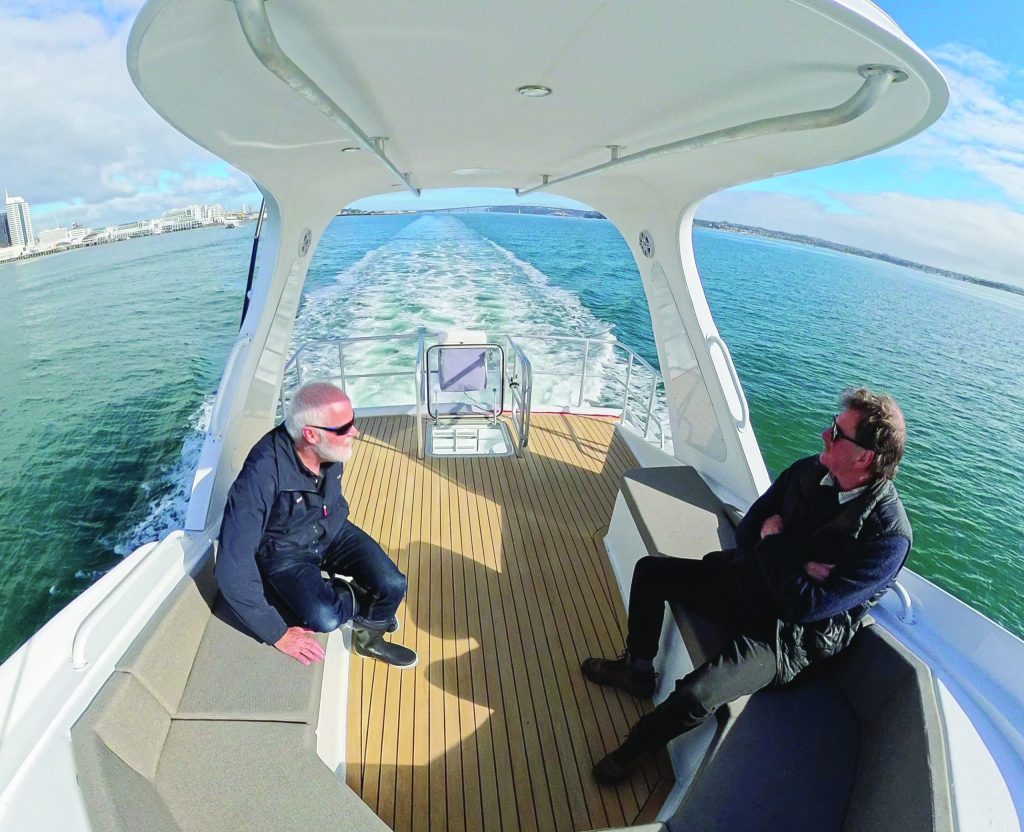
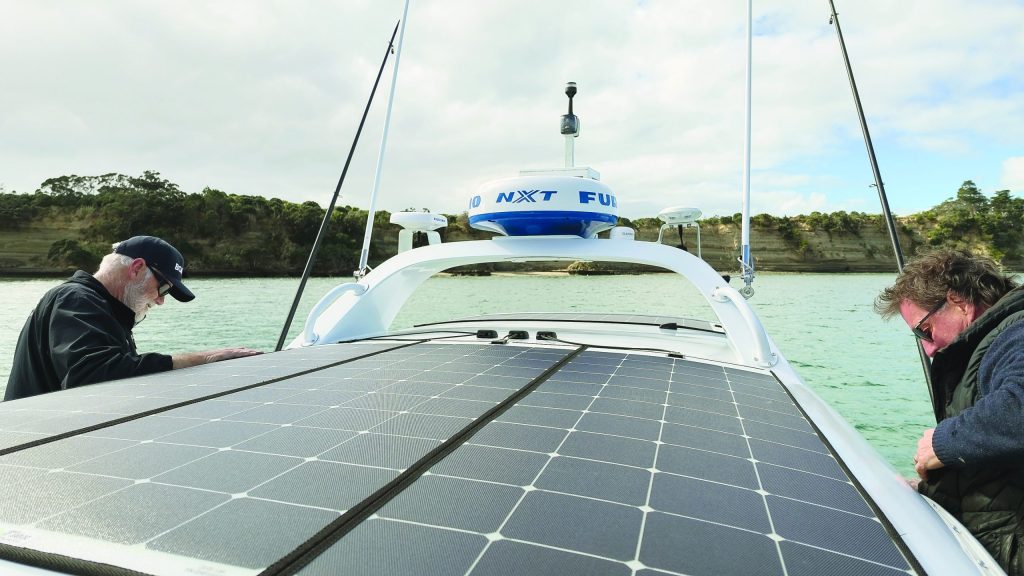
An extended hardtop covers about half of the cockpit and forms the floor of the flybridge above. There are currently no helm controls up there, although Shine says the owner is likely to install another set of plug-and-play Volvo digital controls. The curved brow opens to reveal an enclosed compartment that could easily accommodate another double berth, further increasing the vessel’s overnight capacity. The boat had not yet been fitted with clears around the flybridge, but this is another enhancement still to come. The hardtop has been strengthened and has external steps on either side, allowing it to be used as an even higher viewing platform when spotting game fish. Large walk-on solar panels are fitted across the hardtop, making use of available sunlight to charge the house batteries.
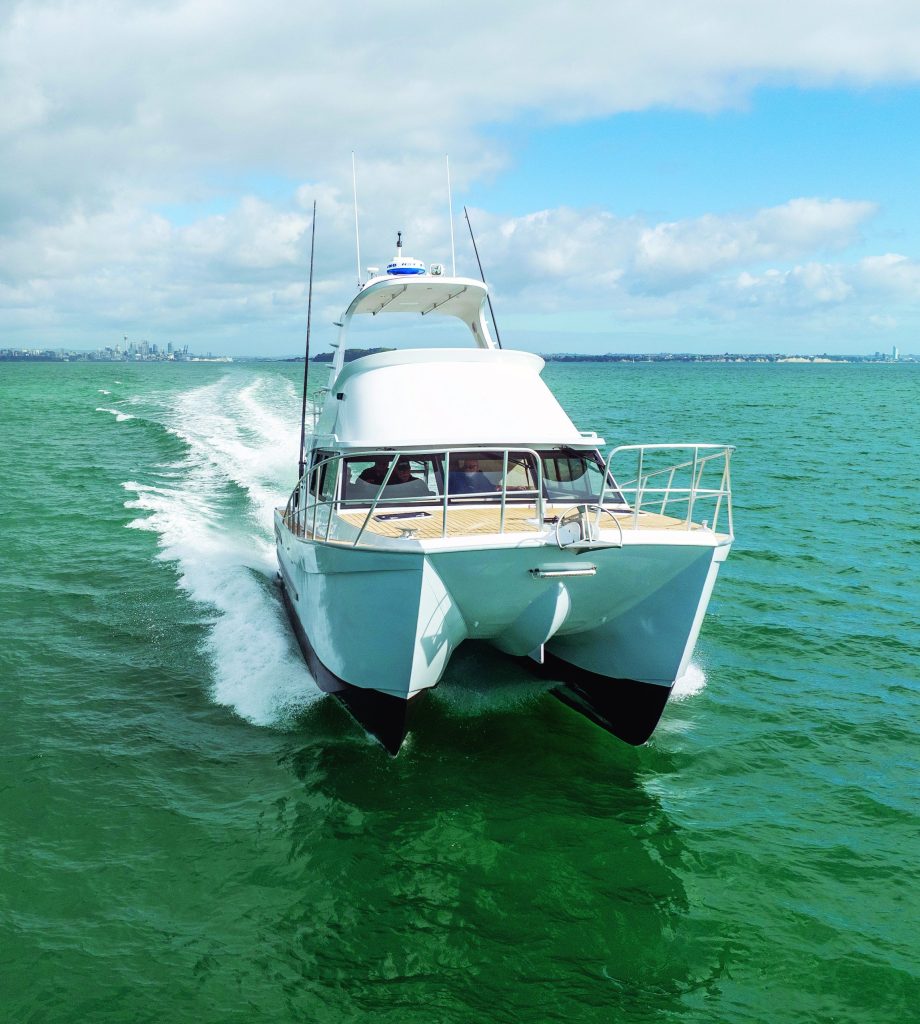
After finishing our inspection, we got underway and, once clear of the harbour, brought the boat up to cruising speed. At 28 knots, the D6-380s were running smoothly at about 60 per cent of maximum power – an efficient, low-stress setting at which they can operate continuously all day. At this speed, the vessel can run continuously for 24 hours on the fuel carried on board, with a maximum range of up to 670 nautical miles.
| Another interesting characteristic of foil-assisted catamarans is how little wake they themselves create once riding on the foils. |
Shine says that, because of the additional equipment installed, the boat came in above its design weight. Its current displacement is around 12,500kg at half load, but despite this, it still performs well within specification. He says this means it uses around 35hp per tonne to operate at 28 knots, which is a very good figure and similar to many other hydrofoil-supported craft Bladerunner has built.
There are, of course, numerous features of the boat’s design that we did not explore, including sufficient sealed buoyancy in both hulls to withstand complete swamping without sinking. There is ample space in all the service areas to provide easy access to the engines, filters, seals and other items requiring maintenance. A liferaft tucked behind the ladder to the flybridge makes the vessel compliant for offshore use, while the forward deck is also finished with Flexiteek and protected by high guardrails.
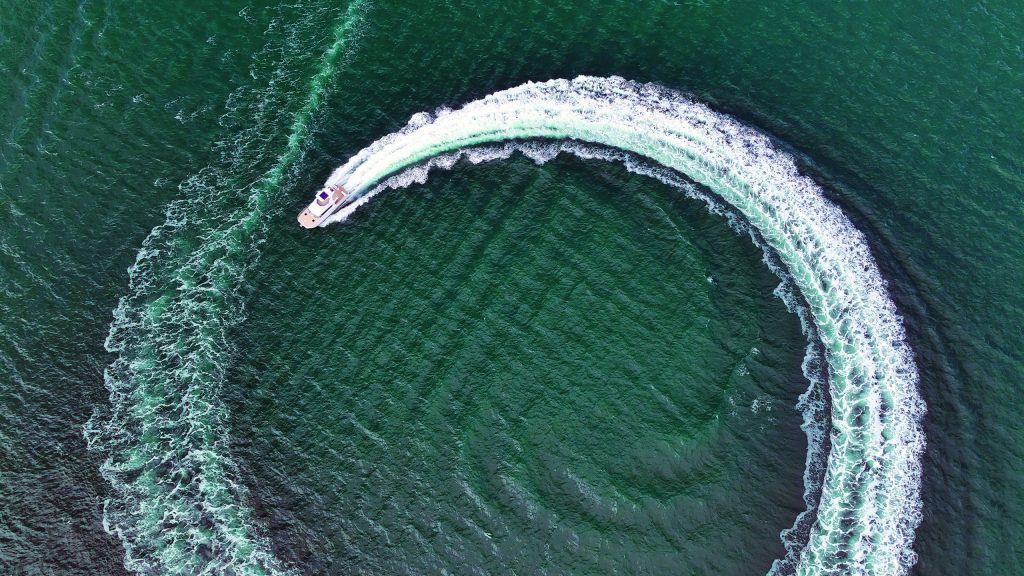
Once we had taken all the necessary photographs and videos, it was my turn at the helm – and I had some fun. One of the interesting characteristics of most power cats is their tendency to bank outwards during a hard turn, which can be disconcerting if you are not expecting it. This can result in items sliding off tables, which is why most catamaran owners tend to ease the throttles before making a hard turn.
However, the foil on the Bladerunner counteracts this tendency and instead creates some positive heel. Consequently, we were happy and comfortable making full-lock turns at nearly 30 knots. Although it did not lean into the turn as much as a monohull would, there was enough angle that we did not need to hold on to anything. That positive banking also means there is very little sideslip, another common characteristic of catamarans with symmetrical hulls.
Acceleration was very good for such a large boat. There is no downside to having additional horsepower, and I love the sweet sound of large turbo-diesel engines running smoothly. As mentioned, we were perfectly comfortable making tight turns, as well as crossing whatever wakes we could find.
Another interesting characteristic of foil-assisted catamarans is how little wake they themselves create once riding on the foils. Compared with even the best planing monohull, we left very little behind us to mark our passing. Looking at the photographs afterwards, we could see how much of the hull lifted clear of the water. By lifting the transom hatches, we could also look forwards and see the foil running smoothly just beneath the surface.
Yet the transition was smooth, with a subtle change in angle being about the only indication that we were now foiling. Trimming the sterndrives in or out adjusted the effective angle of the foil and was the only adjustment required at different speeds. The ride was similarly smooth, with the foil and hull inertia taking care of the usual bounce and roll of open water.
All too soon, we needed to head home. Back at the marina, the joystick docking system demonstrated its worth. We could slide sideways into a tight berth with virtually no effort from the skipper, although we could hear and see the sterndrives adjusting their angle and thrust to move us sideways. A bow thruster is redundant with a system like this, and the electronics take all the stress out of the process.
Overall, this is a serious yet luxurious expedition-level boat: self-contained and with sufficient range for extended trips. Its single fuel source makes it easy to manage, while its fuel efficiency and comfort make it a delight to operate. A Bladerunner should be a serious consideration for anyone in the market for a vessel of this size. In fact, it offers so many benefits that it deserves to sit near the top of any buyer’s shortlist.
| Hydrofoils vs full-foiling catamarans
Hydrofoils have been a hot topic in boating ever since the America’s Cup began using foiling catamarans in 2013. This radical departure from previous designs also led to the establishment of the SailGP competition, which uses similar but smaller boats. However, the concept of a hydrofoil – where a wing-shaped structure ‘flies’ through the water and lifts the boat to reduce drag and increase speed – has existed in various forms for more than a century. We need to start by understanding that there are two different concepts involved. The older of the two is the fully foiling hull, as used in America’s Cup boat designs. With this design, the entire hull lifts out of the water at speed, leaving only the foil blades supporting the boat’s full weight. The first full-sized foiling boat was tested on the River Seine in 1904, and other designs were used during the Second World War. Fast foiling ferries were prevalent during the 1960s before falling out of favour because of poor low-speed performance, high maintenance costs and reliability issues caused by the foils remaining permanently in the water. These boats also perform less effectively in rough water and can be limited to displacement speed when conditions prevent them from rising onto their foils. Modern composites and electronics have led to a resurgence of this concept, while retractable foils with variable pitch have overcome some of the earlier problems. However, these vessels remain complex and expensive and are still very much a niche product, albeit an increasingly common one. Foil-assisted hulls are a very different proposition. In this design, the foil provides some lift but never attempts to lift the entire boat clear of the water. This arrangement is most commonly seen on catamarans, where the foil is positioned between the hulls. Here, it does not protrude below the hulls to become a hazard in shallow water, and it is securely attached at both ends. As the boat accelerates, the foil surface begins to generate lift, helping to raise the hulls and reduce the surface area in contact with the water, thereby reducing overall drag. By tilting the motors to adjust the trim of the hull, the foil’s angle of attack can be changed to generate more or less lift, without requiring any moving parts on the foil itself. These designs are well established and robust, generally have no moving parts and consequently have few disadvantages. Greg Shine of Bladerunner Boats has been building foil-assisted catamarans for more than four decades, and it is fair to say that he knows a thing or two about foils. In the early days, before computer-aided design and engineering software, developing these boats involved a considerable amount of trial and error. Modern designs, however, are created and modelled entirely by computer before a single piece of alloy is cut. Precise weight and balance calculations are made to ensure that the hull will perform to specification, allowing suitable decisions to be made regarding the power plant and weight distribution. On a Bladerunner, the transition from a planing hull to foil-assisted operation begins at about 17 knots, when the lift generated by the foil starts to become significant. Shine says the foils are at their most fuel-efficient between 24 and 30 knots, with the boat having a maximum speed of around 38 knots. At speeds above this, a foil increasingly adds drag without generating additional useful lift, making conventional planing-hull designs more efficient. This is one of the reasons racing powerboats do not generally use foil-assisted hulls. Calculations show that, at 28 knots, the foil produces around 8,400 kg of lift, meaning that approximately 70 per cent of the boat’s weight is supported by the foil. Each motor uses 45 litres of diesel per hour while producing around 220hp and operating at approximately 60 per cent of its capacity. This gives an overall fuel consumption of approximately 3.2 litres per nautical mile, which is exceptional for a twelve-and-a-half-tonne boat measuring more than 13 metres in overall length. Most of that efficiency comes from the physics involved. The lift-to-drag ratio of a hydrofoil is around 20:1, compared with approximately 5:1 for a planing hull. This makes the foil roughly four times as efficient as a conventional hull at generating lift. Therefore, within reason, the more weight carried by the foil, the better. However, keeping the hulls at least partially in the water provides significant benefits in terms of tracking and stability. A foil-assisted boat therefore does not attempt to lift its hulls completely clear of the water. The design is something of a balancing act, but the advantage is that, as the foil – and the entire boat – approaches the water’s surface, the foil loses lift and stabilises just below the surface. This creates the optimum running position and is why the foils on a Bladerunner have no dihedral and do not protrude below the hulls themselves. This raises the only obvious disadvantage of a foil-assisted hull. If the vessel strikes a solid object in the water, a conventional hull will generally slide over or alongside it with minimal damage. The foil, however, could take the full force of the impact and, in a poorly designed boat, could conceivably tear a hole in the side of the hull. Shine says all Bladerunner boats are built with exceptionally strong hulls. The foil mounting points are deliberately designed to withstand the full stresses of normal operation but to shear off without compromising the hull’s integrity if the foil strikes a solid object. He says that, throughout all the years he has been building these boats, none has ever suffered a compromised hull after striking an object. This is testament to Bladerunner Boats’ commitment to design and build quality. |