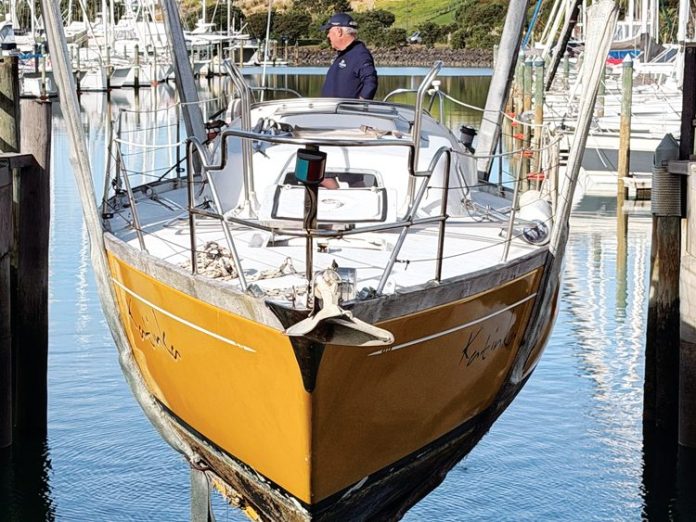
Not all groundings are serious – some result in nothing more than the removal of a little anti-fouling paint. But with more significant cases it pays to know how to proceed.
If there’s danger to life and limb a prompt call to the Coastguard is a good start. If the craft is insured the next call should probably be to your insurance broker (if you have one) or to the insurers who may appoint a marine surveyor to advise and assist you.
Until underwriters have sufficient information about the cause and events leading up to the grounding they cannot consider how they should respond. They may or may not have a liability. If underwriters do instruct a surveyor to assist they can be expected to meet his actual fee (but not any costs of the operation until liability under the policy is accepted).
Unless the grounding is serious the craft can probably be refloated by the owner’s own efforts but the decision to refloat requires careful assessment. In some cases, it may be prudent to leave her stranded if there’s a likelihood of her filling with water.


When reporting to underwriters, provide the following information to help them assess the situation and offer initial guidance to any appointed surveyor:
1. Geographical location
2. Size and type of craft (launch/yacht, mono/multihull)
3. Type of construction (wood, FRP, steel, aluminium)

4. Times of High and Low Water and time of grounding
5. Weather conditions and state of the sea and swell
6. Nature of sea bottom (mud, sand, rock etc)
7. Apparent degree of fastness on the bottom (short, deep or long keel, and extent to which she is embedded)
8. Brief assessment of any hull damage to consider whether she is likely to refloat satisfactorily, or whether there is a grave risk of flooding and sinking
9. Any known source of assistance in the vicinity.
Responsibility for mitigating the loss rests with the owner. In practice this probably means incurring some costs for refloating the vessel and getting her to a place of safety – and then to a suitable repair yard.
Many owners with yet-to-be accepted claims fail to understand how the insurance works. Until the claim is accepted by the underwriters neither they, nor any surveyor they may appoint, is likely to agree to incur any refloating expenses.

They may first require the claimant to submit a signed claim form. But in practice, especially if the initial discussion is within office hours and the policy immediately available, a prompt decision can usually be expected. Unless a policy warranty has been breached the chances of acceptance are generally good.
There is usually an urgent need for action – time is of the essence. But if assistance is not initiated promptly by the underwriter, the legal position is that any refloating costs rest with the claimant. He has a duty to act promptly – to minimise the loss if the underwriter’s liability is later established and a valid claim established under the policy.
Assuming all goes well with the arrangements, and with underwriter’s agreement, the claimant can be relieved of the financial responsibility of seeking assistance. It is probable that any appointed surveyor will take over the direction – but not the costs – of the recovery measures, on behalf of the insurers.
Very few groundings end in catastrophe; the majority are resolved satisfactorily at small cost to owners. In many cases a happy outcome is the result of owners taking the steps recommended above.