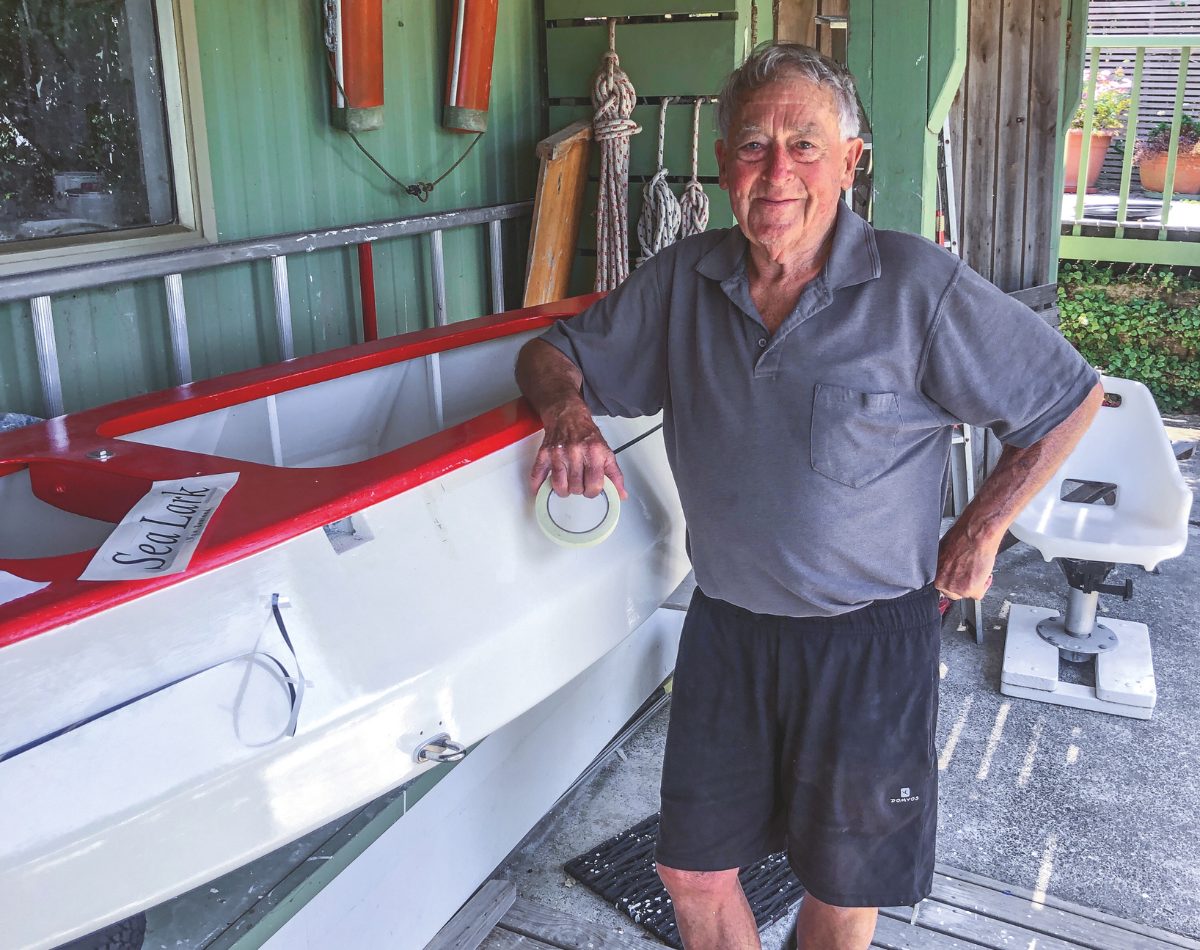
“An old bugger still ticking over” – is how 90-year-old Alan Wright describes himself and his desire to keep designing boats and having a project on the go. Story by Mark Seabrook.
Alan Wright is among a handful of legendary Kiwi yacht designers – and a major contributor in New Zealand’s developing boat industry in the sixties and seventies. To this day he remains one of the country’s most prolific designers, with the most registered yachts to his name.
Now, with the lingering reality of losing his driving licence due to the NZTA’s draconian annual driving test for the elderly, Alan has spotted an opportunity to combine his passion for designing and building boats.
During a recent daily walk he passed a mobility scooter towing a small trailer. That encounter made an immediate impact and he quickly hatched a plan to design and build a small boat that could be towed behind a mobility scooter. The boat would also need to be its own trailer—with easily detachable wheels. Sea Lark New Zealand was born.
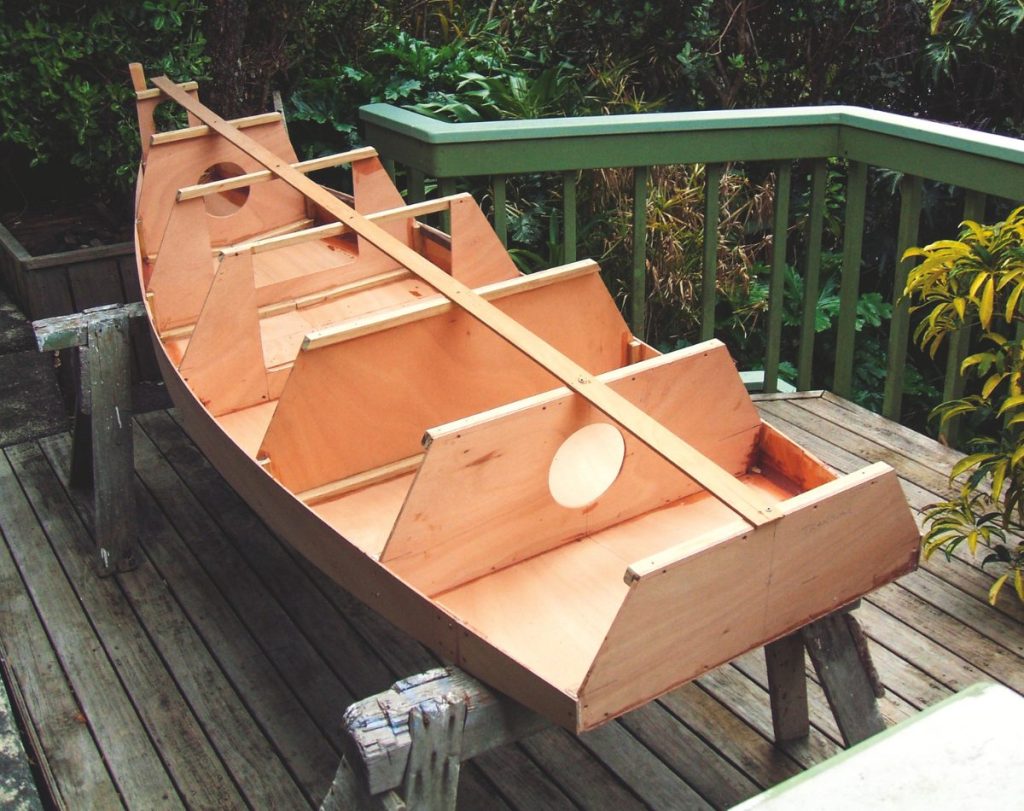
Potentially, there were a number of additional benefits: this could be a popular home-build project for other retirees, an ideal project for grandfathers and grandsons, or for fathers and young sons to learn and pick up the practical skills from woodworking. In effect, anyone from school students through to those of more advanced years.
“Those practical woodworking skills we all learnt as part of our development growing up, I feel, are fading,” notes Alan, “and this could provide both young and old with an opportunity to lend a hand to working with wood.”
Speaking to some of his retirement village contemporaries, it seemed there was strong interest in such a project as it’d be ideal for those with a workshop and a waterway in close proximity. “It’s also important for retired people to have an interest or a project to keep the mind and body active,” he adds. At 90 he’s testament to this belief – still sailing and winning races with his son Don who skippers a Marauder with a much younger and very competitive crew.
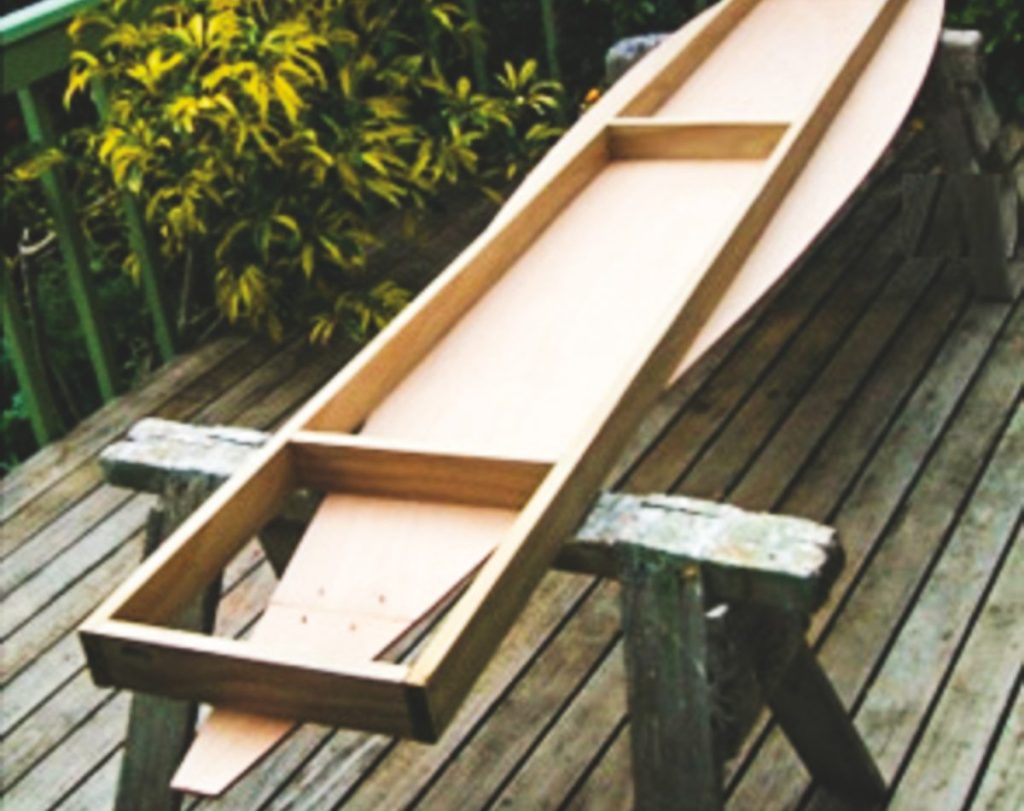
Alan has now produced the first prototype and says the Sea Lark has sea-tested very favourably. It’s stable, easy to paddle and fit for purpose. It’s also roadworthy, and it complies with footpath requirements according to NZTA mobility scooter usage rules!

He’s also produced a full set of design drawings, detailed step-by-step instructions with photographs, a materials list and even where to purchase the supplies (all easily available from the likes of Bunnings and Burnsco).
He estimates the cost to build a Sea Lark at $500-600. You can purchase a plastic paddler for half of that, but this craft is more about the satisfaction of constructing a wooden boat yourself – and one that can be towed behind a mobility scooter (or go on a roof rack).
The cost for the plans, build instructions, photos and materials list is just $100.00. Beyond that, there’s a possibility to produce it in kitset form with every component supplied and ready to go, but that’s a project for another day.
He is quick to point out that if someone wants a business idea, he’d be happy to help out. “I wouldn’t be interested in going into business at my age, but happy to pass on my ideas if there’s anything in it for someone.”
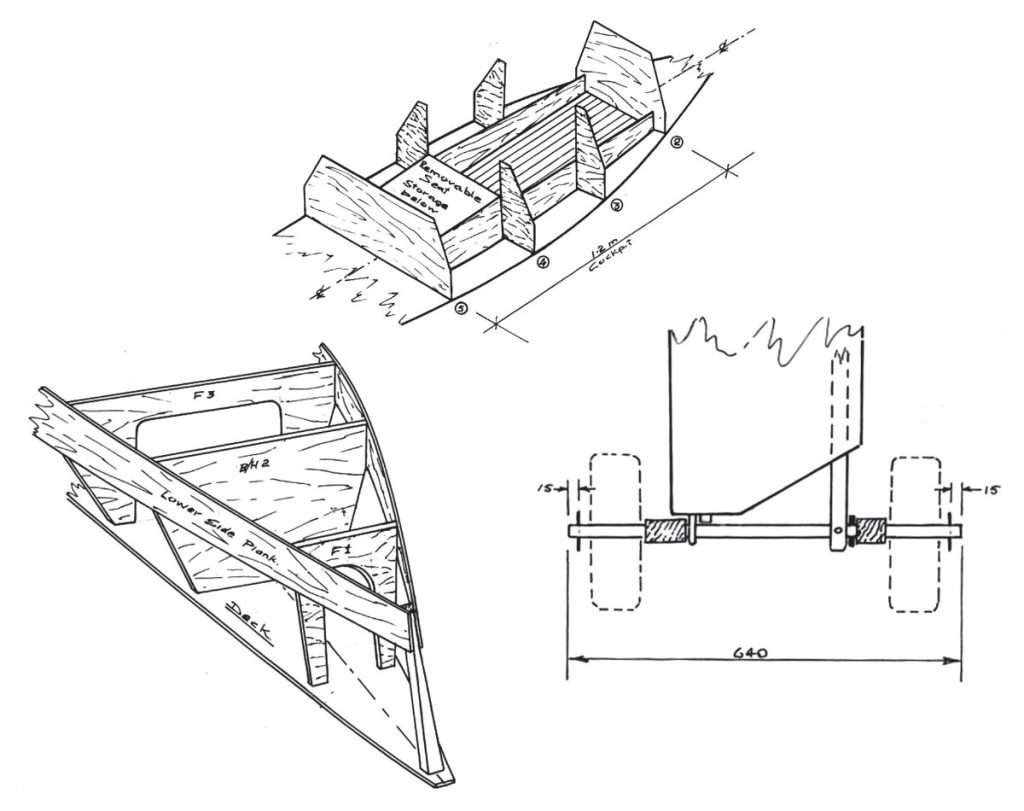
Remarkably, all the plans are hand-drawn without the aid of computer technology. Alan still uses his traditional design techniques – varying lengths of thin wooden splines made of hickory that are curved on to tracing paper and held down by varying weights – to create the design outline. This technique was widely used prior to the digital age and required the designer to have a good eye for the lines and curvature of the vessel he was creating.
Interestingly, Alan’s design career and business originated in selling plans to the Kiwi do-it-yourself, semi-skilled, backyard boatbuilders. Today, with space at such a premium, this market has completely disappeared.
The Sea Lark, fortunately, can be built in a workshop, a small garage, in schools (or even a spare bedroom as the nest empties). “It’s always been a great thrill for me to put people in boats through my designs, and this project achieves that and more,” he says.
Sea Lark construction
Wood was the obvious choice as Alan envisages this as a project for people with limited boatbuilding experience and minimal tool requirements (basic woodworking tools, a jigsaw and a power drill). “Synthetic materials such as fibreglass and resins scare people off – Sea Lark is made of plywood.”

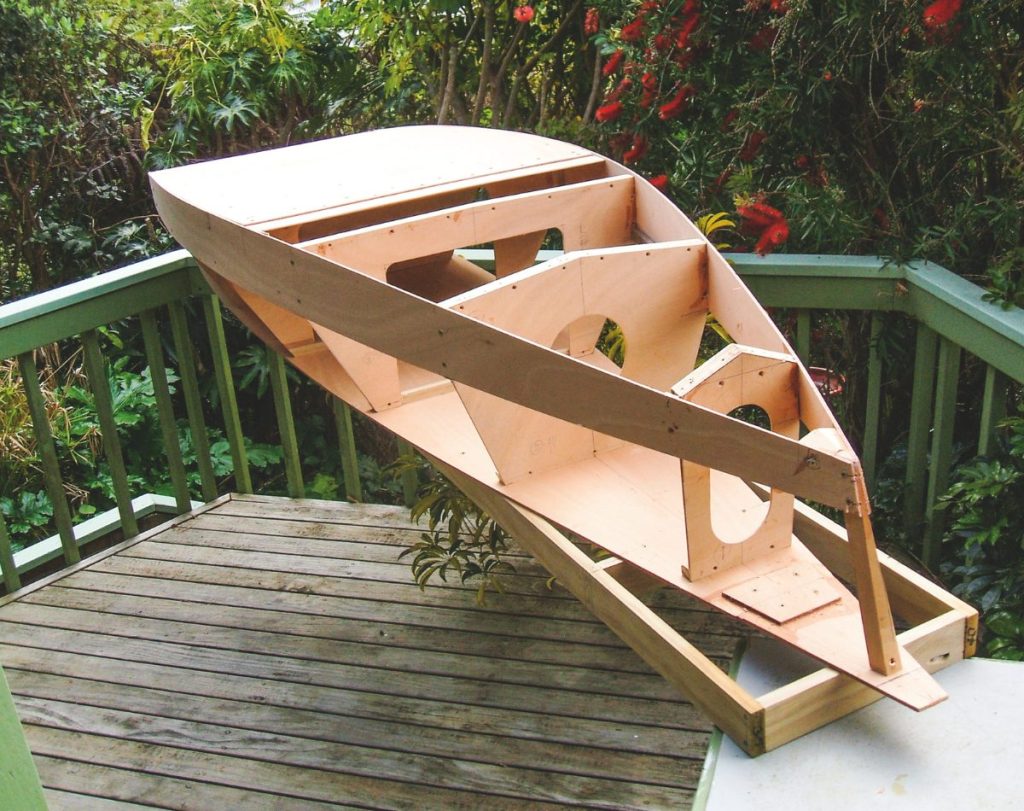
It uses a clever construction technique, with the upside-down boat deck becoming the platform for securing the bulkheads and frames. The flat straight deck is also designed to assist with stowage on a vehicle roof top, or with the boat on its side, and it can be stored efficiently against a wall.
The hull design provides a generous beam for good stability and extends to the transom to maintain stability aft and provide ample aft reserve buoyancy. Top sides then taper inboard to the deck line for an easier paddling angle. The keel line lifts to the bottom of the transom to eliminate underway resistance. Hull form and the ‘in hull’ seating are also designed to ensure good stability.
Sea Lark transportation and launching
The Sea Lark is towed on its side by mobility scooter or by hand. Two pneumatic wheels are quickly attached, then removed from the hull and stored in the aft stowage compartment. The hull’s easily towed on its side and later rolled over for launching.
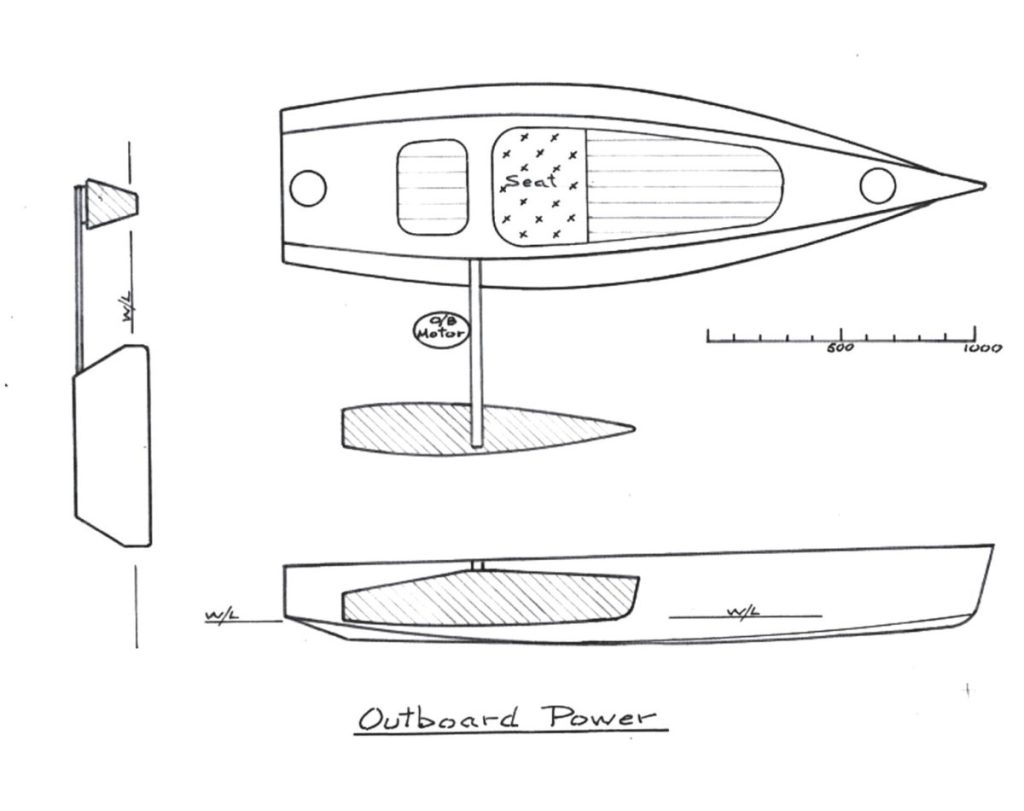
Alan’s ideas are always evolving – he is contemplating an outrigger where you can mount a 2hp outboard on the inside (between the paddler and outrigger) to aid propulsion. Both the outrigger and outboard can be packed inside the boat’s cockpit to be towed with the same setup. This feature can provide extended adventures for retirees who might find paddling tiring.
Still working away at what he loves, Alan Wright is proof that age is no barrier when you have the right attitude and approach to life – a true Kiwi treasure.
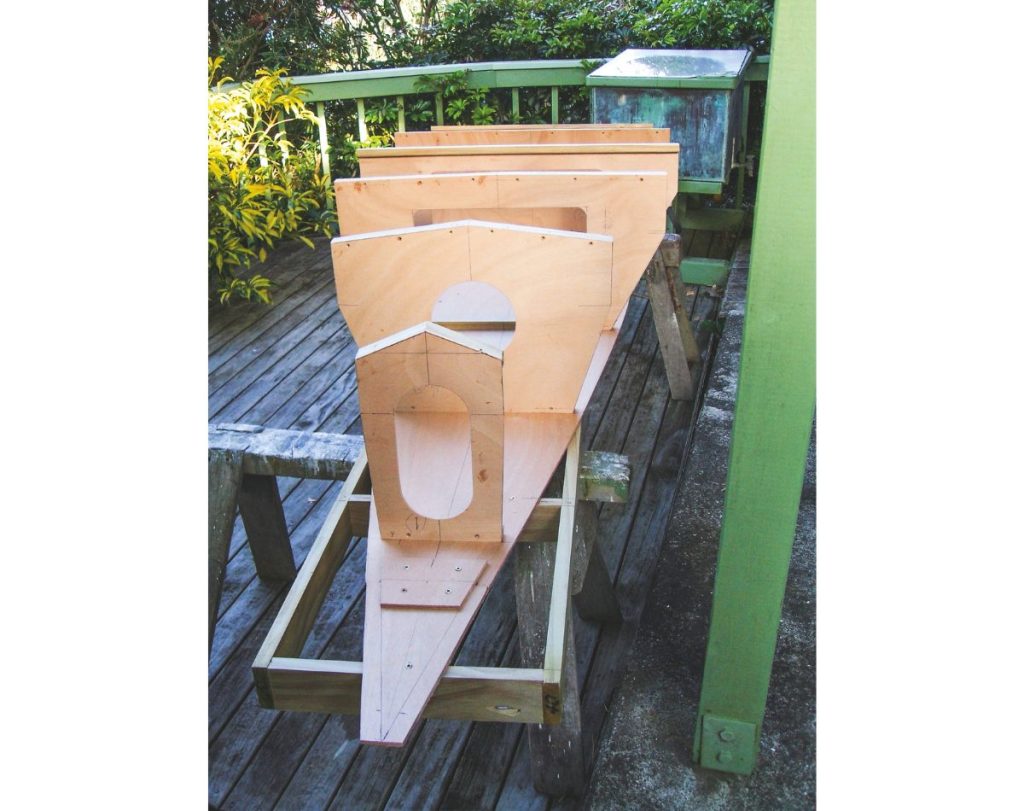
Sea Lark building sequence
- Construct the building frame.
- Cut the deck to shape 22mm larger both sides to allow for the 12mm external gunwale. The cockpit openings etc. will be cut to their shape after the hull planking is complete.
- Fasten the 6mm deck to the building frame.
- Construct the transom, bulkheads and frames [TBFs].
- Temporarily screw all the TBFs to their positions on the deck. The screws will enter through the deck plywood into the TBF cleats.
- Brace the bottoms of the TBFs with a batten screwed into them.
- Cut the stem angle at the forward end of the side planks.
- Screw the side planks together at the stem.
- Remove the side planks, apply the glue to the TBFs and permanently fit the side planks.
- Fit and glue the stem to the side planks and temporarily screw to the deck. Fit the timber inserts and ensure that the side planks fair accurately to the bottoms of the TBFs.
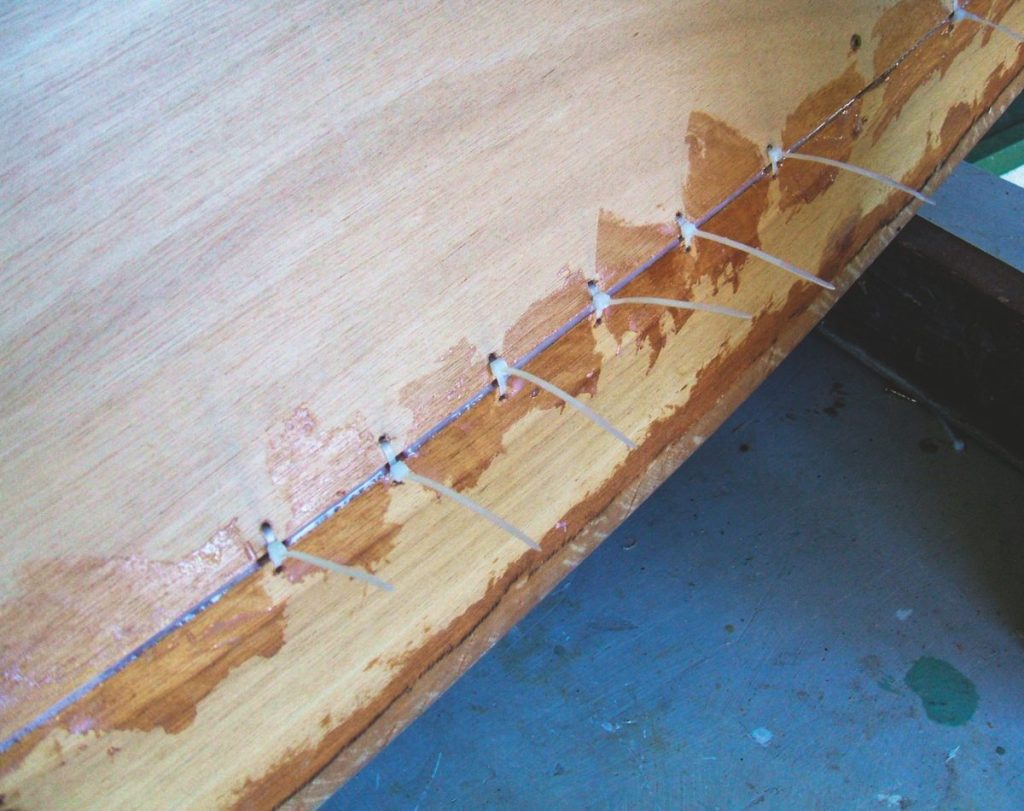
- Dry fit and temporarily fasten the bottom plank and joining pad. Remove them, apply the glue to TBFs and permanently fit. Use cable ties where necessary.
- Turn the hull right way up.
- Epoxy cove the bottom and side planks’ joint on the inside. The hull is now structurally rigid.
- Remove the deck from the building frame.
- Fit, cable tie and cove; tape the top planks.
- Glue the external timber gunwale to the top plank.
- Fit and glue the two skegs.
- Complete the hull interior and paint it.
- Glue the deck on and tape the edges.
- Fit the bow handle and wheel fittings. Remove them and refit after the hull exterior is painted.
Sea Lark specifications and build details
Length overall: 2.7m
Beam: 0.8m
Weight: 22kg
Maximum carrying capacity: 150kg
Construction
Simple plywood stitch and tape construction, designed for straightforward assembly and durability.
Build plans
Comprehensive step by step construction plans are provided, including photographs and a full materials list to guide builders through the process.
Tools required
Only basic workshop equipment is needed, including a drill, jigsaw and standard hand tools.
Usage
A stable and comfortable multi use dinghy designed for one adult, or an adult with one or two small children.
Propulsion
The boat can be paddled or powered by a small outboard up to 2hp when fitted with the optional outrigger attachment.
Transportation
Two removable hull wheels allow the boat to be moved easily on land. These wheels can be quickly fitted or removed and allow the dinghy to be legally towed behind a mobility scooter or bicycle, or simply pulled by hand for short distances.
The boat can also be carried on a standard car roof rack.
When fitted, the hull wheels double as a beach trolley. The boat is wheeled on its side, reducing the transport width and making storage easier. When not in use, the wheels pack neatly into the aft storage compartment.